A Small Country Packed Into One Long Tour
Vatican City was part of our stay in Rome, but there was enough packed into this one day that it deserves its own destination story. We booked a small-group tour with fewer than twenty people, and they picked us up directly at our hotel that morning. We already had passes, but there was still a wait outside the Vatican Museums, so our guide used the time to start explaining the buildings, symbols and details around the entrance before we ever made it inside.
The crowds became part of the day almost immediately. At times it was elbow to elbow, and the group moved at a pretty steady pace. Laura normally stayed closer to the guide and listened while I moved around looking for photographs, but even she had trouble keeping close because of the number of people. I was usually farther back waiting for someone to move out of a composition or trying to get the shot I wanted. The farther I drifted, the more static I got through the headset.
That probably explains the way I remember Vatican City better than anything. I can’t tell you the explanation behind every statue, tapestry or fresco we saw, but I photographed a lot of them. I was interested in nearly everything around me, and the camera became my record of what held my attention as we moved through the museums, the Sistine Chapel, St. Peter’s Basilica and finally St. Peter’s Square.
Journey Timeline
Day 1 — Hotel pickup in Rome; Vatican Museums and courtyard areas; Sistine Chapel; direct passage into St. Peter’s Basilica; St. Peter’s Square; tour ended and we walked back into Rome.
The Experience, Told Through the Journey
Into the Vatican Museums
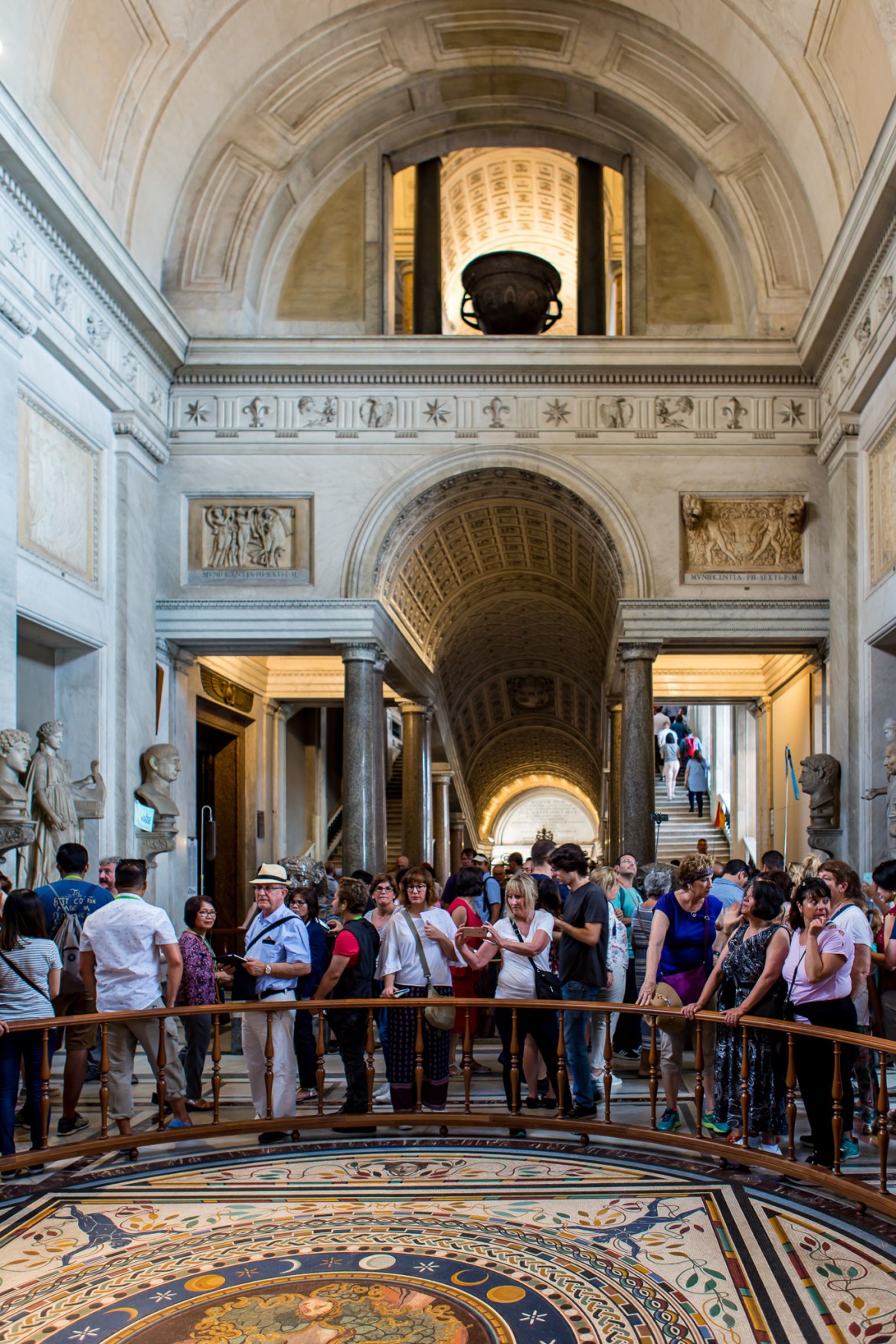
Even with our passes, getting into the Vatican Museums wasn’t immediate. We spent some time outside while the group worked its way toward the entrance, and our guide filled the wait by explaining what we were seeing around us. Once we were inside, keeping twenty people together became harder than it probably sounds. The museum was crowded enough that there were stretches where everyone seemed to be moving shoulder to shoulder.
I was interested in pretty much everything we passed, but I wasn’t touring the Vatican like someone trying to memorize an art-history course. I was looking at the rooms, sculpture, ceilings and architectural details and deciding what I wanted to photograph. That meant I regularly fell behind. The headset worked fine when I stayed reasonably close to the guide; when I hung back too long, the explanation usually turned into static.
Laura stayed closer and caught more of the commentary than I did, although even she had trouble keeping up with the guide in some of the heavier crowds. That was the basic pattern for much of the tour: Laura listening and trying to stay with the group while I was somewhere a little farther back trying to make a photograph without twenty people walking through it.
The first part of my photographs moves through the outdoor spaces around the museums and into the classical collections. The Courtyard of the Pinecone gave me a mix of architecture, sculpture and open space, including the huge bronze pinecone and Arnaldo Pomodoro’s modern Sphere Within a Sphere. I also photographed the courtyard gardens and the exterior of the Vatican Pinacoteca, although several of those shots didn’t make my original final selections.
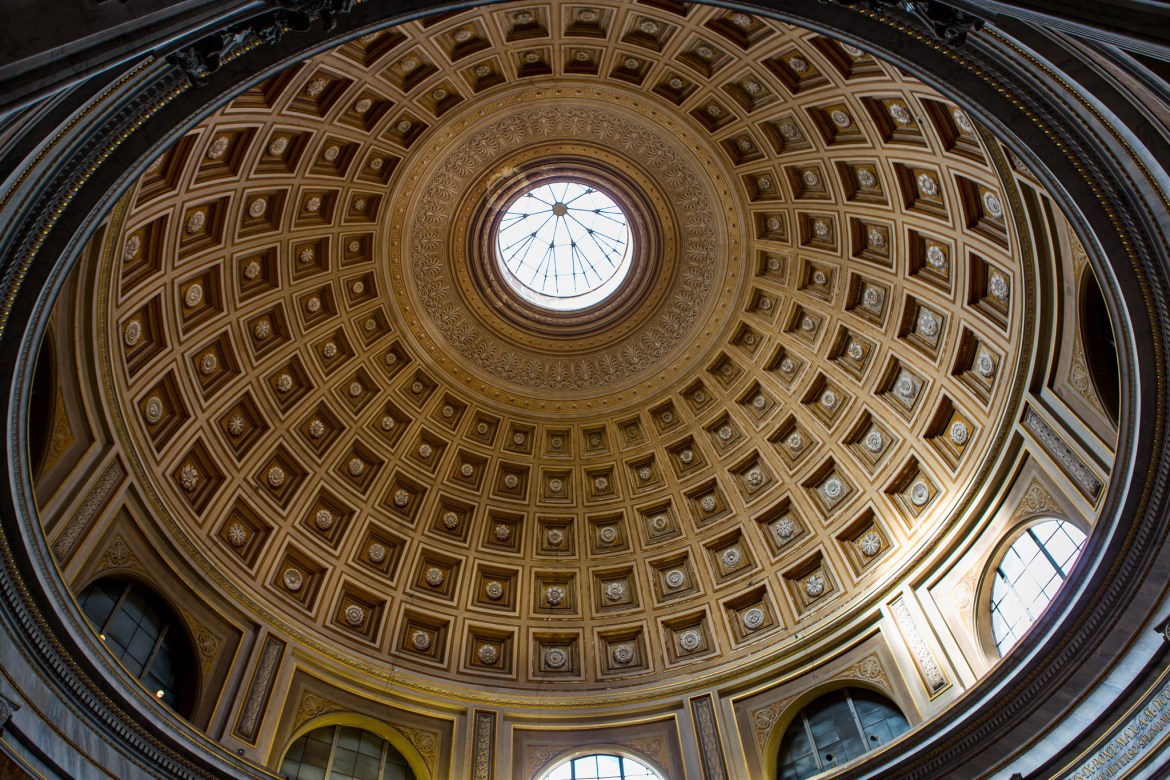
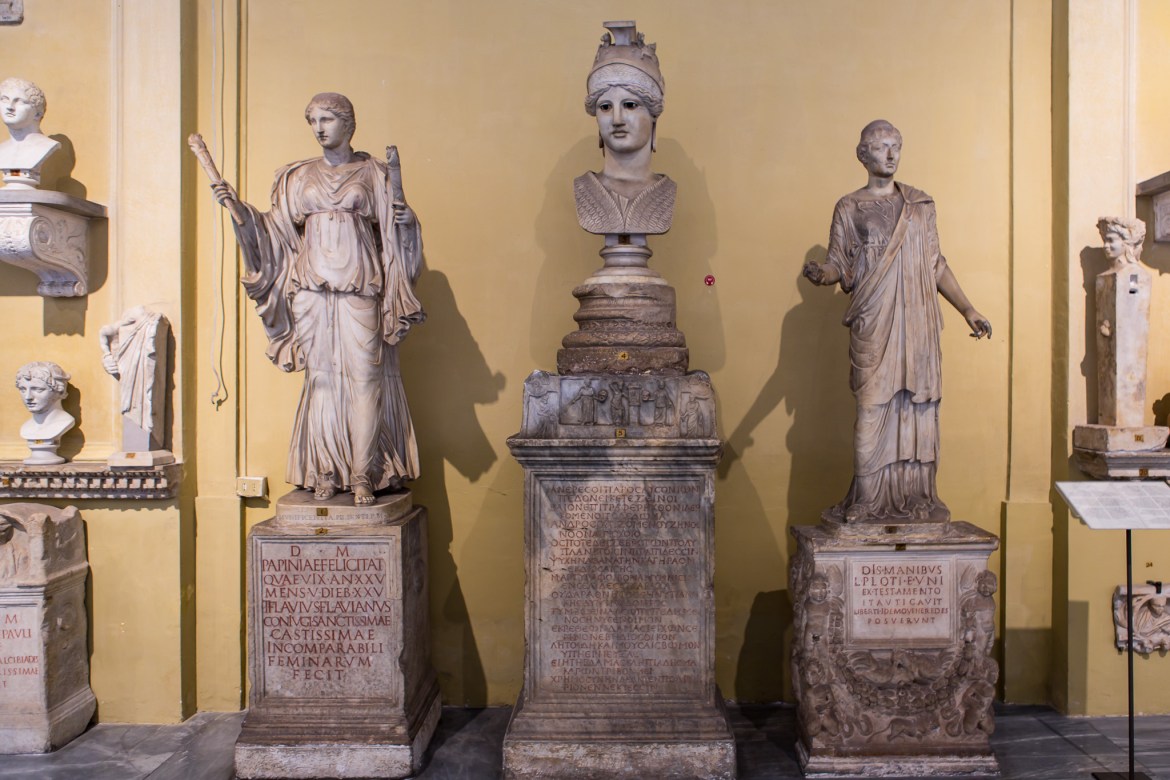
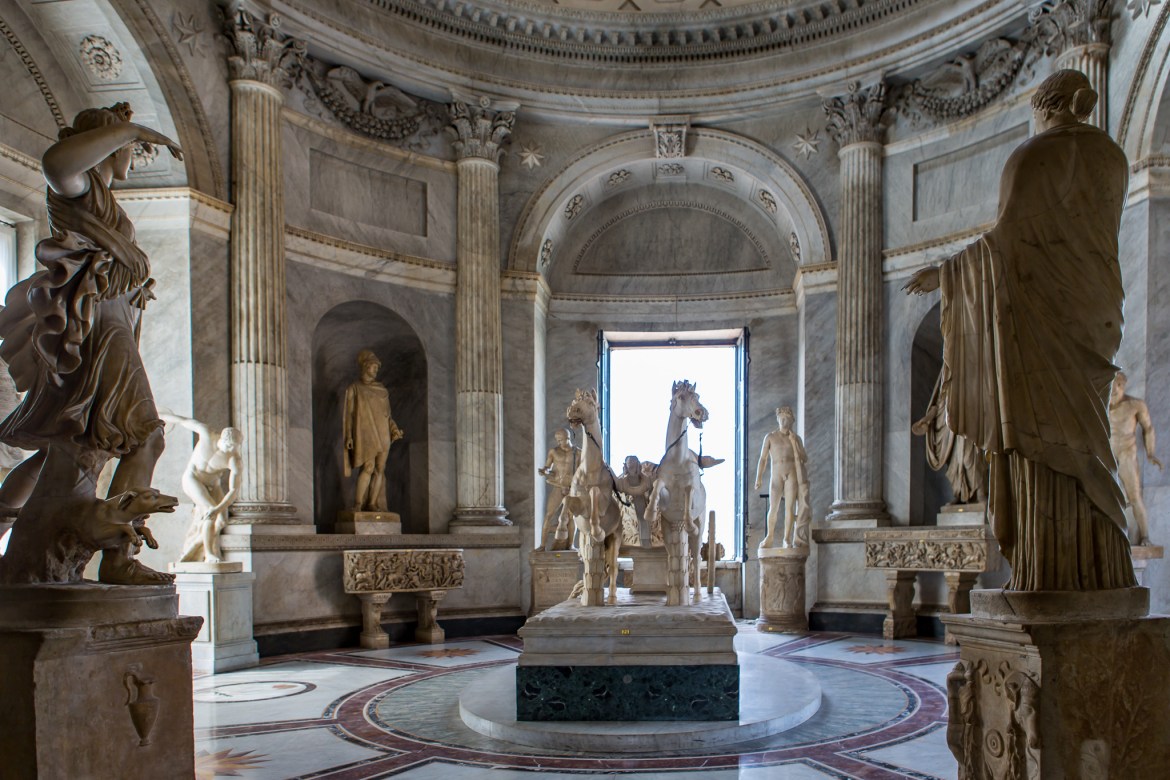
Inside, the subject matter changed constantly. Ancient Roman and Greek sculpture filled the Pio-Clementino Museum, and we seemed to spend a little more time in the Hall of Animals and Hall of the Muses. Those two rooms are especially well represented in my photographs. The Round Hall, with its massive coffered dome, the Greek Cross Hall and the Hall of the Chariot followed as we continued deeper into the museum.
Tapestries, Maps and Raphael
Later sections of the museum gave me completely different photographic subjects. The Gallery of Tapestries was filled wall to wall with large narrative scenes, followed by the Gallery of Geographical Maps with painted maps running down the sides and an incredibly detailed ceiling overhead. The photographs from the Maps gallery are a good example of how I was working that day: wide views to show the room, then tighter photographs of artwork, papal coats of arms and architectural details that caught my eye.
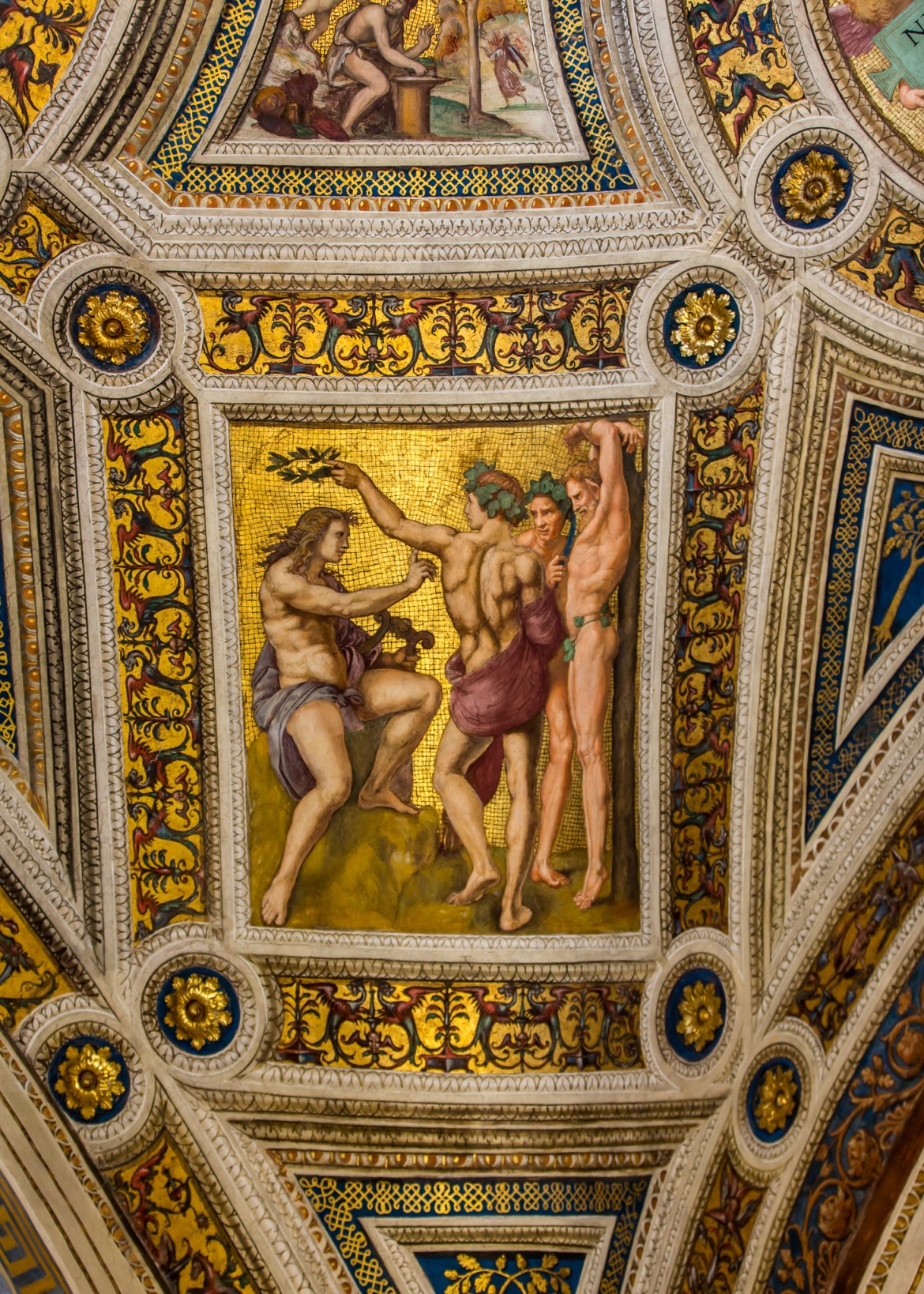
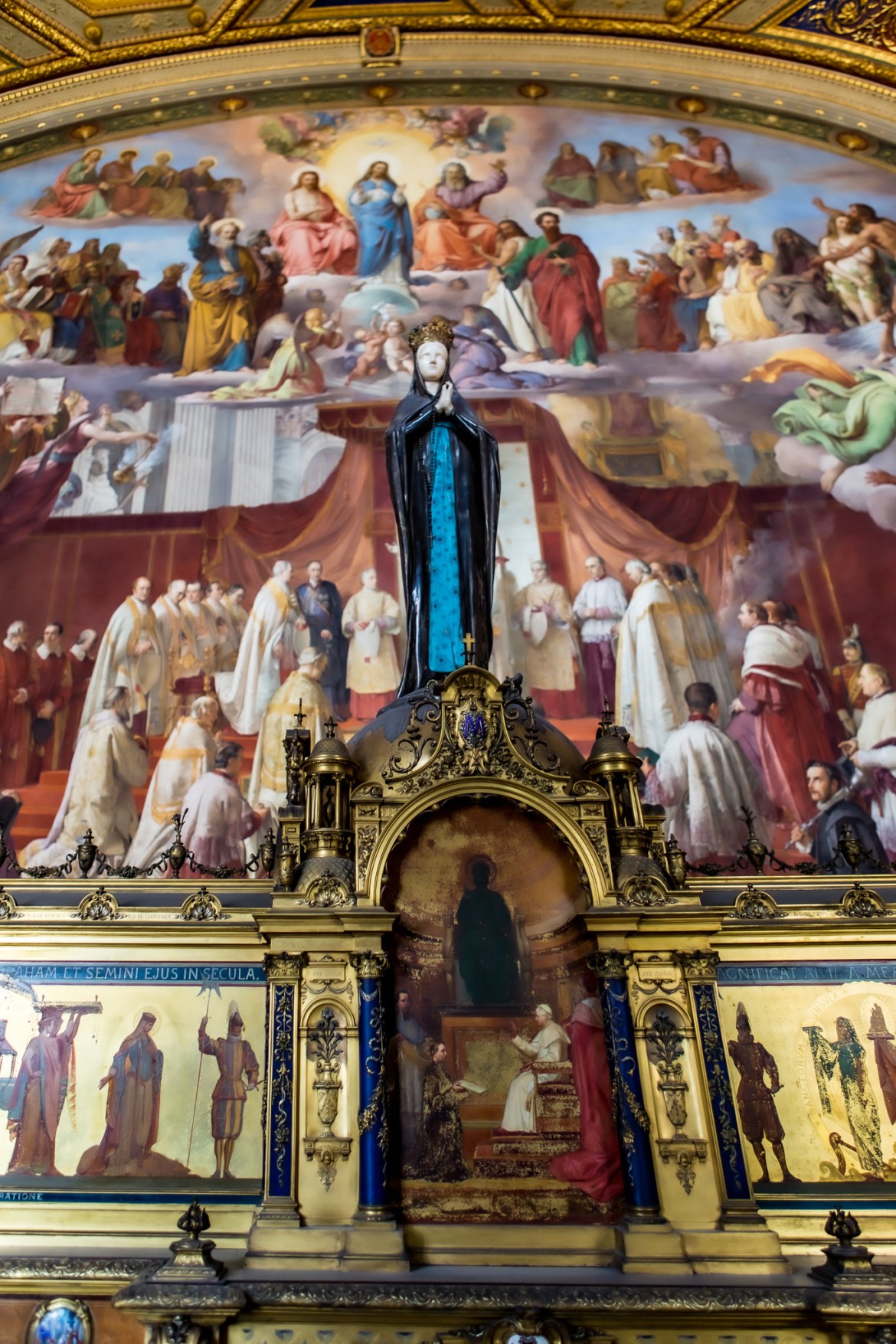
We continued through the Room of the Immaculate Conception and into the Raphael Rooms. I photographed The School of Athens, The Encounter of Leo the Great with Attila, The Crowning of Charlemagne, The Fire in the Borgo, The Battle of Ostia and several smaller details along the way.
I don’t remember the individual explanations our guide gave for most of them now. I know he was explaining the major pieces as we moved through them, but eight years later the photographs are the stronger record for me. That doesn’t mean I wasn’t interested in what I was seeing. I was paying attention visually, looking at the art and figuring out how I wanted to photograph it rather than trying to retain every name and story attached to every wall.
The photographs I’ve kept for Shutter Nomadica are also only a small part of what I shot. They’re the ones I liked enough to keep working with years later, so the subjects that appear repeatedly give a pretty good indication of where my attention kept going.
The Experience, Told Through the Journey
A Couple of Forbidden Photos
Photography in the Sistine Chapel was a completely different situation.
The group was told beforehand that photography was prohibited, and the staff reinforced it as people entered. They were actively stopping visitors who tried to take pictures and calling the restriction out to the crowds. Pulling out the Canon and pointing it toward Michelangelo’s ceiling was obviously not going to be subtle.
The phone was another story.
I kept the camera put away but held my cell phone low enough that I could at least attempt a couple of quick photographs without drawing attention. I managed two: one of Michelangelo’s ceiling and another of The Last Judgment behind the altar. They’re phone snapshots rather than the kind of photographs I was trying to create everywhere else that day, but I’m glad I have them.
After the Sistine Chapel, our group used the direct passage into St. Peter’s Basilica rather than going back through the museum exit and circling around outside.
St. Peter’s Basilica
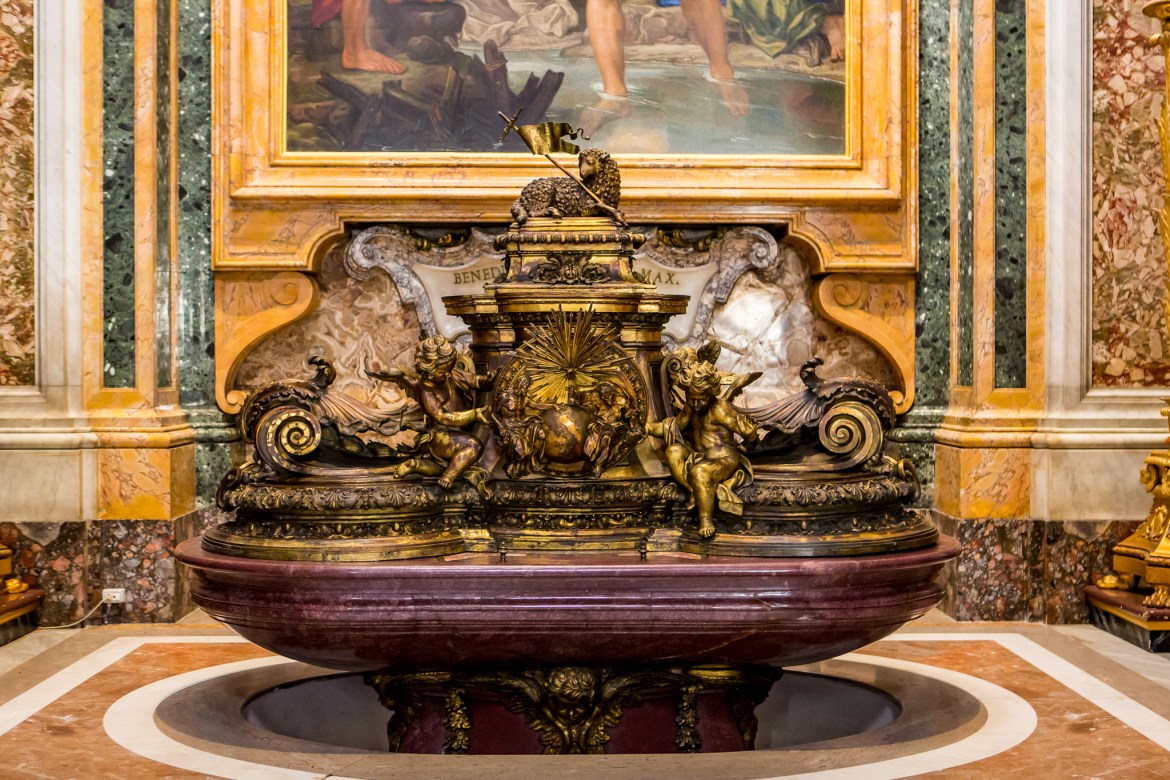
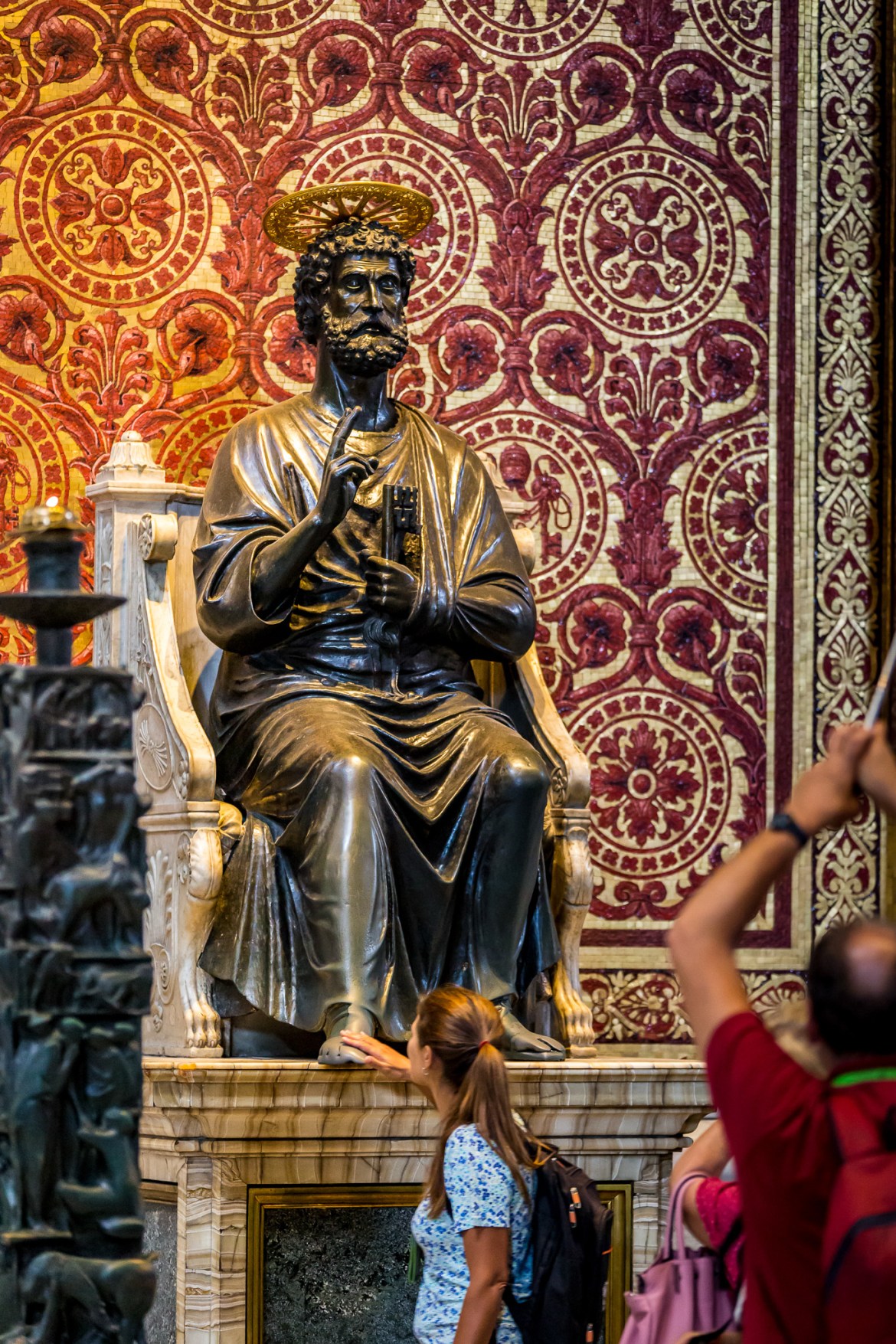
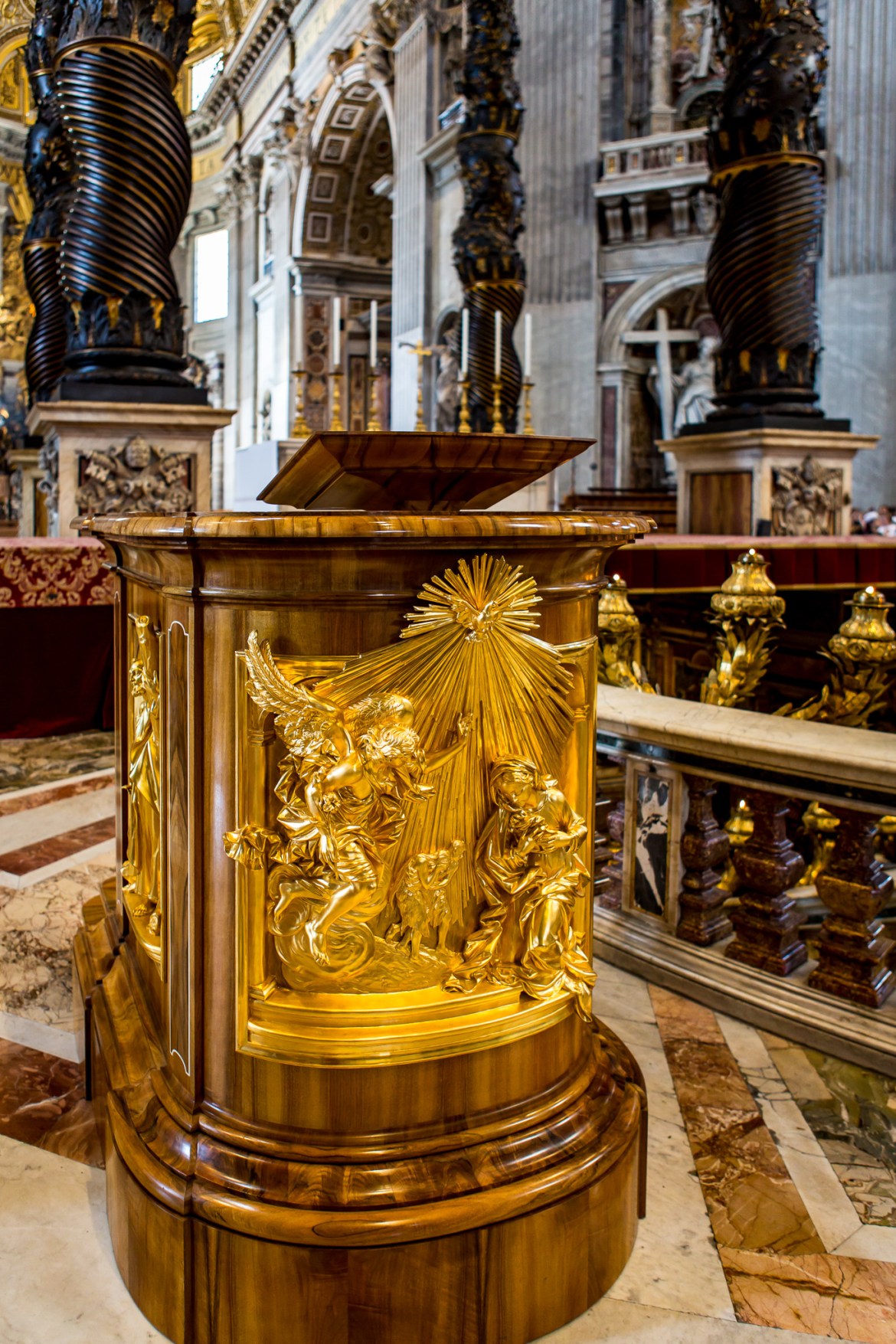
St. Peter’s gave me another long list of subjects to photograph. Michelangelo’s Pietà was one of the first major pieces, followed by Bernini’s enormous bronze Baldachin above the papal altar. I photographed the bronze statue of Saint Peter, the Chair of Saint Peter at the far end of the basilica, chapels, domes, papal monuments, altars and smaller details throughout the church.
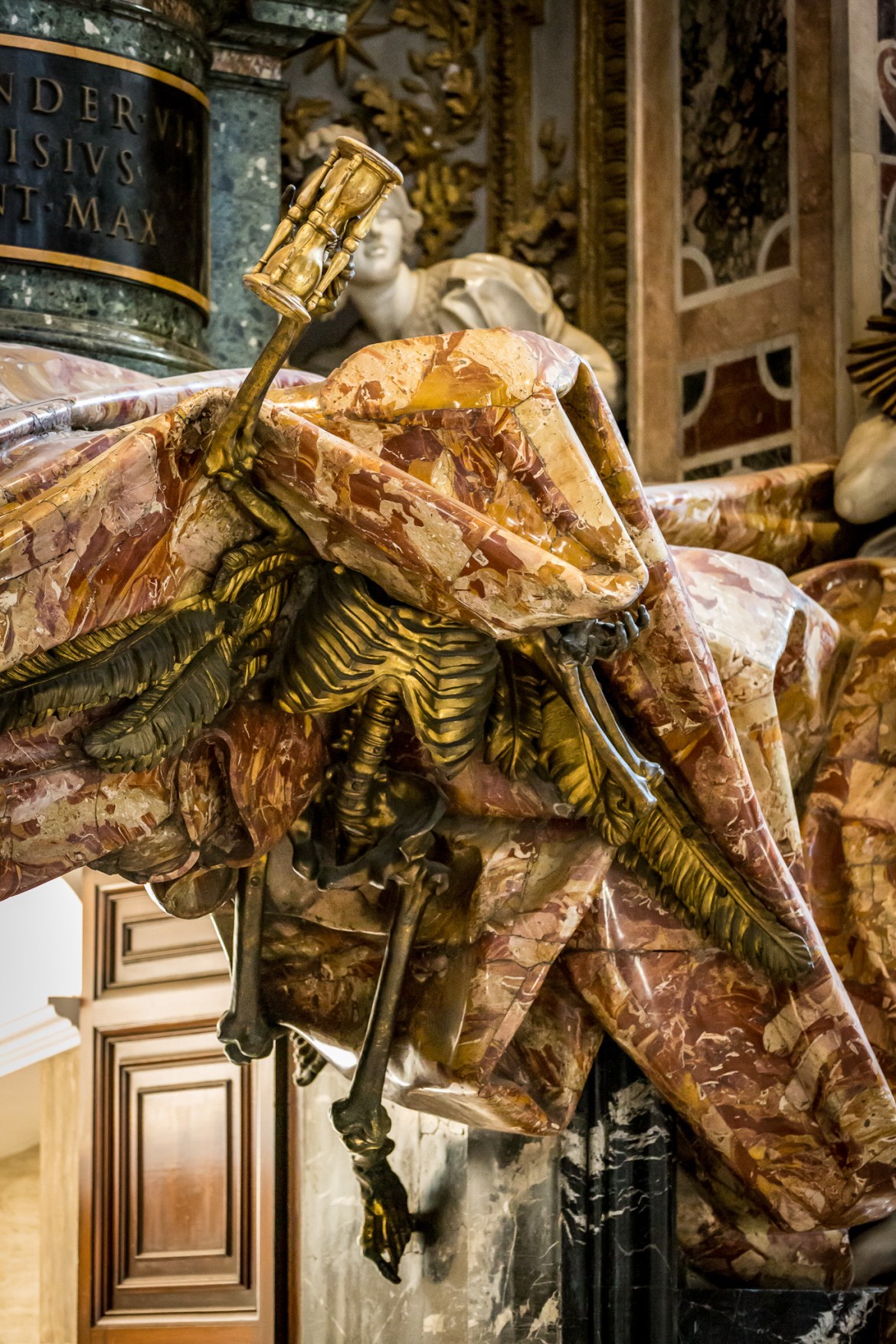
The scale made wide photographs useful, but there were just as many interesting details once I started looking closer. Bernini’s Monument to Alexander VII was a good example. The full monument is impressive, but the gilded skeleton of Death pushing out from beneath the marble drapery with an hourglass was the detail I really wanted to isolate.
Laura and I did manage to get a photograph together inside St. Peter’s with the Baldachin behind us. Personal photographs weren’t something I was stopping for very often on this trip. Most of my attention was still going toward the places and subjects around us, so the few photographs of the two of us or either of us alone became useful markers within a much larger collection of architecture and artwork.
St. Peter’s Square
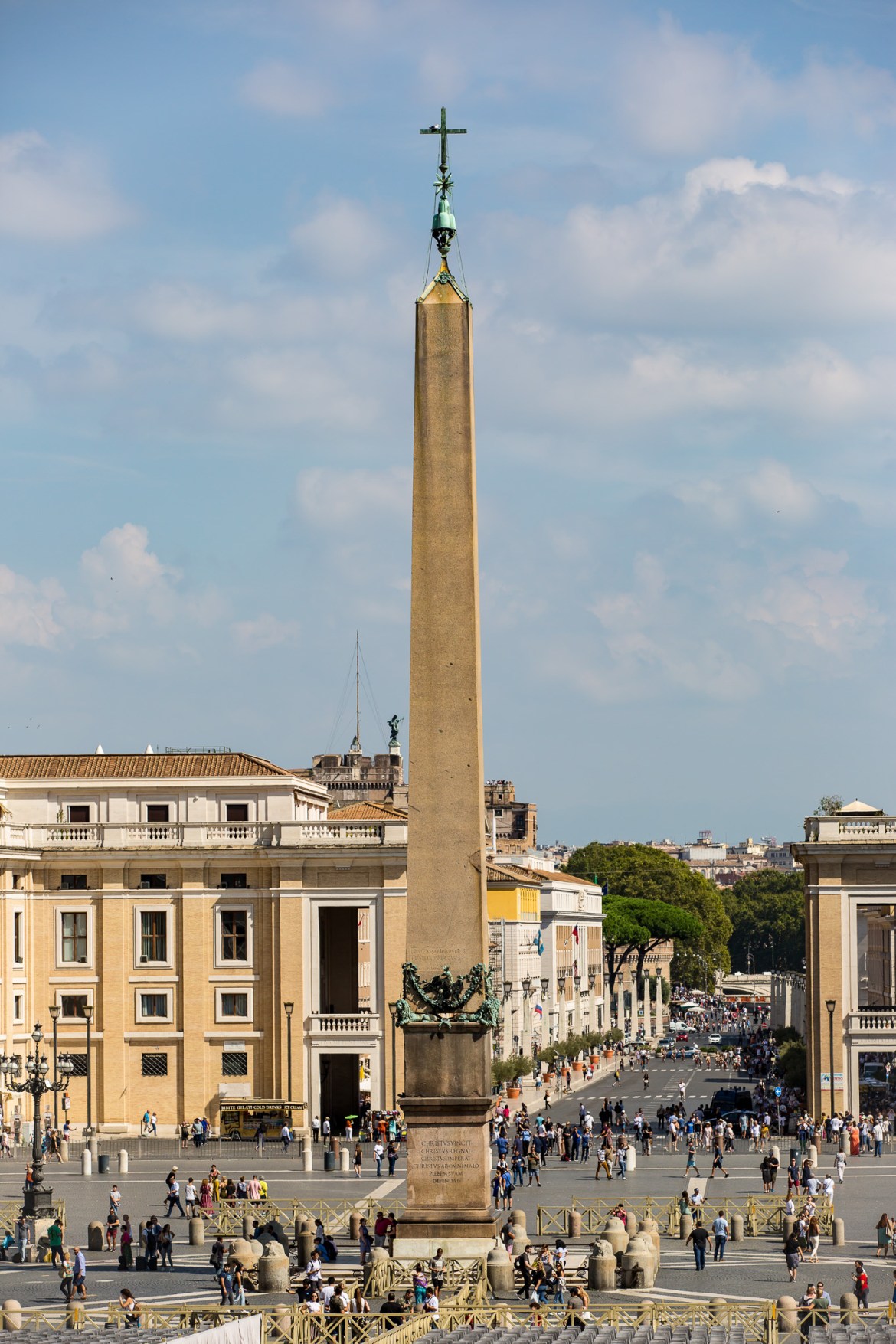
Our tour eventually carried us outside into St. Peter’s Square, where the visual focus changed again. I photographed Bernini’s sweeping colonnade, the Vatican Obelisk, the statues of saints above the square, the Apostolic Palace, one of the Swiss Guards and the fountains. The weather was changing by then as well. Some frames still have a bright blue sky while later photographs show much darker clouds building behind the basilica and dome.
This was also where I slowed down enough to get a few more photographs of Laura. One shows her sitting with some water, while the last series has her standing in the square with St. Peter’s Basilica behind her. Those ended up being some of our final photographs in Vatican City.
The guided portion ended in St. Peter’s Square. Laura and I left the group there and continued on our own, walking back into Rome. I believe that was also when we picked up the hop-on-hop-off bus again, but Vatican City itself was finished for the day.
In the Frame
The Faces Behind This Journey
Just Beyond: Rome
Vatican City was one part of our larger stay in Rome, where we spent several days exploring the Colosseum, Roman Forum, Pantheon, Trevi Fountain, Spanish Steps, Castel Sant’Angelo and the streets in between.
Explore the Rome Feature Story
Photography Notes
Vatican City gave me a huge range of subjects in a relatively compact visit. I was moving between ancient sculpture, frescoes, tapestries, painted ceilings, long galleries, courtyards, basilica interiors and architectural details, so I photographed both wide scenes and tighter compositions throughout the day.
The biggest photographic challenge was simply getting clean frames in rooms that were often packed with people. I would wait for openings when I could, but on a moving tour there was only so much time before I needed to catch up. Some of the photographs that work best now are the tighter details—sculpture, papal emblems, ceilings and individual pieces—where the crowds disappear from the composition entirely.
The Sistine Chapel was the one place where the normal approach stopped. Photography was prohibited, so the Canon stayed away and I only came home with two quick cell-phone images. They aren’t technically among the strongest photographs from the day, but they document a place that otherwise would have been missing from the visual record.
Looking through the full collection now, I’m also reminded how much more I photographed than what eventually made the website. The final selections are the images that still stand out to me years later, not a complete inventory of everything we saw.
Practical Notes & Lessons Learned
A small-group tour was the right way for us to handle Vatican City. There was too much ground to cover and too much context behind what we were seeing for me to want to figure out the route on my own, and having the hotel pickup made the start of the day easy.
The tradeoff was pace. Even with fewer than twenty people, moving a group through heavily crowded galleries meant there wasn’t much opportunity to linger. If photography is a priority, that is worth knowing beforehand because a guided tour and deliberate photography are occasionally working against each other.
Using the direct passage from the Sistine Chapel into St. Peter’s Basilica was also a big advantage. It kept the visit moving naturally and avoided having to exit the museums and work our way around separately to the basilica.
For a first visit, I wouldn’t change the overall structure. We saw the Vatican Museums, Sistine Chapel, St. Peter’s Basilica and St. Peter’s Square in one continuous visit, which covered the major experiences I would have wanted without dedicating the entire day to Vatican City.

Behind the Lens
I’m Steve—a retired Army vet who traded rucksacks for camera bags and never stopped exploring. What started with a simple 110 film camera grew into photographing all 50 states and 30+ countries, from quick business-trip detours to adventures with my wife Laura. Shutter Nomadica is where I share those travels through the photographs, stories, and moments that made each place memorable.
Beyond the Story
Continue Through Italy: Florence
Later in the trip, Florence put us back among the art, churches and Renaissance architecture that had filled so much of our Vatican visit, this time spread throughout the historic center of the city.
Explore the Florence Feature Story