From Cristo to Copacabana: How to See (and Shoot) Rio de Janeiro

Rio de Janeiro is a city that glitters, thunders, and dances—often in the same hour.

Rio de Janeiro is where granite peaks shoulder into gold-sugar beaches and the whole city moves to a samba heartbeat. From C

There are cities that move, and then there’s Rio de Janeiro — a place that dances. Cradled between lush jungle peaks and the endless blue of the Atlantic, Rio feels alive in every sense: the sway of samba, the glint of sun on bronzed skin, the echo of waves at Copacabana Beach. It’s a city that refuses to sit still — bursting with color, music, and a kind of joy so contagious it seeps into your stride before you realize you’re walking to its rhythm.

From the awe-inspiring Christ the Redeemer towering above the clouds to the golden-hour glow of Sugarloaf Mountain, Rio offers photographers a never-ending parade of drama and beauty. Wander through Santa Teresa’s bohemian alleys, chase carnival confetti through the Sambadrome, or watch football fever ignite at the Maracanã Stadium. And when the day fades, the sunsets here don’t just fall — they sizzle, painting the sky in purples and golds worthy of Brazil’s spirit.

hrist the Redeemer to Sugarloaf Mountain, every turn is a ready-made postcard. Come hungry for color, coastline, and culture—you’ll leave with memory cards that weigh more than your suitcase.

The sweet spot for vibrant skies and balmy breezes is April–June or September–November, when Rio’s warmth flatters without overwhelming. Fly into Rio de Janeiro–Galeão International Airport (GIG) — just 30 minutes from Ipanema — and give yourself four to five full days to chase its rhythm. Whether you’re dancing barefoot in Lapa, photographing the skyline from Corcovado, or sipping caipirinhas as the city hums beneath you, Rio de Janeiro reminds you that beauty here isn’t posed — it’s alive.

Rio de Janeiro – Christ the Redeemer statue from base with dramatic clouds
A low-angle view of Christ the Redeemer on Corcovado with arms outstretched against textured cloud cover. The granite base and robe pleats add weight and symmetry while the sky breaks toward blue.
Rio de Janeiro – Sugarloaf Mountain (Pão de Açúcar) with cap cloud from Urca waterfront
Sugarloaf Mountain rises from the harbor with a neat little cap cloud, seen from the Urca seawall and low-rise waterfront. Crisp afternoon light chisels the granite face.
Rio de Janeiro – Crowds climbing Escadaria Selarón colorful tiled steps
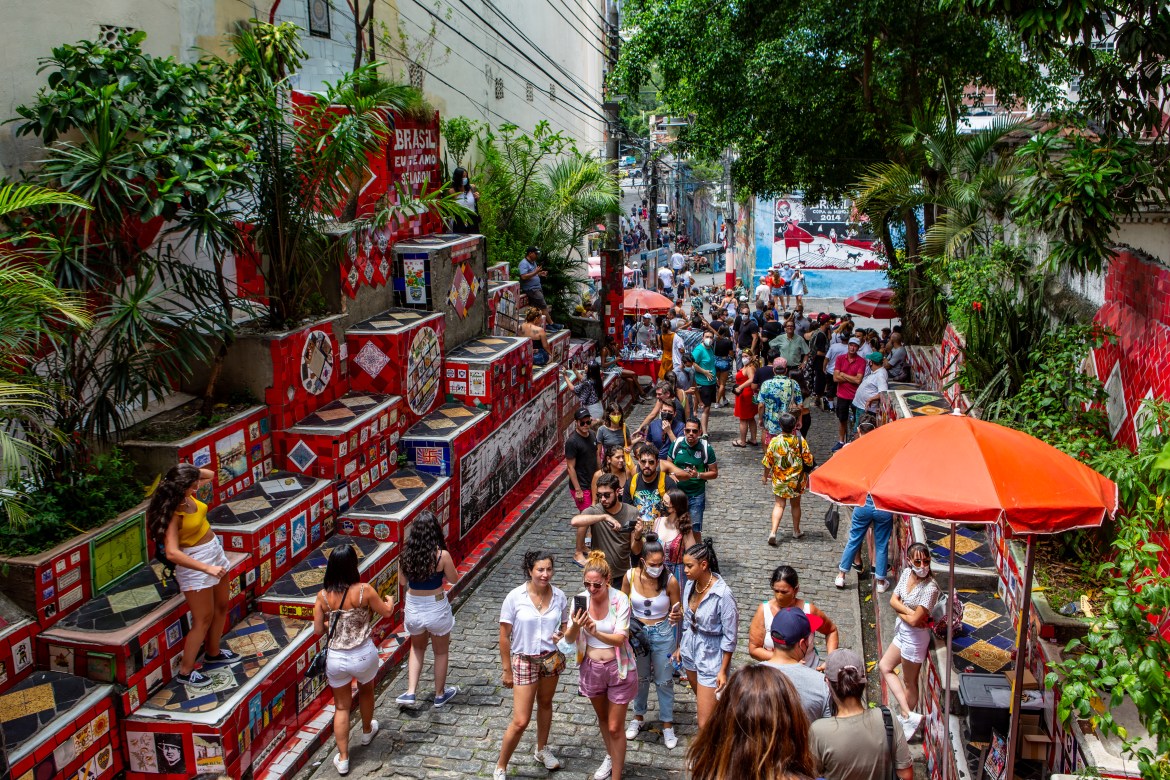
The red walls and mosaic risers of Selarón Steps channel a river of people upward beneath a leafy arch. Tiles flash flags and patterns in every color.
Rio de Janeiro – Exterior of Metropolitan Cathedral of Saint Sebastian with vertical blue glass
The conical façade of Saint Sebastian Cathedral rises like a ziggurat, its blue glass stripe slicing toward a sky of broken clouds. People at the entrance scale the mass of concrete latticework.

🎯 Don’t Miss Shortlist in Rio de Janeiro

Rio de Janeiro is a sensory mixtape—Atlantic blue, rainforest green, and mosaic red—with samba thumping under every skyline view. Morning mist slips off granite domes, afternoons turn Copacabana to liquid gold, and evenings wrap the city in sea breeze and drumlines. These picks deliver the city’s iconic drama and photographer candy in equal measure.

  1. Christ the Redeemer (Corcovado)
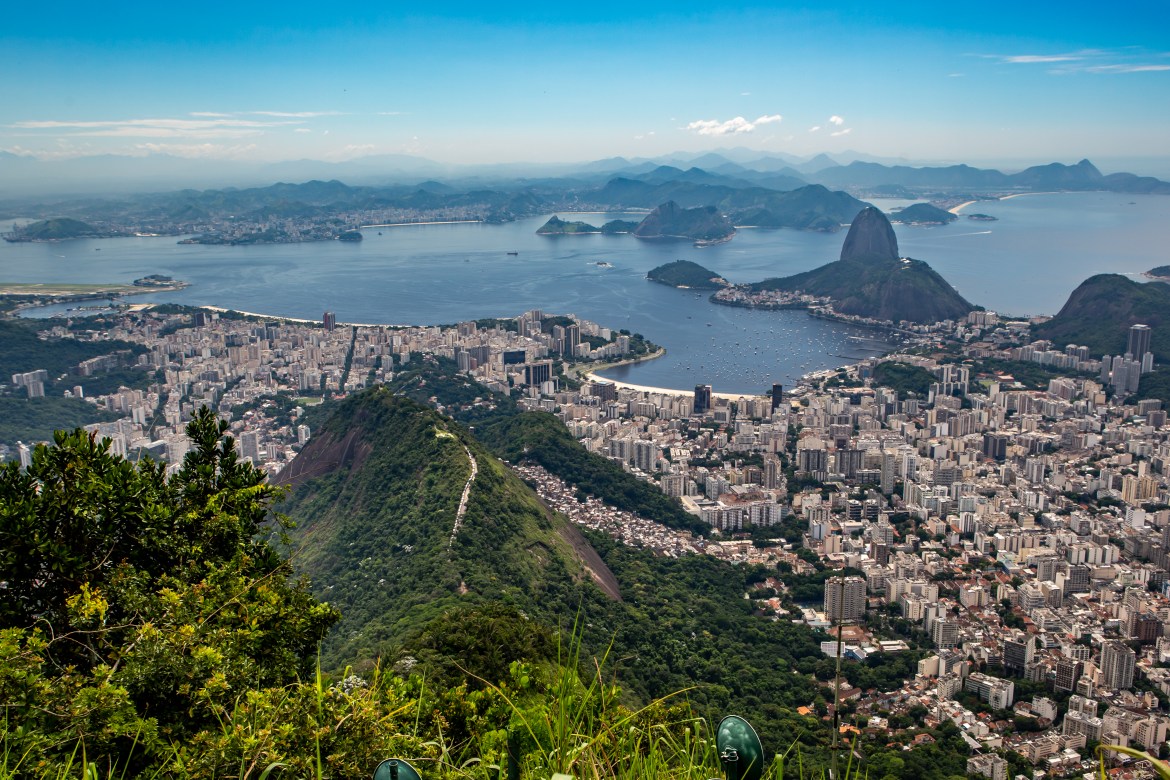
    From the terraces, Cristo Redentor floats above the city like a calm lighthouse, with Guanabara Bay and Sugarloaf layered beyond. Go ultra-wide for the statue, then pivot to skyline slices between visitors for human-scale storytelling.
    🕒 Open: Daily 8:00–19:00 (seasonal extensions)
    💵 Cost: $25–35 (Trem do Corcovado + entry)
    💡 Insider Tip: First train up; use terrace edges for clean frames and fewer heads.

  2. Sugarloaf Mountain (Pão de Açúcar)
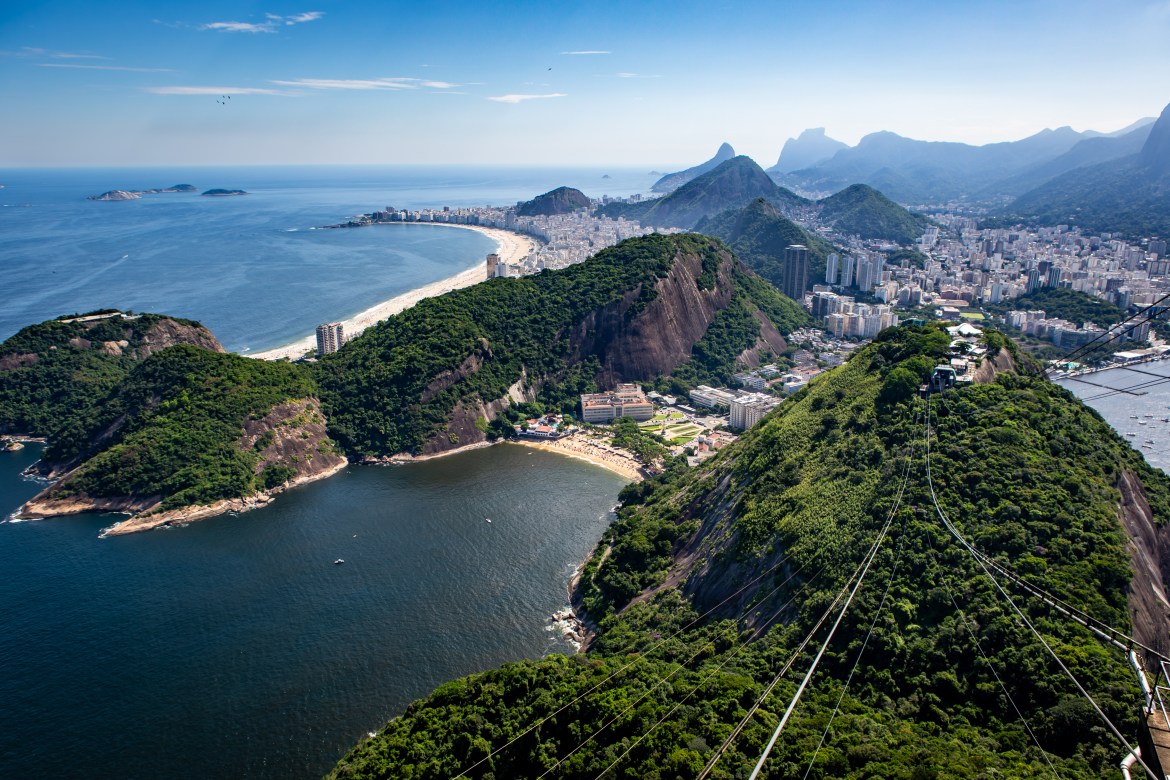
    Two cable cars deliver a front-row seat to Copacabana’s perfect arc and the city’s granite humps rolling into the sea. Morro da Urca is fantastic for mid-level perspectives; the summit sings at sunset.
    🕒 Open: Daily 8:00–21:00 (last ascent varies)
    💵 Cost: $30–40 (round-trip)
    💡 Insider Tip: Shoot the arc from the mid-station first, then ride up for the glow.

  3. Copacabana Beach
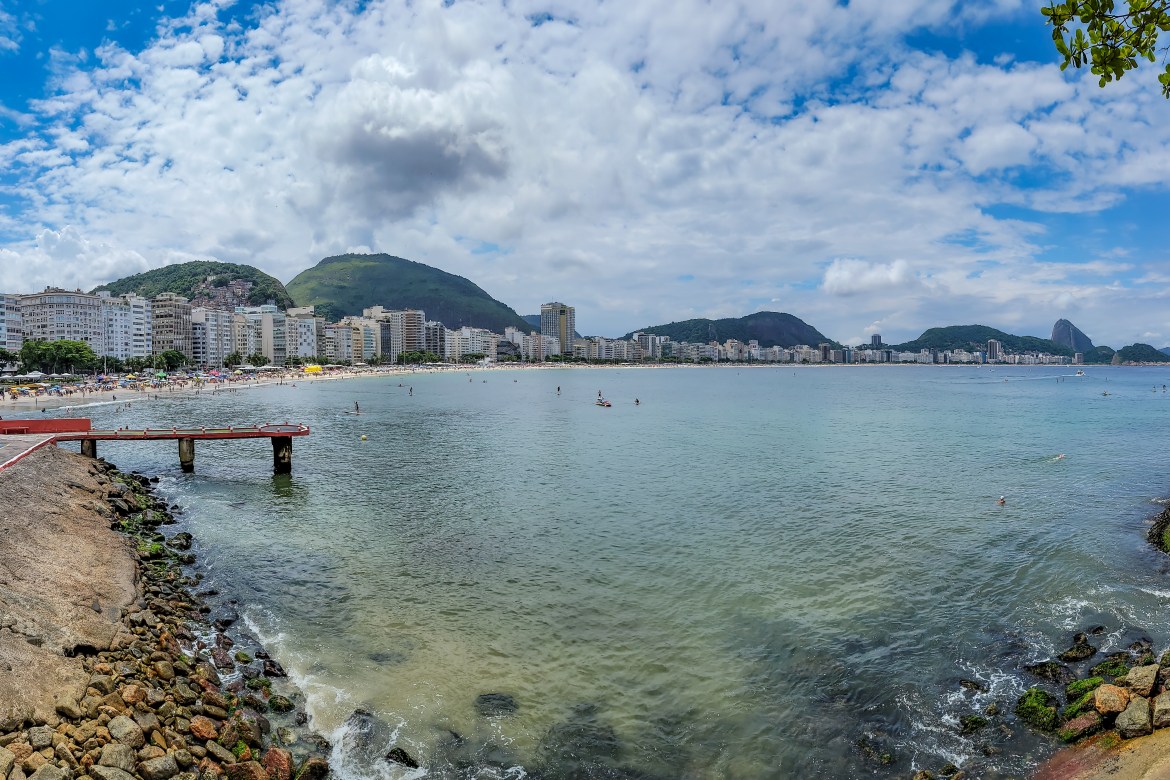
    A golden half-moon of sand backed by 1930s glam and the black-and-white wave promenade. Sunrise gives mirrored reflections on wet sand; afternoons are for volleyball, caipirinhas, and people-watching.
    🕒 Open: 24/7
    💵 Cost: Free (chairs/umbrellas $5–10)
    💡 Insider Tip: Compose with the curving shoreline as a leading line; watch for pickpockets.

  4. Ipanema & Arpoador Rocks
    Ipanema brings chic cafés and dramatic light; climb Arpoador for blue-hour silhouettes of Dois Irmãos and long-exposure surf. It’s Rio’s evening photo studio with applause when the sun drops.
    🕒 Open: 24/7
    💵 Cost: Free
    💡 Insider Tip: Mini-tripod for ½–1s water blur; keep gear minimal after dark.

  5. Escadaria Selarón (Lapa)
    A riot of red tiles climbs between murals and tropical leaves, every riser a story from a different country. Tight details pop at midday; wider frames work best early before crowds.
    🕒 Open: 24/7 (best in daylight)
    💵 Cost: Free
    💡 Insider Tip: Arrive before 9:00; hunt for your home-country tile for a fun insert shot.

  6. Maracanã Stadium (Tour & Museum)
    Temple of futebol and goosebumps, with World Cup lore and panoramic stands that swallow sound. The Bellini statue outside makes a perfect fan portrait stop.
    🕒 Open: Daily 9:00–17:00 (match days vary)
    💵 Cost: $15–25
    💡 Insider Tip: Mid-morning light balances concrete, palms, and faces.

  7. Forte de Copacabana
    A seafront fort guarding the bay with a photogenic courtyard and café perches over clear water. From the ramparts, Sugarloaf sits perfectly framed across the blue.
    🕒 Open: Tue–Sun 10:00–18:00 (varies)
    💵 Cost: $4–7
    💡 Insider Tip: Shoot geometric walls at noon; long lens for Sugarloaf layers later.

  8. Forte Duque de Caxias (Leme Fort)
    A short jungle walk delivers a commanding lookout over Copacabana and moody storm ceilings. Flags snap, palms bend, and the city stretches like a model set below.
    🕒 Open: Tue–Sun 9:30–16:30 (varies)
    💵 Cost: $4–6
    💡 Insider Tip: Windy days = dramatic flag shots; a polarizer tames sea glare.

  9. Metropolitan Cathedral of Saint Sebastian
    Brutalist cone outside, cathedral of color inside—four stained-glass “rivers” climb to a cross-shaped skylight. Center up for symmetry or stitch a quick vertical pano to catch the full height.
    🕒 Open: Daily 7:00–17:00
    💵 Cost: Free
    💡 Insider Tip: 1/30–1/60s at ISO 800–1600; brace on a pew for sharpness.

  10. Guanabara Bay Boat Cruise (Marina da Glória)
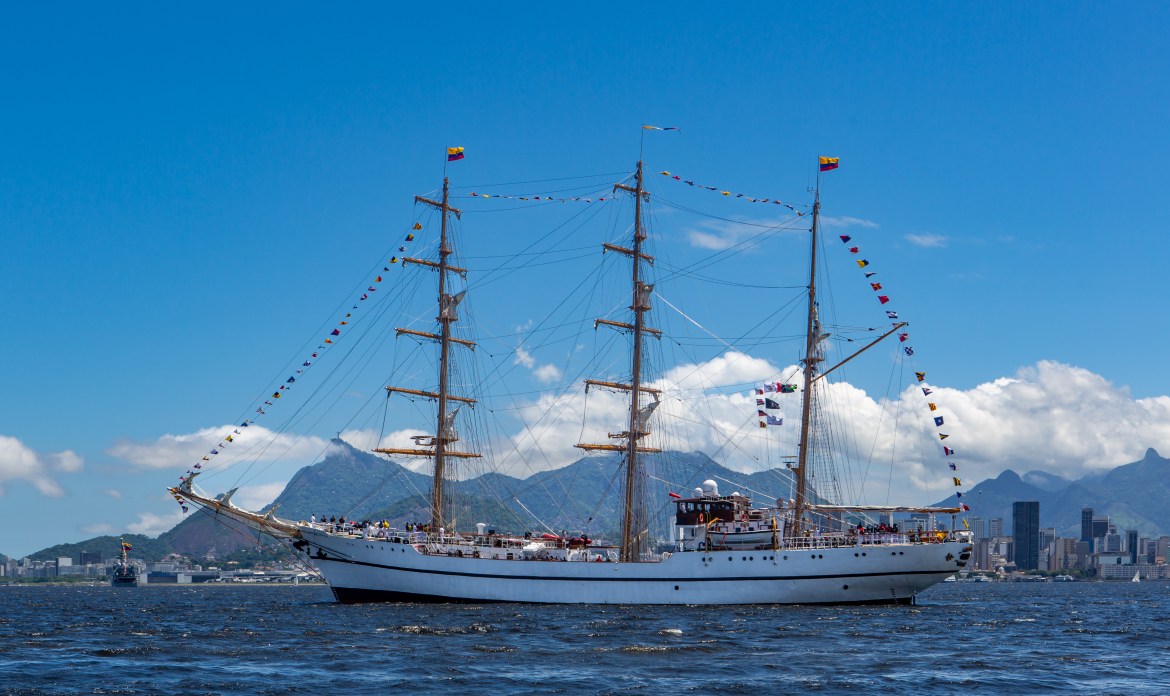
    From the water, Rio stacks in cinematic layers—masts, skyline, Sugarloaf, then saw-tooth mountains fading blue. Late mornings give deep color; afternoons can sparkle with backlit chop.
    🕒 Open: Daily departures
    💵 Cost: $25–45
    💡 Insider Tip: Port side outbound for Sugarloaf profile; 1/1000s to freeze boat motion.

If you’d rather glide between the icons without juggling tickets and Ubers, I like the compact Rio-in-a-Day tour that strings Christ the Redeemer, Selarón Steps, and Sugarloaf in a smart light sequence—book it through Viator to lock times and skip the logistics. For water-level perspectives and those skyline layers you can’t get on land, a Guanabara Bay sailing/boat cruise via GetYourGuide is an easy add—aim for late afternoon so Sugarloaf silhouettes as the city lights wink on.

🚖 Best Way to Travel in Rio de Janeiro

Rio de Janeiro is big, beachy, and wonderfully connected—think Uber/99 for door-to-door hops, MetrôRio for quick zips between Copacabana, Ipanema, Botafogo, and Centro, and official yellow taxis for short beachfront rides when your hands are full of camera gear. For the icons, treat the Trem do Corcovado (to Christ the Redeemer) and the Sugarloaf bondinho (cable car) as experiences, not just transport—both are efficient and insanely photogenic.

If you’re stacking far-flung spots (say Santa Teresa + Lapa + Urca) in one day, a half-day private driver or small group tour smooths traffic, parking, and ticket timing so you can chase light instead of buses. At night, stick to rideshare between neighborhoods; by day, the metro is clean and intuitive—grab a reloadable card and keep a small bill stash for kiosks and beach vendors. Two final photographer perks: the VLT tram glides through Centro with great street frames from the windows, and a short ferry hop across Guanabara Bay sets you up for skyline layers that your wide-angle will love.

🖼️ Rio de Janeiro in Pixels: Bonus Shots

Rio de Janeiro – Sugarloaf and Morro da Urca with homes along the shoreline
From the waterfront, Morro da Urca leads the eye to Sugarloaf, with cable cars strung like beads above the green hillside. Shoreline houses and barracks sit tight to the water.
Rio de Janeiro – Market bustle at Selarón Steps with green canopy and red walls
A green canopy of leaves shades stalls and selfie-takers as the tiled staircase climbs toward murals. It’s a symphony of reds, yellows, and human motion.
Rio de Janeiro – Cliffs and green headland with Brazilian flag above turquoise surf (Near Arpoador)
Turquoise waves chew at the granite ledges as the flag snaps in the breeze high on the headland. The coast feels wild within city limits.
Rio de Janeiro – Interior panorama of Metropolitan Cathedral of Saint Sebastian stained glass
A sweeping interior of the conical Metropolitan Cathedral reveals four towering stained-glass rivers pouring light onto the altar. The lattice concrete ribs arc overhead like a honeycomb dome.
Rio de Janeiro – Forte de Copacabana white gatehouse with Brazilian flag
The whitewashed portal of Forte de Copacabana opens toward the sea, flanked by cannon emblems and topped with the flag. Tropical trees cradle the arch in green.
Rio de Janeiro – View over Botafogo Bay sailboats and Flamengo shoreline
A flotilla of white sailboats freckles dark-blue water while the city wraps around the curve of the bay. Distant clouds pile up like mountains beyond Guanabara.

💵 Sleep • Eat • Move: Cost Breakdown in Rio de Janeiro

What it really costs to savor Rio de Janeiro like a savvy wanderer.

Rio de Janeiro can swing from breezy-budget to red-carpet Copacabana glam in one sunset. Beds cost more the closer you get to Ipanema and beach views, while lively Lapa and Botafogo keep rates friendlier. Meals are wonderfully flexible—street snacks and por-quilo buffets for a few dollars, or a splurge-worthy rodízio at Marius Degustare. Transit is a steal with MetrôRio and rideshares, and most activities are modest—think forts, viewpoints, and bay cruises—so your wallet can samba right along with you.

🏷️ Category💵 Cost Range (USD)📌 What You Get
🏨 Lodging $40–$80 Budget guesthouses/hostels in Lapa, Glória, or Botafogo; clean privates, breakfast often included.
  Mid-Range $90–$170 Modern hotels near Copacabana/Botafogo with balconies, solid Wi-Fi, and beach access.
  Luxury $250–$700+ Beachfront icons in Copacabana/Ipanema; pools, spas, and postcard views.
🍽 Meals $12–$25 Por-quilo buffets, bakery lunches, beach snacks (açaí, pão de queijo), fresh juices.
  Mid-Range $25–$45 Seafood plates, casual rodízio, pizza/pastas; caipirinhas and dessert included.
  Luxury $50–$100+ Rodízio feasts (e.g., Marius Degustare), rooftop dining in Ipanema or Leblon.
🚌 Transportation $6–$15/day MetrôRio + buses + occasional rideshare; reloadable transit card.
  Mid-Range $20–$35/day Mostly rideshare between neighborhoods; add one icon ticket (train/cable car).
  Luxury $60–$120/day Private driver, hotel cars, or guided day tours across the city.
🏛 Activities $10–$20 Entries to Forte de Copacabana, Duque de Caxias, parks, and small museums.
  Mid-Range $40–$80 Guanabara Bay cruise, stadium tour, combo tickets for viewpoints.
  Luxury $120–$300+ Helicopter flights, private sailing, premium photo tours at sunset.

Average Cost Per Day in Rio de Janeiro

Your daily spend hinges on where you sleep and how you dine. Budget travelers keep it light with metro rides, street eats, and one paid attraction each day. Mid-range travelers add rideshares, a bay cruise, and sit-down seafood dinners. Luxury travelers lean into beachfront suites, private drivers, and rodízio splurges—worth it when time is short and views are the goal.

🧳 Traveler Type 💵 Daily Estimate (USD) 📌 What’s Included
   🎒 Budget – Wander Smart    $55–$95 Guesthouse/hostel, metro/bus, beach snacks + one paid site.
   🏖️ Mid-Range – Wander Well    $140–$230 3-star near beach, rideshares, nice dinners, bay cruise or tour, 1–2 attraction tickets.
   🏰 Luxury – Wander Luxe    $350–$700+ Beachfront hotel, private driver, rodízio/rooftops, premium experiences (heli/sailing).

A few links and ads here are affiliate portals. If you click through and snag something, you’ll be fueling my next photo-quest at no extra cost to you. Thanks for keeping the adventure rolling!

📸 Essential Photo Tips for Capturing in Rio de Janeiro

Rio de Janeiro is a playground of granite peaks, golden beaches, and tile-bright streets where light changes the mood by the hour. Sunrise paints Copacabana into a burnished curve; early morning keeps the Selarón Steps colorful before crowds; and midday turns forts and courtyards into clean, graphic geometry. Late afternoon sculpts Botafogo Bay and the ridges around Sugarloaf, while golden hour from the bondinho platforms is pure skyline theater. Blue hour belongs to Ipanema and Arpoador for silhouettes and silky water, and after dark the arches of Lapa thrum with neon and drumlines—street photography heaven.

Gear I actually use here: the Canon RF 15–35mm f/2.8L lives on my camera for tight terraces at Cristo and sweeping beach curves, while the Canon RF 70-200mm F2.8 L is USM Lens is my reach for cable cars, surfers, and skyline compression from Sugarloaf.

📍 Where & What to Shoot ⏰ When to Shoot 📷 How to Nail the Shot 🏛 Tourist Traffic 💡 Insider Tip
Copacabana Beach – Curving Shoreline & Mosaic Promenade Sunrise Use 15–24mm for the half-moon curve; low ISO, f/8. Let wet sand reflect pastel clouds for leading lines. Low Frame near lifeguard posts for scale; watch for wave push when kneeling low.
Escadaria Selarón – Tiles & Street Life Early Morning Polarizer to cut glaze glare; shoot tight tile grids, then a centered stair portrait under the leafy canopy. Moderate → High Arrive before 9:00 to work the steps people-free; keep gear minimal and zipped.
Metropolitan Cathedral – Stained-Glass Rivers Late Morning 1/30–1/60s at ISO 800–1600; brace on a pew for sharp symmetry or shoot a quick vertical pano. Low Expose for glass—shadows recover well; a 15–20mm view captures the full cone.
Forte de Copacabana – Courtyard Geometry & Sugarloaf Across the Bay Midday Flat light = clean lines; f/8 for crisp brick pattern, then switch to 100–200mm for Sugarloaf layers. Low–Moderate Use walls and ramp edges as frames; a CPL tames sea glare on the overlook.
Botafogo Bay Overlook – Fleets & Shoreline Curve Afternoon 1/800–1/1000s to freeze bobbing boats; compose a sweeping C-curve with the city wrapping the bay. Low Polarize lightly—too much kills sparkle; a touch of haze adds depth layers to distant hills.
Sugarloaf (Morro da Urca → Pão de Açúcar) – Citywide Panorama Golden Hour → Sunset Bracket ±1 EV or gentle HDR; include cable lines for story and shoot the Copacabana arc from mid-station. High Arrive 90 minutes before sunset to work both platforms without rushing.
Ipanema & Arpoador Rocks – Silhouettes & Silky Surf Dusk / Blue Hour Tripod or brace; 1/4–1s for water blur. Expose for sky, let Dois Irmãos fall to silhouette. Moderate Stay on the higher rocks for spray safety; keep a microfiber for salt mist.
Lapa Arches & Streets – Night Rhythm & Neon Evening / Night ISO 800–1600, f/2–f/2.8, 1/80–1/160s; wait for passing trams or dancers to add motion and scale. High Work with a buddy and stick to lit areas; sling bag in front while shooting.

👋 Local Etiquette & Travel Smarts in Brazil

Rio de Janeiro is famously relaxed, but a few courtesies make everything smoother. A warm “bom dia/boa tarde” opens doors, and vendors appreciate a friendly “não, obrigado(a)” if you’re not buying. On the beaches of Copacabana and Ipanema, dress is casual, but common sense with valuables matters—keep cameras discreet in crowds and use rideshare at night between neighborhoods. Tipping isn’t mandatory; many restaurants add 10% “serviço” to the bill—when it’s already included, no extra is expected. In churches and memorials, modest dress and quiet voices earn smiles, and always ask before photographing staff or performers.

✅ Do’s in Rio de Janeiro
  ✅ Greet people with a simple “bom dia/boa tarde/boa noite”—polite Portuguese goes a long way.
  ✅ Check your bill for “serviço 10%”; if it’s not listed and service was good, tip ~10–12%.
  ✅ Use Uber/99 at night and between distant areas; it’s affordable and safer than wandering.
  ✅ Keep beach gear minimal; use a small cross-body or hotel safe for passports and extras.
  ✅ Validate metro cards and stand on the right of escalators; offer seats to elders.
  ✅ Ask permission before close-up photos of vendors, musicians, or capoeira circles—most will say yes with a smile.

❌ Don’ts in Rio de Janeiro
  ❌ Don’t flash jewelry, phones, or long lenses in crowded places (e.g., Selarón Steps, busy beach sections).
  ❌ Don’t assume English is spoken everywhere; avoid speaking loudly if misunderstood—switch to simple Portuguese or show the address.
  ❌ Don’t walk unfamiliar hillsides/favelas without a reputable guide—streets can change quickly.
  ❌ Don’t leave bags unattended on the sand or by café chairs—use a strap around your leg or a clip.
  ❌ Don’t drink on church steps or monuments, and keep swimwear to the beach—not shops or transit.

🍽 Where to Refuel Nearby

Eat the Coastline in Rio de Janeiro — from seawall snacks to rodízio pageantry

Rio de Janeiro eats with sunshine on its shoulders—grilled fish, moqueca bubbling in clay pots, and beach snacks passed from vendor to towel. In Copacabana and Ipanema, expect caipirinhas that taste like summer and plates big enough to share. Up in Santa Teresa, leafy terraces trade the surf soundtrack for birdsong and city views. And when you’re ready to splurge, rodízio temples turn dinner into theater—bells, skewers, and a parade of sides that would make your wide-angle lens jealous.

🍽 Top Local Restaurants & Their Must-Try Specialties

  • Marius Degustare (Copacabana) ($$$$) – Maximalist seafood/steak rodízio with whimsical, nautical décor; go for moqueca de peixe, endless skewers, and a joyful dessert cart.

  • Bar Urca (Urca) ($$) – Legendary seawall spot for sunset petiscos; order bolinho de bacalhau and a cold beer, then dine perched on the bay.

  • Confeitaria Colombo (Centro/Forte Annex) ($$–$$$) – Belle-Époque café glory; pair pastéis and strong carioca coffee, or treat yourself to the afternoon tea service.

  • Cervantes (Copacabana) ($) – Old-school counter famous for hot sandwiches layered with roasted pork and pineapple; fast, tasty, perfect post-beach.

  • Aprazível (Santa Teresa) ($$$) – Tropical-garden terrace with city views; try piranha-do-rabo or tapioca-crusted fish and linger over a caipirinha flight.

🥩🥗☕🍰 Savor the Shot in Rio

Rio de Janeiro – couple dining at Marius Degustare with plates of rodízio and appetizers
Sitting with Laura under neon glow for a Valentine's Day feast—plates loaded, tiny table flag flying—ready for the next skewer at Marius Degustare.
Rio de Janeiro – cold buffet of ceviches and salads at Marius Degustare, Copacabana
Silver trays of citrusy ceviche, bright salads, and skewers sparkle beneath the bottle-lined bar—fuel for the rodízio parade at Marius Degustare.
Rio de Janeiro – steaming pots and brass bells on hot buffet at Marius Degustare
Feijoada, stews, and sides simmer under golden bells while blue ambient light washes the dining room—comfort meets carnival.
Rio de Janeiro – JW Marriott Copacabana executive lounge buffet with cold and hot bites
A polished buffet at the JW Marriott Copacabana lines up cold cuts, canapés, and warm bites under a cozy task lamp. Wood tones and ceramics make it feel like a private bistro above Copacabana.

🏨 Where to Stay: Beds Worth Booking in Rio de Janeiro

Sleep to the hush of surf, wake to granite peaks, and let Copacabana coffee do the rest.

Rio de Janeiro gives you three classic vibes: beachfront glamour, bay-view design, and bohemian charm on the hills. Prices climb as you move closer to the sand in Copacabana and Ipanema, while Botafogo and Lapa/Santa Teresa stretch your budget without shrinking the experience. For photographers, think sunrise balconies, rooftops with a clean line to Sugarloaf, and neighborhoods that feel safe for blue-hour strolls. These three picks hit those sweet spots—one lavish legend, one crowd-pleasing favorite, and one wallet-happy base with personality.

🌴 Sleep Like a Carioca With a View

  1. 🏨 Copacabana Palace – Old-World Glam on the Golden Crescent
    Why it made the list: The city’s grande dame fronts Copacabana Beach with palm-lined pools, marble cool, and staff who somehow appear before you need them. Rooms facing the promenade give dawn light over the black-and-white wave mosaic, and the rooftop frames Sugarloaf for cocktail hour. It’s the quintessential Rio postcard—except you’re inside it.

  2. 🏨 Yoo2 Rio de Janeiro by Intercity – Artful Frames on Botafogo Bay
    Why it made the list: A design-forward favorite opposite Botafogo Bay, this hotel turns windows into Sugarloaf viewfinders. Funky interiors, a lively rooftop bar, and easy MetrôRio access make it a perfect base for bouncing between Urca, Lapa, and the beaches. Sunrise mist over the bay equals instant gallery shots from your room.

  3. 🏨 Selina Lapa Rio de Janeiro – Creative Budget in the Heart of the Beat
    Why it made the list: Steps from the Lapa Arches and a quick hop to the Selarón Steps, Selina mixes dorms and privates with cowork spaces and a rooftop for city silhouettes. You’ll save on lodging, spend on caipirinhas, and still wake close to Centro museums and the Santa Teresa tram. It’s budget with flair—and plenty of street-shot potential.

Wander on a Dime

Selina Lapa Rio de Janeiro

Creative Budget in the Heart of the Beat
Why it made the list: Steps from the Lapa Arches and a quick hop to the Selarón Steps, Selina mixes dorms and privates with cowork spaces and a rooftop for city silhouettes. You’ll save on lodging, spend on caipirinhas, and still wake close to Centro museums and the Santa Teresa tram.

Where Everyone Stays

Yoo2 Rio de Janeiro by Intercity

Artful Frames on Botafogo Bay
Why it made the list: A design-forward favorite opposite Botafogo Bay, this hotel turns windows into Sugarloaf viewfinders. Funky interiors, a lively rooftop bar, and easy MetrôRio access make it a perfect base for bouncing between Urca, Lapa, and the beaches. Sunrise mist over the bay equals instant gallery shots from your room.

Indulge in Style

Copacabana Palace

Old-World Glam on the Golden Crescent
Why it made the list: The city’s grande dame fronts Copacabana Beach with palm-lined pools, marble cool, and staff who somehow appear before you need them. Rooms facing the promenade give dawn light over the black-and-white wave mosaic, and the rooftop frames Sugarloaf for cocktail hour. It’s the quintessential Rio postcard—except you’re inside it.

📸 In the Frame: Our Journey in Rio de Janeiro

Rio de Janeiro – Couple portrait on Sugarloaf platform with cable car passing
Standing with Laura on the Sugarloaf terrace as a cable car glides past our shoulders. Granite, sea, and a blue sky make the happiest backdrop.
Rio de Janeiro – Sailing selfie couple on Guanabara Bay near Urca waterfront
Sitting at the rail with Laura as the boat slices past Urca’s seawall and granite slopes. Sunlit water and a cobalt sky make pure Rio happiness.
Rio de Janeiro – Fans at Maracanã Stadium with Bellini statue and World Cup replica
I stand with Laura in front of the Bellini statue at Maracanã Stadium, holding a World Cup replica with palm trees framing the scene. Midday sun and a cobalt sky make the marble and concrete pop.
Rio de Janeiro – Couple selfie on Copacabana Beach with skyline and surf
Standing with Laura ankle-deep in foam as the Copacabana skyline stretches behind us. Wind in her hair, salt on my shoulders, and a beach that never quits.

⏱️ Quick-Hit Day-Trip Plan for Rio de Janeiro

Sunrise-to-sunset Rio: ride a train into the clouds, chase tile colors, then sail the city into golden hour.

One perfect day in Rio de Janeiro is absolutely doable if you string the icons in a smart loop and let the light lead you. We’ll climb to Christ the Redeemer while the city yawns awake, slide down to the color-splashed Escadaria Selarón and bohemian Santa Teresa for mid-day texture, then swing to Sugarloaf Mountain for a front-row seat to the world’s prettiest coastline. Finish on Copacabana with blue-hour glow and a celebratory feast. Pack water, sunscreen, and your wide-angle + tele—Rio rewards both.

🕒 7:30 AM – Corcovado Train to Christ the Redeemer
Begin at the Trem do Corcovado for the first ascent, when breeze and birdsong beat the tour buses. On top, work the terrace edges for clean frames of Cristo and skyline layers with Sugarloaf tucked right. Go ultra-wide for the classic upward portrait, then pivot to tighter city slices as light strengthens—clouds often part for dramatic reveals.
 🕒 Open: Daily ~8:00 AM–7:00 PM (seasonal extensions)
 💵 Cost: ~$25–$35 (train + site ticket)
 💡 Insider Tip: Book the earliest train online; if fog hugs the statue, wait 10–15 minutes for gaps.

🕒 10:15 AM – Lapa & Escadaria Selarón
Uber to Lapa and climb the Selarón Steps, where red tiles and flags pop even at mid-morning. Take tight details, then a centered stair shot under the leafy canopy before it gets shoulder-to-shoulder. Swing by the Arcos da Lapa for a quick white-arc skyline frame—street energy here is Rio in one block.
 🕒 Open: 24/7 (best in daylight)
 💵 Cost: Free
 💡 Insider Tip: For a people-free tier, climb two landings and shoot downward between gaps; keep gear minimal and zipped.

🕒 12:15 PM – Santa Teresa Tram + Lunch
Ride the vintage tram over the arches into Santa Teresa’s cobbles and ateliers. Browse murals and studios, then claim a shady terrace for grilled peixe or feijoada (weekends). Midday light is harsh—lean on architectural details, doorways, and compressed rooflines for painterly frames.
 🕒 Open: Tram runs Tues–Sun (hours vary)
 💵 Cost: ~$3–$5 tram; lunch ~$12–$25 pp
 💡 Insider Tip: Ask for a table with a view; a 70–200mm compresses rooftops and Guanabara Bay into layers.

🕒 3:00 PM – Sugarloaf: Morro da Urca → Pão de Açúcar
Glide up the bondinho to Morro da Urca and don’t rush—the mid-station frames Copacabana’s perfect arc and tells the cable-car story. Continue to the summit for golden light that chisels the granite and sets the coastline aglow. Bracket gently or use a light HDR if contrast spikes, and include the cable lines once—they’re part of the narrative.
 🕒 Open: Daily ~8:00 AM–9:00 PM (last ascent varies)
 💵 Cost: ~$30–$40 round-trip cable car
 💡 Insider Tip: Arrive 90 minutes before sunset to work both platforms without rushing.

🕒 6:45 PM – Copacabana Blue-Hour Stroll
Uber to Copacabana and walk the black-and-white wave promenade as the sky shifts cobalt. Streetlamps warm the curve, vendors drift by with churros and caipirinhas, and the surf turns to satin with longer exposures—prime time for couple selfies or mosaic-lead frames.
 🕒 Open: 24/7
 💵 Cost: Free (chairs/umbrellas $5–$10 if lingering earlier)
 💡 Insider Tip: Brace on a railing or post for ¼–1s exposures if you left the tripod at the hotel.

🕒 7:30 PM – Dinner at Marius Degustare (Copacabana)
Close with theatrical rodízio at Marius Degustare—nautical lamps, ceviche-bright cold bar, and skewers that don’t quit. Start light, then let the gauchos parade the greatest hits; leave room for the dessert cart. It’s indulgent, joyful, and unmistakably Carioca.
 🕒 Open: Daily (typically lunch–late night)
 💵 Cost: $$$$ fixed-price rodízio
 💡 Insider Tip: Reserve a window or aisle table for ambiance photos; a fast prime (f/2–2.8) tames mixed neon lighting.

Total Timing Overview:

  • Activities & attractions: ~6.5–7.5 hrs

  • Transit (train, tram, Ubers, cable car): ~2–2.5 hrs

  • Meals / breaks: ~1.5–2 hrs
    Grand Total: ~10–12 hrs with breathing room for serendipity.

🧳 What to Pack for Picture-Perfect Shots

Granite Peaks, Samba Streets, and Ocean Light That Loves a Lens

Rio is a city of bold contrasts—gold surf on Ipanema, granite drama on Sugarloaf, cloud halos around Christ the Redeemer, and neon nights in Lapa—so packing right turns whirlwind days into wall-worthy frames. Start with water, a sun hat, and respectful, breathable layers for churches and hilltop chapels; slip light socks in your bag if your route includes shoes-off stops. Footing flips from hot sidewalks to steep viewpoints and cable-car platforms, so grippy shoes beat flip-flops for photo missions. A soft lens cloth is essential—sea spray, sunscreen haze, and tropical humidity love your glass—and favor low-key stabilization (railings, elbows, calm breath) where full tripods are awkward on busy lookouts. With a nimble kit you can catch sunrise at Arpoador, cable-car glow on Pão de Açúcar, and blue-hour ribbons around the Lapa Arches without missing a beat.

👉 The Nomad’s Kit: Gear That Earns Its Miles

Canon RF 15–35mm f/2.8L — Ultra-wide for the Corcovado platform, mosaic curves at Selarón Steps, and tight beachfront scenes where stepping back means “hello, tide.”
Canon RF 24–105mm f/2.8L — Your beach-to-boteco workhorse: portraits on the calçadão, mid-tele details of colonial façades in Santa Teresa, and café vignettes between cable-car rides.
Canon RF 100–500mm f/4.5–7.1L IS USM — From Two Brothers (Dois Irmãos) or Sugarloaf, compress skyline and beach crescents into cinematic layers; isolate surfers, hang gliders, and Christ’s silhouette from a respectful distance.
Lowepro ProTactic BP 350 AW III — Compact and boardwalk-friendly; keeps filters dry and gear discreet on metro rides and at viewpoints.
Peak Design Travel Tripod — Break it out for blue hour on Avenida Atlântica or Botafogo Bay; keep folded on crowded platforms and inside churches where setups are restricted.
JOBY GorillaPod 3K Kit — Clamp to railings on the Arcos da Lapa overlook or seaside barriers for long exposures—tiny footprint, big stability when the ocean breeze kicks up.

Cut Glare. Shape Time. Make Every Frame Sing.
Rio is a mirror city—chrome waves, wet sidewalks, glass towers, and tropical haze. A circular polarizer tames glare on water and windows, deepening rainforest greens and cobalt sky; a variable ND slows the rhythm so beach crowds melt to a whisper, traffic paints elegant ribbons along Copacabana, and surf turns to satin while mountains stay eternal.

🌊 Control Reflections & Punch Up Color
Circular Polarizer Filter — Dial down hotspots on the calçadão, reveal reef tones near Arpoador, and hold cloud texture around Corcovado. Pro tip: rotate just shy of max—keep a hint of shimmer on the Atlantic so the water doesn’t go flat.

⏱️ Drag the Shutter in Broad Daylight
Neutral Density Variable Filter — Midday brightness? Drop 3–6 stops to blur walkers on the Selarón Steps, smooth Botafogo’s harbor ripples, and turn Avenida Atlântica traffic into silky streams at dusk. Pro tip: start around 1/4–1 s for people blur; go 2–10 s for dreamy water.

Pack both for any trip: the polarizer reveals the scene; the ND sculpts time. Together, they’re a portable “wow” switch.

Photo Policy RemindersNo flash in churches and many museum rooms; tripods/stands are often restricted on crowded lookouts and inside sanctuaries. Drones face tight rules near beaches, favelas, and major landmarks—check local guidance before flying. Always ask before close-ups of vendors/performers; be discreet with gear on transit and busy promenades; and respect security advice at viewpoints and trailheads (e.g., Dois Irmãos, Vista Chinesa).

🌤️ When to Go & Weather Sweet-Spots for Rio de Janeiro

Sync your shutter with Rio de Janeiro’s seasons: beach light, jungle haze, and golden-hour glow

Rio de Janeiro changes character with the calendar. Summer (Dec–Mar) is hot, humid, and electric—Carnival, late sunsets, and big beach energy (plus afternoon downpours). Fall (Apr–May) cools just enough for soft skies and calmer seas. Winter (Jun–Aug) is mild with dramatic fronts that carve moody clouds over Sugarloaf—great for long views with less haze. Spring (Sep–Nov) might be the sweet spot: clearer horizons, manageable crowds, and flattering light for everything from Copacabana curves to Corcovado terraces.

🌞 Season🧘‍♂️ Vibe Check🌦 Rain Factor🏛 Tourist Traffic
🌴 Winter (June–August)Mild temps, crisp air, dramatic cloud ceilings—great visibility from Sugarloaf and Vista Chinesa.Low to ModerateMedium
🌸 Spring (September–November)Clear horizons, gentle breezes, photogenic light—prime for beach frames and city panoramas.LowLow → Medium
☀️ Summer (December–March)Beach buzz + Carnival; long days and vibrant color, but heat and humidity are real.Medium to High (afternoon showers)High
🍂 Fall (April–May)Comfortable temps, softer sunsets, calmer seas—easy shooting and fewer lines.Low to ModerateMedium

🌧️ Rainiest Months: December–March
🎯 Peak Tourist Season Months: Christmas–New Year’s and Carnival (late Feb/early Mar), plus summer weekends
🏖️ Off-Season Sweet Spot Months: September–October
💡 Insider Pro Tip: For Sugarloaf, check visibility before you go; if haze sits over Guanabara Bay, swap the order—shoot Selarón or the forts first, then ride up for golden hour when the air usually clears.

🎥 Reels on the Road

Rio de Janeiro is born for motion—cable cars gliding over granite, waves curling onto gold sand, and samba spilling into the streets after dark. Short reels thrive here because contrasts are everywhere: rainforest cliffs vs. neon beach kiosks, solemn Cristo vs. carnival color, sea breeze vs. drumline heat. Think quick reveals, horizon sweeps, and sound-forward clips—the city gives you rhythm; you just press record. Here are quick-hit reel ideas that package Rio’s energy and light.

🎬 Sunrise sweep along Copacabana, starting on the black-and-white promenade pattern, then tilting up to the glowing half-moon beach.
🎬 Door-open reveal on the Sugarloaf bondinho: begin with reflections inside the car, slide out to the Copacabana arc and distant Dois Irmãos.
🎬 Tile-by-tile hyperlapse up Escadaria Selarón—end on a smiling close-up of your favorite country tile.
🎬 Bay-level pan from masts to skyline on a Guanabara Bay boat; whip-pan to a passing tall ship and finish on Sugarloaf.
🎬 Blue-hour silhouette at Arpoador: steady 1–2 second clips of waves + clapping crowd as the sun drops behind Dois Irmãos.
🎬 Night street-beat in Lapa: drumline audio, neon signs, and a quick rack-focus on the white Arcos—end with a caipirinha cheers.

Sail Guanabara Bay, skim past pastel Ilha Fiscal, trace the curve of Copacabana Beach, and end beneath Sugarloaf (Pão de Açúcar)—all in one minute. Shot around Urca and Copacabana, this breezy cut is pure postcard Rio: blue water, granite domes, and beach-day energy.

Glide from Morro da Urca to Pão de Açúcar on Rio’s iconic bondinho and watch the city unfold—Copacabana’s perfect arc, Botafogo Bay’s forest of masts, and Christ the Redeemer standing watch over the granite skyline. Shot handheld in late afternoon for that warm, contrasty glow, this POV captures why the cable car isn’t just transport—it’s the view you came for.

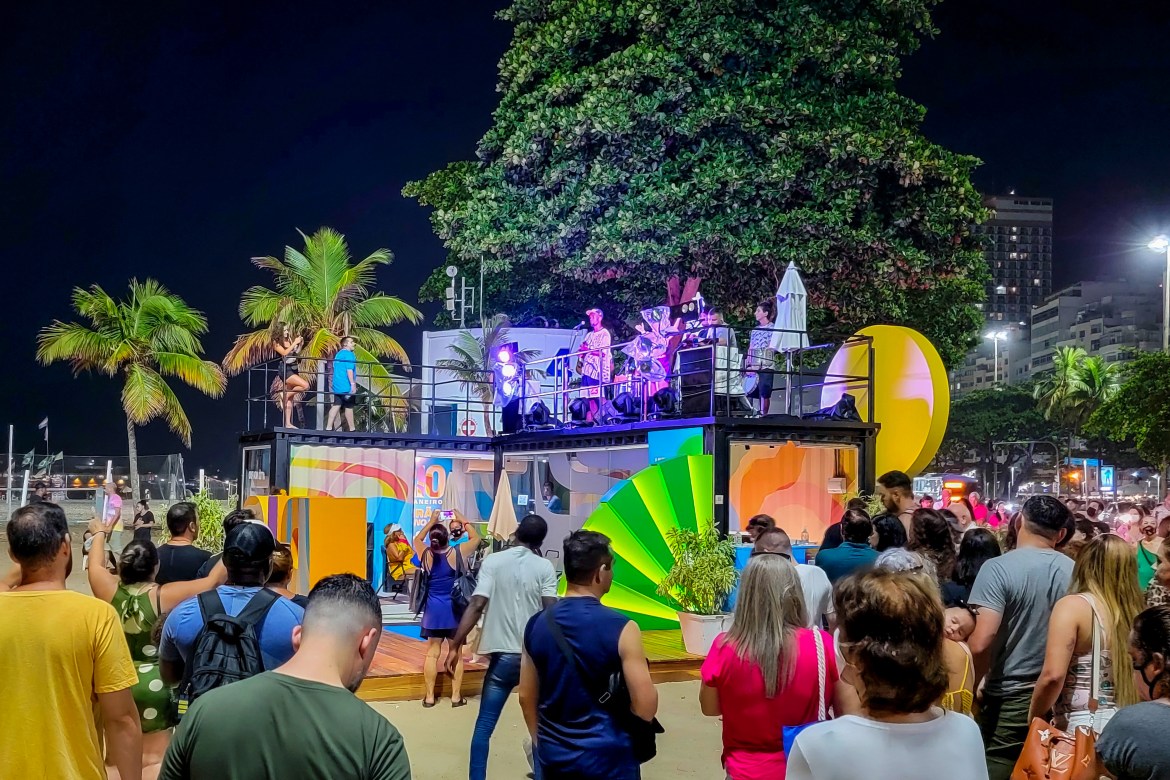
Copacabana after dark is a mood—neon kiosks, ocean breeze, and live bands turning the boardwalk into a dance floor. This quick cut drops you into the scene: a rooftop stage on the promenade, a beach-bar band jamming steps from the sand, the crowd swelling around the kiosks, and a stroll through the night market lined with tees, swimsuits, and souvenirs. 

🗣️ Cheat Sheet for Friendly Encounters while in Rio de Janeiro

Cariocas are famously warm—half the conversation is a smile and a wave. A few friendly Portuguese phrases turn quick transactions into tiny friendships, whether you’re ordering açaí, asking for the bondinho, or cheering a goal. Keep it light, keep it musical, and don’t sweat mistakes; Rio rewards the effort with extra help and better photo access.

💡 Reason to learn a few words: A simple “bom dia” or “obrigado(a)” opens doors (and sometimes viewpoints); your camera loves the results.

🇺🇸 English 🇧🇷 Português (Brasil) 📖 Phonetic
Hello / HiOlá / Oioh-LAH / oy
Good morning / afternoon / eveningBom dia / Boa tarde / Boa noitebohm JEE-ah / BOH-ah TAR-jee / BOH-ah NOY-chee
PleasePor favorpohr fah-VOHR
Thank you (m/f)Obrigado / Obrigadaoh-bree-GAH-doo / oh-bree-GAH-dah
You’re welcomeDe nadajee NAH-dah
Excuse me / SorryCom licença / Desculpakohm lee-SEN-sah / dehs-KOOL-pah
Do you speak English?Você fala inglês?voh-SEH FAH-lah een-GLAYS?
How much is it?Quanto custa?KWAN-toh KOO-stah?
Where is…? (the metro / the beach)Onde fica…? (o metrô / a praia)OHN-jee FEE-kah…? (oo meh-TROH / ah PRY-ah)
Ticket / EntranceIngresso / Entradaeen-GREH-so / en-TRAH-dah
Cable car / TrainBondinho / Trembon-JEEN-yoh / trem
Water / Coconut waterÁgua / Água de cocoAH-gwah / AH-gwah jee KOH-koo
Delicious! / Very good!Delicioso! / Muito bom!deh-lee-see-OH-zoh / MOO-ee-toh bohm
Can you take a photo of us?Pode tirar uma foto da gente?POH-jee chee-RAHR OO-mah FOH-toh dah ZHEN-chee?
Cheers!Saúde!sah-OO-jee

Lens & Latitude – Chasing Peaks at Mount Rainier

Behind the Lens

I’m Steve—a retired Army vet who traded ruck sacks for camera bags and now chases light across every latitude I can reach. From 110 point & shoot film camera beginnings to a Canon R5 Mark II and Mavic Pro II drone, I’ve logged shots in 36 countries and all 50 states, squeezing solo photo runs between corporate flights and longer adventures with my wife. Shutter Nomadica is where I share the hits, misses, and field notes so fellow roamers can skip the guesswork and grab the shot!


Leave a Reply

Discover more from Shutter Nomadica

Subscribe now to keep reading and get access to the full archive.

Continue reading