Milan’s Duomo: A Sky-High Journey Through Six Centuries of Art & Architecture
Walking into Duomo di Milano feels like stepping straight into a marble daydream—one carved over six centuries of obsession, ambition, and unapologetic Milanese flair. This is the kind of landmark that doesn’t just show up on your itinerary; it sets the tone for the whole trip. Visit between April–May or September–October for clear skies and comfortable rooftop wandering, or shoot for crisp winter days right after rain when the façade practically glows. The nearest airport is Milan Malpensa (MXP), though Linate works just as well if you want a quicker hop into the city. Give yourself 2–3 hours minimum to explore the interior, the archaeological zone, and the rooftop terraces where the spires rise like a stone forest.
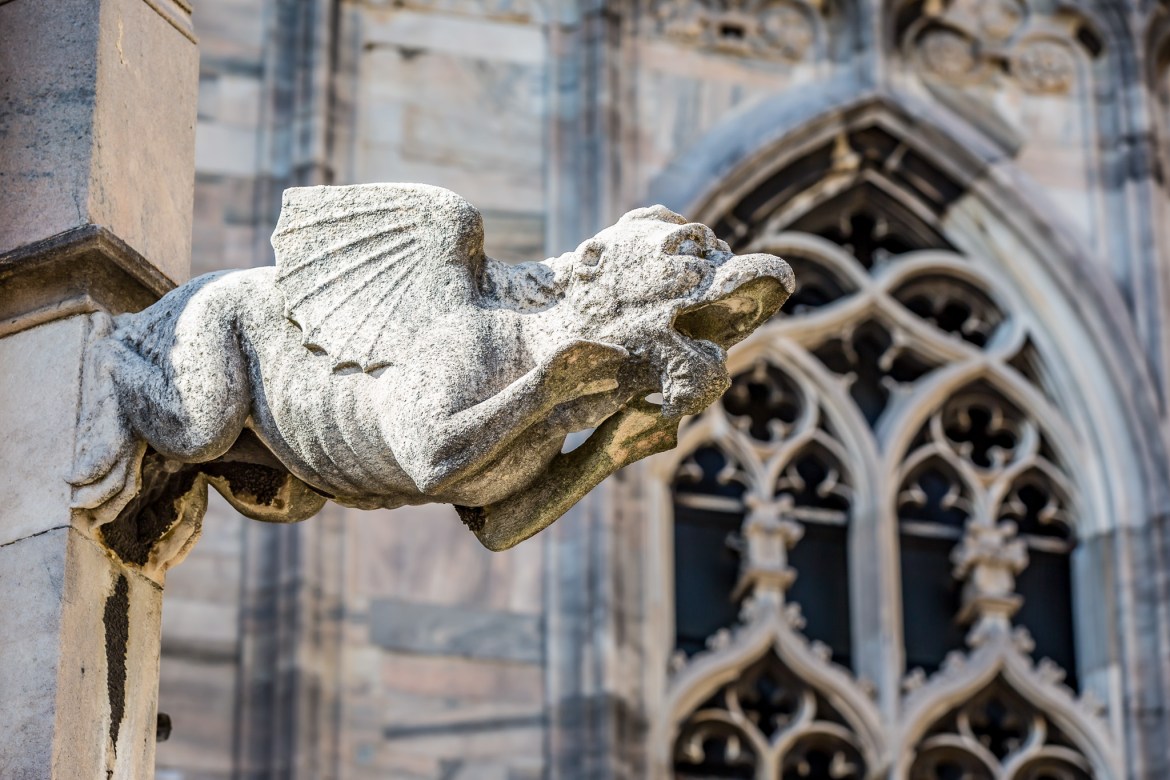
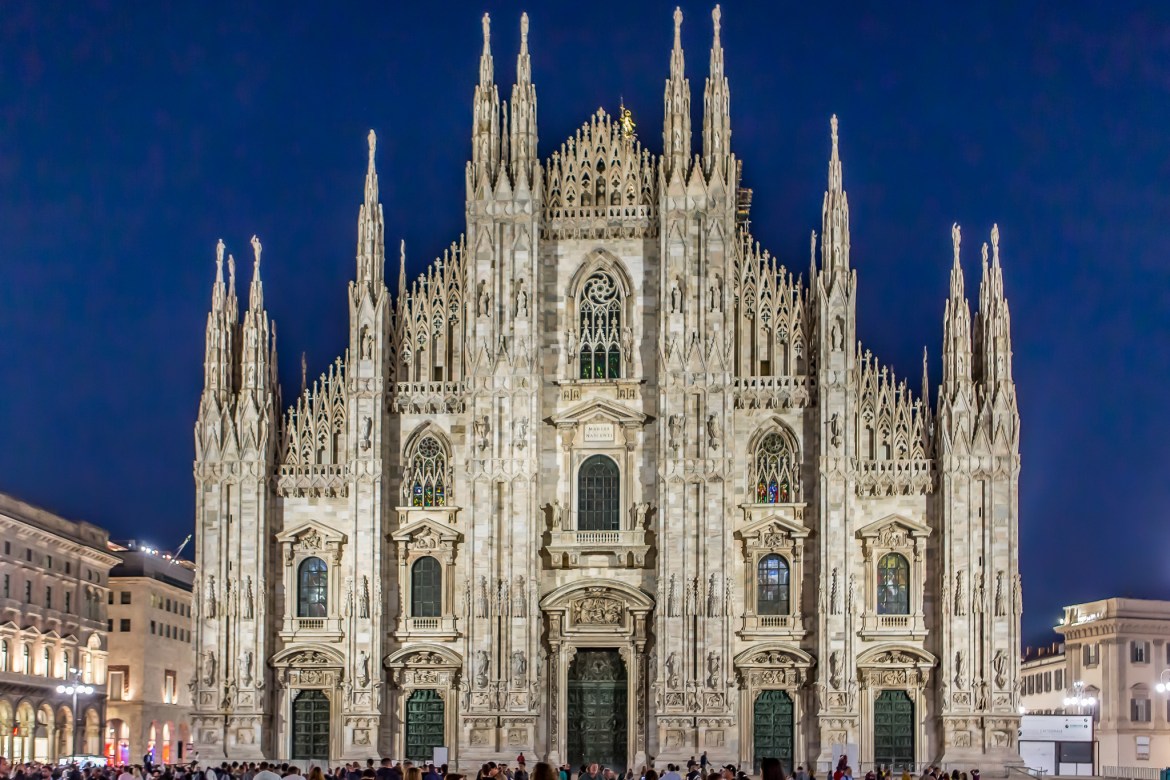
The Duomo earns its reputation the moment you see it, a white-pink Gothic titan sprawling across Piazza del Duomo like Milan’s crown jewel. As a traveler, it’s an emotional gut punch—the kind of place where you automatically slow your stride because the scale is just that ridiculous. As a photographer, this cathedral is pure indulgence: textured marble ribs, shadow-rich interiors, dizzying rooftop symmetry, and an endless lineup of gargoyles daring you to find the perfect angle. Whether you’re chasing blue-hour glow, skyline vistas, or quiet corners lit by filtered stained-glass light, the Duomo rewards every minute you spend with it. And in true Milan fashion, it does all of this with a little swagger.
🏛️ Story & Significance: The Soul of Duomo di Milano
The Duomo di Milano isn’t just Milan’s centerpiece—it’s Milan’s personality carved into marble. Six centuries of construction layered Gothic ambition with Renaissance polish, French flair, and modern engineering, turning the cathedral into a living timeline of the city’s evolution. Every spire, statue, and buttress tells a story of civic pride and relentless craftsmanship, and stepping inside feels like walking into the heart of Milanese identity. This is where emperors walked, armies marched, and generations found their sense of home beneath a canopy of stone and stained glass. The Duomo’s endurance is the story of Milan itself—resilient, artistic, and always reaching upward.
Notable People & Patrons
The Duomo’s existence is a who’s-who of European history, beginning with Gian Galeazzo Visconti, whose political swagger and resources transformed a local church project into a monumental Gothic ambition. Later came Napoleon Bonaparte, who famously insisted the façade be finished before his coronation in Milan—a flex only Napoleon could pull off. The cathedral also carries the influence of hundreds of unnamed master carvers and guild artisans who shaped everything from the saints’ faces to the mischievous gargoyles perched above the piazza. Patronage ebbed and flowed with Milan’s fortunes, but the city never abandoned the project—proof that the Duomo was always more than architecture; it was civic identity set in stone.
Architecture in a Nutshell
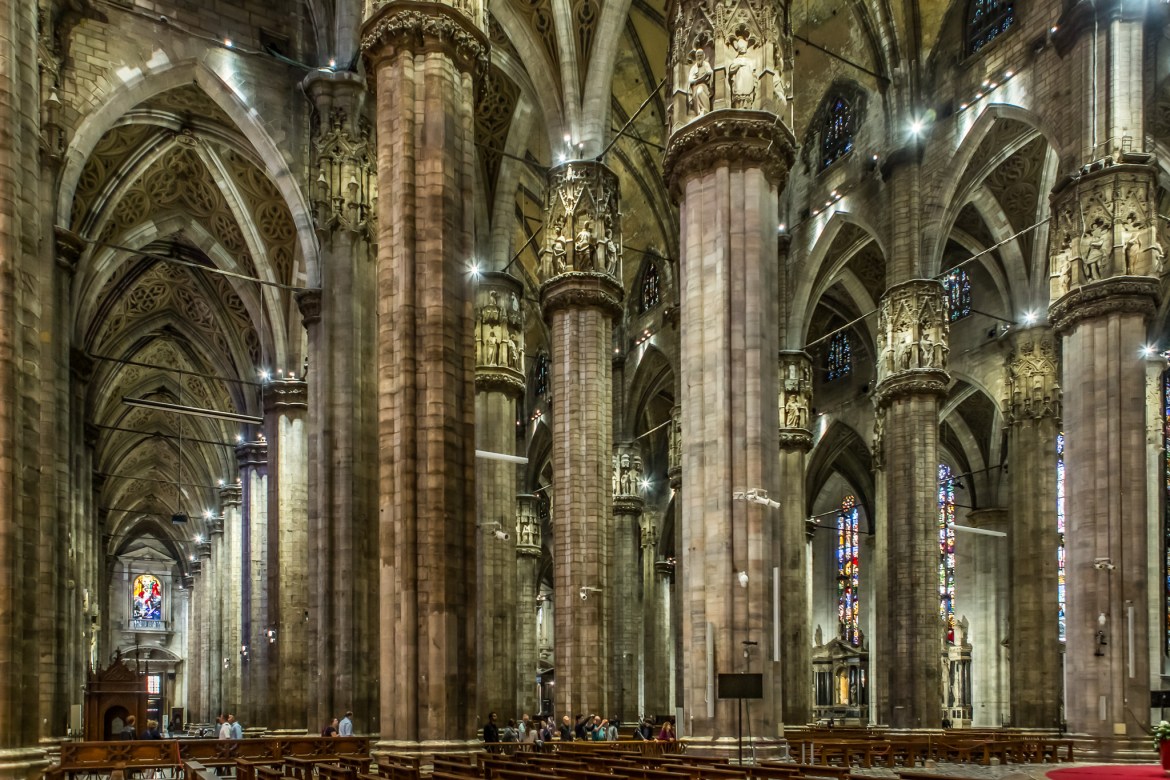
Calling the Duomo “Gothic” is technically true but hilariously incomplete. It’s Italian Gothic with a French spine, German inspiration, Lombard detailing, and modern restoration engineering layered into its bones. More than 3,400 statues, a forest of marble spires, flying buttresses, bronze doors, and a kaleidoscope of stained-glass windows create the sensory overload that defines the cathedral. The marble itself—Candoglia marble—was shipped through a special canal system so it could be delivered tax-free, stamped with the markings “A.U.F.” (for church use only). Inside, the vast nave, ribbed vaults, and towering columns feel almost temple-like, while the rooftop terraces offer the rare chance to literally walk among spires. The Duomo is a building meant to be experienced vertically as much as horizontally.
Living Traditions Today
Despite its age, the Duomo remains a fully active cathedral with daily Mass, high holidays, and cultural events that remind you this masterpiece isn’t frozen in time. The Veneranda Fabbrica, the centuries-old institution responsible for maintaining and restoring the cathedral, still employs artisans and stonecutters dedicated to preserving every inch of marble. Seasonal ceremonies spill into Piazza del Duomo, blending sacred tradition with Milan’s modern urban pulse. The rooftop remains one of the only places in Europe where visitors can wander a living Gothic sculpture garden above an active working cathedral. The Duomo continues to serve Milan not as a relic, but as a heartbeat.
🧠 Fascinating Facts & Hidden Meanings
The Duomo di Milano is one of those rare landmarks where the deeper you look, the stranger and more fascinating it becomes. Beneath the elegance and marble glamour lies a cathedral packed with hidden meanings, mathematical precision, arcane symbolism, and centuries of artistic eccentricity. From relics that stop visitors in their tracks to rooftop secrets most travelers never hear about, the Duomo rewards anyone who lingers beyond the obvious photo ops. This is where Milan’s history gets delightfully weird—and irresistibly compelling.
Five Did-You-Knows
More statues than any other cathedral in the world — over 3,400, including saints, monsters, angels, and a few figures that look suspiciously modern. It’s a stone population explosion.
The “Madonnina” statue is legally protected — no building in Milan may rise taller unless it displays a replica on its roof, ensuring the golden Madonna always watches over the city.
A sundial runs across the cathedral floor — built in 1768, it’s so precise that it was once used to regulate official clocks in Milan.
There’s a relic of Saint Bartholomew that’s… intense — the statue of him inside shows him holding his own flayed skin like a cloak, and the anatomy is unsettlingly accurate.
You can still see remnants of ancient Milan beneath the Duomo — Roman ruins lie in the archaeological area below, where early Christian baptisms once took place.
Kids tend to zero in on the Duomo’s “wow” factor—especially the rooftop walkway that feels like exploring a marble castle from a fantasy movie. The gargoyles and quirky statues spark endless curiosity (“is that one sticking out its tongue?”), and the stained-glass windows light up like a storybook when the sun hits just right. The underground archaeological zone also taps into the natural love of discovery, letting kids walk through real Roman history.
A few links and ads here are affiliate portals. If you click through and snag something, you’ll be fueling my next photo-quest at no extra cost to you. Thanks for keeping the adventure rolling!
If you want a seamless way to explore the cathedral without juggling multiple ticket lines, the Duomo di Milano: Guided Cathedral Tour & Rooftop Access Included delivers a smooth, structured walk through the interior, terraces, and archaeological zone. It’s especially helpful on crowded days when rooftop times vary, and the guide’s commentary helps connect the symbolism, sculptures, and hidden design quirks that casual visitors often miss.
For travelers wanting a broader view of Milan’s artistic story, the Best of Milan Experience Including Da Vinci’s The Last Supper and Milan Duomo pairs the cathedral with two of the city’s most defining cultural icons. It’s a satisfying way to understand how Gothic ambition and Renaissance genius shaped Milan’s identity, all while avoiding the logistical headache of separate entry windows and timed reservations.
📌 Plan Your Visit: Hours, Tickets & What to Expect
Visiting the Duomo di Milano is surprisingly smooth when you know how the different ticket types and access points fit together. The cathedral, archaeological area, and rooftop terraces each have separate entrances and queue flows, so planning your sequence ahead of time will save you a ton of backtracking. Morning visits offer softer light on the façade, while late afternoon is ideal for rooftop photography as the sun grazes the marble spires. Weekends draw the biggest crowds, so expect longer climbs and slower rooftop movement, especially on clear days. If you want to hit all sections comfortably without rushing, budget 2–3 hours, with a little extra time to soak in Piazza del Duomo afterwards.
Ticketing Tips
Book rooftop access in advance — the terraces have controlled entry, and same-day slots often sell out during peak months.
Decide early between stairs vs. elevator; the elevator saves time but still requires walking across uneven marble.
Combo tickets that include the Cathedral + Archaeological Area + Rooftop offer the best flow if you plan to see it all in one visit.
Arrive 15–20 minutes before your timed entry, especially in summer, as the piazza lines move unpredictably during midday heat.
Security screening is required before entering any section — keep small bags and avoid large backpacks to speed things up.
Festival / Peak-Day Watch
The Duomo hosts several major liturgical events throughout the year, especially around Christmas, Easter, and the Feast of St. Ambrose (Dec 7), each of which draws large crowds and temporarily shifts access. During these windows, rooftop entry may pause or re-route, and cathedral hours may shorten for rehearsals or services. If you’re visiting during Milan Fashion Week or major city festivals, expect added congestion in Piazza del Duomo. Early morning hours remain the best strategy for crowd-free views and steadier natural light.
| 📌 Quick Fact | Details |
|---|---|
| Location | Piazza del Duomo, Milan, Italy — heart of the city center |
| Nearest Metro | Duomo M1/M3 — exits directly into the piazza |
| Best Time of Day | Morning for the interior; late afternoon for rooftops & golden light |
| Average Visit Duration | 2–3 hours for Cathedral + Rooftop + Archaeological Area |
| Photo Permissions | Interior photography allowed; no flashes; respectful distance needed during services |
| Accessibility | Elevator available to rooftop (limited access); interior navigation mostly step-free |
| Dress Code | Shoulders covered; modest attire required — cathedral enforcement varies but is real |
Just Beyond: The Complete Milan Destination Guide
After you finish tracing marble spires atop the Duomo di Milano, the rest of the city opens up like a second act: evening golden light along the Navigli, design-rich streets around Brera, and cafés where Milan's effortless style takes center stage. Our full Milan Guide ties it all together — routes, neighborhoods, hidden corners, and photo-ready stops that transform a single cathedral visit into a full Milan story.
View Our Milan Guide
🚶 Getting There, Entry & Accessibility
Reaching the Duomo di Milano is refreshingly simple since it sits at the literal crossroads of Milan’s transit system. Most visitors arrive by metro, stepping out of the station directly into Piazza del Duomo with the cathedral towering overhead. If you’re coming by taxi or rideshare, drop-off points ring the square, though traffic can bottleneck during peak shopping hours along Via Torino and Corso Vittorio Emanuele II. The piazza is pedestrian-heavy nearly all day, so plan for slow movement across the square—especially if you’re trying to hit a timed-entry ticket window. Once you’re through security, each area of the Duomo has clearly marked paths, though navigation feels more intuitive when you know which door leads to what.
Parking & Drop-Offs
Parking around the Duomo is limited, pricey, and generally not worth the hassle unless you’re staying nearby with guaranteed garage access. If you must drive, look for underground garages along Via Agnello or Piazza Diaz, both within a short walk of the piazza. Taxis and rideshares drop passengers along perimeter streets like Via Carlo Maria Martini and Via Mengoni, giving quick, level access to the square. Weekend crowds swell the immediate area, so add buffer time if you have a timed rooftop reservation.
Accessibility Notes
The Duomo offers strong accessibility compared to many European cathedrals of its age, thanks to ongoing restoration and modernization efforts. The main interior is mostly level with smooth pathways, though occasional small thresholds remain. An elevator provides access to the rooftop terraces for wheelchair users and mobility-limited visitors, though portions of the roof feature uneven marble tiles that may require caution. The archaeological area beneath the cathedral has some narrow sections and a few steps but remains one of the more accessible underground heritage sites in Europe. Staff members are accustomed to assisting visitors and can direct you to the most accessible routes.
Wayfinding Inside
The Duomo is large enough to feel overwhelming at first, but navigation becomes simple once you understand the flow. The main nave runs directly from the central doors toward the high altar, flanked by a series of chapels showcasing sculptures, relics, and stained-glass stories. Side aisles loop naturally back toward exits, making it easy to roam without getting turned around. Rooftop access is handled through a separate entrance on the south side of the cathedral—follow signs for “Terrazze.” The archaeological area is accessed through a dedicated stairwell near the front of the nave, clearly marked with bilingual signage.
🧭 How to Explore: Smart Routes for Any Timeline
The Duomo di Milano is one of those landmarks where the route you choose dramatically shapes the experience. Some visitors want a quick architectural hit, others want to wander chapels and crypts in slow detail, and photographers tend to beeline for the rooftop spires. These smart routes give you flexible options depending on your timing, energy, and light conditions. Each route flows logically through the cathedral’s different areas so you’re not doubling back or losing time in queues. No matter how long you spend, every pathway delivers something unforgettable—Milan made sure of that.
60-Minute Essentials
This is your “I only have an hour, but I refuse to skip this” route. Start at the main nave, where you’ll get the cathedral’s full scale in one sweeping view and enough stained-glass color to feel the building’s soul. Walk the central aisle slowly—this is where you’ll feel the Gothic height and symmetry most intensely. Pause at the Saint Bartholomew statue (yes, the one holding his own skin) for a moment of morbid Renaissance brilliance. End at the high altar, turning back for the classic center-aisle shot before exiting into the bright expanse of Piazza del Duomo.
90–120 Minutes Deeper Look
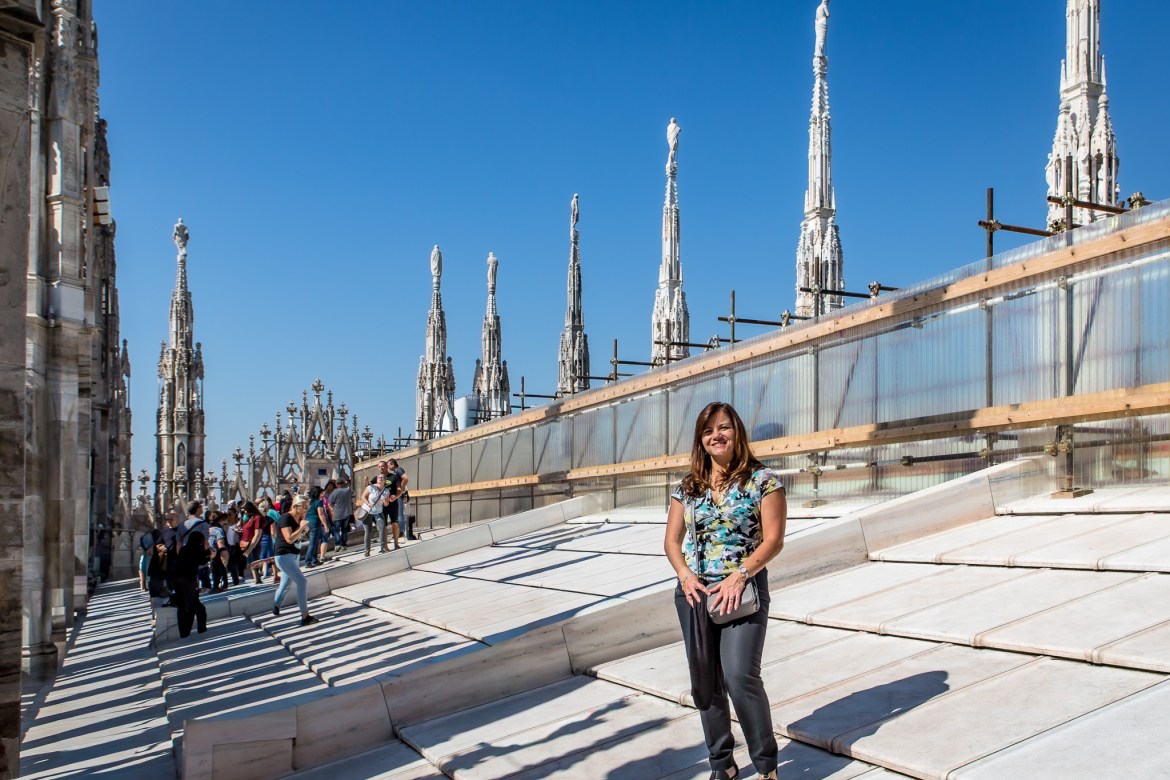
Begin with the interior, taking time to explore side chapels, stone carvings, and the sundial that streaks across the floor. From there, descend into the archaeological area, where Roman foundations and early Christian remnants show how Milan evolved layer by layer. Once back upstairs, follow the signage toward the rooftop terraces—take the elevator if you can, since the time savings here are huge. Wander the marble walkways among spires and statues, picking out skyline icons like Torre Velasca and the Galleria dome. Finish by circling the upper edges of the terrace for the signature “spires in a row” photograph Milan is famous for.
Cruise Clock (2–3 Hours)
This is the full, satisfying experience—ideal for travelers who want the architecture, symbolism, skyline, and historical depth without rushing. Begin inside the cathedral with an unhurried loop through the nave, side aisles, and chapels, letting the stained-glass stories unfold panel by panel. Take time in the archaeological zone, where quiet lighting and museum-style plaques reveal Milan’s ancient roots. Then head up to the rooftop terraces (elevator recommended), and spend a generous stretch of time exploring the marble forest—this is where photographers will lose track of time in the best way. Finish with a walk around Piazza del Duomo to admire the cathedral from ground level at multiple angles, especially as late-afternoon glow hits the façade.
🖼️ Spaces & Highlights You’ll Love
The Marble Forest Rooftop
The rooftop terraces are the Duomo’s most surreal experience — a literal marble forest where spires rise around you like stone trees twisting toward the sky. Walking these terraces feels like stepping into the blueprint of Gothic architecture made real, where every carved figure and pointed pinnacle becomes a foreground subject waiting for your lens. Photographers love the repeating patterns, the skyline contrast, and the way light grazes the marble in late afternoon, turning the whole terrace into a soft pink glow. Travelers get a different kind of reward: pure, wide-open Milan views and the thrill of exploring a cathedral from above rather than below. The rooftop is also where you’ll find some of the Duomo’s strangest statues, including mischievous gargoyles and modern additions placed so discreetly you only notice when you get close.
The Stained-Glass Windows
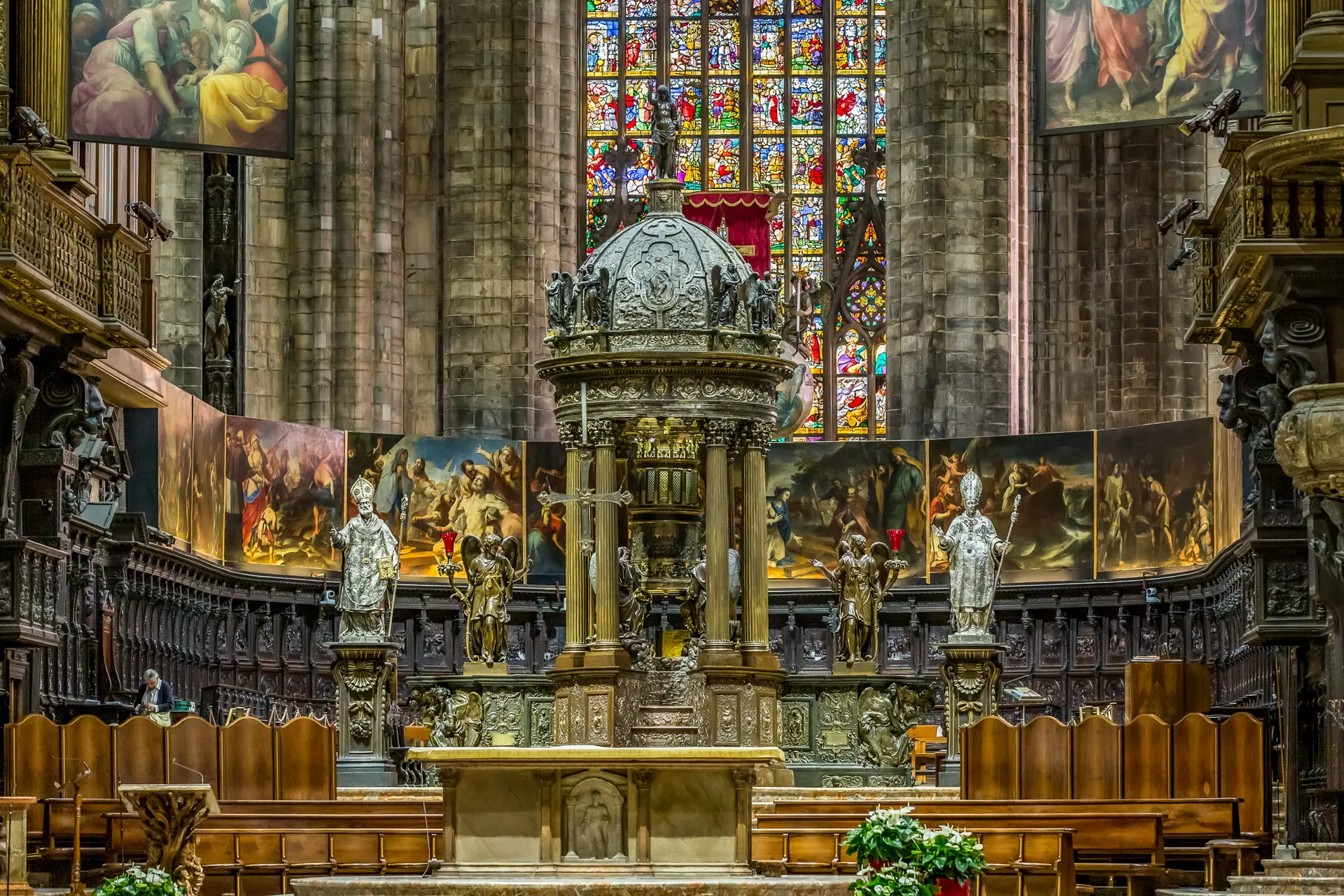
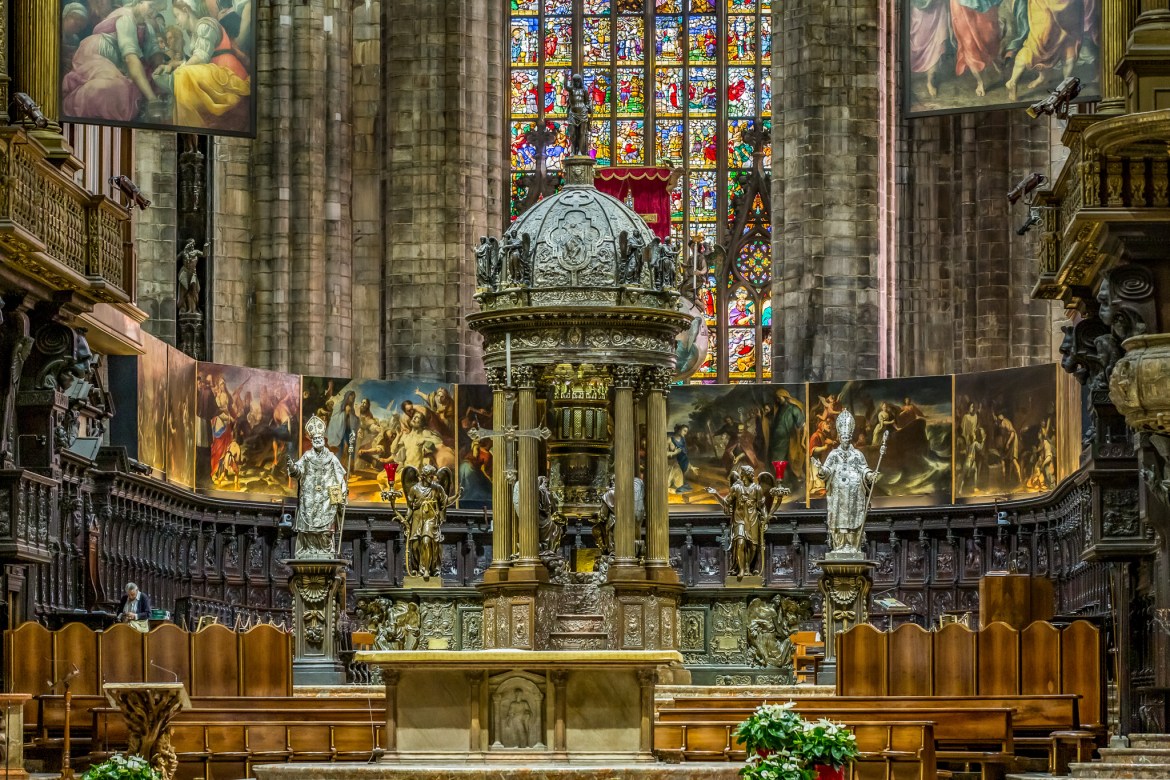
Inside the cathedral, stained-glass windows tower above the nave like illuminated tapestries, each telling centuries-old stories with color so rich it feels hand-painted on sunlight. These aren’t simple panels; they’re multi-story Gothic light machines designed to guide visitors through biblical narratives one vertical frame at a time. In late morning, the sun hits the southern windows, lighting them from behind and scattering soft color across the stone columns — a dream for photographers aiming for gentle interior ambience. Travelers will appreciate the extraordinary craftsmanship, especially the panels that were painstakingly reconstructed after World War II damage. The windows serve as a living, glowing archive of Milanese devotion and artistry.
The Archaeological Area (Early Christian Foundations)
Beneath the grandeur of the main cathedral lies a quieter realm: the archaeological zone built on the remains of ancient Milan. Down here, you walk past foundations of early Christian basilicas, the baptistery where Ambrose may have preached, and remnants of Roman walls that once shaped the old city. The lighting is subtle and warm, giving the space a calm, reflective tone that contrasts beautifully with the dramatic architecture upstairs. For photographers, textures dominate — stone, brick, and the interplay of shadowed corridors create cinematic compositions. For travelers, the area offers a grounded sense of continuity, showing just how many layers of history lie underneath the marble icon above.
Hidden Angles
If you like wandering for uncommon shots, the Duomo hides them in plain sight. One of the best is from the north side of Piazza del Duomo, where the façade aligns perfectly with the Galleria Vittorio Emanuele II dome — a composition that blends Gothic and Italian Belle Époque. Another is the view from Piazza Diaz, where the cathedral’s south flank towers over the square with fewer crowds. On the rooftop, look for reflections in the polished marble near puddles after rain — they create gorgeous inverted spire shots. And inside, stand beneath the organ lofts to catch dramatic leading lines that converge toward the altar.
🍽️ Nearby Pairings & Pleasant Pauses
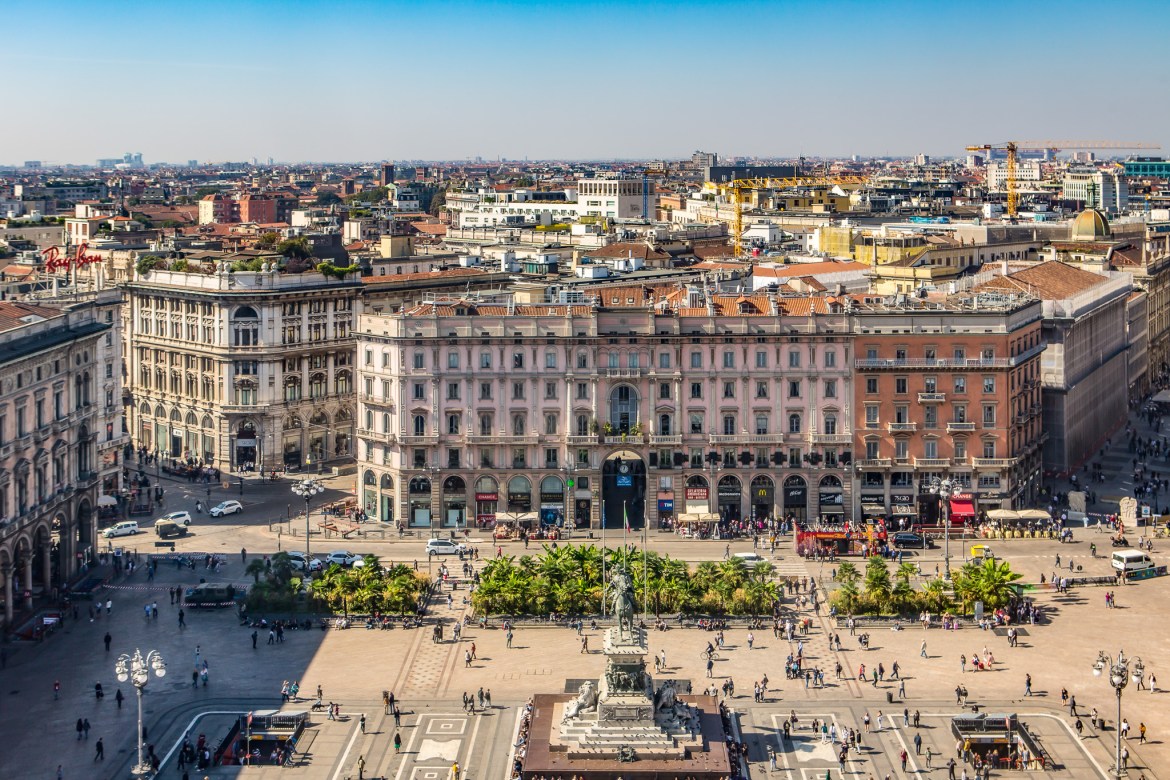
Once you step out of the Duomo di Milano, you’re surrounded by some of the most rewarding quick-add stops in the entire city. The Galleria Vittorio Emanuele II sits just steps away, offering an elegant indoor promenade perfect for a slow wander or a celebratory espresso under the glass dome. Head toward Piazza Mercanti for a quieter medieval pocket that contrasts beautifully with the cathedral’s grandeur and makes for relaxed photo moments. Travelers wanting a scenic pause can drift toward the terrace cafés along Via Mengoni, where you get people-watching, Duomo views, and a little Milanese atmosphere in one hit. Photographers may prefer circling the piazza’s edges to capture the façade from multiple angles as the light shifts throughout the afternoon.
Family-Friendly Stops
Galleria Vittorio Emanuele II — Safe, stroller-friendly, and filled with visual surprises, from the mosaic bull on the floor to soaring iron-and-glass arches.
Piazza Mercanti — Kids love the echo effect under the loggias and the feeling of stepping into “old Milan.”
Gelato at CioccolatItaliani (Via San Raffaele) — A guaranteed win; grab a cone and enjoy it in the shade near the piazza’s edges.
Rain / Heat Refuge
Galleria Vittorio Emanuele II — The best nearby refuge from weather of any kind; plenty of benches, balconies, and covered viewpoints.
Museo del Novecento — Right beside the Duomo with modern art, great air-conditioning, and easy access for a 30–45 minute cool-down.
La Rinascente Rooftop Café — A perfect pause with Duomo roof views, shelter, and breezy seating when the weather is unpredictable.
🎥 Reels on the Road
The Duomo di Milano practically begs for reel-worthy footage, thanks to its combination of sweeping piazza views, dramatic interior lighting, and that wild rooftop spire forest. Morning light gives you soft, pearly marble, while late afternoon turns everything gold — perfect for transitions, pans, and slow walk-throughs. Even quick FPV-style shots work well here because the cathedral’s geometry creates natural leading lines for movement. Whether you’re capturing reflections after rain or the skyline from the terraces, every angle has the kind of cinematic punch that plays beautifully on reels.
🎥 Rooftop Spire Walk — A slow, steady pan moving between the marble spires at golden hour.
🎥 Piazza Reveal Shot — Step out of the metro and tilt up from pavement to façade for a dramatic opening frame.
🎥 Stained-Glass Glow — A gentle slide or pivot shot inside the nave as sunlight filters through the tall windows.
🎥 Galleria-to-Duomo Transition — Walk through the Galleria dome and transition to the Duomo façade with a matching upward tilt.
🎥 Rain Reflection Moment — After a drizzle, capture the puddle reflections of the cathedral for a mirror-style cinematic shot.
🧳 What to Pack for Picture-Perfect Memories
The Duomo di Milano rewards anyone who comes prepared for mixed lighting, vertical compositions, and long stretches on stone floors. Inside, you’ll be working with low light and dramatic contrast, so having gear that handles shadows and stabilization makes a world of difference. The rooftop, meanwhile, is all about wide angles and changing light as the sun moves around the piazza — plus it can get windy, so secure straps and stable footing matter. Whether you’re shooting casually or chasing gallery-grade images, the right kit helps you make the most of rooftop geometry, stained-glass glow, and sweeping piazza vistas.
👉 The Nomad’s Kit: Gear That Earns Its Miles
Canon RF 15–35mm f/2.8L — My favorite lens for the Duomo roof. The ultra-wide range lets you exaggerate spires, capture sweeping marble lines, and make that skyline pop.
Canon RF 24–105mm f/2.8L — A perfect walkaround lens for the interior and piazza. Great for stained glass, chapels, and mid-range rooftop shots without switching lenses constantly.
Lowepro ProTactic BP 350 AW III — Reliable, compact, and weather-ready. Ideal for navigating security queues and keeping your setup organized across multiple cathedral areas.
Peak Design Travel Tripod — Compact enough to carry without hassle and stable enough for interior long exposures when allowed. Great for blue-hour shots around the piazza.
JOBY GorillaPod 3K Kit — Perfect for quick stabilization on the rooftop railings or low-angle interior shots where full tripods can’t be used.
🌊 Control Reflections & Punch Up Color
Circular Polarizer Filter — A polarizer works magic on the Duomo’s Candoglia marble, cutting midday glare so the pink and white tones look clean rather than blown out. It also deepens the sky behind the rooftop spires, giving your wide-angle shots more separation and punch. On the piazza level, it reduces window reflections from surrounding buildings, making street-level compositions cleaner.
Pro tip: Rotate the CPL gently until the sky darkens evenly — too far and the polarization banding becomes noticeable in ultra-wide shots.
⏱️ Drag the Shutter in Broad Daylight
Neutral Density Variable Filter — A variable ND lets you smooth out the constant flow of foot traffic across Piazza del Duomo, turning crowds into soft motion blur while the cathedral stays tack-sharp. On the rooftop, it helps you slow the shutter just enough to soften passing clouds, which makes the spires feel even more dramatic. It’s also a lifesaver for balancing extreme daylight when shooting at f/2.8.
Pro tip: Start around 1/4–1 second for people blur; go 2–10 seconds for cloud and atmosphere effects.
Pack both for any trip: the polarizer reveals the scene; the ND sculpts time. Together, they’re a portable “wow” switch.
Photo Policy Reminders — Most photography is allowed inside the Duomo as long as you avoid flash and remain respectful during Mass or active services. Tripod usage varies depending on staff discretion, especially inside — rooftop areas tend to be more flexible. Drones are strictly prohibited in and around Piazza del Duomo, and security screenings require all gear bags to be opened. Always follow staff instructions, as rules can temporarily tighten on festival days.
💰 On-Site Costs Snapshot
Costs at the Duomo di Milano vary depending on how deep you want to go — interior only, rooftop access, or the full experience including the archaeological zone. The cathedral itself remains one of Milan’s best-value landmarks, especially considering the craftsmanship, history, and skyline access you get with a combo ticket. Rooftop pricing varies by season and by whether you choose the stairs or elevator, but both options are worth every euro for the marble-spire views alone. Guided tours tend to cost more but streamline your visit by covering all areas without juggling separate lines. Expect modest additional fees for audio guides and certain timed experiences.
| Category | Cost (USD) | What’s Included |
|---|---|---|
| Entry Only | $12–$15 | Interior access, chapels, nave, stained-glass viewing |
| Rooftop Access | $17–$30 | Stairs or elevator entry to rooftop terraces among marble spires |
| Full Pass (Cathedral + Rooftop + Archaeology) | $30–$38 | Interior, archaeological area, terraces, priority entry depending on season |
| Guided Access | $55–$75 | Expert-led walkthrough of cathedral, terraces, and underground zone |
| Extras | $5–$10 | Audio guide, upgrades, occasional special exhibit entry |
🤝 Etiquette & Respectful Visiting
The Duomo di Milano is both a global icon and an active place of worship, so the vibe inside is quieter and more contemplative than the energy out in the piazza. Visitors are welcome to explore freely, but a bit of awareness goes a long way toward keeping the space respectful for locals attending Mass or private prayer. Modest dress is still the expectation here, and the cathedral staff enforces it more consistently than many other European sites. Photography is allowed, but the tone of the space calls for calm movement, low voices, and patience when crowds bunch up around popular angles. Think of the Duomo less like a tourist attraction and more like a shared cultural treasure you’ve been invited into.
💵 Tipping & Money Notes
💵 Small change for candles or offerings is appreciated but not required.
💵 Guided tours do not require tipping, but a small gesture is welcomed for exceptional service.
💵 Avoid exchanging money with unofficial vendors in the piazza; use staffed locations only.
✅ Do’s (Travel with Respect)
✅ Keep shoulders covered and wear modest clothing suitable for a functioning cathedral.
✅ Move quietly through active prayer areas and give space to visitors who are worshipping.
✅ Follow posted instructions for photography and respect any temporary restrictions during services.
✅ Step aside from doorways and aisle intersections to avoid blocking foot traffic.
❌ Don’ts (Keep Duomo Sacred)
❌ Don’t use flash inside the cathedral — it’s disruptive and strictly discouraged.
❌ Don’t climb or lean heavily on rooftop spires or railings for photos.
❌ Don’t eat or drink inside any part of the cathedral complex.
❌ Don’t leave bags or gear unattended; security will remove them.
📌 Street-Savvy Notes
📌 The piazza is beautiful but crowded; keep your phone and wallet secure in front-facing pockets.
📌 Watch for pickpockets near the metro exits and at the base of the cathedral steps.
📌 Street “friendship bracelet” hustles still occur — a firm “no grazie” ends it quickly.
📌 Evening lighting is gorgeous for photos, but stay aware of your surroundings when walking with gear.
🕰️ Historical Timeline at a Glance
The Duomo di Milano is more than a cathedral—it’s a six-century project that mirrors the rise, reinvention, and cultural might of Milan itself. Every era added a new layer, from medieval foundations to Gothic ambition, Renaissance embellishments, and modern restoration engineering. Wars, coronations, and political shifts all left their fingerprints on the building, making its timeline a living cross-section of European history. This overview distills the major milestones so you can appreciate the cathedral with a clearer sense of how long—and how fiercely—Milan has protected its masterpiece.
| Year | Event | Significance |
|---|---|---|
| 1386 | Construction of the Duomo begins under Gian Galeazzo Visconti | Launches one of Europe’s most ambitious Gothic projects |
| 1400s | Rapid Gothic expansion of spires, buttresses, and ornate façades | Defines the cathedral’s distinctive architectural identity |
| 1577 | Carlo Borromeo consecrates the unfinished cathedral | Establishes the Duomo as Milan’s formal religious center |
| 1768 | Installation of the precision sundial on the cathedral floor | Becomes Milan’s official time-regulating instrument |
| 1805 | Napoleon orders the façade completion before his coronation | Accelerates major construction and finalizes the western façade |
| 1965 | Official completion of the cathedral | Marks the end of a 579-year building process |
| 2000s–Today | Ongoing restoration led by the Veneranda Fabbrica | Preserves marble, statuary, and structural integrity for future generations |

📓 Through My Lens: Field Notes from the Road
When Laura and I arrived in Milan, the first thing that hit us was how unapologetically modern the city felt compared to the rest of Italy we’d been exploring that week. Sleek storefronts lined the streets, dressed in Prada, Versace, and every luxury brand you’d expect from a place that carries itself like Paris and New York’s stylish cousin. Art and design spill into every corner here — murals on alley walls, sculptural storefronts, even the way the light hits the glass downtown feels curated. The food didn’t disappoint either, carrying that bold Milanese confidence straight onto the plate. But then you turn into Piazza del Duomo and the entire city hands the spotlight to its 700-year-old marble monarch. We happened to arrive during a special ceremony that cleared the whole front courtyard, gifting us a rare, crowd-free window to photograph the façade before the usual surge of humanity filled the square again. Inside, the cathedral stunned us into silence, and the rooftop — a marble labyrinth floating over the city — became the perfect finale to our Milan chapter.
☀️ When to Go & Weather Sweet-Spots
Milan’s Marble Mood Swings: Timing the Duomo Just Right
Milan is a city of extremes — sharp sun one minute, moody cloud cover the next — and the Duomo di Milano wears those shifts like different outfits. For travelers, the best months are April–May and September–October, when temperatures are comfortable, skies are often clear, and rooftop wandering feels effortless. Photographers get the advantage of softer shoulder-season light, which paints the cathedral’s Candoglia marble in warm, flattering tones. Summer brings long days but also heat, haze, and heavier crowds, while winter rewards you with crisp air and glowing façades after rain, even if it comes with a chill. No matter the season, the Duomo always finds a way to show off — you just choose the version of Milan you want to experience.
| 🌞 Season (Months) | 🧘♂️ Vibe Check | 🌦 Rain Factor | 🏛 Tourist Traffic |
|---|---|---|---|
| 🌴 Winter (December–February) | Cool, atmospheric, quiet mornings perfect for photography | Moderate rain; crisp post-rain light is excellent | Low to moderate, busier around holidays |
| 🌸 Spring (March–May) | Fresh, bright, ideal rooftop temperatures | Occasional showers; usually brief | Moderate, rising toward late May |
| ☀️ Summer (June–August) | Long days, vibrant piazza energy | Low rain but higher humidity | High — peak tourist surge |
| 🍂 Fall (September–November) | Golden light, mild weather, perfect city wandering | Light showers; mostly predictable | Moderate in September, tapering by late October |
🎯 Peak Tourist Season Months June through August — long lines for rooftop access; arrive early for the best experience.
🏖️ Off-Season Sweet Spot Months Late January to early March — clear air, fewer crowds, and superb façade photography.
💡 Insider Pro Tip If you want the cathedral glowing like it was carved from rose quartz, hit the piazza about 45 minutes before sunset in spring or fall — that warm Milanese light does half the work for you.
🛡️ Practical & Safety Notes
The Duomo di Milano sits in one of the busiest squares in Italy, so a little awareness goes a long way. Piazza del Duomo is lively, safe, and heavily patrolled, but like any major European landmark, it draws souvenir hustlers and the occasional aggressive “bracelet” scam — a confident “no grazie” ends it quickly. Inside the cathedral and on the rooftop, watch your footing; the marble can be slick after rain, and some rooftop tiles slope subtly. Bags are screened at entry, and large backpacks may be denied or held, so pack light for a smoother experience. Metro stations around the piazza are efficient but crowded during rush hours — keep valuables zipped and keep your phone in a front pocket or crossbody bag. Overall, Milan is traveler-friendly, but staying alert ensures your visit stays focused on the beauty, not the hassle.
🎞️ More Frames From the Road: Scenes Worth Stopping For
🗣️ Cheat Sheet for Friendly Encounters while in CITY
Milanese locals are used to visitors from all over the world, but dropping a few Italian phrases always earns you a warmer smile. The city moves fast — fashion, design, and espresso all seem to run on their own clock — so having a handful of quick greetings and polite phrases makes everything smoother. Whether you’re ordering a cappuccino before your Duomo visit, asking for directions, or thanking someone for helping you navigate the metro, a little language effort goes a long way here. And with that unmistakable Milan confidence in the air, speaking even a few words feels like joining the rhythm of the city instead of watching from the sidelines.
💡 Reason to learn a few words
Because in Milan, everyone appreciates confidence — even linguistic confidence. A couple of well-placed phrases can turn a rushed transaction into an easy exchange, help you get better service, and make you feel less like a lost tourist and more like someone who belongs, at least for the day.
| 🇺🇸 English | 🇮🇹 Italian | 📖 Phonetic |
|---|---|---|
| Hello | Ciao / Salve | chow / sal-veh |
| Good morning | Buongiorno | bwon-jor-no |
| Good evening | Buonasera | bwo-na-seh-ra |
| Please | Per favore | pair-fa-vo-reh |
| Thank you | Grazie | graht-see-eh |
| You're welcome | Prego | preh-go |
| Excuse me | Mi scusi | mee skoo-zee |
| Where is…? | Dov’è…? | do-veh |
| How much? | Quanto costa? | kwan-toh koh-sta |
| I would like… | Vorrei… | voh-ray |
| Bathroom | Bagno | bahn-yo |
| Train station | Stazione | staht-zee-oh-neh |
| Help | Aiuto | eye-oo-toh |
| Goodbye | Arrivederci | ah-ree-veh-der-chee |

Behind the Lens
I’m Steve—a retired Army vet who traded ruck sacks for camera bags and now chases light across every latitude I can reach. From 110 point & shoot film camera beginnings to a Canon R5 Mark II and Mavic Pro II drone, I’ve logged shots in 36 countries and all 50 states, squeezing solo photo runs between corporate flights and longer adventures with my wife. Shutter Nomadica is where I share the hits, misses, and field notes so fellow roamers can skip the guesswork and grab the shot!