
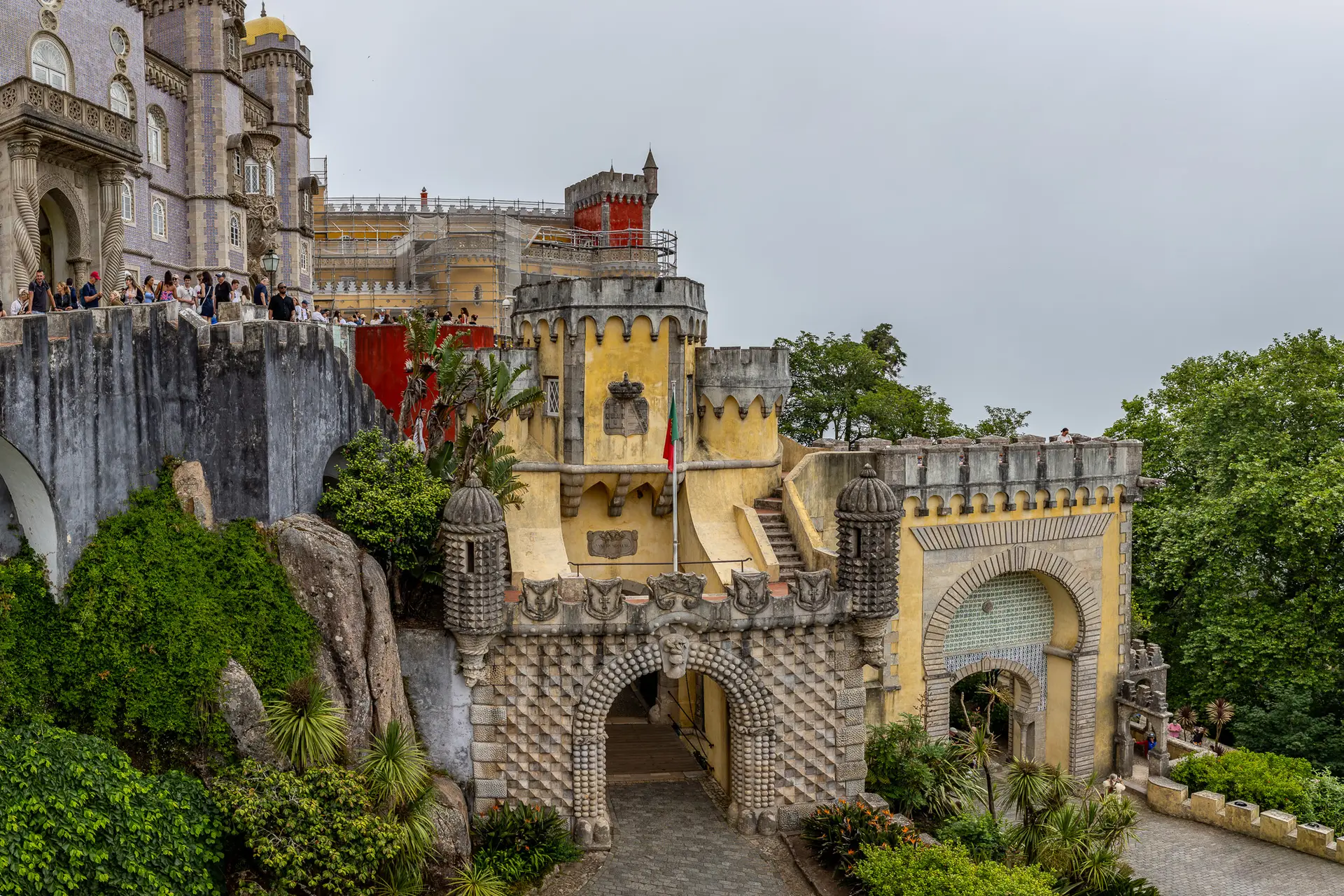
Fog, Tiles, and Turrets: A Photographer’s Guide to Pena Palace
Standing on a cloud-kissed ridge above Sintra, Palácio Nacional da Pena looks like a place a painter dreamed and an engineer somehow built. Domes, battlements, and candy-colored walls lean into the Serra de Sintra’s moody weather, where fog can roll in like stage smoke and then rip open to reveal the Atlantic. For travelers, it’s a 19th-century Romantic daydream; for photographers, it’s a masterclass in color theory, texture, and layers. You’ll find ornate tilework, cloister arcs, watchtowers, and sweeping terrace views—plus a labyrinthine park where mossy stone, ferns, and micro-climates turn every path into a different palette. Expect stairs, uneven paving, and views that make you forget your legs are burning. If you love architecture with personality and landscapes that flirt with the light, this hilltop castle is your siren call.
This deep dive gives you a traveler-first plan with photo-smart pacing: how to get there, ticketing strategy, accessible routes, and which terraces deliver the hero shots. You’ll also get contextual highlights—who built it and why the colors matter—plus a friendly timeline, practical safety notes, nearby pairings, and short-form video prompts for your Reels. Consider this your blueprint to wander well and frame boldly.
🏛️ Story & Significance: The Soul of Pena Palace
A castle that looks like it fell out of a watercolor set and landed on a mountain, Palácio Nacional da Pena is Portugal’s poster child for Romanticism—where architecture turned theatrical and emotion outranked symmetry. Its story begins with faith, reinvention, and a king who fancied himself both artist and dream-builder. Rising from the bones of a monastery destroyed by the 1755 earthquake, it became a stage for 19th-century imagination, a royal retreat above the Atlantic mists, and today, a UNESCO darling pulling visitors into its pastel spell.
Every tile, turret, and flourish has a purpose: to merge nature, art, and myth into one panoramic mood board. What you see now is not just a castle—it’s Portugal’s national identity painted in Technicolor.
🧑🎨 Notable People & Patterns
The palace’s soul belongs to King Ferdinand II, nicknamed the “Artist King.” Born a German prince, he married Queen Maria II and brought with him a collector’s curiosity and a sketchbook full of romantic ideals. Where others saw ruins, he saw a canvas. Ferdinand’s inspirations were eclectic—Gothic spires from Bavaria, Moorish arches from Andalusia, and Manueline flourishes from Portugal’s seafaring age.
He personally oversaw the blend of styles, adjusting proportions and colors like brushstrokes until the whole complex looked simultaneously ancient and fantastical. The resulting pattern of contrasts—faith versus fantasy, stone versus color, discipline versus whimsy—became the defining language of Portuguese Romanticism. Travelers can still trace Ferdinand’s personality in the playful iconography: sea creatures, vines, ropes, and the legendary Triton arch, symbolizing the unity of land and sea.
🏗️ Architecture in a Nutshell
Think of Pena Palace as Europe’s architectural remix. Its palette of crimson, ochre, and royal blue breaks every classical rule—and that’s exactly the point. The design fuses Neo-Gothic battlements, Neo-Manueline carvings, Moorish domes, and Renaissance cloisters into a single mountain-top silhouette visible for miles.
Inside, carved stucco, azulejo tiles, and nautical motifs echo Portugal’s Age of Discovery, while terraces open to sweeping views of the Serra de Sintra and, on clear days, the Atlantic. Photographers adore the palace because it was practically composed for framing—receding layers, saturated walls, and light that shifts by the minute. Even its asymmetry feels intentional, like a painter’s composition come alive in stone.
🌿 Living Traditions Today
Romanticism may have faded as a movement, but Pena Palace still lives and breathes its philosophy: emotion through design, harmony with landscape, and beauty that rewards patience. The palace and its Parque da Pena are now part of Sintra’s UNESCO World Heritage landscape, lovingly restored to protect both its riotous color and its forested setting.
Every season brings a different mood—spring flowers spill across the slopes, summer sun gilds the towers, autumn fog rolls through the park like dry ice on a stage. Locals treat the hilltop as both a spiritual refuge and a weekend workout, hiking the old carriage roads for views of the rainbow fortress. Cultural events and restorations continue Ferdinand’s legacy of art meeting nature—ensuring that what began as one man’s dream still paints the skyline of Sintra in defiant joy.
🧠 Fascinating Facts & Hidden Meanings
Behind all that playful color and turret drama, Palácio Nacional da Pena hides layers of symbolism that would make any code-lover grin. Every flourish carries intention—numerology, mythology, and geometry working quietly beneath the spectacle. The palace wasn’t built to imitate the past but to celebrate imagination itself, a place where fantasy got its own foundation. Once you start spotting the patterns, you realize Ferdinand designed an emotional compass more than a castle.
Five Quick “Did-You-Knows”
1️⃣ The Triton arch isn’t just decoration—it represents the link between land and sea, earth and spirit, echoing Portugal’s seafaring legacy.
2️⃣ The palace sits at exactly 490 m above sea level—Ferdinand’s chosen number symbolizing divine perspective in Romantic numerology.
3️⃣ Color choices followed a symbolic scheme: red for royalty, yellow for divinity, and blue for dreams and distance.
4️⃣ Its towers align roughly with Sintra’s Moorish Castle and the Atlantic horizon, a Romantic nod to Portugal’s explorers navigating by stars.
5️⃣ Locals whisper that the fog itself was “invited” by design—architect Baron von Eschwege claimed mist was “the final brushstroke.”
A few links and ads here are affiliate portals. If you click through and snag something, you’ll be fueling my next photo-quest at no extra cost to you. Thanks for keeping the adventure rolling!
If you’d rather spend your time shooting turrets than juggling timetables, a guided circuit through Sintra’s hill country makes perfect sense. The roads are steep, parking scarce, and fog unpredictable—but with a driver-guide, you can relax, watch the light shift across the palace walls, and arrive at each site when it looks its best.
Sintra and Cascais Small-Group Day Trip from Lisbon — A full-day escape covering Pena Palace, the windswept cliffs of Cabo da Roca, and the seaside charm of Cascais. Ideal for travelers who want curated logistics and plenty of time for photos without the stress of multiple tickets or train transfers.
Guided Tour to Sintra, Pena, Regaleira, Cabo da Roca and Cascais — A compact itinerary linking Pena Palace, the mystical gardens of Quinta da Regaleira, and the dramatic western edge of Europe. Great for photographers who crave variety in one golden-hour-friendly circuit.
Both tours leave from Lisbon, fold in scenic coastal stops, and let you focus on color, light, and composition—while someone else navigates the hairpin roads.
📌 Plan Your Visit: Hours, Tickets & What to Expect
Pena Palace rewards slow wandering, not speed runs. Budget 2–3 hours for the palace and terraces, plus 60–90 minutes if you want to meander through the Parque da Pena paths and lower viewpoints. Crowd rhythm builds from about 10:30 a.m., peaks midday, and eases again late afternoon; tickets are checked at the park entry and again at the palace interior queue. Most rooms are on a signed, one-way route; select exhibits or restoration spaces may be access-controlled or staff-escorted when open.
🎫 Ticketing Tips
Buy timed tickets online; choose “park + palace” if you want interiors (park-only skips them). Early slots beat lines, and late-day slots pair nicely with gentler light. Skip-the-line passes typically skip the ticket counter, not security/entry scans. Refunds/changes are limited—confirm your date/time before purchase.
🎉 Festival/Peak-Day Watch
Summer weekends, Lisbon holidays, and sunny forecasts spike crowd levels. Local events in Sintra town can slow shuttles/traffic—pad transfers by 20–30 minutes. If your dates are fixed, go first thing or near last entry; prioritize terraces before interiors.
| Quick Facts | Details |
|---|---|
| Location | Hilltop above Sintra within Parque da Pena; shuttle/footpath from park gates. |
| Time Needed | 2–3 hours palace + terraces; add 60–90 min for park overlooks and trails. |
| Ticket Checks | Scan at park entrance; second scan at palace interior queue (timed entry enforced). |
| Routes & Flow | One-way interior route; terraces and battlements loop outside. Expect narrow thresholds and brief bottlenecks. |
| Guided-Only Areas | Most spaces are self-guided; occasional exhibits/restoration rooms may be staff-escorted or closed. |
| Best Crowd Windows | First entry of the day or last 90 minutes before closing; weekdays outside summer. |
| Photo Notes | Fog = layered silhouettes; post-rain walls are ultra-saturated; late light flatters the Queen’s Terrace views. |
🚶 Getting There, Entry & Accessibility
Arriving for Pena Palace works best if you treat it like a hill walk with a castle at the end: start at the Parque da Pena gates, then ride the internal shuttle or follow the signed uphill paths through the trees. From Sintra train station, local buses and tuk-tuks climb to the park; if you’re driving, expect limited parking below the palace and a short transfer up. Security/bag checks happen at the park entrance and again before the palace interior queue, so keep tickets handy and pack light. If anyone in your group has mobility needs, budget extra time for slopes, stair breaks, and shuttle intervals—there are benches and shaded pull-offs where the forest air runs cooler. Pace the day so you hit terraces first (when energy and light are kind) and loop interiors after crowds thin.
Parking & Drop-offs
The most dependable option is to park below the palace within the park zone and use official shuttles for the final climb. Spaces are limited and can fill by late morning; arrive early or plan a late-day slot. Ride-hail and tuk-tuks typically drop near the park gates; confirm your pickup point for the return to avoid dead zones. Carry a small bill/coin stash for meters or short-hop transports.
Accessibility Notes
Expect a mix of cobbles, packed earth, and stone steps; thresholds can be narrow and occasionally uneven. Ramps exist in select areas but not everywhere; interiors follow a mostly one-way route with short stair runs. Look for quiet seating in shaded courtyards and along the terrace approaches; restrooms cluster near entry nodes rather than deep inside the route. Wear grippy soles—tiles get slick after rain—and bring a light layer; ridge winds can surprise even on sunny days.
Wayfinding Inside
The palace flows like a loop: scan at the palace entry, follow the signed one-way path through rooms, and pop out to terraces and battlements at several points. If a hall bottlenecks, step outside, work the exterior arcades, and re-enter the route farther along. Good “meet-back” spots: the Triton arch (easy to recognize), the Queen’s Terrace (broad viewpoint), and the clock tower courtyard. Keep your bearings by noting the ocean-facing side vs. the forested slopes—the light changes fast, and so should your plan.
🧭 How to Explore: Smart Routes for Any Timeline
Think of Pena Palace as a four-act play: you enter through the intro courtyard where color and crenellations set the mood, glide into highlight halls that stitch monastery calm to Romantic flourish, step onto wind-brushed terraces and garden paths where fog and light do their dance, and finish at a high vantage where Sintra rolls away like painted scenery. Keep your camera ready for quick pivots—the weather changes costumes often. Work outside-in and back out again: when interiors bottleneck, slip to the arcades for fresh angles, then rejoin the one-way route. Save five quiet minutes near the end to simply stand and watch the palette shift; it’s the moment that anchors the whole visit.
60-Minute “Essentials”
Enter, then beeline to the Queen’s Terrace for the skyline sweep—your first hero frame. Loop the Triton arch (wide, then tight on textures), skim the exterior battlements for leading lines, and pop into the key interior run for a taste of stucco and azulejos before circling back outside. Finish with a quick park overlook just below the palace to layer domes through trees—mood in a single frame.
90–120 Minutes “Deeper Look”
Add the cloister circuit for soft, reflective light on tilework and a slower study of carvings. Walk the full terrace loop to catch the clock tower from multiple angles, then dip into a quieter garden court on the downhill side for moss, ferns, and painterly foregrounds. Time a second pass at the Queen’s Terrace when the light shifts; the palace reads differently every 20 minutes in Sintra’s micro-climate.
Cruise Clock (2–3 Hours)
00:00–00:20 — Uphill arrival and courtyard acclimatization; shoot a quick establishing pan from the first terrace.
00:20–00:50 — Hero View #1: Queen’s Terrace sweep (wide + mid-tele for compression).
00:50–01:20 — Interiors one-way route; Detail Study: azulejo/stucco textures in even light.
01:20–01:40 — Café pause for a quick local snack (pastel de nata + espresso).
01:40–02:10 — Exterior battlements and Hero View #2: clock tower lines against the hills.
02:10–02:30 — Reflective Moment: slip to a lower park overlook; frame the palace through cedar boughs.
+ Optional 00:30 — Circle back for a last look if fog lifts or golden light arrives—Pena often rewards the lingerers.
🖼️ Spaces & Highlights You’ll Love
This isn’t just a photographer’s playground—it’s a full-sensory wander for anyone who likes a little wonder with their walk. Pena Palace unfolds in scenes: breezy terraces, color-drenched courtyards, and hushed cloisters where time slows down. Give yourself permission to linger; the light and fog here change like theater, and the experience feels different every ten minutes. Look for small details (tiles, carvings, playful gargoyles) as much as the big postcard views. And when the crowds bunch up, step to the side, breathe the cedar-scented air, and let Sintra’s mood do its quiet work.
Queen’s Terrace
This is the grand stage—the broad, cliff-hanging balcony where Sintra’s hills roll away and the palace colors glow. It matters because it distills the whole experience into one scene: wind, horizon, tiny people on battlements, and the sense you’re standing inside a storybook. Scan for changing skies; fog often parts in dramatic swipes that reveal new layers. Savor a slow lap along the rail, then step back a few paces to enjoy the moment without a screen in front of your face.
Triton Arch
A mythic gateway carved like a sea-creature sentinel, the Triton Arch is symbolism you can touch—where land, ocean, and imagination meet. It matters because it’s Ferdinand’s Romantic philosophy in one frame: playful, layered, and a little bit wild. Notice the textures (shells, vines, marine motifs) and how shadows deepen the relief as the day turns. Pause on the far side for a beat; it’s a natural bottleneck, but with patience you’ll catch a clear look and feel the theater of the entrance.
Cloister & Tiles
Tucked inside the older monastic heart, the cloister is calm in architectural form—arches, azulejos, and soft, even light. It matters because it shows the palace’s quieter soul, the place where faith and reflection predate the color riot outside. Look for tiny tile stories, weathered edges, and the hush that makes voices drop without anyone asking. Sit a minute on the ledge, trace the patterns with your eyes, and let the bustle outside fade to a pleasant murmur.
🍽️ Nearby Pairings & Pleasant Pauses
Ease off the hill with low-stress add-ons that keep the day delightful. In town, slide into a café like a tile-lined classic for a slow espresso and a still-warm pastel de nata before wandering artisan lanes where cork goods and azulejo prints make easy souvenirs. If your legs want views without drama, the Moorish Castle ramparts are a short ride from Pena and serve up breezy panoramas with plenty of places to pause. Closer in, the Vila Sassetti garden path offers a gentler downhill wander—ferns, stone bridges, and shaded benches that feel tailor-made for a reset. Aim café time for late afternoon, then linger on a mellow overlook as blue hour paints the palaces like lanterns—romantic for travelers, forgiving light for anyone with a phone.
Family-Friendly Stops
Courtyard benches in Sintra’s center and the leafy pockets near the Vila Sassetti trail make easy regroup points for kids; gelato and bakery counters are never far. Strollers work best in town and garden paths—save the steepest hill and castle stairs for carriers or hand-holds. Short hops by tuk-tuk or taxi keep transitions quick when little legs fade.
Rain/Heat Refuge
When sun bites or mist turns to showers, duck into tile-cool cafés, small local museums/galleries, or the cloistered rooms at nearby sites with covered arcades. Breezy passages and church naves double as quiet breathers; let weather pass while you sip something warm. After rain, colors pop—step back out for the richest walls and mirror-gloss cobbles.
🎥 Reels on the Road
Pena Palace was made for movement—the way fog curls, doors creak open to bursts of color, and sunlight cuts through arches feels cinematic even to casual visitors. Great micro-videos here capture transitions rather than stillness: doorway reveals, light shifts, and slow symmetry walks through courtyards or along battlements. Listen for natural sound cues—the rumble of wind against tiles, distant bells from Sintra, or even the rhythmic footsteps echoing on old stone floors. Keep clips under five seconds, layer them to the beat of your steps, and let the palace’s drama do the storytelling. Travelers love these moments because they’re immersive, quick to film, and pure mood—no script needed.
🎥 Doorway Reveal: Step through the Triton Arch from shadow into sun—perfect for a before/after color pop.
🎥 Terrace Sweep: Slow pan from the Queen’s Terrace across the forested hills toward the Atlantic haze.
🎥 Fog Shift: Time-lapse a minute of rolling mist swallowing and revealing the towers—Sintra’s signature move.
🎥 Tile Close-up Walk-by: Glide past azulejo walls catching reflections of tourists and umbrellas after rain.
🎥 Balustrade at Golden Hour: Walk the parapet, brushing your hand along the railing as the light warms the walls.
🎥 Reflection Lock-Off: After a shower, film a fixed shot of puddles mirroring domes and sky for a quiet closing beat.
Pena Palace in Sintra, Portugal feels like stepping into a dream perched in the clouds. It opens with mist curling along the cliffs and walls of the palace, the bright yellows and reds of the Romanticist architecture fading in and out of the fog, the ornate exterior, its tiled walls, Gothic arches, and stone carvings revealing the palace’s fairytale mix of Moorish and Manueline detail. Inside, lavish interiors where candlelit chandeliers and carved woodwork glow under vaulted ceilings. The middle section introduces a burst of color — a peacock displaying its full plumage in the courtyard, a symbol of the palace’s grandeur and whimsy. The focus then moves to the stained-glass windows, their jewel tones casting radiant patterns across the ancient stone.
As the video draws to its close, the camera ascends once more through swirling mist to reveal the palace’s hilltop terraces and towers, their forms partially veiled by fog but glowing softly in the light. It ends on a sweeping aerial shot that captures Pena Palace’s surreal magic — a royal dreamscape rising above Sintra’s emerald forests.
This one-day Lisbon reel opens in Belém, panning the lace-carved façade of the Jerónimos Monastery before drifting along the Tagus to the Padrão dos Descobrimentos, where stone sailors lean into the wind. Cut to the creative sprawl of LX Factory and its sky-high bookshelves at Ler Devagar, then roll into Chiado/Baixa: patterned calçada portuguesa underfoot, the ironwork of the Santa Justa Lift rising between 19th-century façades, and café tables spilling onto narrow lanes. Street musicians thread guitar and percussion through a leafy square as locals linger over espresso.
Midday shifts to the cool hush of a grand baroque basilica, light pooling across marble columns and a packed nave. Golden hour brings the camera back outside for tile, tram bells, and river breeze; the final sequence glides beneath the Arco da Rua Augusta to the open plaza and water beyond. Throughout: handheld pacing, natural sound, and warm city ambience—Lisbon’s stone, song, and sea in under two minutes.
🧳 What to Pack for Picture-Perfect Memories
Sintra’s ridge serves four seasons in a day. Pack a refillable bottle, light hooded layer/hat, and shoes with real grip—cobbles and terrace tiles get slick after mist or showers. Keep your kit small; shuttles and narrow thresholds favor compact setups. A microfiber lens cloth is gold when fog beads on glass, and a low-key stabilizer helps during blue hour on breezy battlements. Dress respectfully for interiors (covered shoulders), and stash a thin pair of socks in case any restored spaces request shoes-off.
👉 The Nomad’s Kit: Gear That Earns Its Miles
Canon RF 15–35mm f/2.8L — Ultra-wide for tight courtyards, colorful façades, and sweeping terraces where stepping back means “olá, cliff.”
Canon RF 24–105mm f/2.8L — Your forest-to-fortress workhorse: portraits in tiled corridors, mid-tele mosaics and ironwork, and quick pastel-dome details without lens juggling.
Canon RF 100–500mm f/4.5–7.1L IS USM — From Cruz Alta Viewpoint or Moorish Castle, compress the palace against cloud layers and pine forests; isolate domes and gargoyles in the mist.
Lowepro ProTactic BP 350 AW III — Weather-tough and stair-friendly; keeps filters dry and organized while navigating narrow corridors.
Peak Design Travel Tripod — Use in palace gardens or outside the gates for golden-hour skyline shots; not allowed inside or on crowded balconies.
JOBY GorillaPod 3K Kit — Clamp to railings along terraces for silky fog trails or soft-motion crowd blurs—tiny footprint, big stability in mountain wind.
Cut Glare. Shape Time. Make Every Frame Sing.
Sintra’s light dances across tile, stucco, and gold leaf—one minute dazzling, the next shrouded in mist. A circular polarizer tames glare on painted walls, tile mosaics, and wet stone, restoring true color depth. A variable ND lets you slow the fairytale—turn fast-moving fog into ethereal streaks, soften fountain water in the gardens, and ghost tour groups into whispers beneath the arches.
🌫️ Control Reflections & Punch Up Color
Circular Polarizer Filter — Reduce glare on wet tiles and painted plaster, deepen blue gaps in the sky between domes, and reveal detail on gilded ornamentation. Pro tip: rotate lightly—over-polarizing can mute the palace’s signature warm tones.
⏱️ Drag the Shutter Above the Clouds
Neutral Density Variable Filter — Drop 3–6 stops to blur drifting fog over the turrets, soften waterfalls in the park, and smooth foot traffic through arches and terraces. Pro tip: start around 1/4–1 s for mist motion; push to 2–10 s for magical cloud flow.
Pack both for any Sintra day: the polarizer reveals Pena’s vibrant hues; the ND sculpts its dreamlike atmosphere. Together, they turn a postcard into a fairytale.
Photo Policy Reminders — No flash or tripods/stands inside the palace; handheld only. Drones are not permitted within Sintra–Cascais Natural Park. Respect roped areas, keep stairways clear, and avoid leaning from parapets—marble is slick when misted. Visit early morning or late afternoon for diffused light and fewer crowds—when Pena Palace feels suspended between the clouds and imagination.
💰 On-Site Costs Snapshot
Most visitors spend on three things: entry, a guided experience (either a quick audio/guide add-on or a full Sintra circuit), and a drink/souvenir in town. Expect entry to run the bulk of your spend, with a small bump for the hill shuttle or bus if you don’t want the climb. It’s worth upgrading to timed palace+park access and a small-group tour if you value smoother flow and context (you’ll see more and wait less). Save a little extra for a café stop—Sintra tastes better with a pastel de nata in hand.
| Item | Typical Spend (USD) | Notes & When It’s Worth It |
|---|---|---|
| Park-Only Ticket | $12–$18 | Great if you want exterior views, terraces, and garden paths without interiors; budget-friendly and flexible timing. |
| Palace + Park (Timed Entry) | $20–$30 | Best overall experience; interiors plus terraces. Timed slots help control queues—upgrade if it’s your first visit. |
| Hill Shuttle / Local Bus | $4–$10 | Saves legs on the final climb; helpful for families, hot days, or tight schedules. |
| Guided Small-Group Tour | $65–$95 | Worth it for curated timing and context (Pena + Regaleira/Cascais). Cuts planning friction and maximizes viewpoints. |
| Audio Guide / Add-On | $5–$12 | Low-cost context if you’re DIY. Good compromise when tours are sold out. |
| Café Stop (Town) | $4–$8 | Espresso + pastel de nata is the classic reset before/after the climb. |
| Souvenir (Tiles/Prints) | $10–$25 | Small, packable keepsakes from artisan lanes; set a cash cap to stay quick. |
🤝 Etiquette & Respectful Visiting
At Pena Palace, grace is as important as curiosity. Dress modestly enough for interiors—covered shoulders, no beachwear—and remove hats in chapels or quiet alcoves. The palace attracts every kind of traveler, so practice the gentle art of stepping aside on narrow stairways and terrace bottlenecks. Keep voices low in the cloister and interior rooms where echoes multiply, and resist the urge to lean or rest on fragile walls and railings. When ceremonies, restoration work, or staff guidance pauses access, treat it as part of the rhythm—Sintra runs on patience and politeness. A smile and a “obrigado” go further here than any fast move; kindness makes everyone’s climb to the clouds a little more magical.
🕰️ Historical Timeline at a Glance
These beats turn the palace from “pretty” into “legible.” Knowing when a monastery stood here, when the earthquake struck, and when Ferdinand II staged his Romantic remix helps you spot material shifts—cloister calm versus theatrical color, maritime Manueline motifs, and rooms repurposed from prayer to panorama.
| Year / Century | Milestone | What to Notice On-Site |
|---|---|---|
| 16th c. | Hieronymite monastery founded on the ridge | Cloister proportions, contemplative courtyards, simpler stonework beneath later color. |
| 1755 | Lisbon earthquake damages the monastery | Romantic “ruin” mood that later designers embraced rather than erased. |
| 1838 | King Ferdinand II acquires the site | Shift from sacred retreat to royal vision; eclectic inspirations take root. |
| 1840s–1850s | Romantic palace rises (with Baron von Eschwege) | Bold palette, Neo-Gothic battlements, Moorish domes, Manueline ropes; theatrical skyline. |
| 1885 | Ferdinand II’s later restorations and refinements complete | Finishing touches in tile, stucco, and terraces—look for craftsmanship details. |
| 1910 | Proclamation of the Republic; palace becomes national monument | Public heritage era begins; interiors curated for visitors rather than court life. |
| 1995 | UNESCO: Cultural Landscape of Sintra inscribed | Park views protected; tree lines and paths “compose” sightlines by design. |
| 1990s–present | Color studies & conservation campaigns | Reinstated ochres/reds/blues; stabilized facades—note fresh pigment against weathered stone. |

📓 Through My Lens: Field Notes from the Road
We arrived at Pena Palace with our small tour group, stepping into a cloud that felt more like a dream than weather. The fog was thick at first—softly swallowing the turrets and towers—but as we climbed the winding pathway, colors began to reveal themselves like brushstrokes through mist. It was crowded, yes, but the rhythm of the line felt calm, the kind of pace that lets you really look. Inside, we wandered through ornate rooms and paused in the quiet chapel tucked near the rear, where candlelight flickered against tile and stone. Up on the upper walkways, the world fell away beneath drifting fog, revealing bursts of crimson and gold. Just when we thought we’d seen it all, a peacock appeared near the Triton arch, tail unfurled like a living echo of the palace’s grandeur—a perfect, fleeting performance in Portugal’s mountaintop masterpiece.
☀️ When to Go & Weather Sweet-Spots
Sintra’s ridge runs on micro-climates, so your day can slide from bright postcard to moody fairytale in minutes. Spring and fall balance gentle temps with rolling fog that makes the palace feel cinematic, while summer brings long opening hours and thicker crowds (shade and breeze corridors on terraces help). Winter serves quiet paths, saturated walls after showers, and shorter lines—pack a light layer for the chill. No matter the season, aim for first entry or the last 90 minutes for softer light and easier pacing. After rain, the colors pop and puddles turn courtyards into mirror boxes—five bonus minutes you’ll never regret.
| 🌞 Season | 🧘♂️ Vibe Check | 🌦 Rain Factor | 🏛 Tourist Traffic |
|---|---|---|---|
| 🌴 Winter (December–February) | Quiet, atmospheric, fog-forward; colors look extra saturated after showers. | Frequent light rain; cool ridge winds—bring a layer. | Lower overall; easiest queues, shorter days. |
| 🌸 Spring (March–May) | Fresh greens, changeable light; great comfort/crowd balance. | Intermittent showers; fast-moving fog banks. | Builds toward May—go early or late in the day. |
| ☀️ Summer (June–August) | Bright and breezy on terraces; longest opening window. | Lower rain; harsher midday light—seek shade corridors. | Peak crowds—book timed entry well ahead. |
| 🍂 Fall (September–November) | Clear vistas with morning fog; warm tones in late light. | Occasional showers; calm, photogenic air after rain. | Eases after September; sweet spot for pacing. |
🌧️ Rainiest Months: November–February (with a secondary bump in April)
🎯 Peak Tourist Season Months: June–August (weekends and holidays busiest)
🏖️ Off-Season Sweet Spot Months: January–March (weekdays), late October–early November
💡 Insider Pro Tip: If fog swallows the palace, linger at the Queen’s Terrace—breaks often appear in 10–15-minute waves, and the first gap is usually the most dramatic.
Just Beyond: Lisbon’s Tiles, Trams & Golden-Hour Hills
Follow the color trail from Sintra’s misty turrets to Lisbon, where azulejo-clad lanes, café terraces, and riverfront miradouros keep the magic rolling. Our Lisbon Travel Guide maps easy routes through Alfama, Baixa, and Belém—with photo-friendly stops that fit any pace. Expect breezy viewpoints, pastel de nata interludes, and tram-bell soundtracks made for reels. If Pena was your fairytale prologue, Lisbon is the city-sized chapter you’ll replay long after wheels-up.
View Our Lisbon Guide
🛡️ Practical & Safety Notes
Pena Palace is wonderfully scenic but built on steep, uneven ground, so watch your footing—the tiles can turn slick after even a light drizzle. Keep small bags zipped and cameras close in crowded interior corridors where everyone squeezes for the same window view. As closing time approaches, crowds funnel toward the shuttles and main gate, so step aside and let the first rush pass before you descend. If you get separated from your group, regroup at the easily recognizable Triton Arch or Queen’s Terrace, both central and well-signed. Most of all, slow your pace on slopes and battlements—Sintra’s charm is better enjoyed unhurried and upright.
🗣️ Cheat Sheet for Friendly Encounters while in CITY
A few kind words in Portuguese go a long way in Sintra, especially around park staff, café servers, and shuttle drivers. Locals appreciate travelers who try—even a simple “obrigado” softens the day. Use these phrases to navigate courtesies, buy tickets, or ask for the best terrace view. And don’t worry about accent perfection—smiles and effort matter most in the misty magic of Pena Hill.
| 🇺🇸 English | 🇵🇹 Português | 📖 Phonetic Spelling |
|---|---|---|
| Hello | Olá | oh-LAH |
| Good morning / afternoon | Bom dia / Boa tarde | bohm DEE-ah / BOH-ah TAR-d(ee) |
| Thank you (male / female) | Obrigado / Obrigada | oh-bree-GAH-doo / oh-bree-GAH-dah |
| Please | Por favor | pohr fah-VOHR |
| Excuse me / Sorry | Com licença / Desculpe | kohm lee-SEN-sah / deh-SKOOL-peh |
| Where is the terrace? | Onde fica o terraço? | ON-deh FEE-kah oo teh-RAH-soo |
| How much is the ticket? | Quanto custa o bilhete? | KWAHN-too KOOSH-tah oo bee-LYEH-teh |
| Where is the exit? | Onde é a saída? | ON-deh eh ah sah-EE-dah |
| Can I take a photo? | Posso tirar uma foto? | POH-soo chee-RAR OO-mah FOH-too |
| Beautiful! | Lindo! | LEEN-doo |
| Goodbye / See you | Adeus / Até logo | ah-DEH-oosh / ah-TEH LOH-goo |
| Have a good day! | Tenha um bom dia! | TEHN-yah oong bohm DEE-ah |

Behind the Lens
I’m Steve—a retired Army vet who traded ruck sacks for camera bags and now chases light across every latitude I can reach. From 110 point & shoot film camera beginnings to a Canon R5 Mark II and Mavic Pro II drone, I’ve logged shots in 36 countries and all 50 states, squeezing solo photo runs between corporate flights and longer adventures with my wife. Shutter Nomadica is where I share the hits, misses, and field notes so fellow roamers can skip the guesswork and grab the shot!