Jerusalem had been familiar to me long before I ever saw it. I had learned about it in world history classes, heard about it in church and read about many of the places we were about to visit throughout my life. Laura and I had never been to Israel, and while I wouldn’t describe the day as a pilgrimage, I was thrilled to finally see a city so closely connected to the history of our Christian faith.
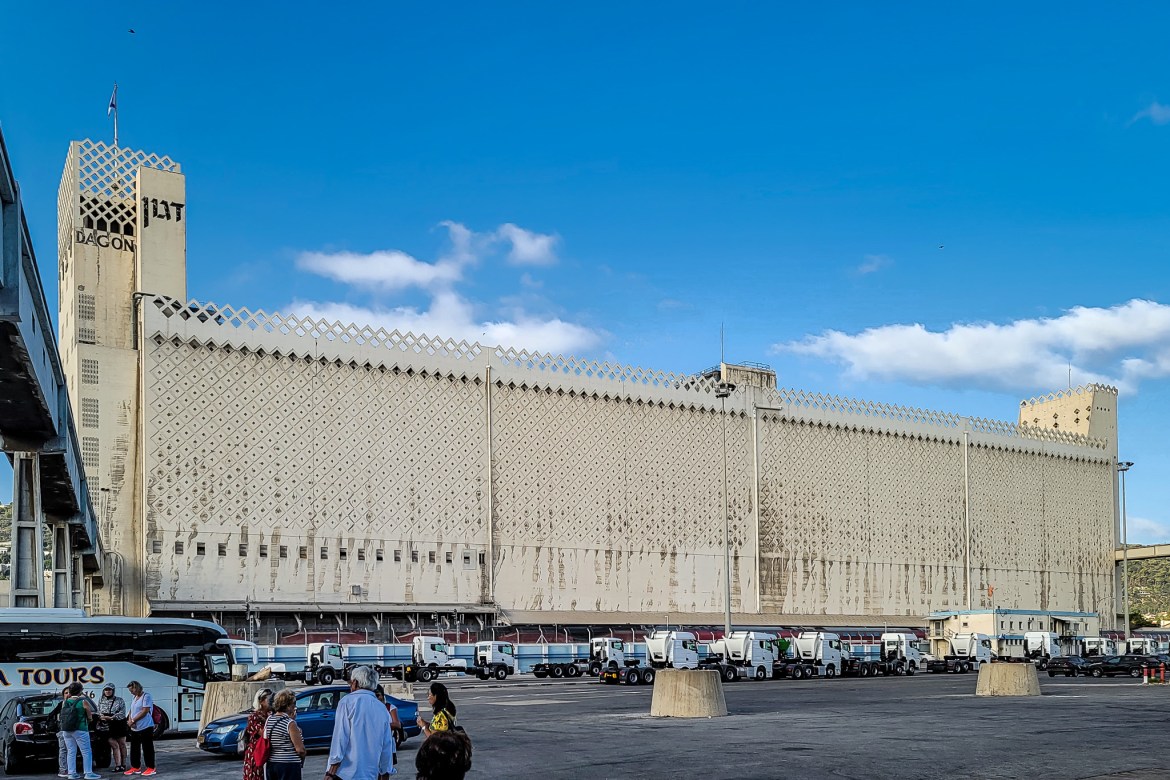
We left MSC Lirica in Haifa that morning, passed through the required screening with our passports, permits and ship cards, and boarded a bus beside the huge Dagon Grain Silos. The drive south is mostly a blur now because I was ready to get there. Once Jerusalem began appearing through the windows, I started taking pictures almost immediately.
There was something different about knowing we were entering a city with thousands of years of recorded history layered into such a small area. As Christians, it was impossible not to think about Christ having walked these same hills and streets and about what life here must have been like two thousand years ago. At the same time, I wanted to see Jerusalem as the living city it is today rather than treating every stone as though touching it somehow made faith more meaningful. For me, the history and what happened here carried the significance.
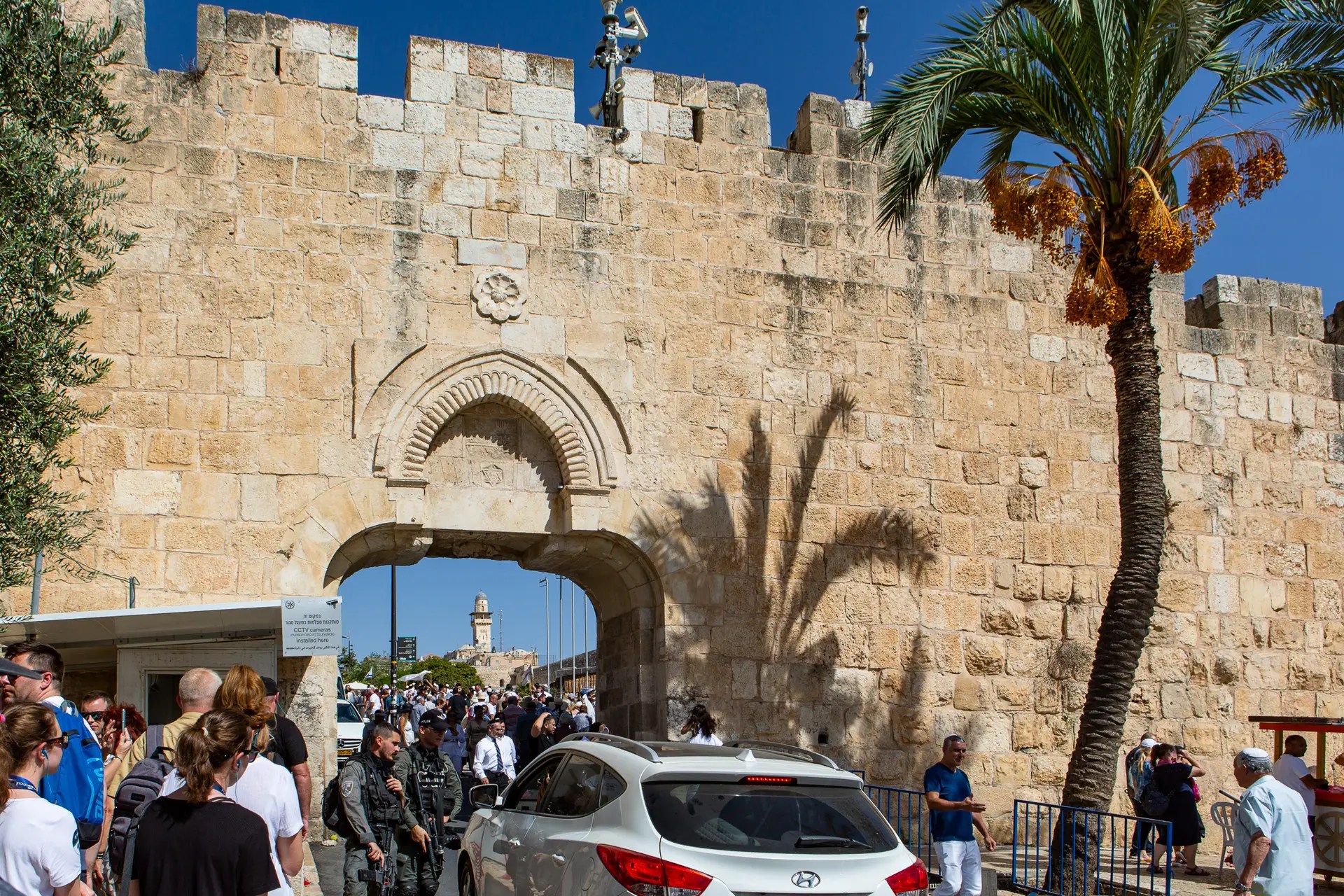
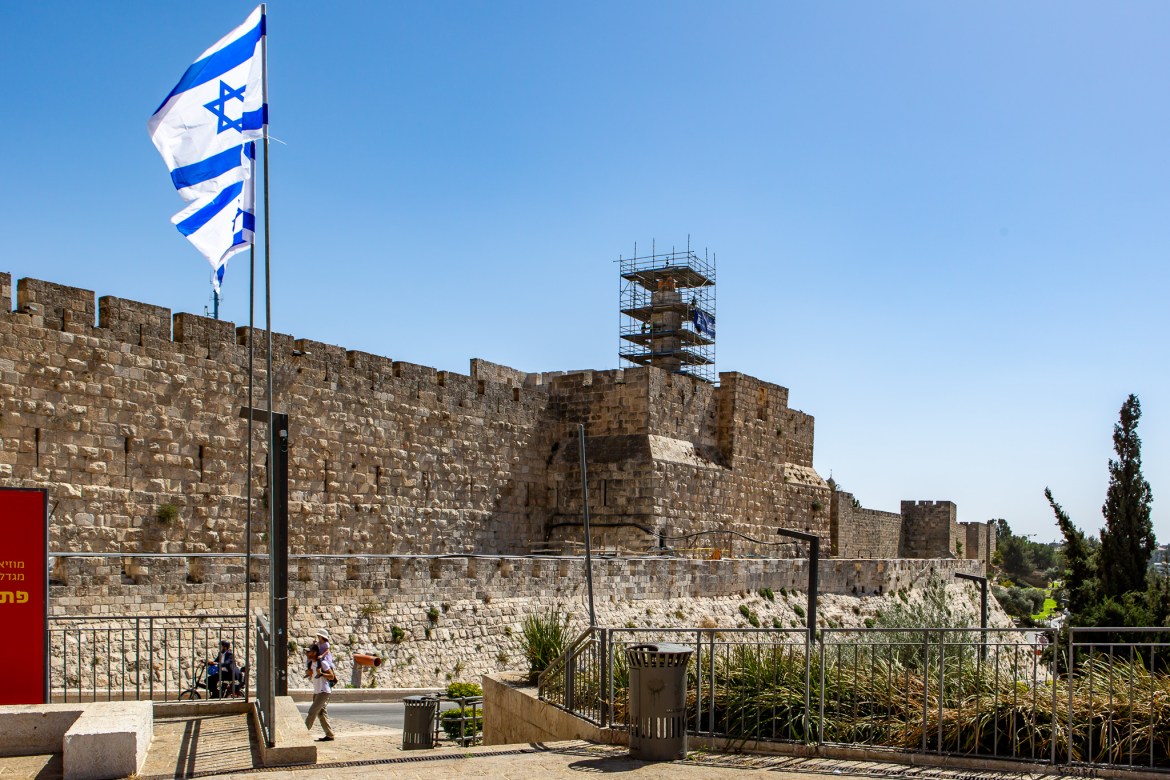
The Dung Gate, one of the entrances through Jerusalem’s Old City walls and the closest gate to the Western Wall.
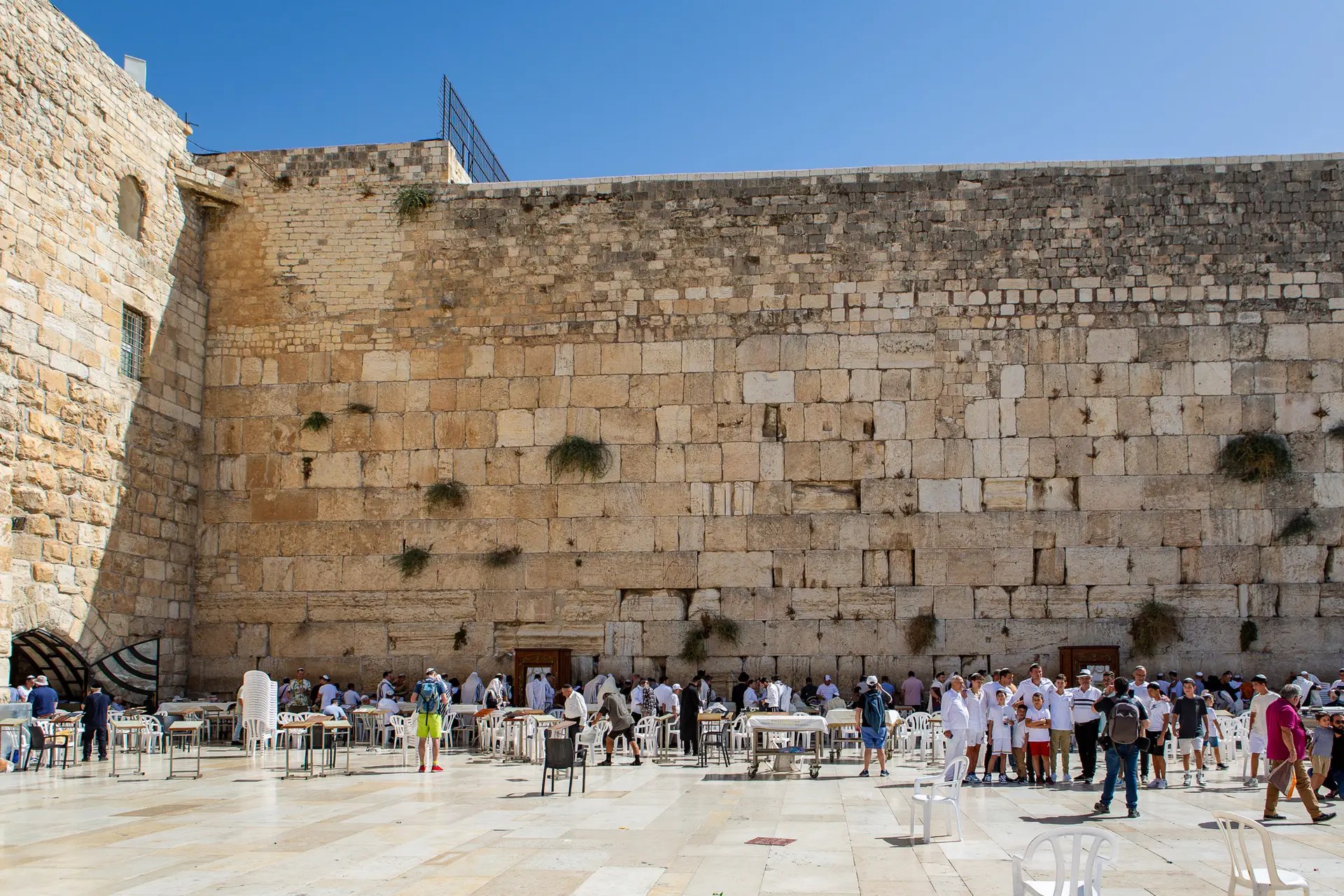
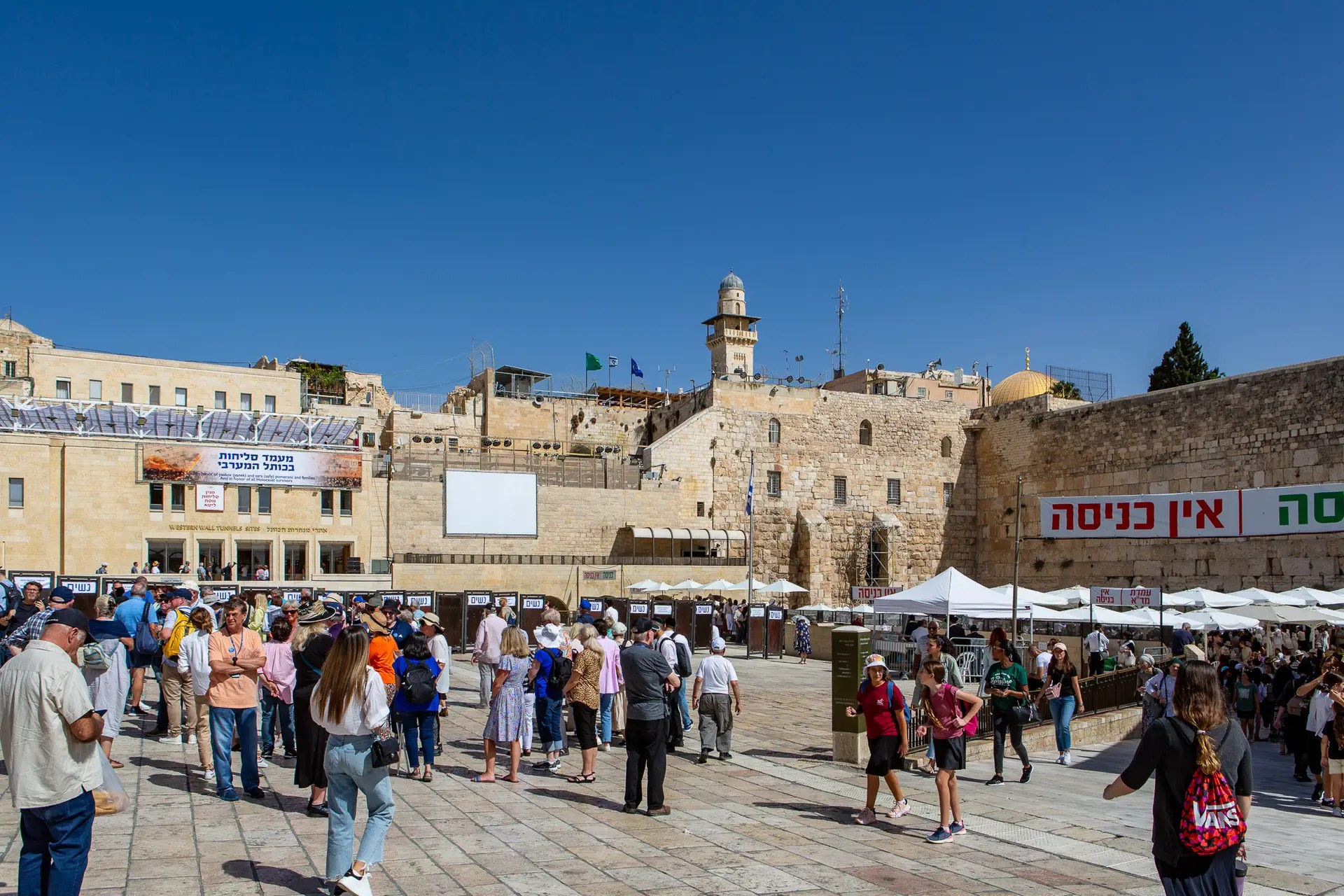
The Western Wall rising above the prayer area in Jerusalem’s Old City.
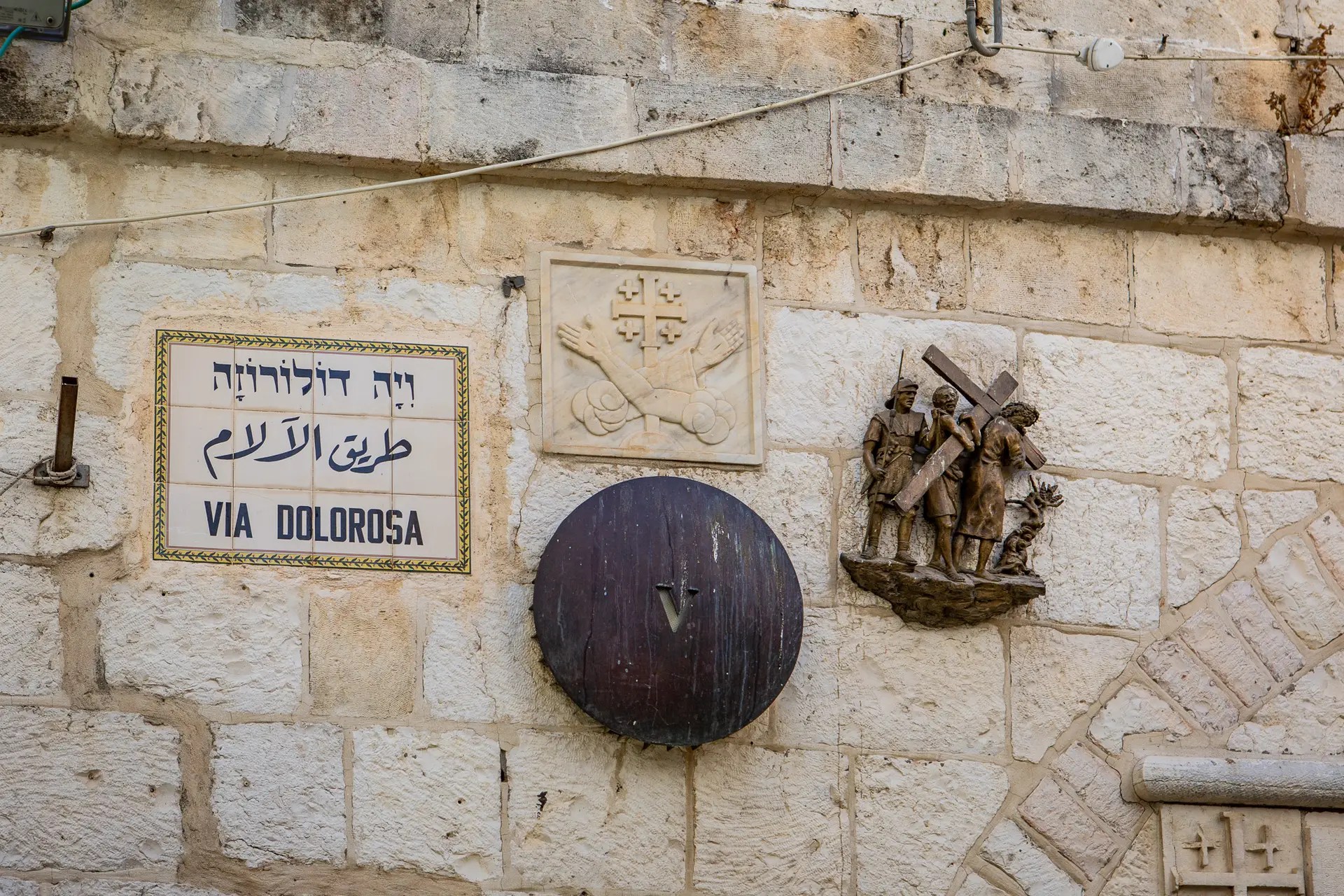
The Fifth Station of the Via Dolorosa, traditionally marking where Simon of Cyrene helped Jesus carry the cross.
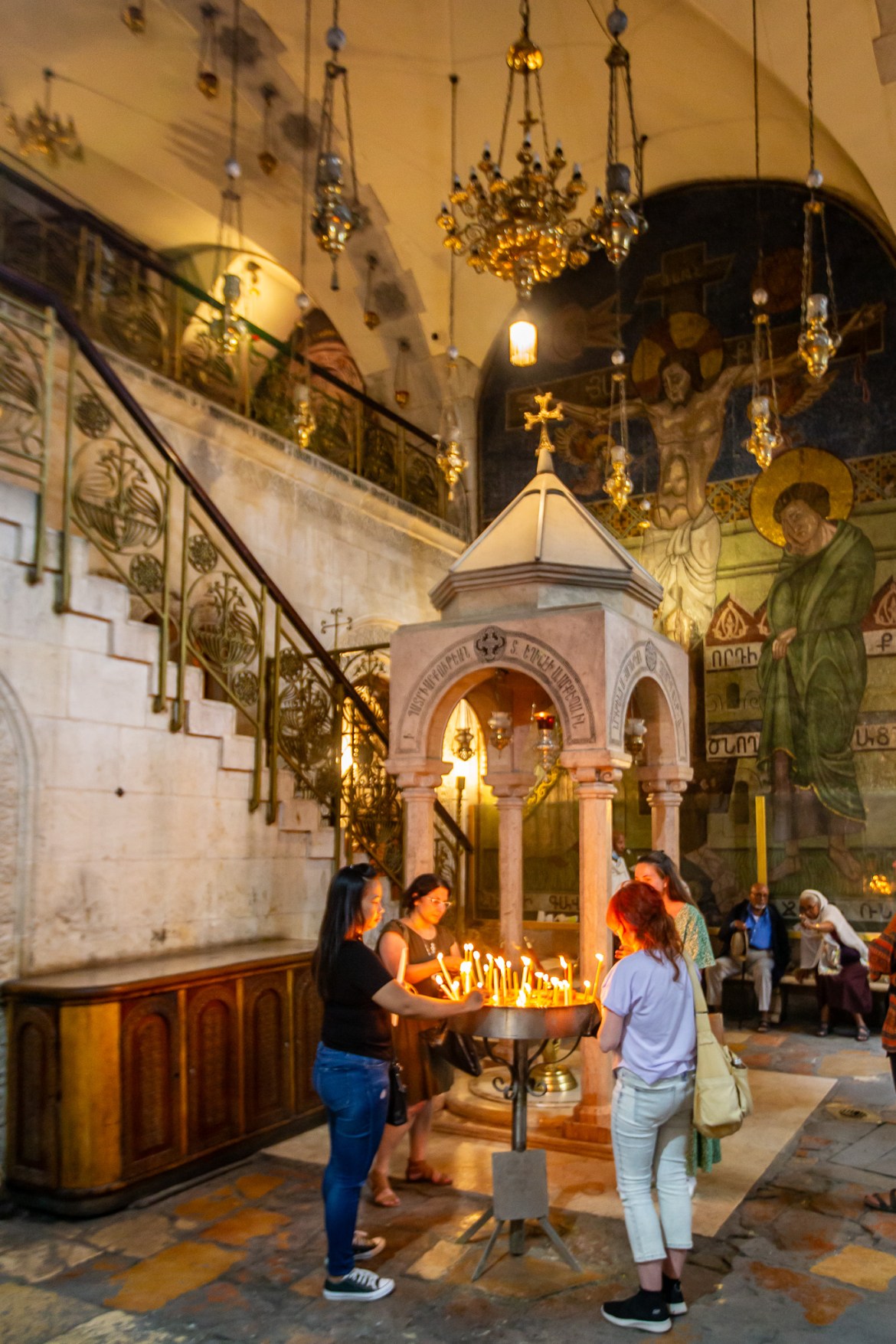
The colorful Armenian Chapel of Saint Helena beneath the Church of the Holy Sepulchre.
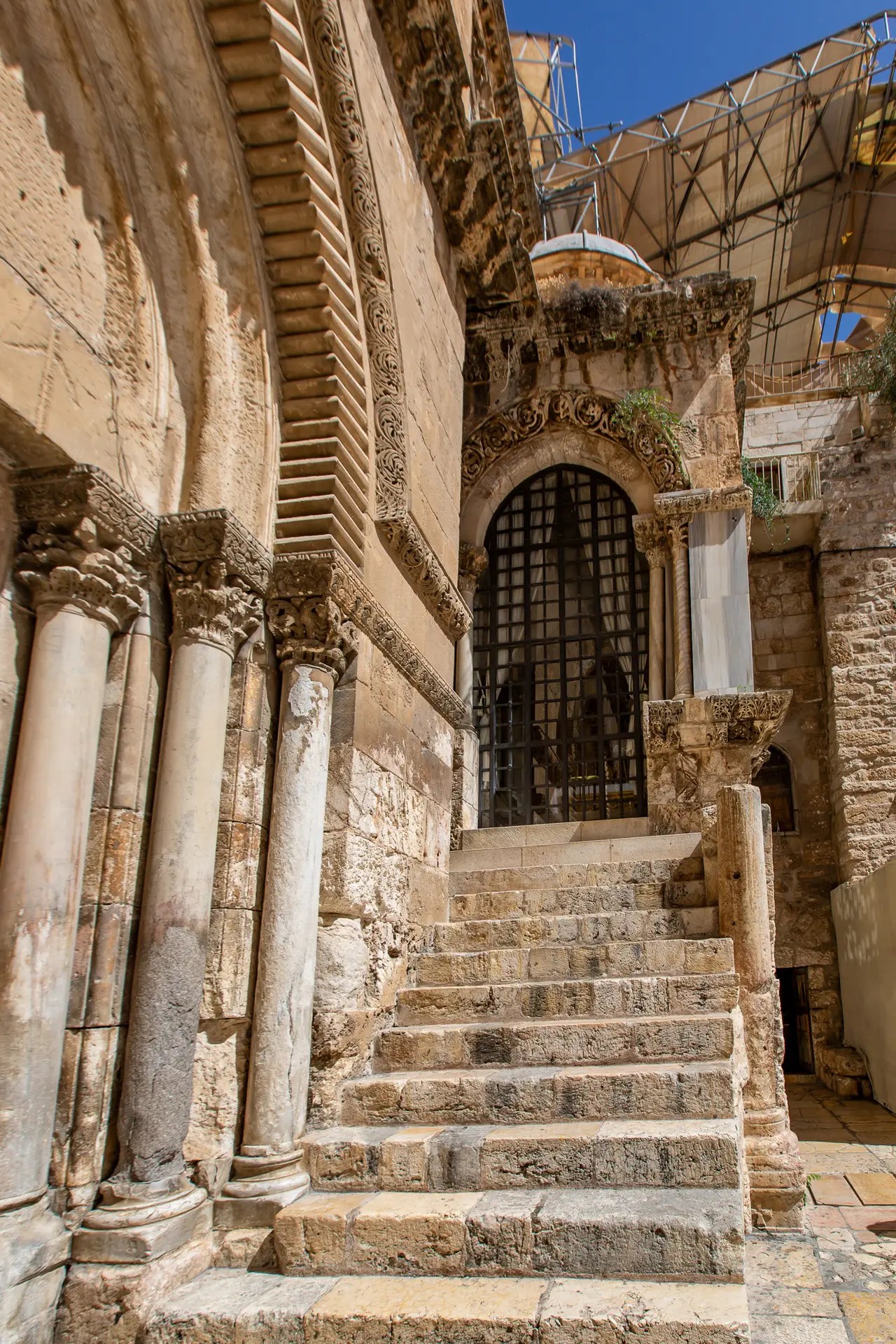
The exterior staircase leading to the Chapel of the Franks beside the entrance of the Church of the Holy Sepulchre.
A lively group gathered together near the Western Wall with music and prayer.
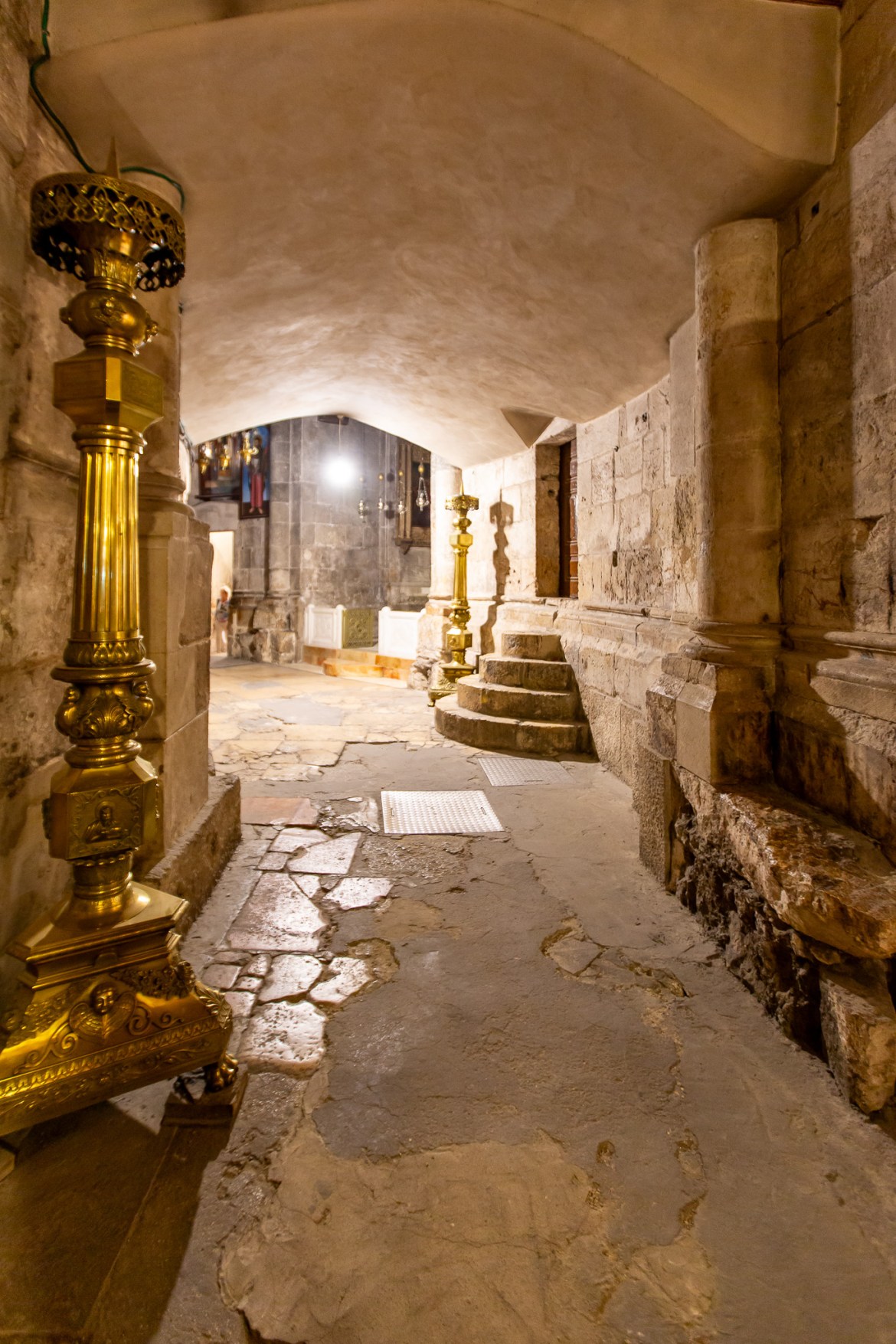
One of the small stone chapels along the lower level of the Church of the Holy Sepulchre.
Journey Timeline
Day 1 — Jerusalem from Haifa
Disembarked MSC Lirica at Haifa Port and boarded our excursion bus beside the Dagon Grain Silos.
Drove south from Haifa to Jerusalem and entered the Old City through the Dung Gate area.
Visited the Western Wall Plaza, with Laura entering the women’s prayer section while I explored the men’s section.
Walked through the Old City markets and followed portions of the Via Dolorosa, including Stations V, VI and VII.
Continued through the Christian Quarter and Muristan before exploring the Church of the Holy Sepulchre.
Visited Calvary, the Chapel of Adam, Chapel of Saint Helena and the underground Chapel of the Finding of the Cross.
Returned through the Rotunda and Aedicule area but skipped the line to enter the Tomb because the wait exceeded an hour.
Exited the Old City near Jaffa Gate and rejoined the excursion bus.
Finished the Jerusalem visit at the Mount of Olives overlook with views across the Jewish cemetery, Kidron Valley, Old City and Dome of the Rock.
Returned to Haifa and MSC Lirica before dinner.
The Experience, Told Through the Journey
The Western Wall
Walking into the Western Wall Plaza was the first moment when the day really connected with things I had studied years earlier. I had seen the Wall in textbooks, documentaries and church discussions, and now it was directly in front of us. I already knew that what we call the Western Wall is only one section of the much larger retaining structure around the Temple Mount, but knowing that academically and standing beside those stones were two different experiences.
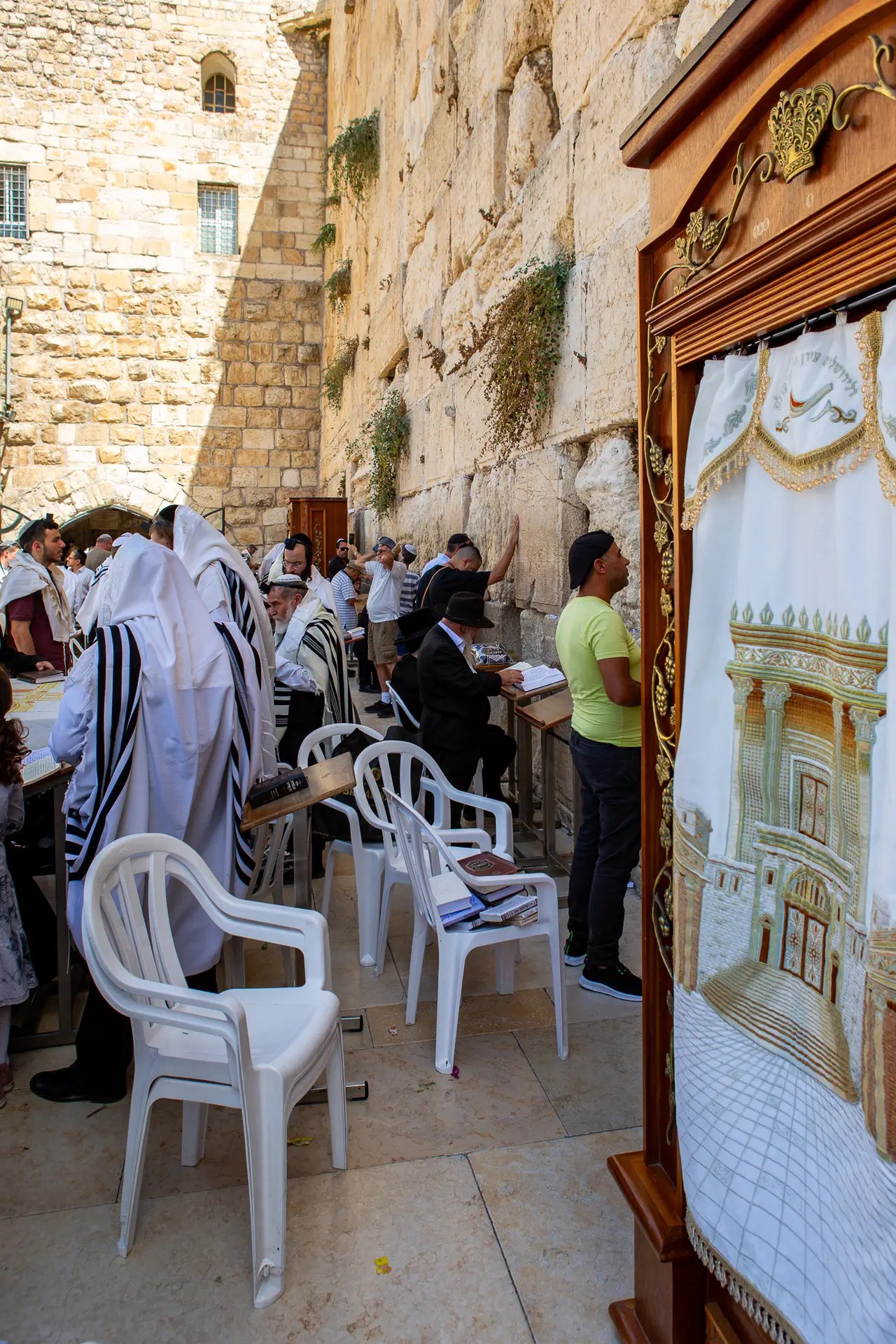
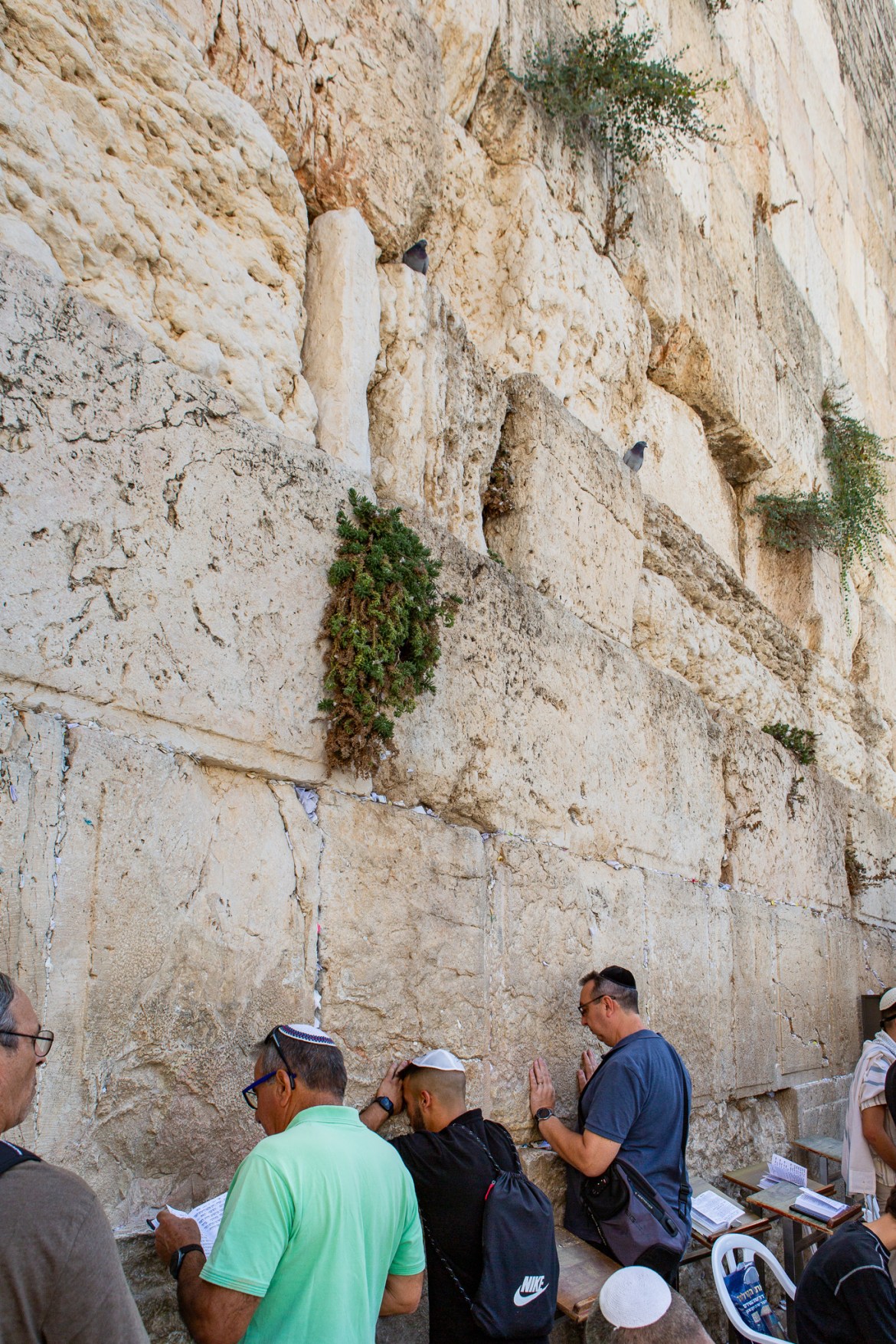
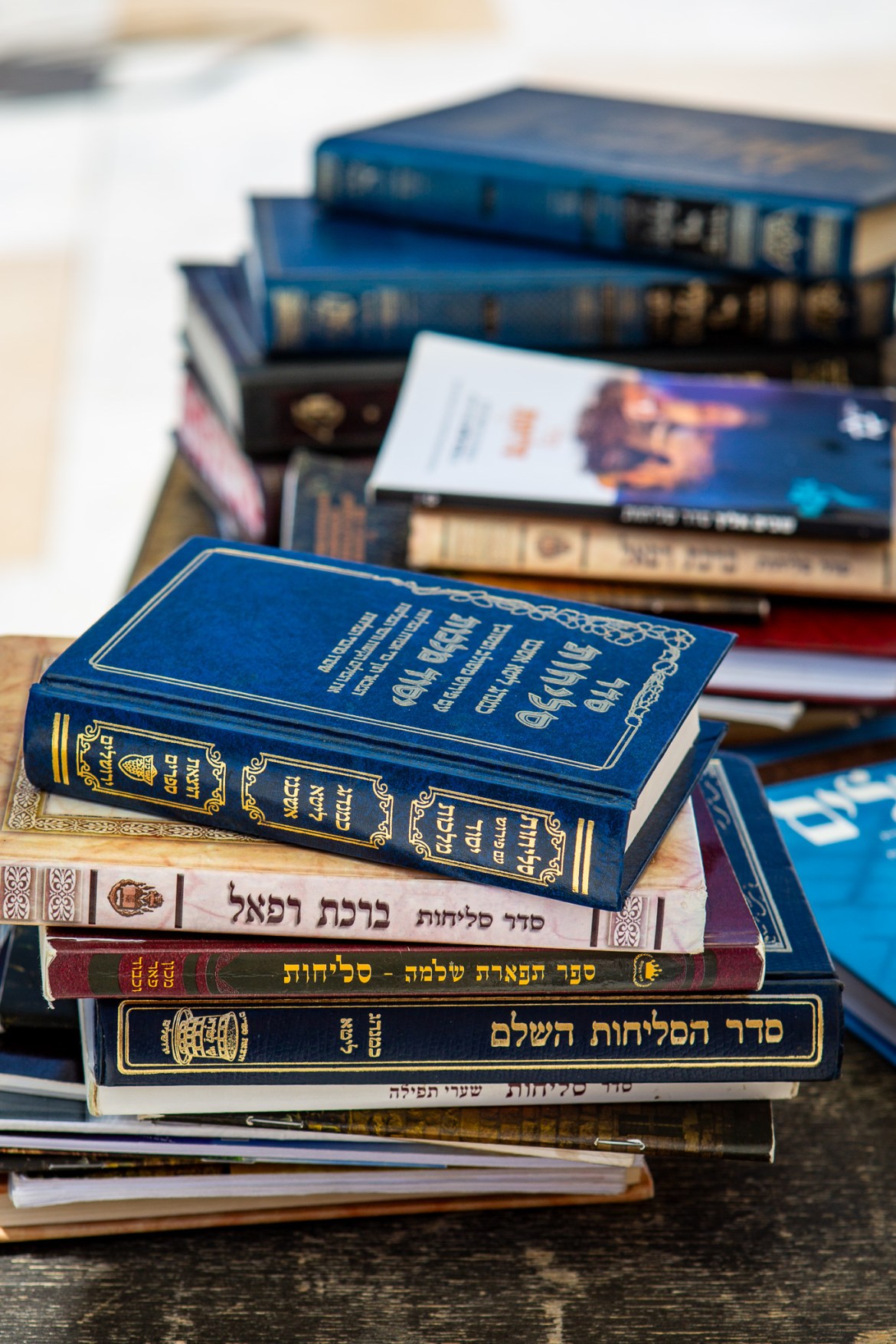
Laura went into the women’s prayer section while I spent time in the men’s section. I touched the Wall but didn’t leave a written prayer. I’ve never believed that touching a particular object or standing in a particular place somehow gives my faith additional power, but that doesn’t take anything away from appreciating what the site represents historically. Around me, men were reading from prayer books while Bar Mitzvah celebrations brought drums, singing and dancing into the plaza. I stayed back with the longer lens for most photographs of people praying rather than getting into their space.
Into the Old City
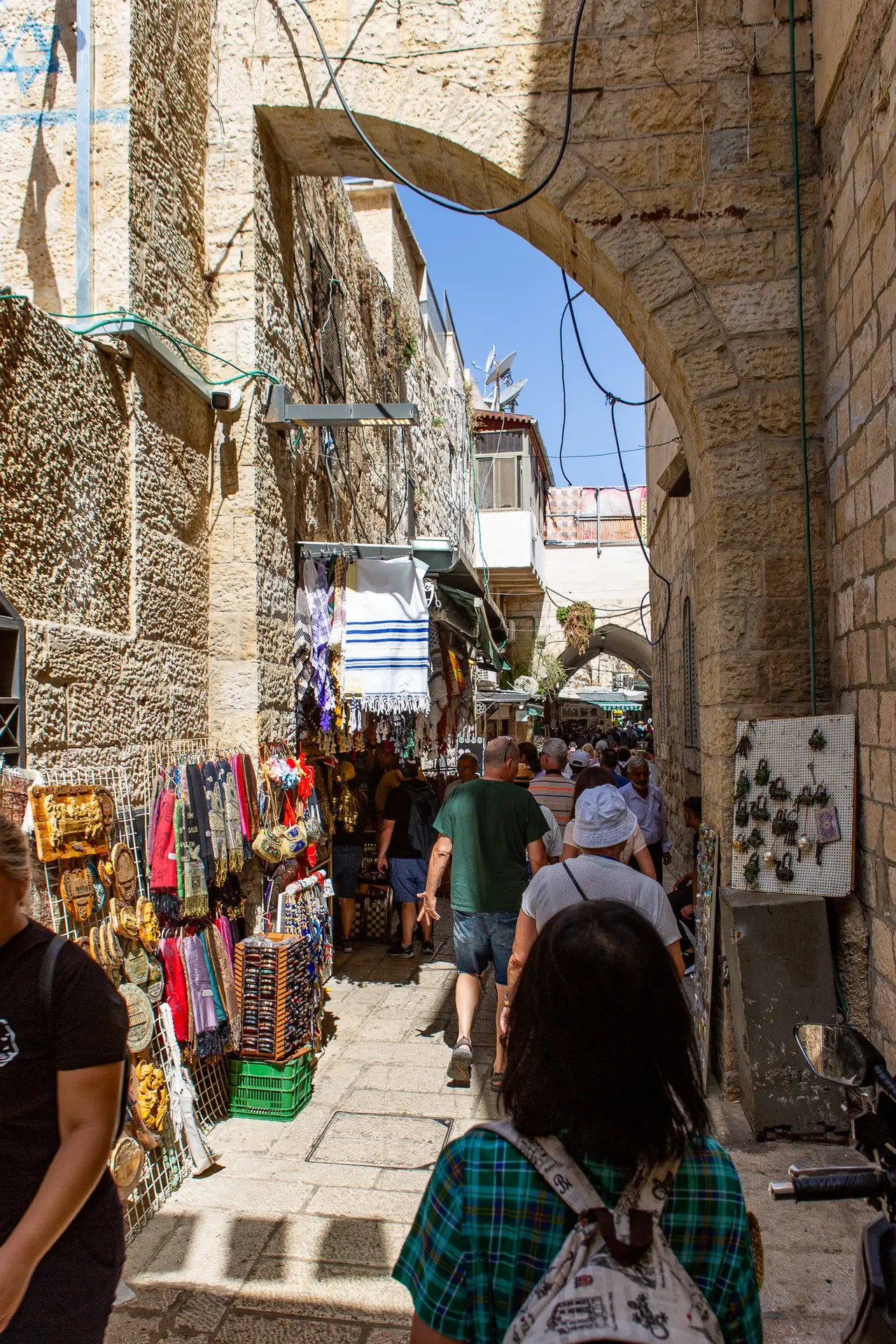
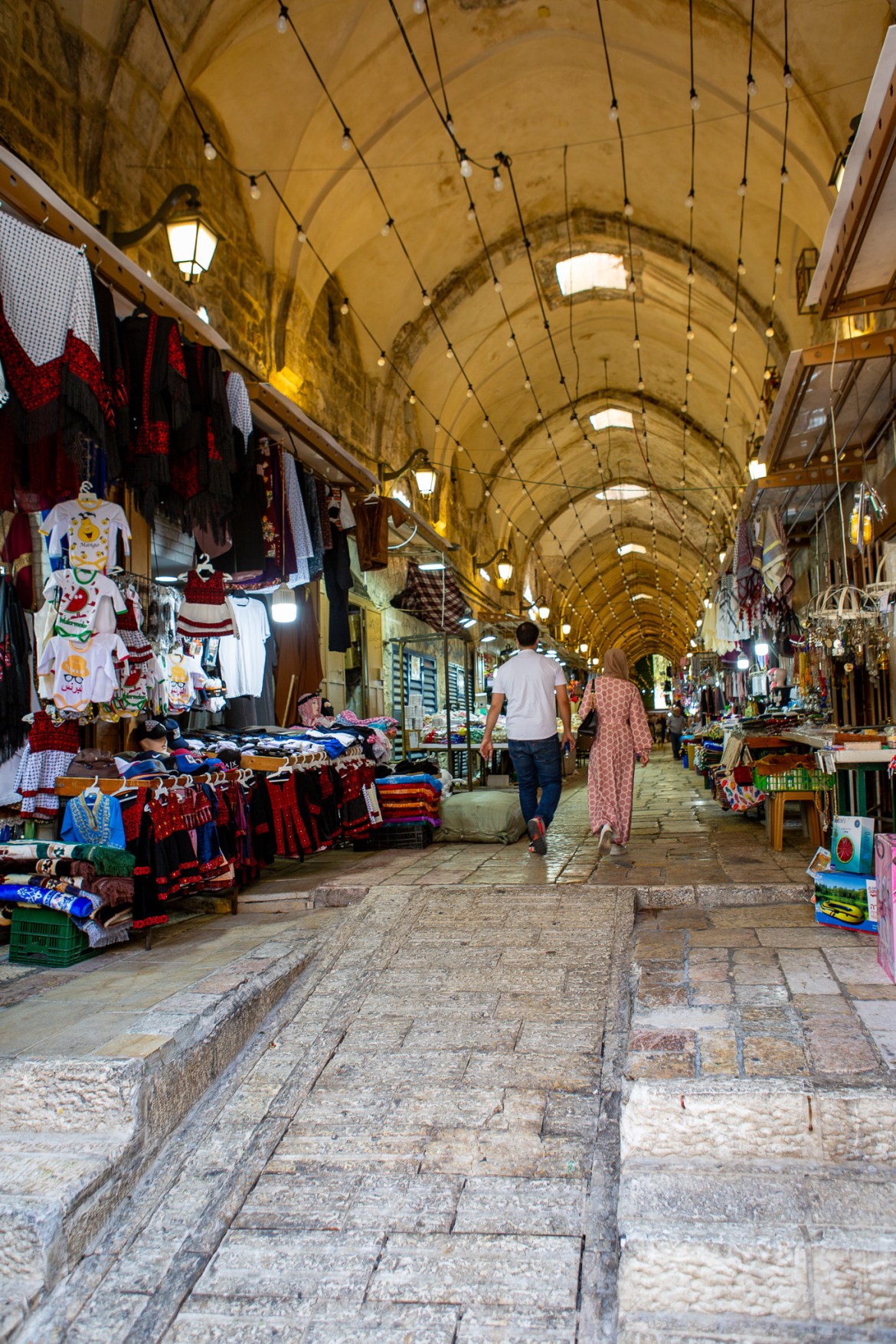
Once we left the open plaza, Jerusalem tightened around us. The broad square gave way to narrow limestone streets packed with small shops, food stands and merchandise hanging practically everywhere. I like markets, so I enjoyed this part of the walk, although our guide moved faster than I would have preferred. There were moments when I was paying more attention to a photograph or storefront and realized I needed to catch back up with the group.
We looked around for souvenirs, but nothing really grabbed me. I couldn’t find a Jerusalem picture frame I liked, and I was still wearing my Athens hat, so there wasn’t much reason to buy another one. Mostly I enjoyed watching the everyday rhythm of the Old City happening around us.
Walking the Via Dolorosa
The Via Dolorosa was different from the version I had built in my head. I knew we were going to walk portions of it, but I hadn’t really understood that the traditional route runs directly through an active marketplace.
We stopped at some of the Stations of the Cross, including V, VI and VII, although I wish more time had been spent identifying and explaining each one. That would also have given me the chance to photograph the entire sequence.
Seeing religious history woven directly into shops and normal daily commerce immediately made me think about the biblical account of Jesus overturning the money tables in Jerusalem. There wasn’t some carefully separated ceremonial corridor leading through the city. People were shopping, working and moving through the same streets where pilgrims were stopping at the stations. Thinking about everything associated with this relatively small area made the route fascinating and, at the same time, pretty sobering.
The One Souvenir I Should Have Bought
We eventually reached the Muristan, where the excursion included a planned stop at a souvenir shop. That’s where I made one purchase decision I still regret.
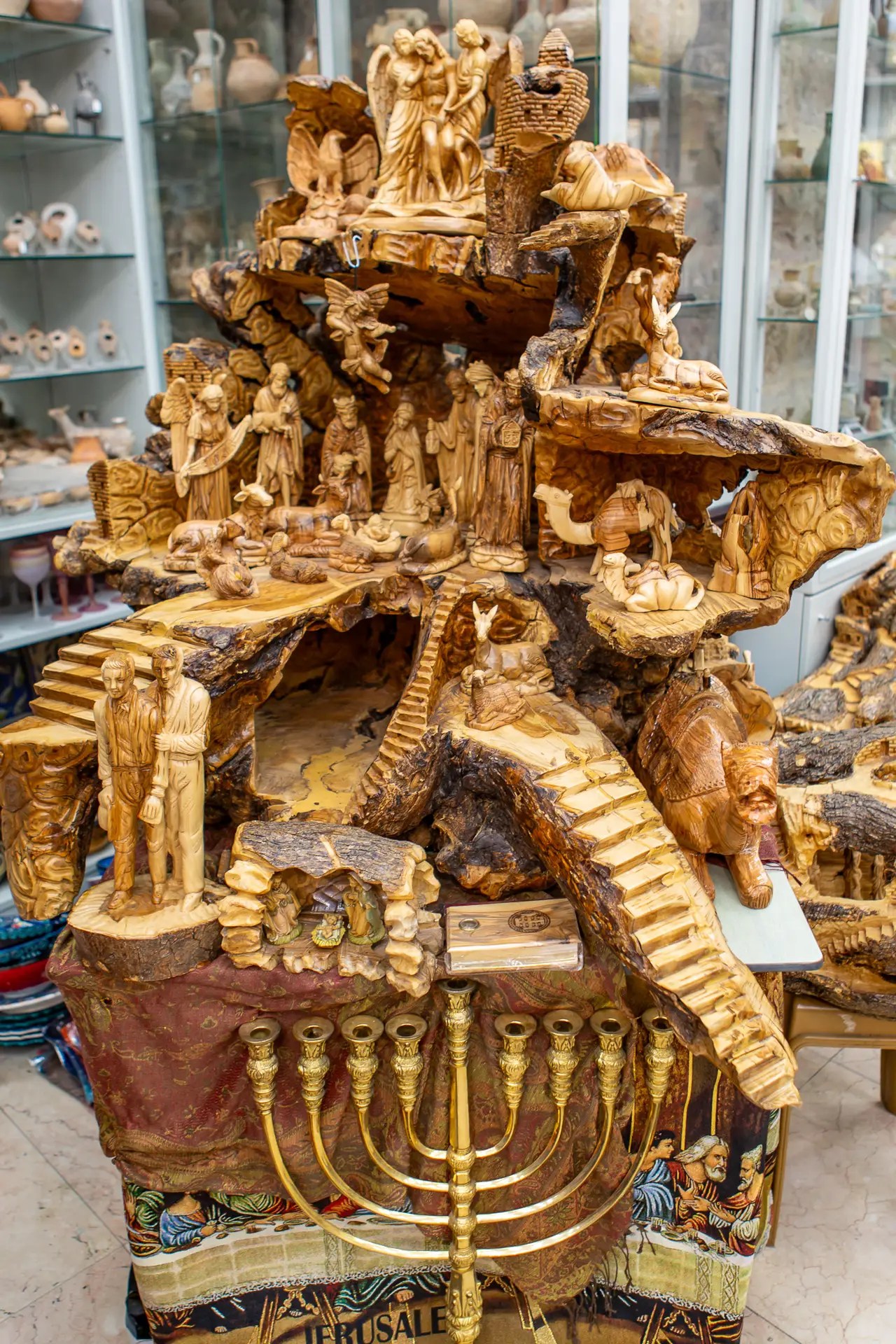
They had a beautiful Noah’s Ark hand carved from local wood for around $200. I loved it but figured I’d find the same thing online once we got home. I did find similar pieces later—for closer to $1,000.
That $200 Ark should have come home with us.
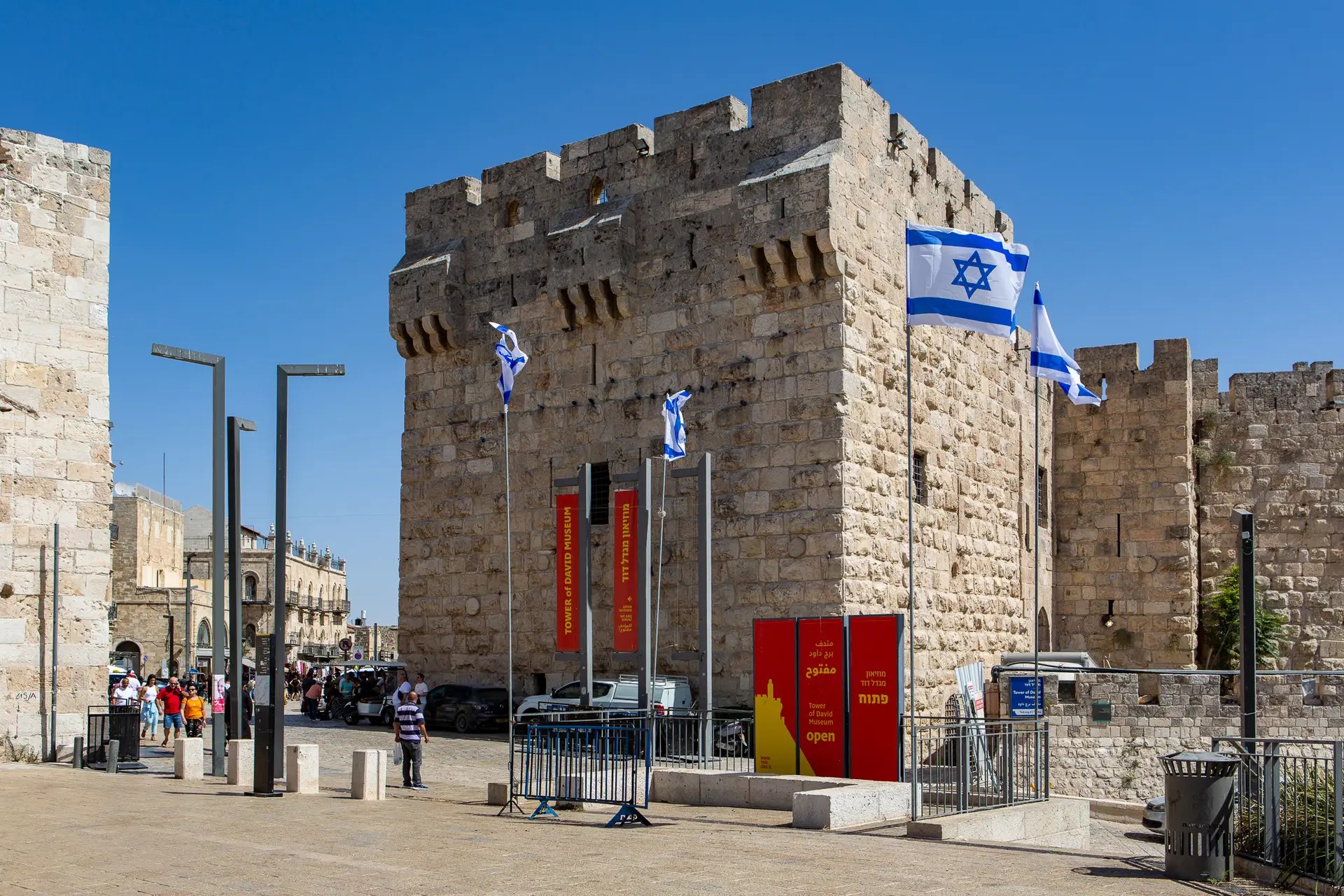
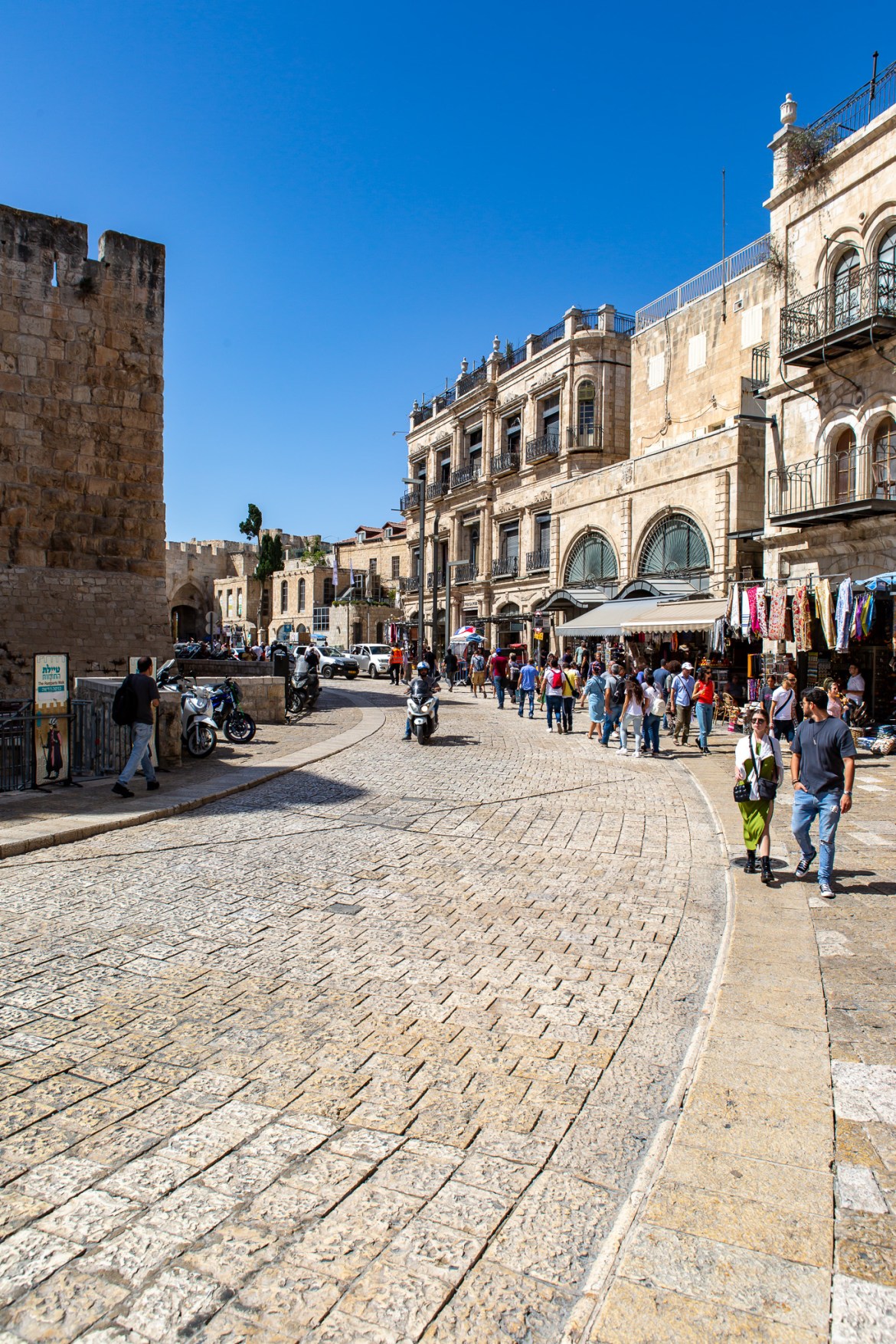
Jaffa Gate at the western entrance to Jerusalem’s Old City.
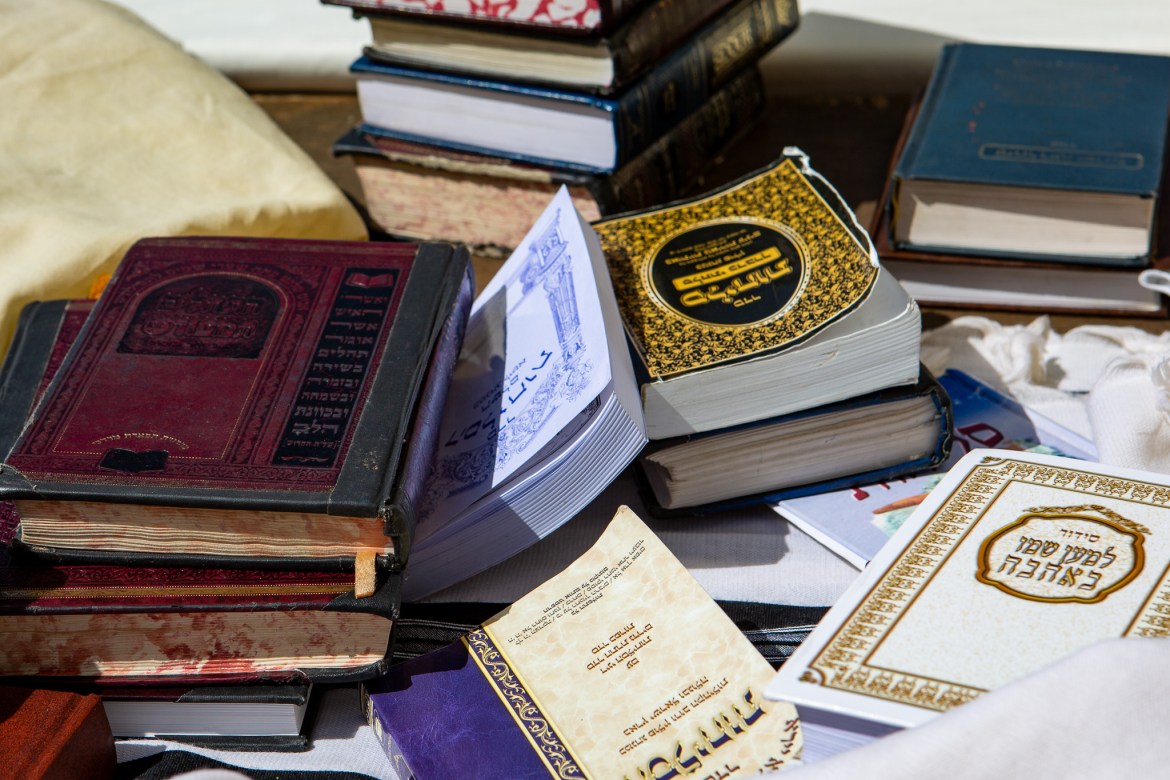
A man reading from a prayer book beside the Western Wall.
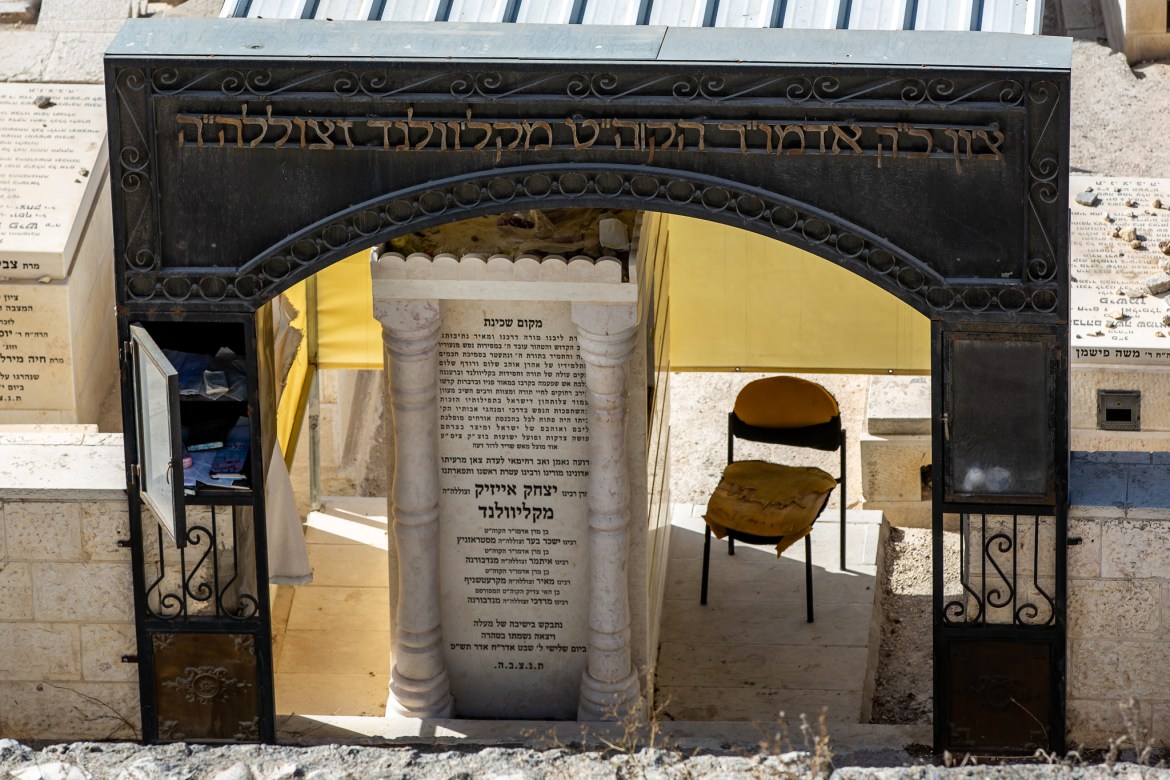
A closer look at the limestone graves packed tightly across the Mount of Olives Jewish Cemetery.
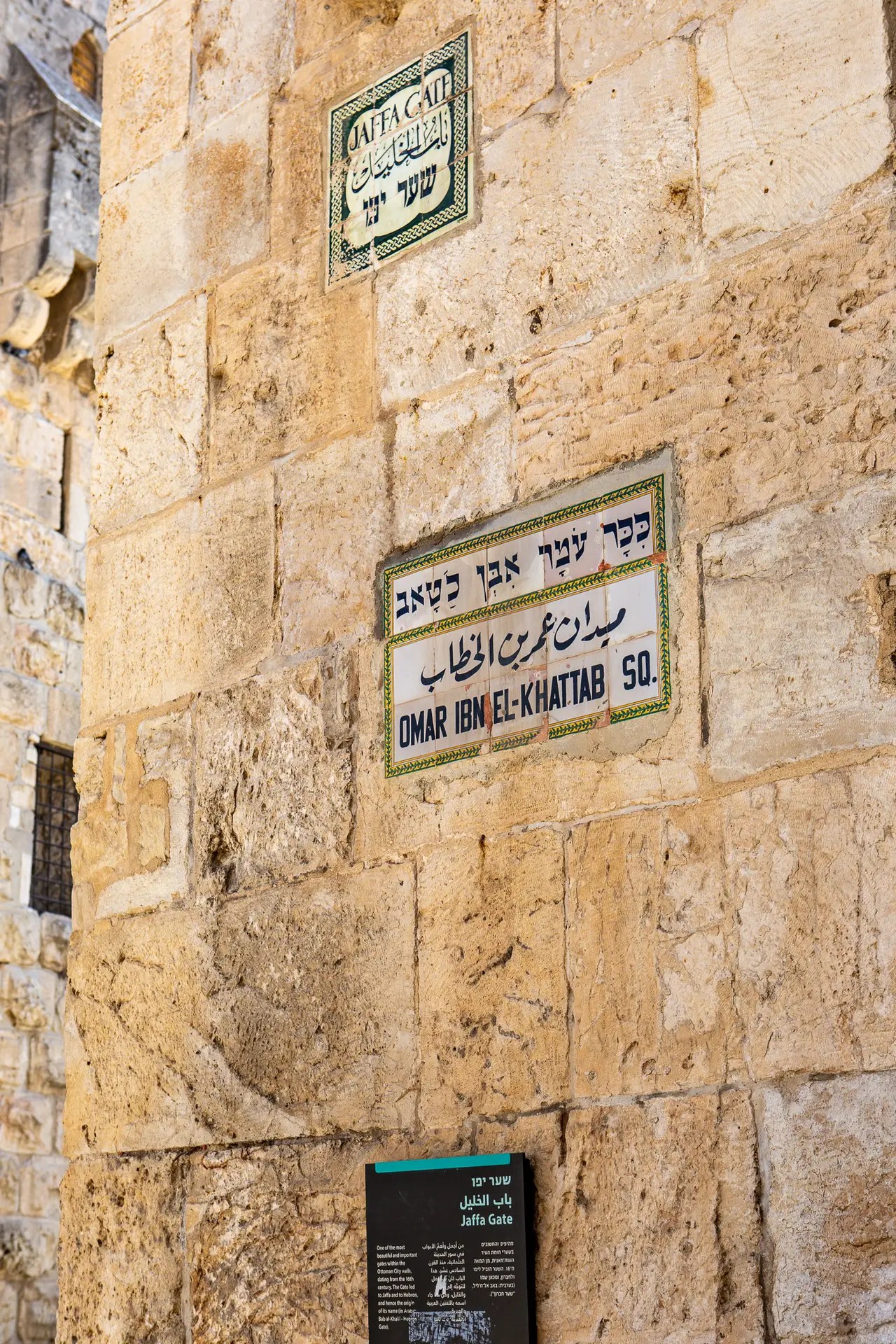
A multilingual Via Dolorosa street sign mounted on the limestone wall of Jerusalem’s Old City.
Looking up at the brightly painted Christ Pantocrator dome inside the Holy Sepulchre.
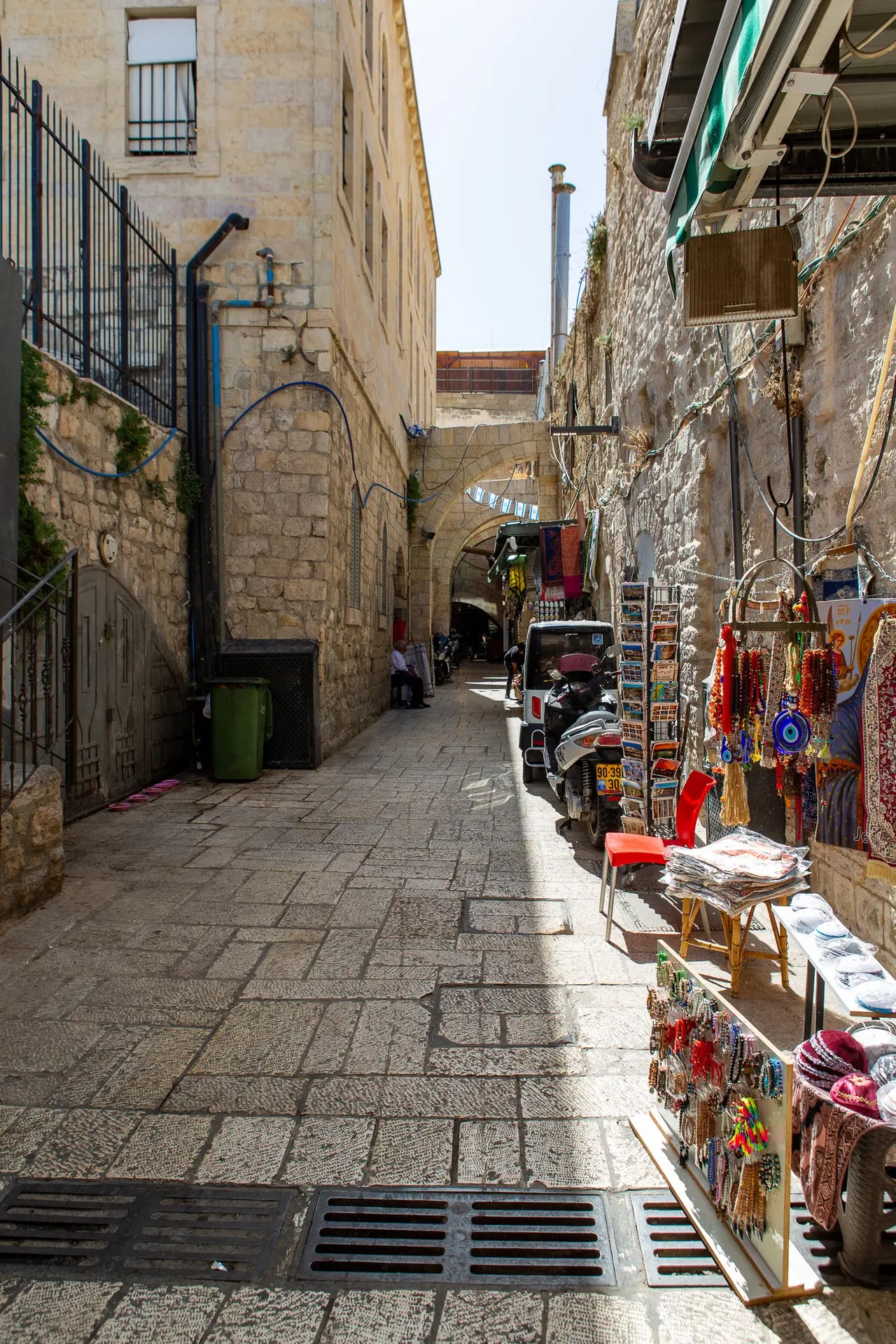
A quieter stone lane lined with small shops as we worked our way through the Old City.
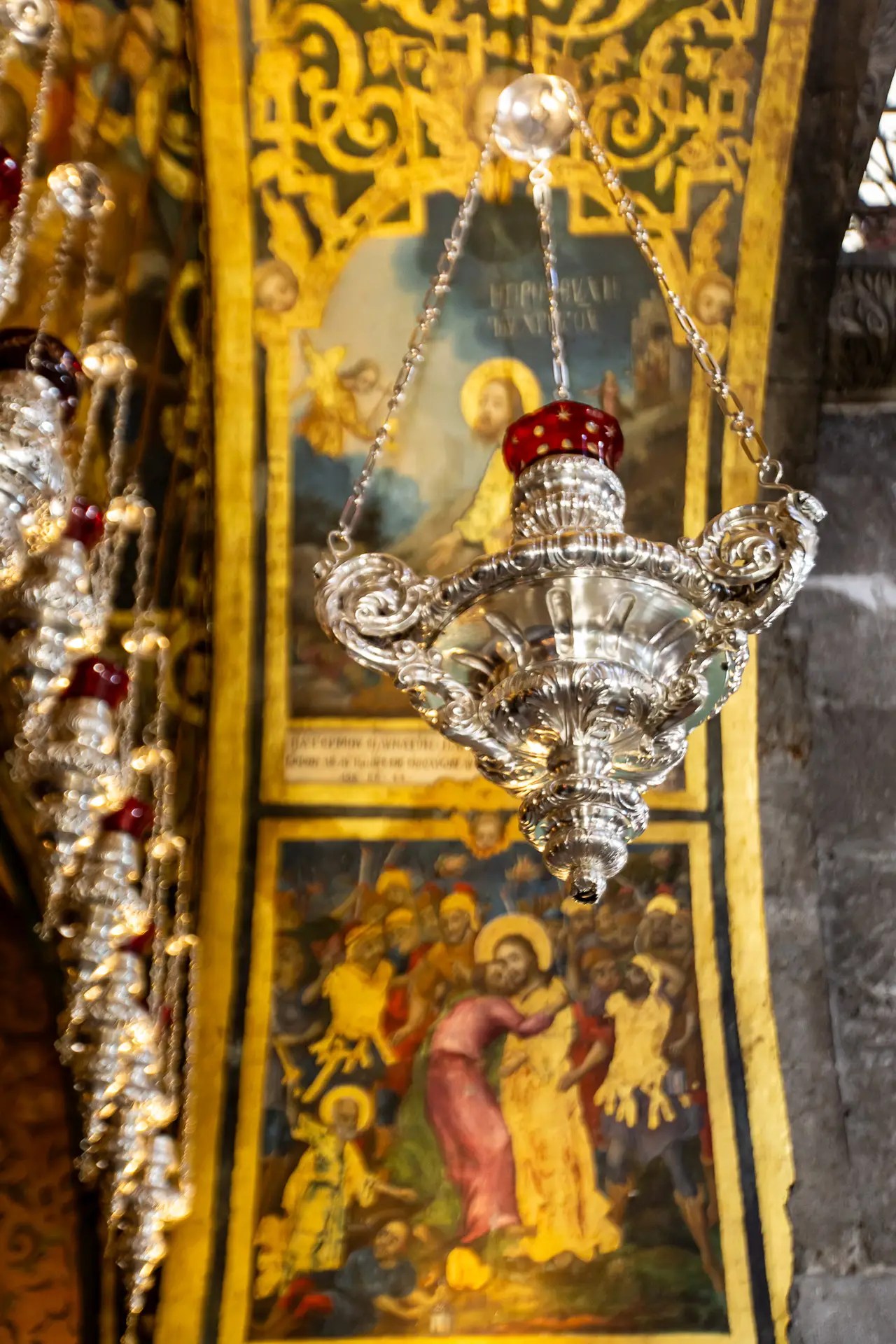
Hanging lamps and religious artwork inside the richly decorated Calvary area of the Church of the Holy Sepulchre.
The Experience, Told Through the Journey
Inside the Church of the Holy Sepulchre
The exterior wasn’t particularly elaborate, and there was some scaffolding around it during our visit. Inside was another matter entirely.
The church was packed with chapels, stairs, stone passages, hanging lamps, icons and religious decoration, and figuring out exactly where everything was took some effort. After a short explanation from our guide, we were given a meeting time outside and allowed to explore on our own. It was crowded and somewhat confusing, but that was part of the experience.
Laura and I made our way through the Calvary area, where there was a short line to approach the traditional site of the Crucifixion. I didn’t reach through the opening to touch the rock. The same reasoning I had at the Western Wall applied here: touching a physical object isn’t something I believe affects my spiritual life. I also recognize that we can’t know with absolute certainty whether every traditional location is exact. Still, standing in a place associated for centuries with those events was both historically fascinating and personally meaningful.
Below the Church
We kept going deeper, eventually descending through the Chapel of Saint Helena and farther down toward the Chapel of the Finding of the Cross.
It was cooler and much quieter below the main level. We were exploring on our own by then, so some of what I photographed—particularly the crosses carved into the stone walls—I researched only after we returned home.
This was one of those places where I would have happily slowed down. Instead, the excursion clock was always somewhere in the back of my mind.
The Tomb We Didn’t Have Time to Enter
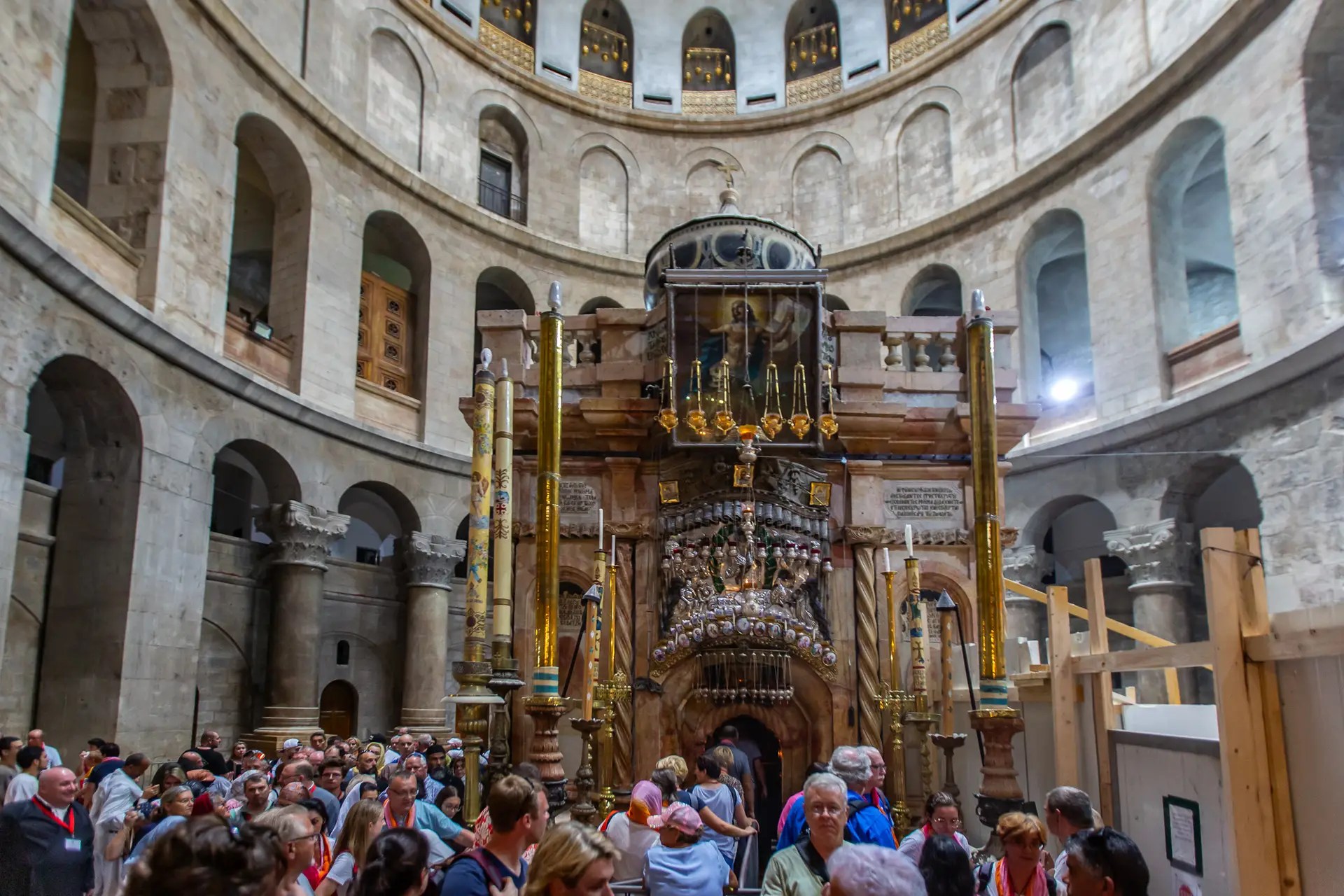
Back upstairs, the Aedicule stood beneath the huge Rotunda, surrounded by a long line of people waiting to enter the traditional Tomb of Jesus.
Unfortunately, the wait was more than an hour.
With a group meeting time and a bus schedule waiting for us outside, there simply wasn’t enough time. Laura and I photographed the shrine and watched the steady line of visitors, but we had to move on.
That’s probably my biggest regret from the day—not because I think entering the Tomb would somehow change my faith, but because we were already there and I would have liked the chance to experience it without watching the clock.
Looking across the Mount of Olives cemetery and Kidron Valley toward Jerusalem.
The Experience, Told Through the Journey
Out Through Jaffa Gate
Eventually we worked our way back outside and continued through the Christian Quarter toward Jaffa Gate.
The crowds never really bothered us, and physically I still felt fine despite all the walking. Laura loves walking anyway, so she was perfectly happy. The only thing either of us really needed by the time we reached the bus was some cooler air.
The bus was waiting nearby, and the driver was selling bottles of water for a dollar. Possibly the most sensible purchase of the entire day.
Jerusalem From the Mount of Olives
Our final major stop was the Mount of Olives, and visually it was the finish I had been waiting for.
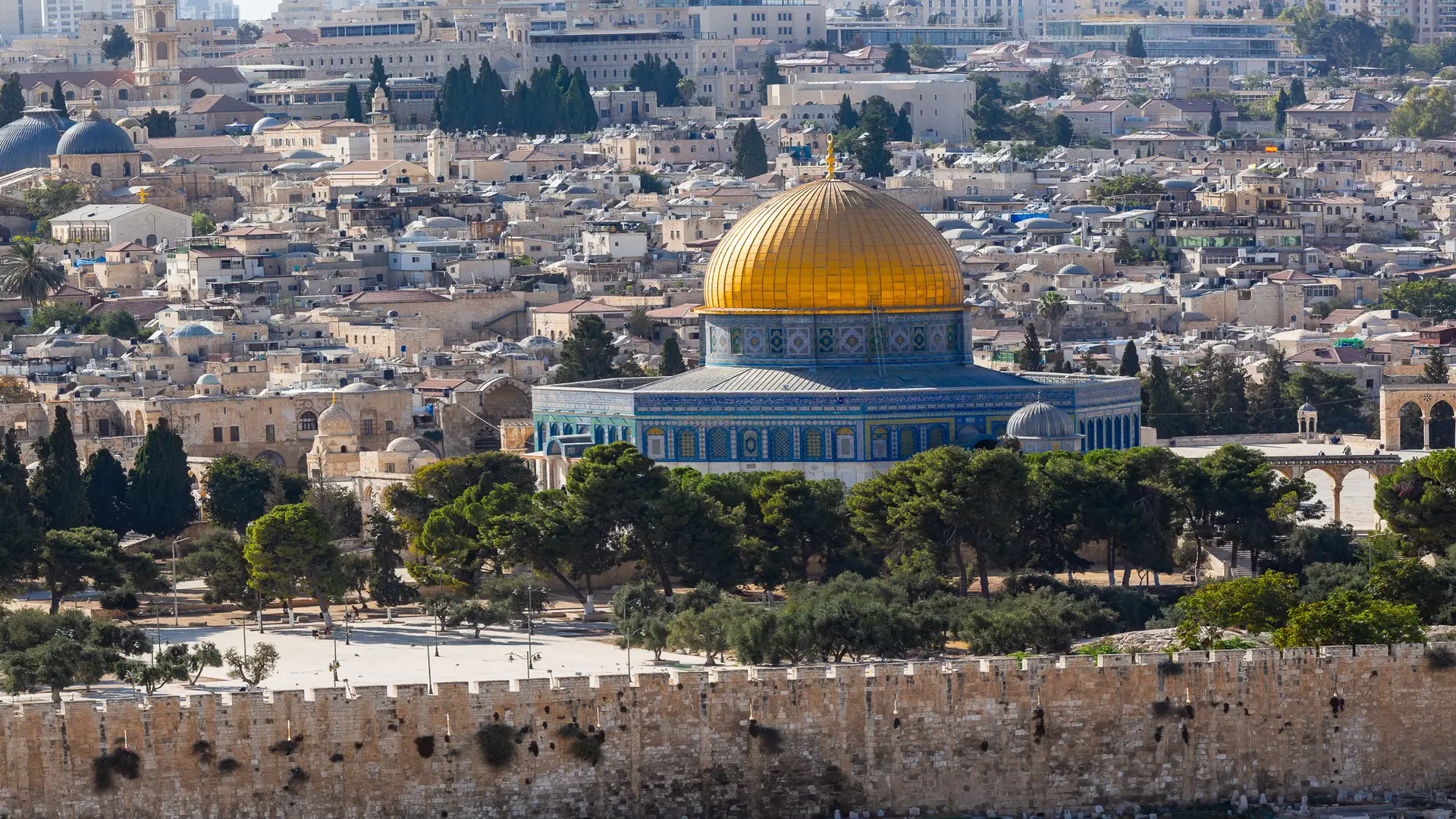
The Jewish cemetery spread across the hillside below us, the Kidron Valley separated us from the Old City and the gold Dome of the Rock immediately dominated the skyline. The cemetery itself was far larger than I had imagined, with row after row of pale stone graves covering the slope.
The Dome of the Rock was one of my must-have photographs from Jerusalem. I pulled out the 70–200mm and concentrated on the skyline, Temple Mount and details across the valley. This was also one of those moments when I badly wished I’d owned the 500mm lens I have now.
Someone took a photograph of Laura and me together at the overlook with Jerusalem behind us, and that became my favorite photo of us from the day.
Back to Haifa
The ride back to Haifa was quiet. I stayed awake because there was still too much outside the window I wanted to see, while Laura eventually fell asleep after we talked about the day.
She especially enjoyed the shops and walking the Via Dolorosa. I couldn’t really pick one part. I liked all of it.
By the time we reached MSC Lirica we still had time for snacks and drinks in the buffet area before dinner, followed later by sailaway from Haifa.
One day in Jerusalem had been enough to see a tremendous amount. It was also enough to know I’d rather return someday without a bus schedule telling me when I have to leave.
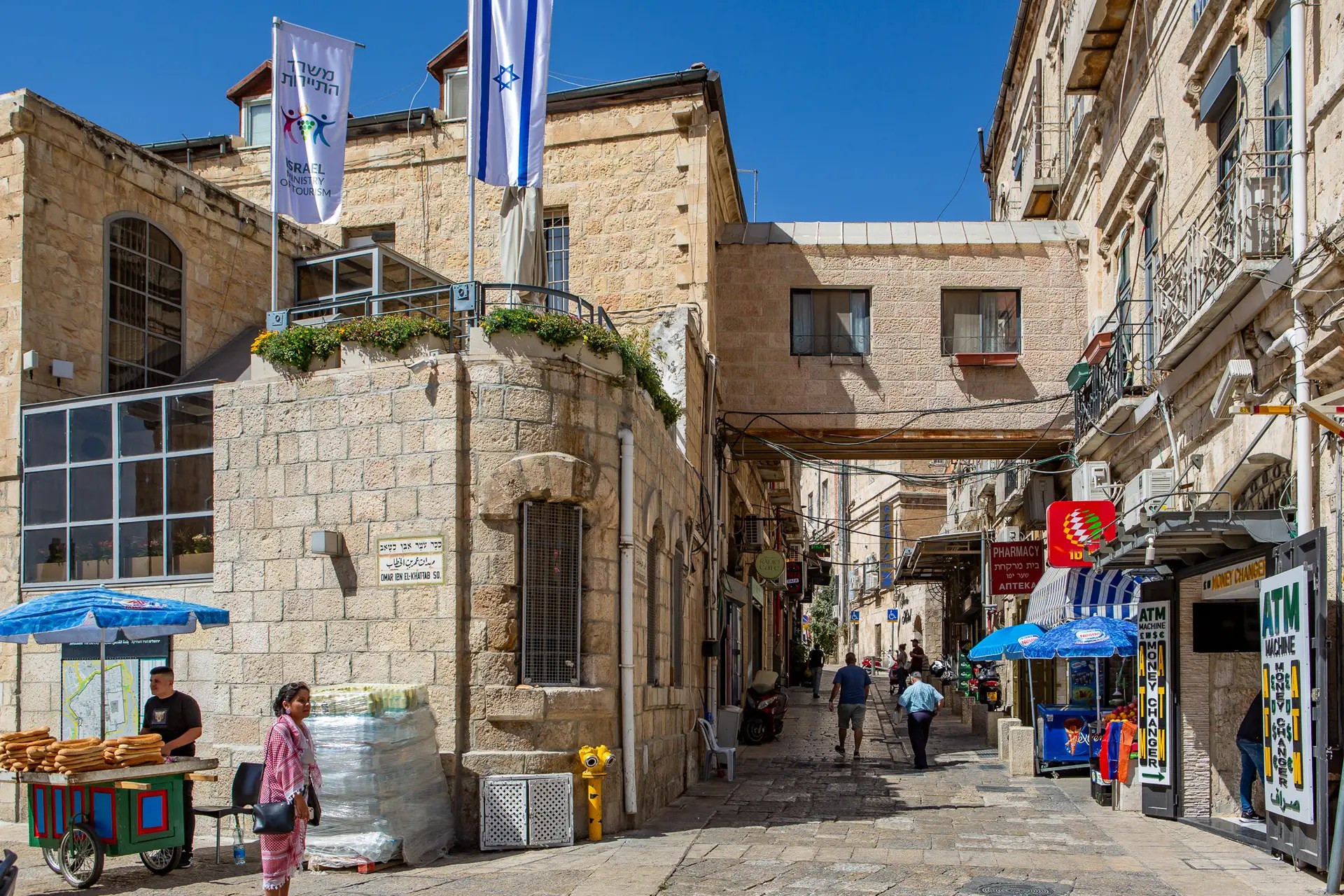
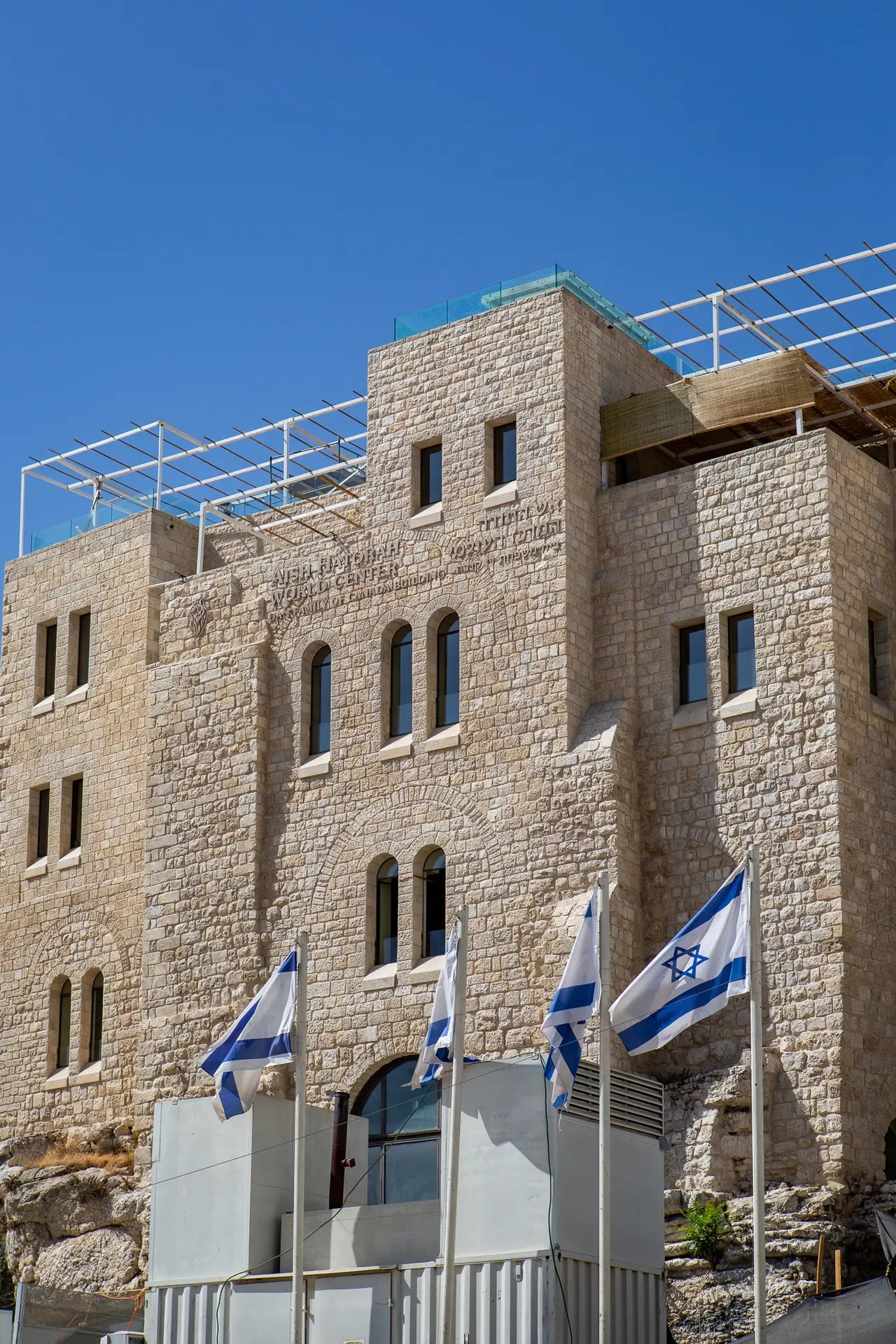
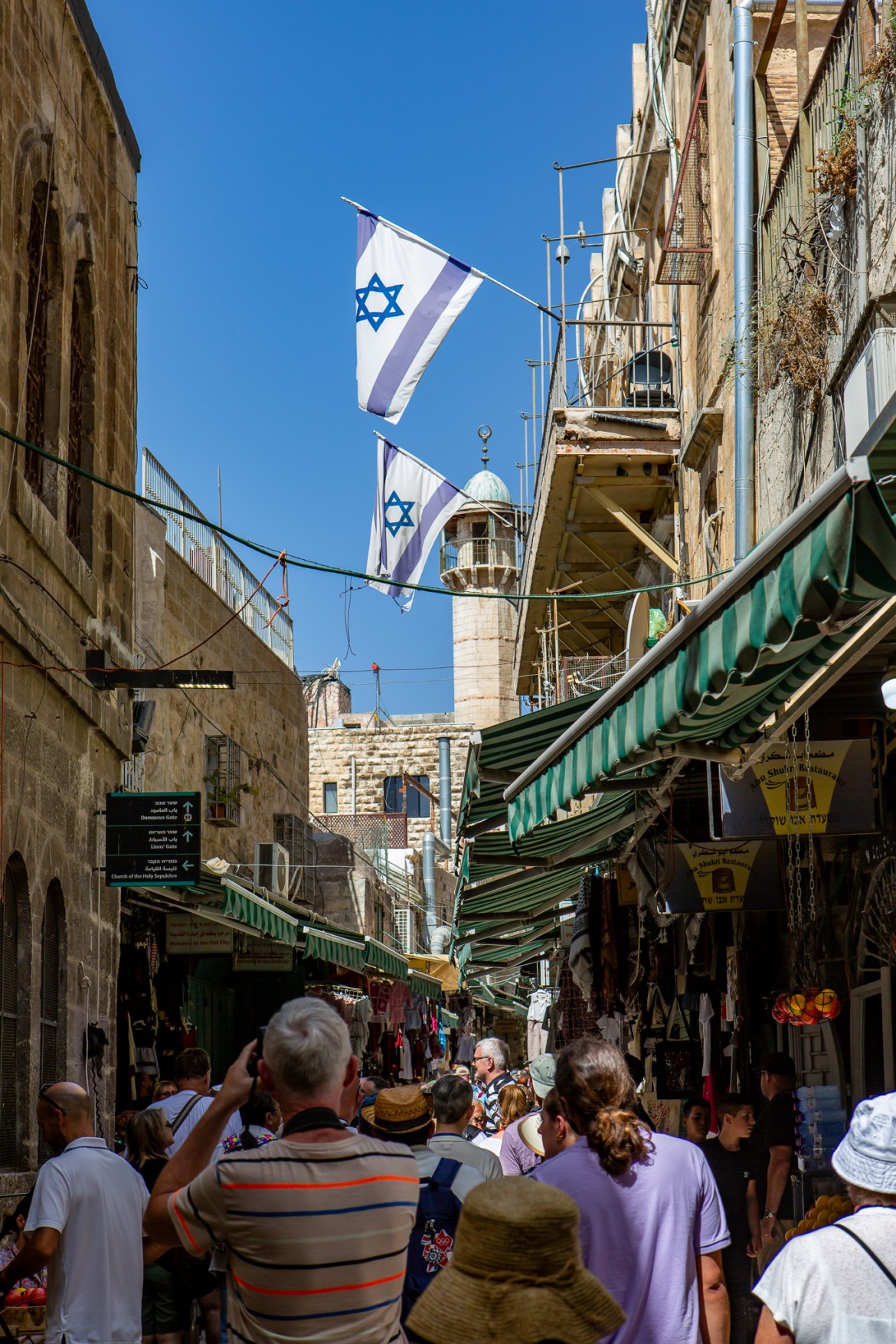
A quieter side street beneath Israeli flags as we continued through Jerusalem’s Old City.
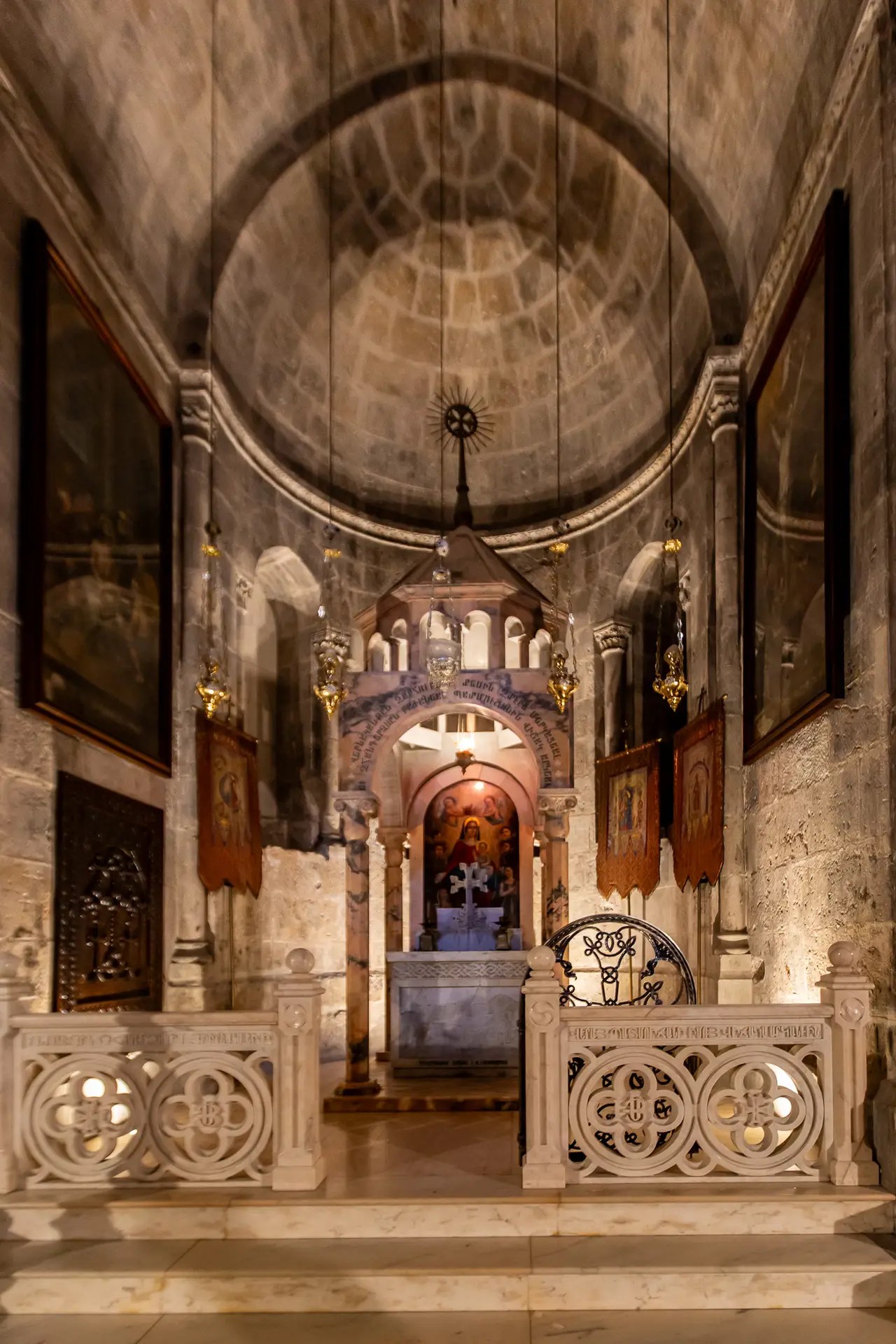
A wider view of the altar and rough rock walls deep beneath the Church of the Holy Sepulchre.
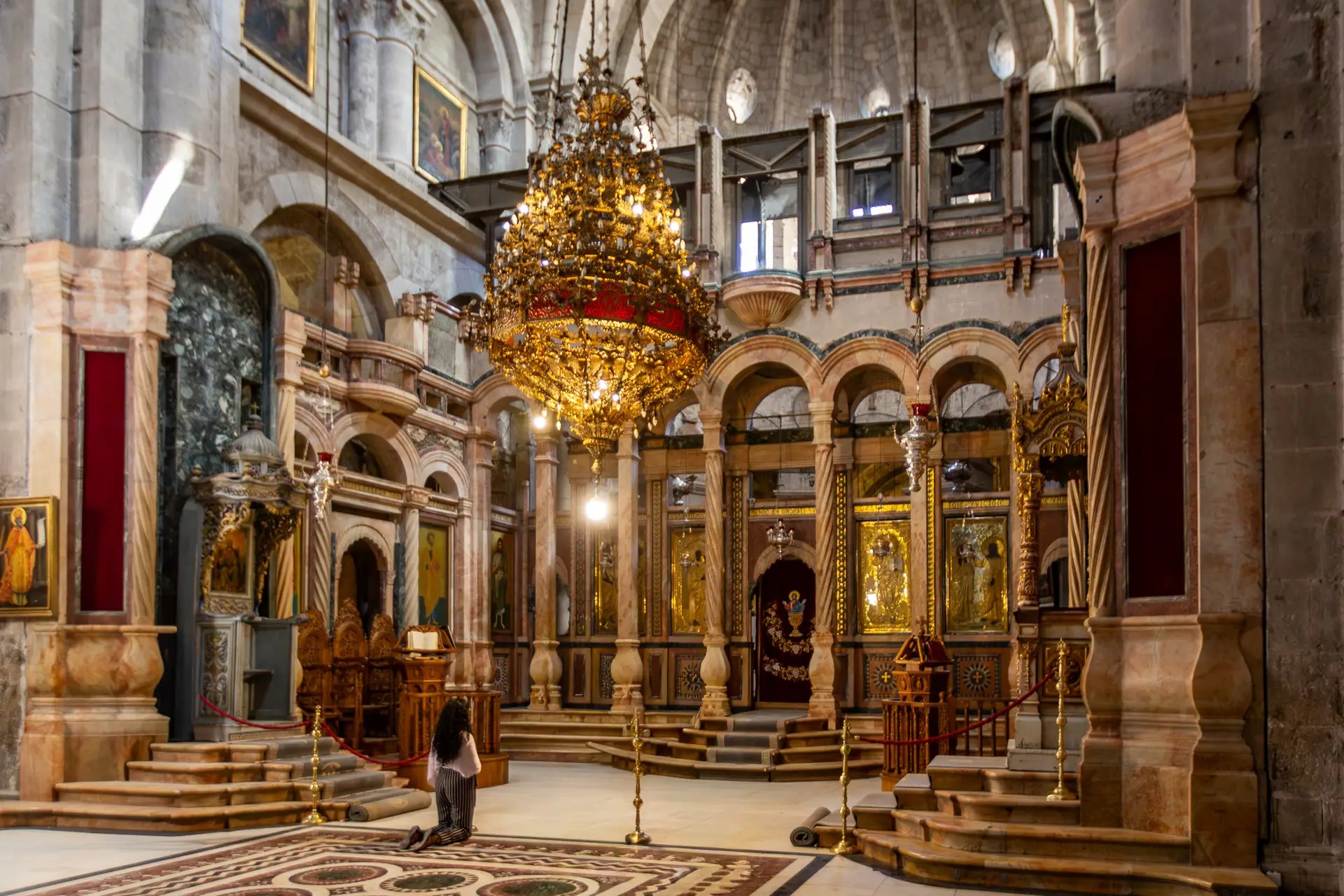
The richly decorated Greek Orthodox Katholikon inside the Church of the Holy Sepulchre.
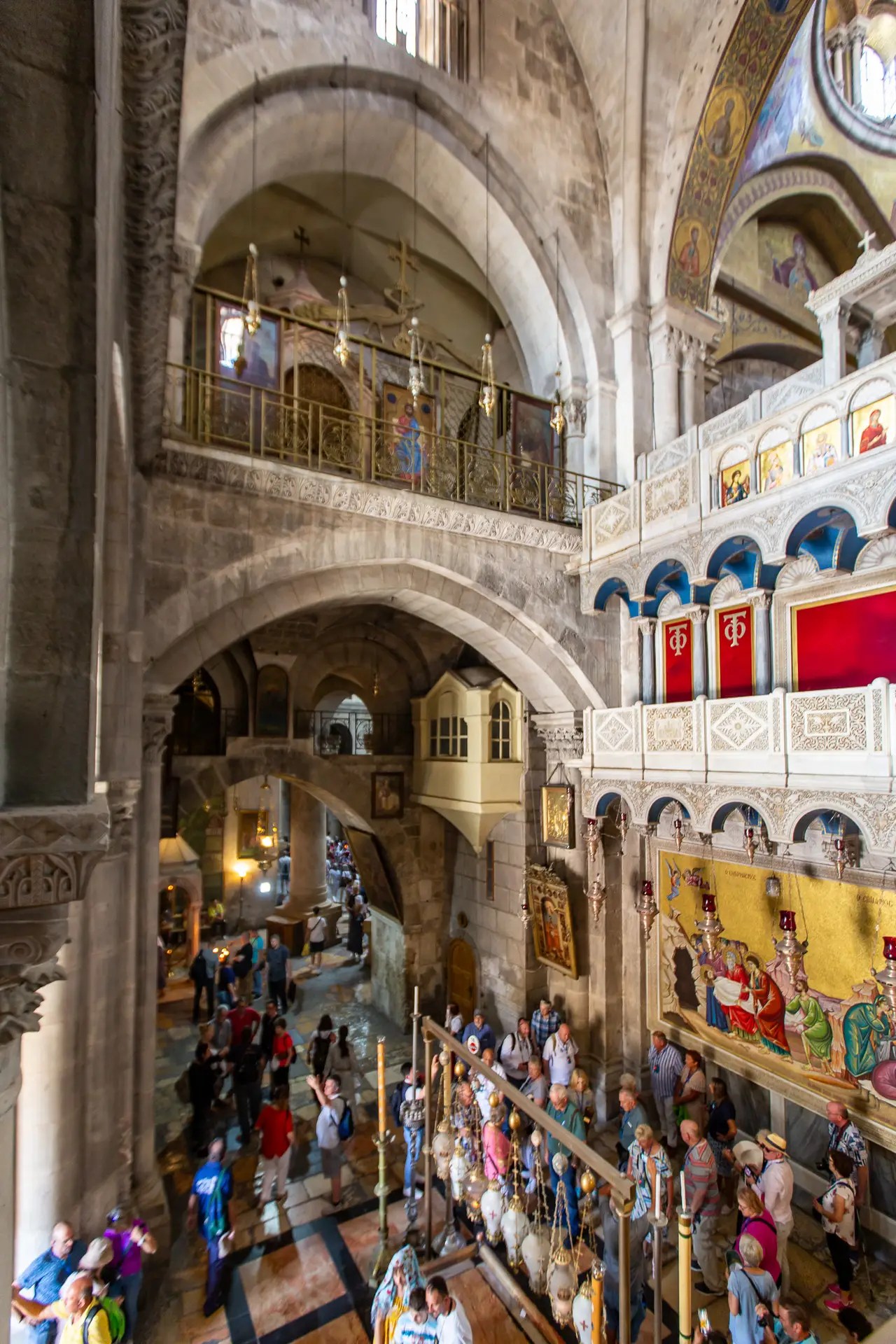
Looking down through the layered arches and chapels inside the Church of the Holy Sepulchre.
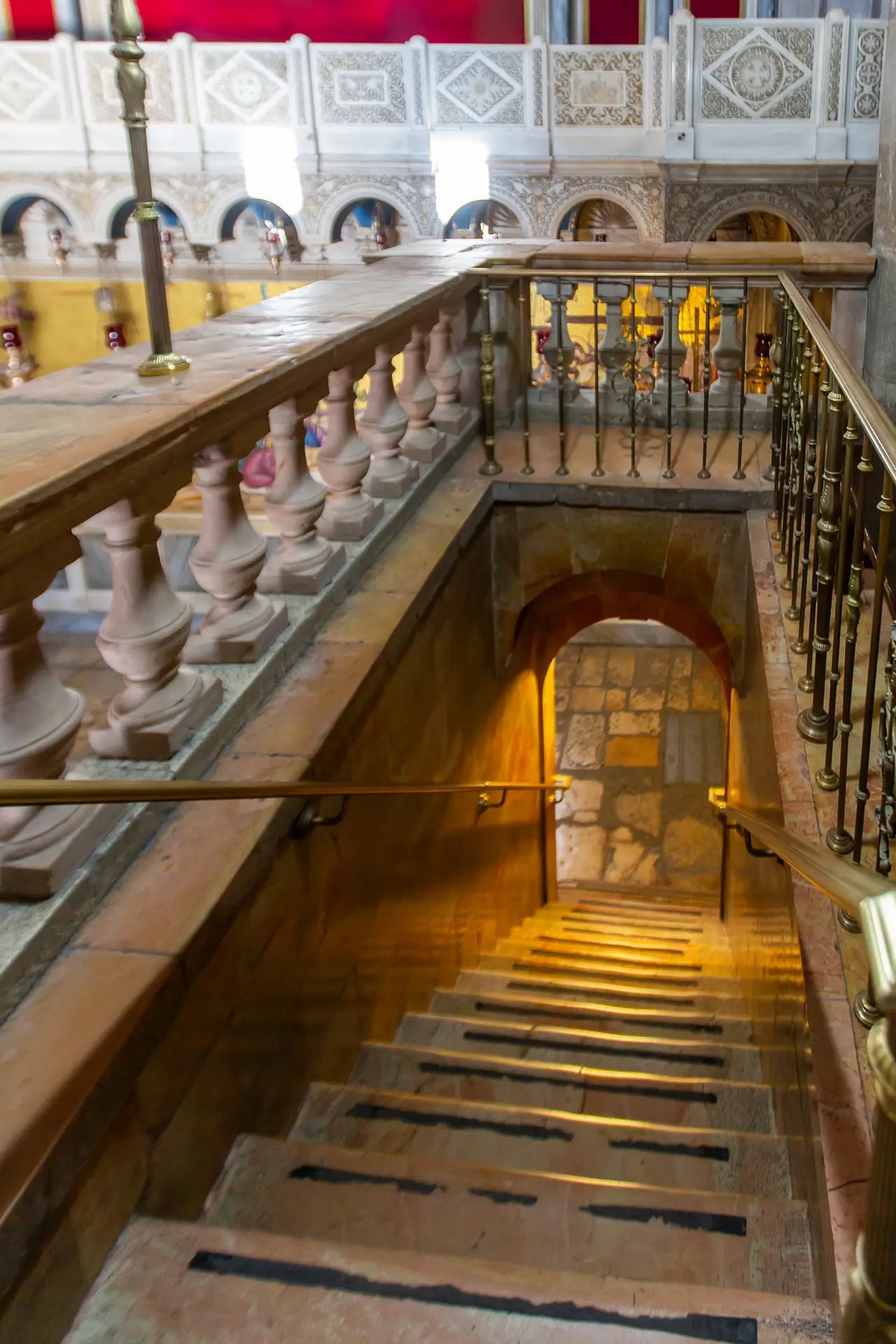
Descending one of the worn stone staircases inside the Church of the Holy Sepulchre.
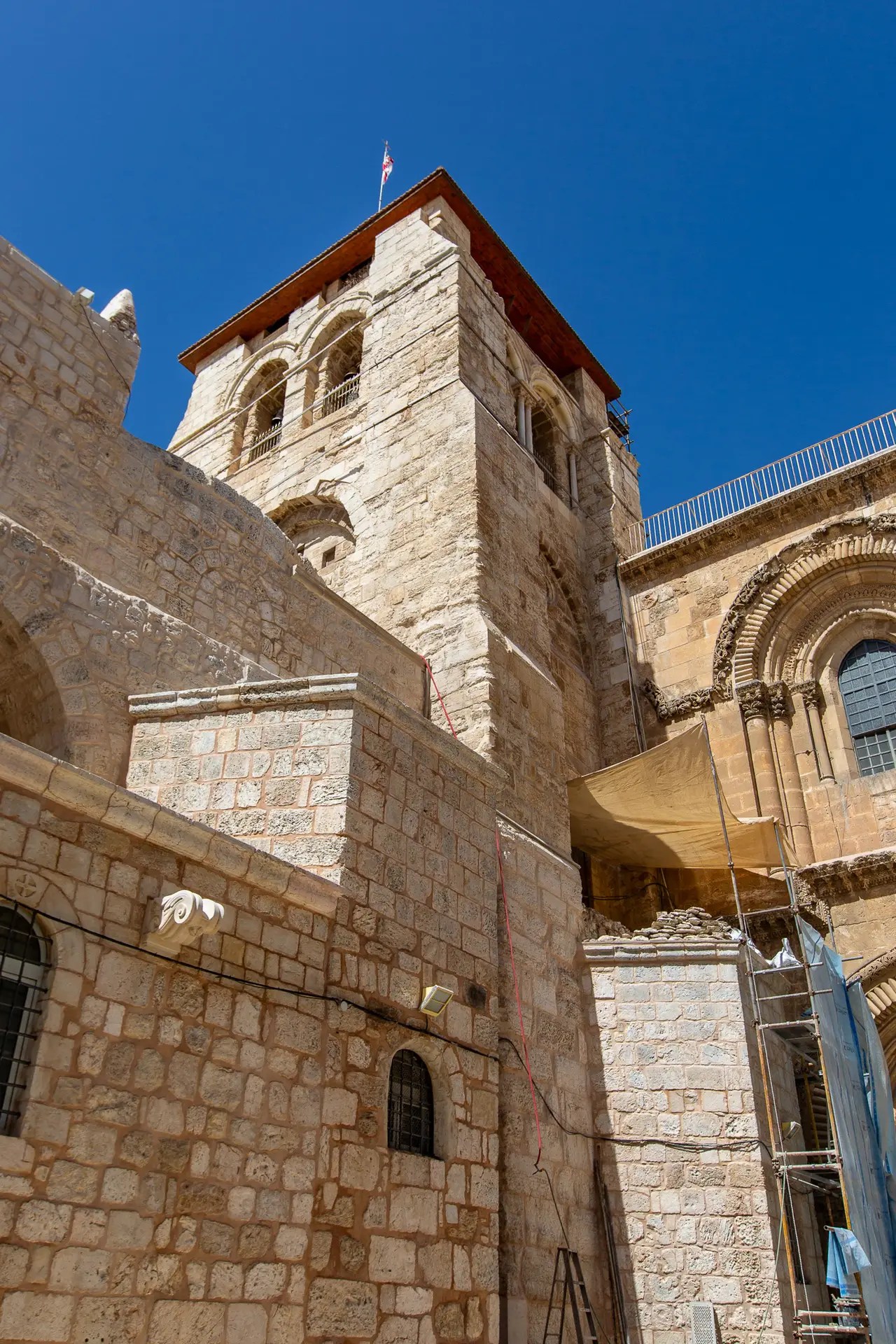
The Crusader-era bell tower of the Church of the Holy Sepulchre rising above the surrounding stone buildings.
The exposed Rock of Calvary visible behind glass in the Chapel of Adam.
Food, Drinks & Quick Stops
Jerusalem wasn’t much of a food day for us. The excursion kept moving, and we never really stopped for lunch. We passed plenty of food stands and shops through the Old City markets, but we stayed with the group rather than stopping to eat.
By the time we got back to the bus near Jaffa Gate, the driver was selling cold bottles of water for $1, which was about all I needed at that point. We were back aboard MSC Lirica before dinner and grabbed our usual snacks and drinks in the buffet area while we relaxed after the excursion.
In the Frame
The Faces Behind This Journey
Laura in the Western Wall Plaza with the wall behind her.
Laura and I overlooking Jerusalem from the Mount of Olives, with the Old City and Dome of the Rock behind us.
Laura and I outside Jaffa Gate before heading back to the bus.
Me in the Western Wall Plaza with the wall and prayer area behind me.
Just Before: Kuşadası
Walk through Ephesus, the House of the Virgin Mary and the ancient streets that connected our first visit to Turkey with another chapter of early Christian history.
The Dome of the Rock rising above Jerusalem’s Old City from our viewpoint on the Mount of Olives.
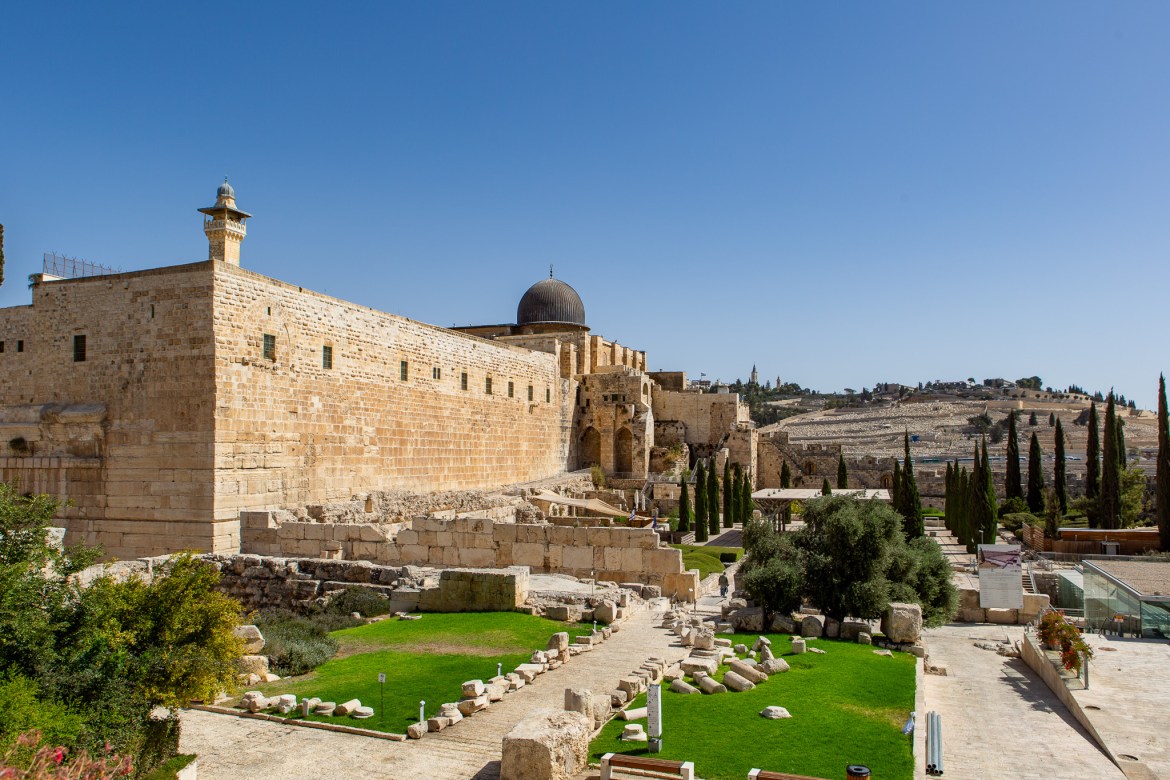
Looking across the Kidron Valley toward Al-Aqsa Mosque and the southern end of the Temple Mount.
Pilgrims gathered around the Aedicule containing the traditional Tomb of Jesus.
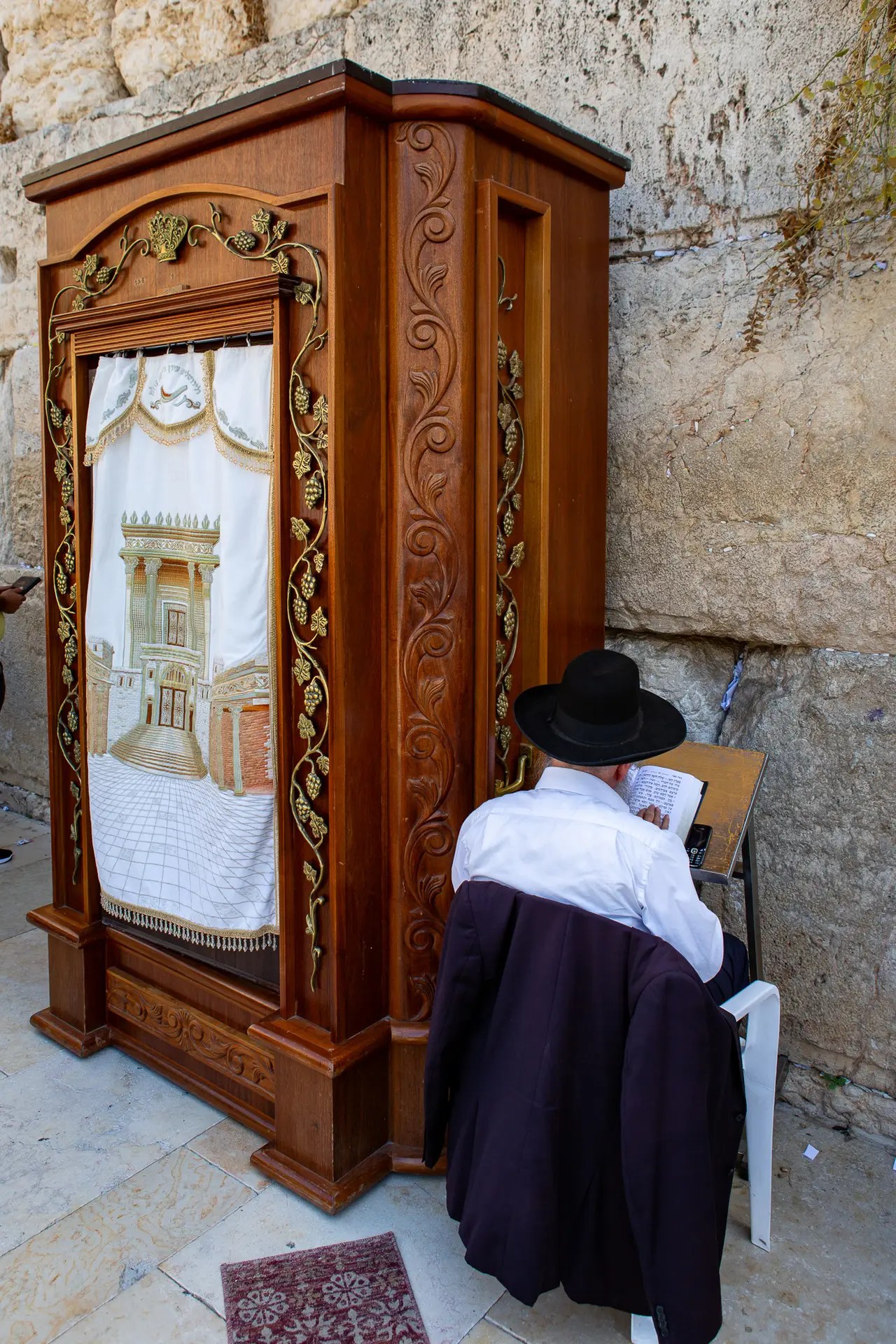
A worshipper beside one of the wooden Torah arks in the men’s prayer section.
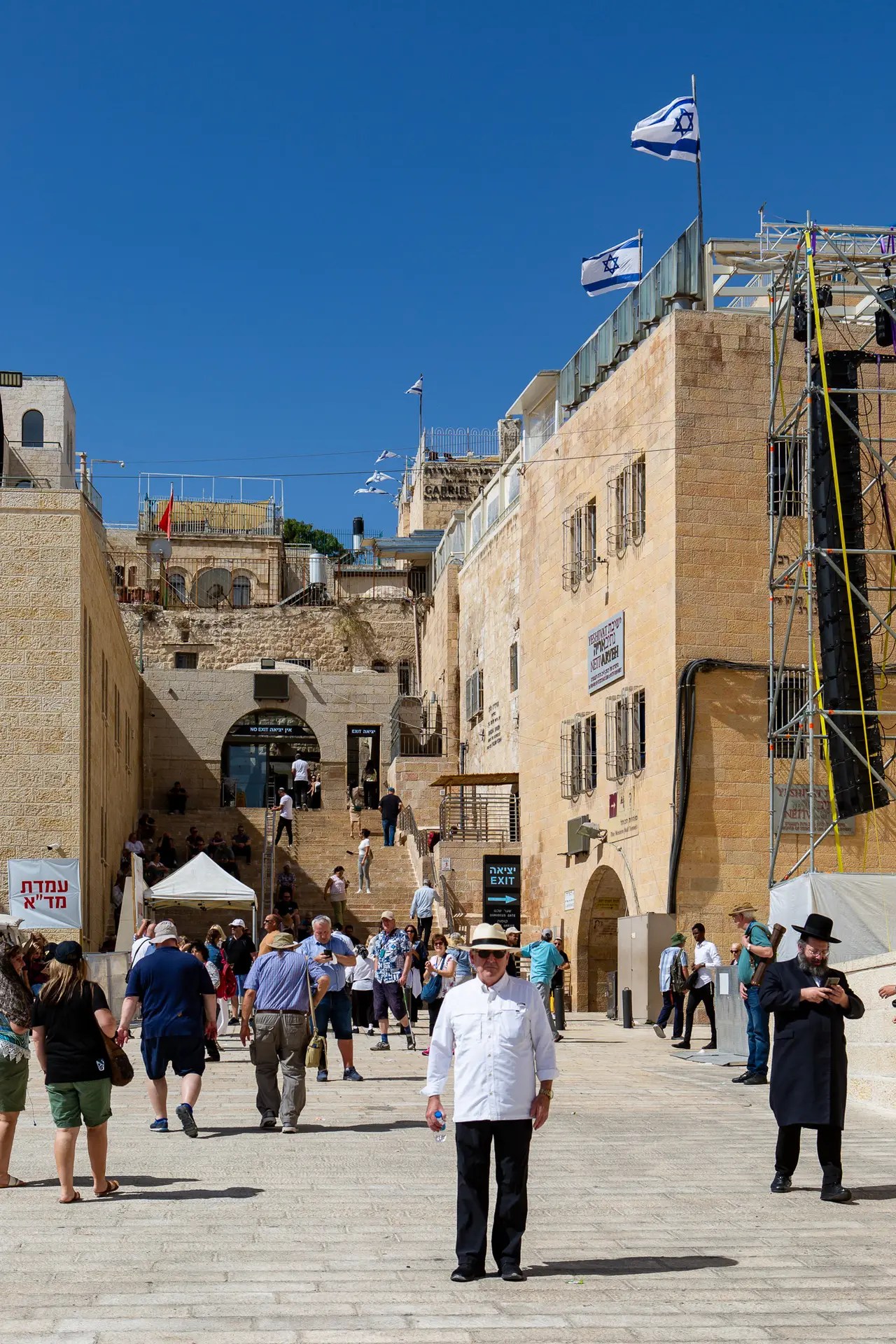
Israeli flags hanging from one of the stone buildings beside the Western Wall Plaza.
Looking through the Katholikon with the Christ Pantocrator dome overhead.
One of the smaller chapels tucked into the layered interior of the Church of the Holy Sepulchre.
Photography Notes
Jerusalem gave me two completely different photographic environments during the same excursion.
Outside, the strong sun produced plenty of light but also hard shadows across the limestone buildings and narrow streets. The Western Wall and Old City markets were busy enough that isolating subjects required patience, particularly when I wanted photographs of worshippers without moving into their personal space. I relied on the longer lens for those situations and photographed the Bar Mitzvah celebrations and prayer activity from a distance.
The Church of the Holy Sepulchre was the opposite problem. Light levels dropped dramatically, and I didn’t have a wide-angle lens with me. I pushed the ISO, used slower shutter speeds where I could and occasionally braced myself or the camera against whatever was available. Some photographs still ended up noisy or slightly blurred, but that’s the reality of photographing a crowded, dark interior while also trying to experience it rather than turning the entire visit into a photo assignment.
The Mount of Olives was easily my favorite photographic stop. The Dome of the Rock was one of my must-have Jerusalem images, and the 70–200mm gave me good compressed views across the Kidron Valley. Today I’d bring the 500mm without hesitation. There were details across the Old City that I could see but couldn’t isolate nearly as tightly as I wanted with the equipment I had in 2022.
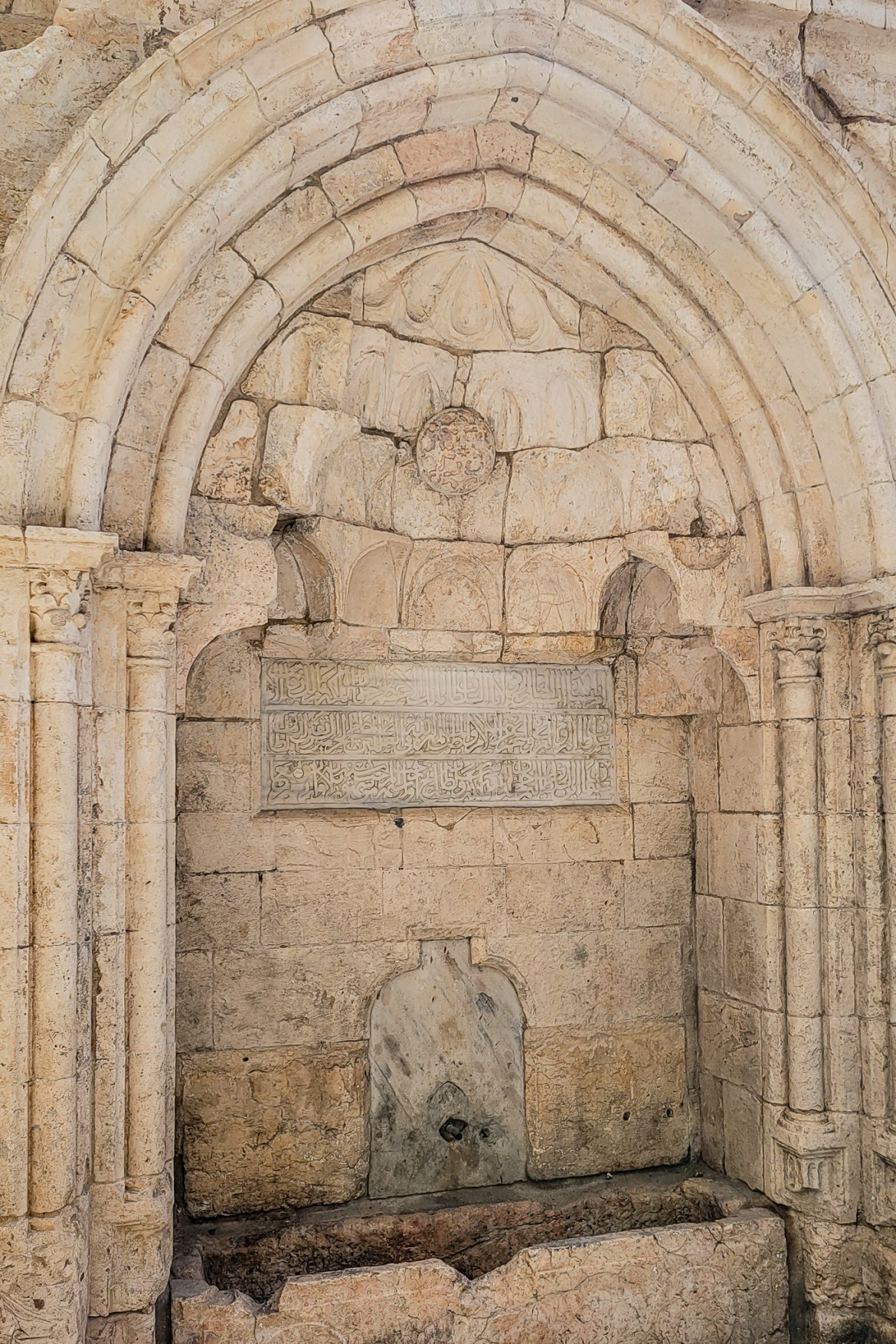
Another look across the Muristan Fountain before we continued toward the Holy Sepulchre.
A mosque minaret and gold dome rising above the homes on the Mount of Olives.
Pilgrims inside the ornate Greek Orthodox Chapel of Calvary at the traditional site of the Crucifixion.
Centuries of crosses carved into the stone walls near the stairway to the Chapel of Saint Helena.
The Armenian Chapel of the Division of the Raiment inside the Church of the Holy Sepulchre.
Worshippers, chairs and a Torah ark inside the men’s section of the Western Wall.
A shop display filled with carved religious scenes and a menorah in Jerusalem’s Old City.
Practical Notes & Lessons Learned
The biggest lesson from Jerusalem is simple: one day works, but one day isn’t enough.
A cruise excursion was a good way for us to experience Jerusalem for the first time. Transportation was handled, security requirements were explained and we covered an impressive amount of ground. The tradeoff was the schedule. There were places where I wanted to slow down, especially along the Via Dolorosa and inside the Church of the Holy Sepulchre, but the group always had another stop and a departure time.
The clearest example was the Tomb. With an estimated wait of more than an hour, entering the Aedicule simply wasn’t realistic without missing the excursion group’s meeting time. If we return, I would rather stay in or near Jerusalem and give the Old City at least a couple of days instead of trying to fit everything between two bus rides.
I’d also slow down along the Via Dolorosa and identify every station instead of catching only the ones the guide chose to emphasize. And apparently I would buy the $200 Noah’s Ark. Experience has now established that particular policy.
Security was visible throughout the day, including armed personnel around entrances and gates, and we needed passports, our permit and ship cards when leaving Haifa. None of it created problems for us, but this was definitely a destination where following the excursion instructions mattered.
Jerusalem is also a place where I’d separate historical and religious significance from the idea that a particular stone or physical object has to carry spiritual power. I was glad I touched the Western Wall and saw the traditional locations associated with Calvary and the Tomb, but the significance for me came from understanding what happened in this city and thinking about the people who lived here—not from believing that touching something made the experience more sacred.
And yes, I’d go back. The first visit covered the landmarks. A second one could actually give us time to experience the city.
Back outside in the sunlit streets of Jerusalem’s Christian Quarter after leaving the Holy Sepulchre.
Entering the Western Wall Plaza in Jerusalem’s Old City.
Descending into the rock-cut Chapel of the Finding of the Cross beneath the Church of the Holy Sepulchre.
Entering the maze of narrow stone streets and small shops beyond the Western Wall area.
Stone buildings and Israeli flags along the route leading away from the Western Wall Plaza.
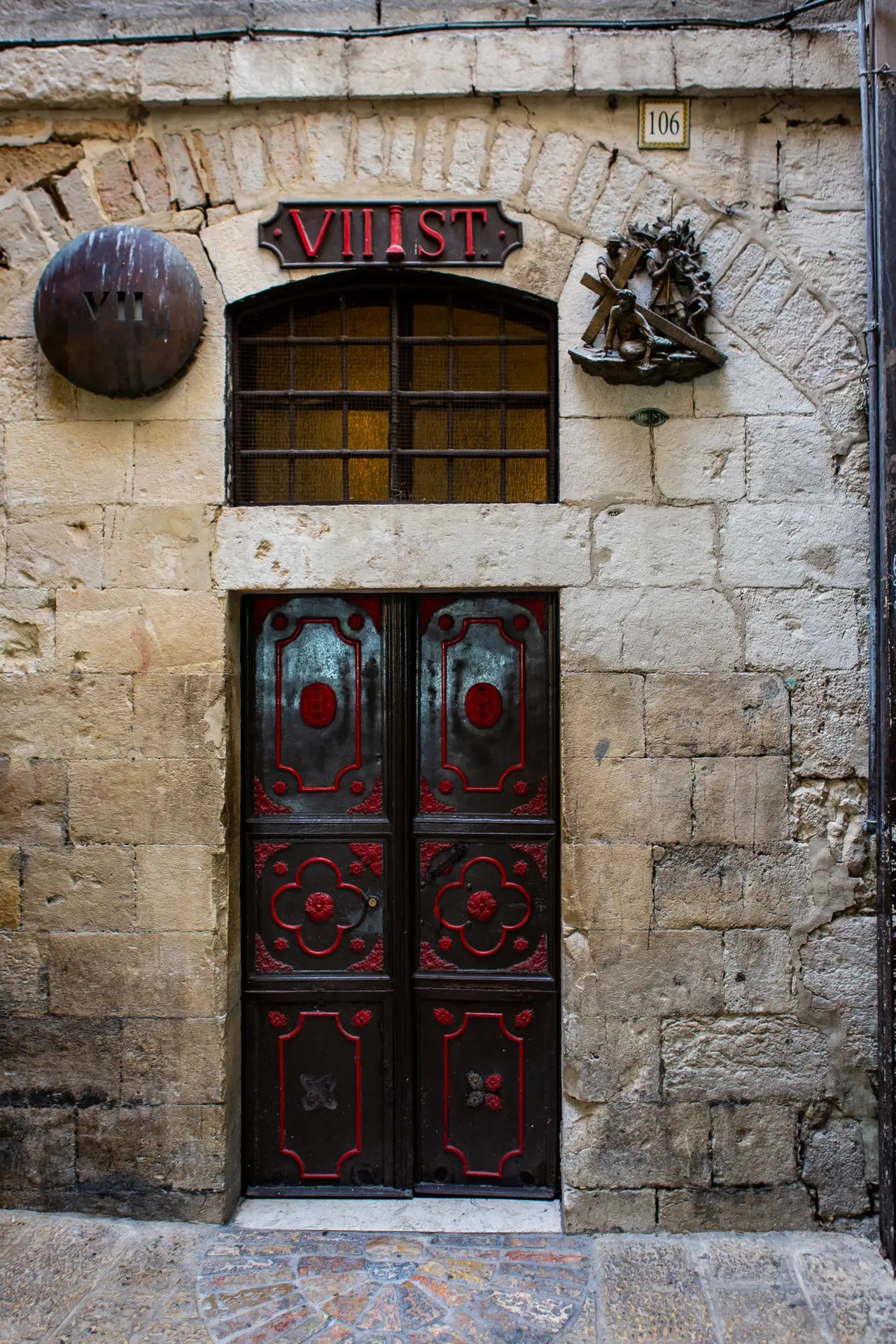
The doorway marking the Seventh Station of the Via Dolorosa.
The ornate Chapel of the Derision inside the Church of the Holy Sepulchre.
The Journey in Motion
Jerusalem is one of those places where movement adds something photographs can’t quite capture—the Bar Mitzvah celebrations at the Western Wall, the flow of people through the Old City markets, the narrow passages of the Via Dolorosa and the crowds moving through the Church of the Holy Sepulchre. This short video brings together pieces of a day that took us from the Western Wall through centuries of history before ending above the city on the Mount of Olives.
A moving look at our day in Jerusalem, from the Western Wall and Old City markets to the Via Dolorosa, Church of the Holy Sepulchre and views across the city from the Mount of Olives.
I’m Steve—a retired Army vet who traded rucksacks for camera bags and never stopped exploring. What started with a simple 110 film camera grew into photographing all 50 states and 30+ countries, from quick business-trip detours to adventures with my wife Laura. Shutter Nomadica is where I share those travels through the photographs, stories, and moments that made each place memorable.
Continue aboard MSC Lirica to Rhodes, where medieval walls, ancient ruins and the streets of the Old Town gave us one of the most distinctive stops of the cruise.