The Day Was Always About Ephesus
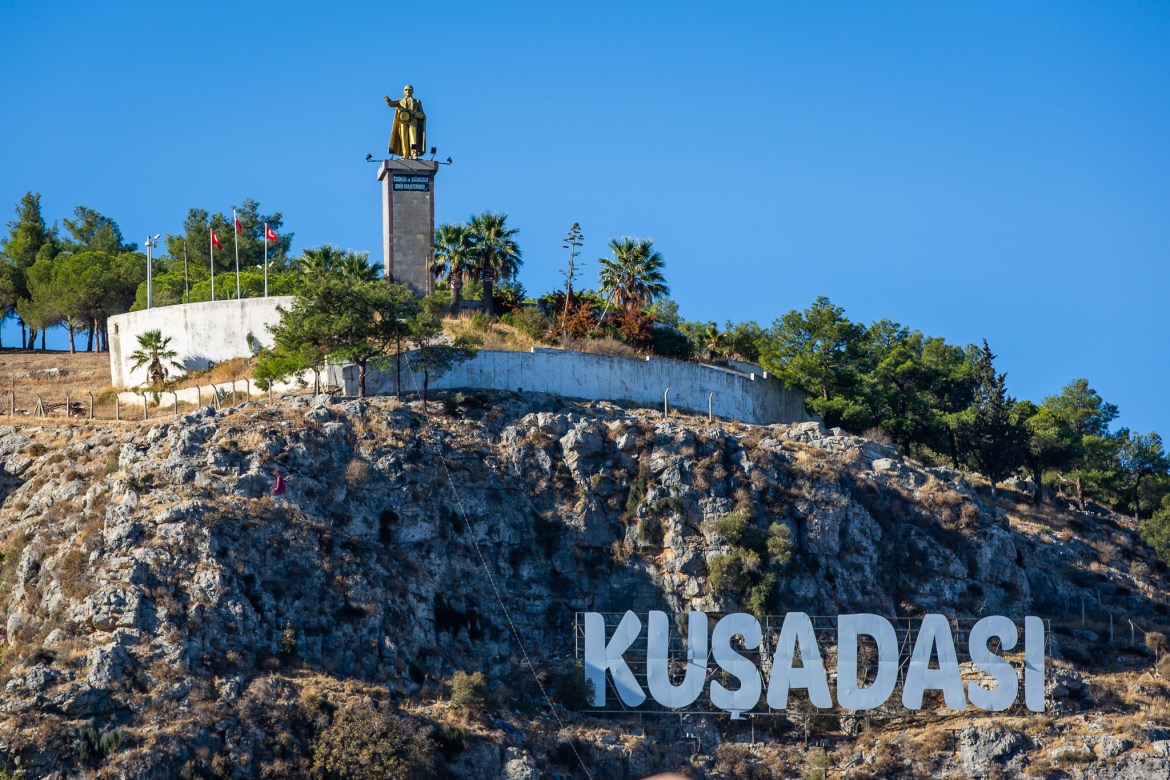
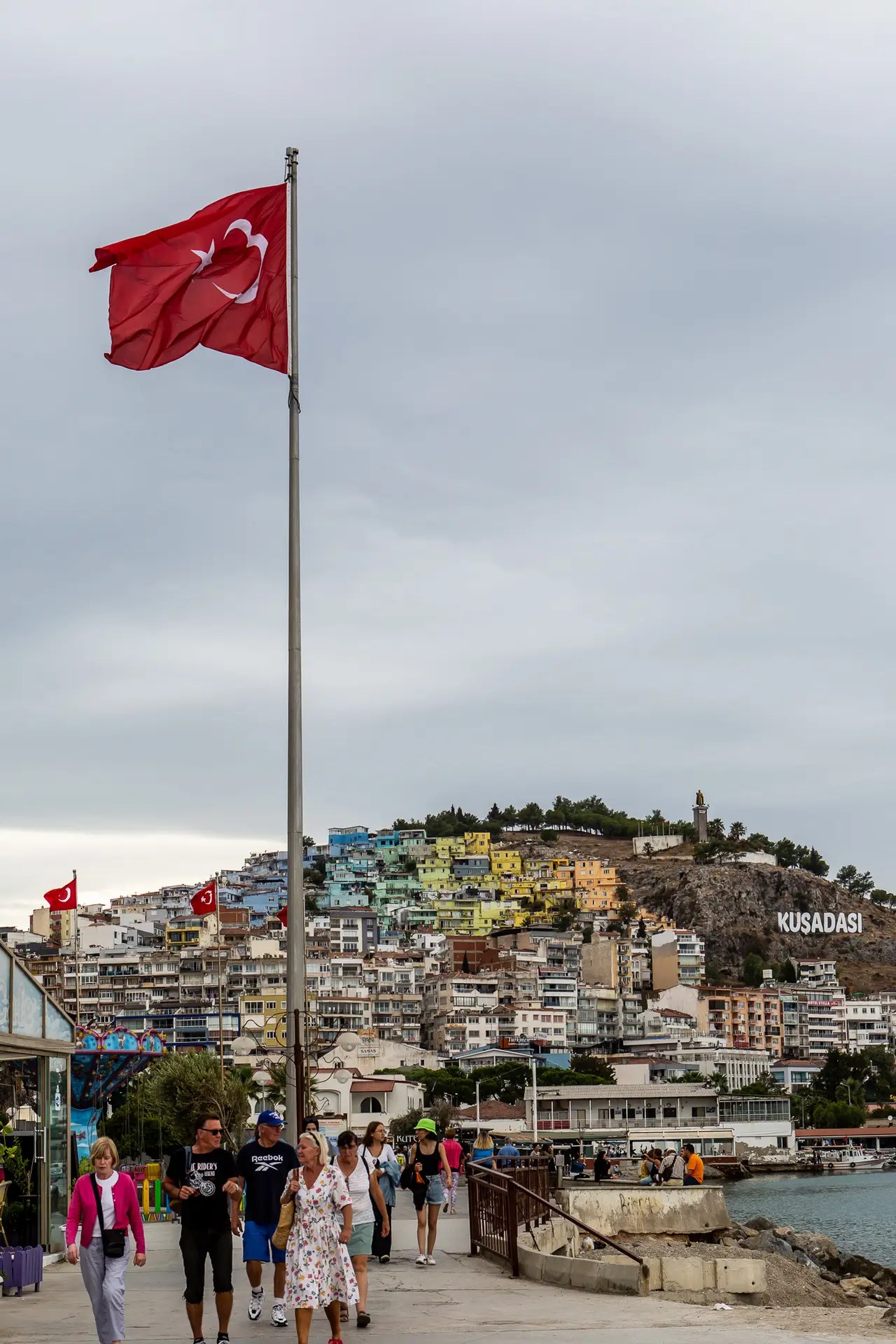
This was our first time in Turkey, and although I was interested in finally seeing the country, Ephesus was the reason I had picked this excursion. We ate breakfast aboard MSC Lirica, walked directly off the ship at Kuşadası without dealing with tenders, and met our excursion group on the dock. From the ship, the city looked roughly the way I had imagined it, with homes climbing the hills behind the waterfront, although the colorful buildings and the giant KUŞADASI lettering above town gave the view a little more personality than I expected. The hillside sign immediately made me think of Hollywood.
Our route would take us first into the hills to the House of the Virgin Mary before continuing to Ephesus, then into Selçuk for the archaeological museum and eventually a carpet-weaving center before returning to Kuşadası. I knew very little about the House of the Virgin Mary before we arrived, and most of the individual monuments inside Ephesus were things I would learn about as we walked. The one exception was the Library of Celsus. I knew that building, I knew I wanted the photograph, and everything else that day was going to build around finally seeing it for myself.
What surprised me later was how much of the rest of Ephesus stayed with me. Walking Curetes Street, seeing the amount of marble and carved stone still scattered through the city, standing inside the enormous Great Theatre and learning that the ancient harbor once reached much closer to the city gave me a better sense of how Ephesus actually functioned. I still think first about the Library, but the day became much more than a single photograph.
Journey Timeline
Our day began at the cruise port in Kuşadası and followed a mostly organized excursion until we returned to the waterfront, where Laura and I had time to explore on our own.
- Kuşadası Cruise Port: Breakfast aboard MSC Lirica, then directly off the ship to meet our excursion group on the dock.
- House of the Virgin Mary: Walked the wooded pilgrimage grounds, went inside the house and photographed the surrounding shrines, Wishing Wall and other sites.
- Ancient Ephesus: Entered from the upper portion of the archaeological site and followed the downhill route through the civic center and along Curetes Street.
- Library of Celsus, Great Theatre & Arcadian Way: Reached the part of Ephesus I had most wanted to photograph before continuing through the lower city.
- Ephesus Archaeological Museum & Selçuk: Saw artifacts recovered from the ancient city, then had free time for a beer and a small snack.
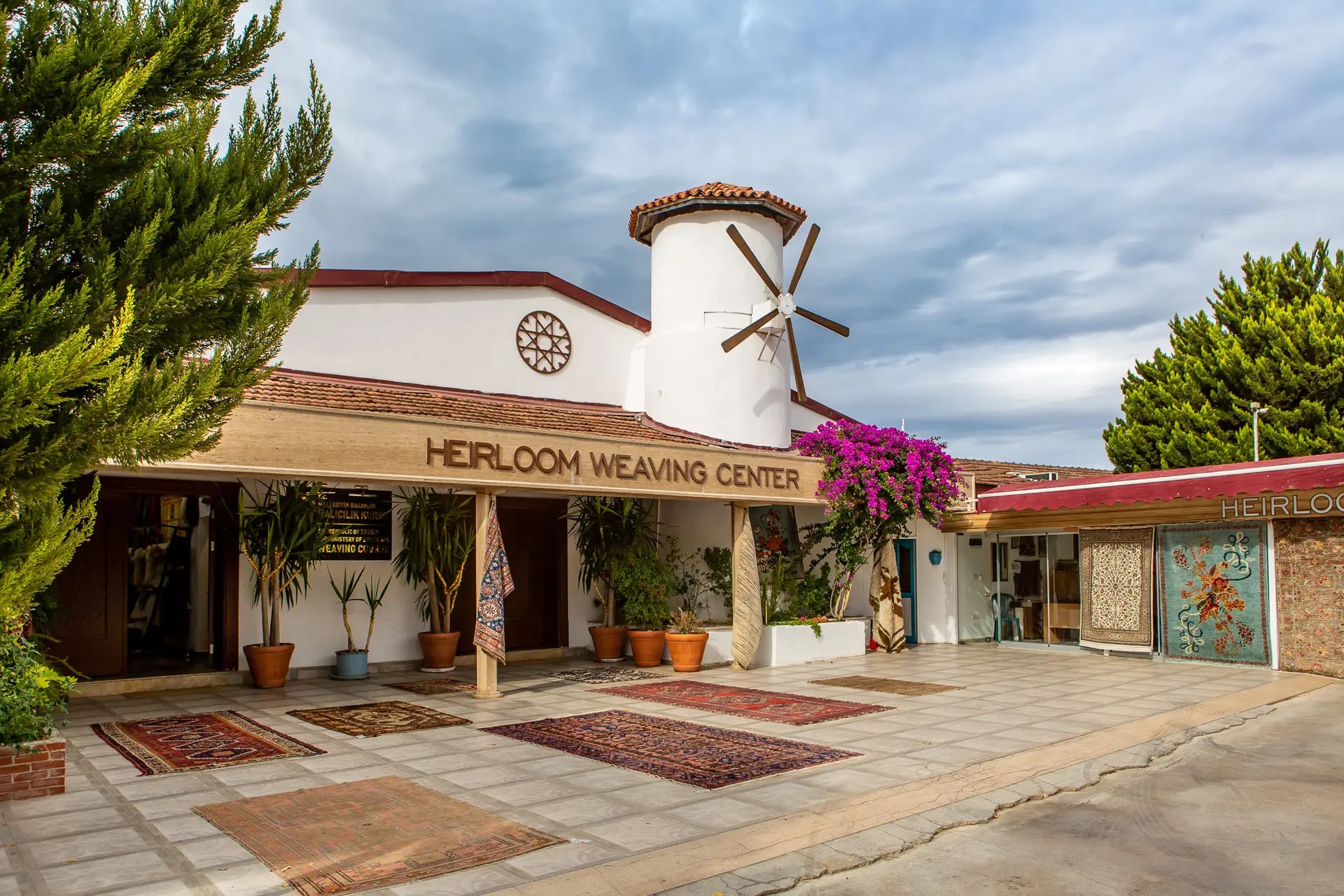
- The Loom Weaving Center: Ate outside before seeing the carpet-making demonstration and showroom.
- Kuşadası Waterfront: Returned to the city with enough time to explore the promenade, browse a few merchants and photograph the harbor before going back aboard MSC Lirica.
The Experience, Told Through the Journey
Into the Hills Above Ephesus
Our first stop was the House of the Virgin Mary, which was almost entirely new to me. I knew the name once we were there, but I had never spent much time thinking about the tradition that Mary may have lived in this area during the final years of her life. The setting was much more wooded than I expected, although the arrival area also had the unmistakable feel of a heavily visited attraction, with shops clustered near the entrance and plenty being sold to the steady flow of visitors. Some of the fertility-themed souvenirs were pretty funny, especially given the setting.
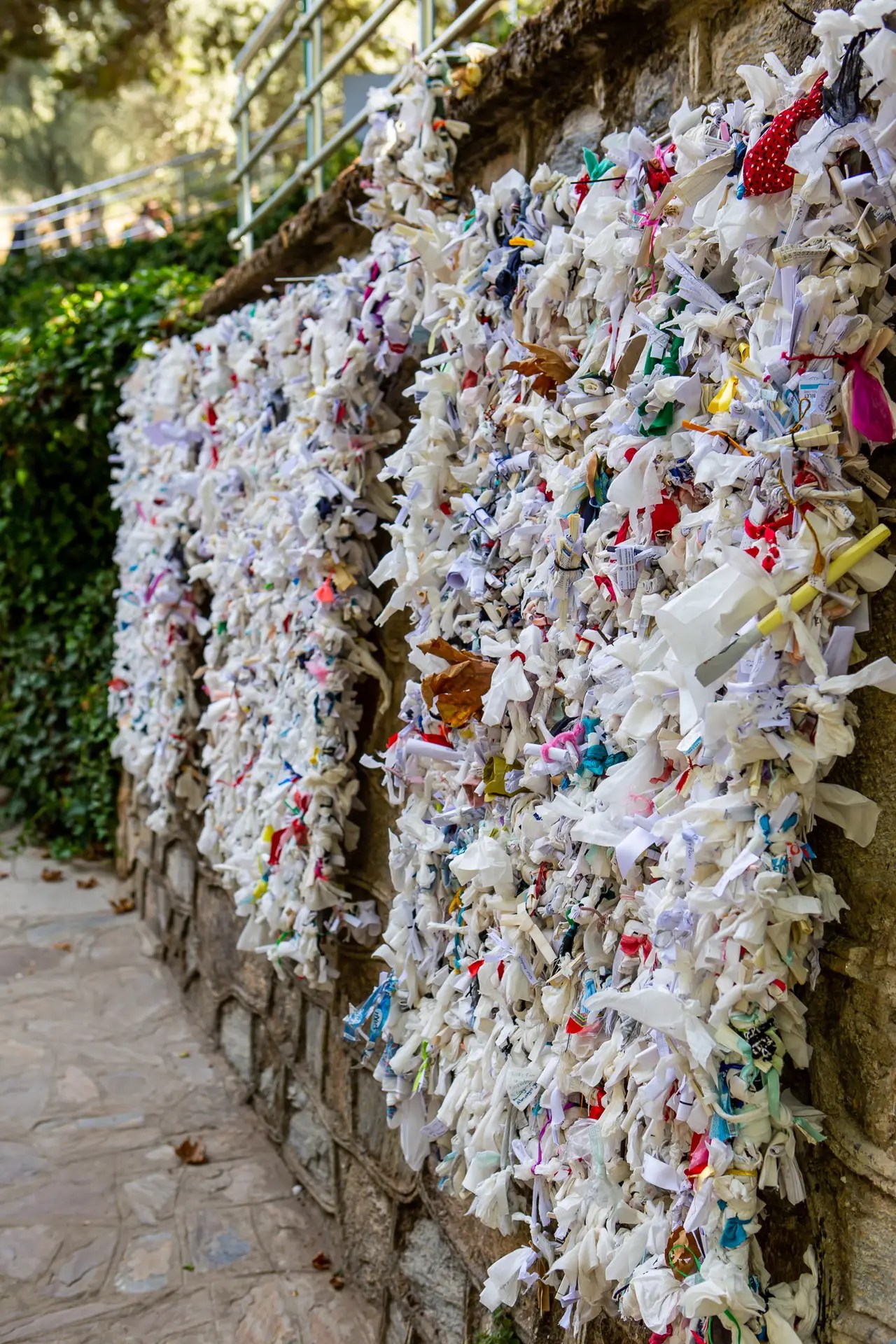
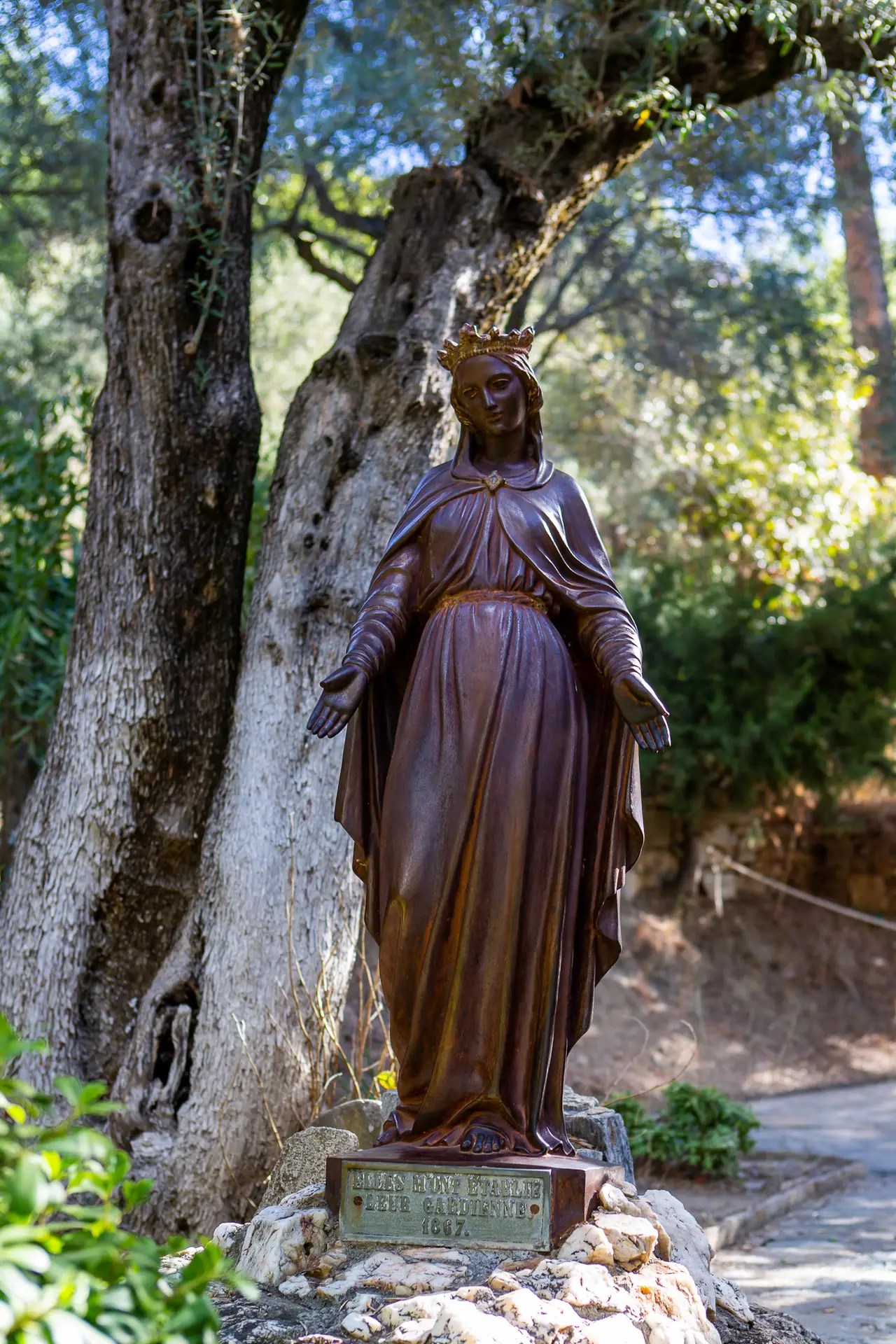
Once we moved beyond that entrance area, the grounds became more interesting. We followed the walkway toward the small stone house, waited in a fairly long line and eventually went inside. Photography was not allowed in the interior, so that part of the visit exists only in memory rather than in my Lightroom catalog. Outside, I photographed the statue of Mary, candles, Wishing Wall and other parts of the site, but Laura and I did not light candles, leave a written prayer or participate in any of the traditions associated with the shrine.
We are both Christians, so being somewhere connected by tradition to Mary naturally carries some meaning, much as Jerusalem would later in this trip. At the same time, I have never believed that touching a place, object or relic makes someone’s faith more authentic or changes their spiritual relationship with God. For me, the value was in seeing the place, understanding why it matters to so many people and connecting it to the history of Christianity without needing to make the physical site itself part of my faith. The amount of time we had there felt about right, and we continued toward the reason I had really chosen the excursion.
Entering Ephesus
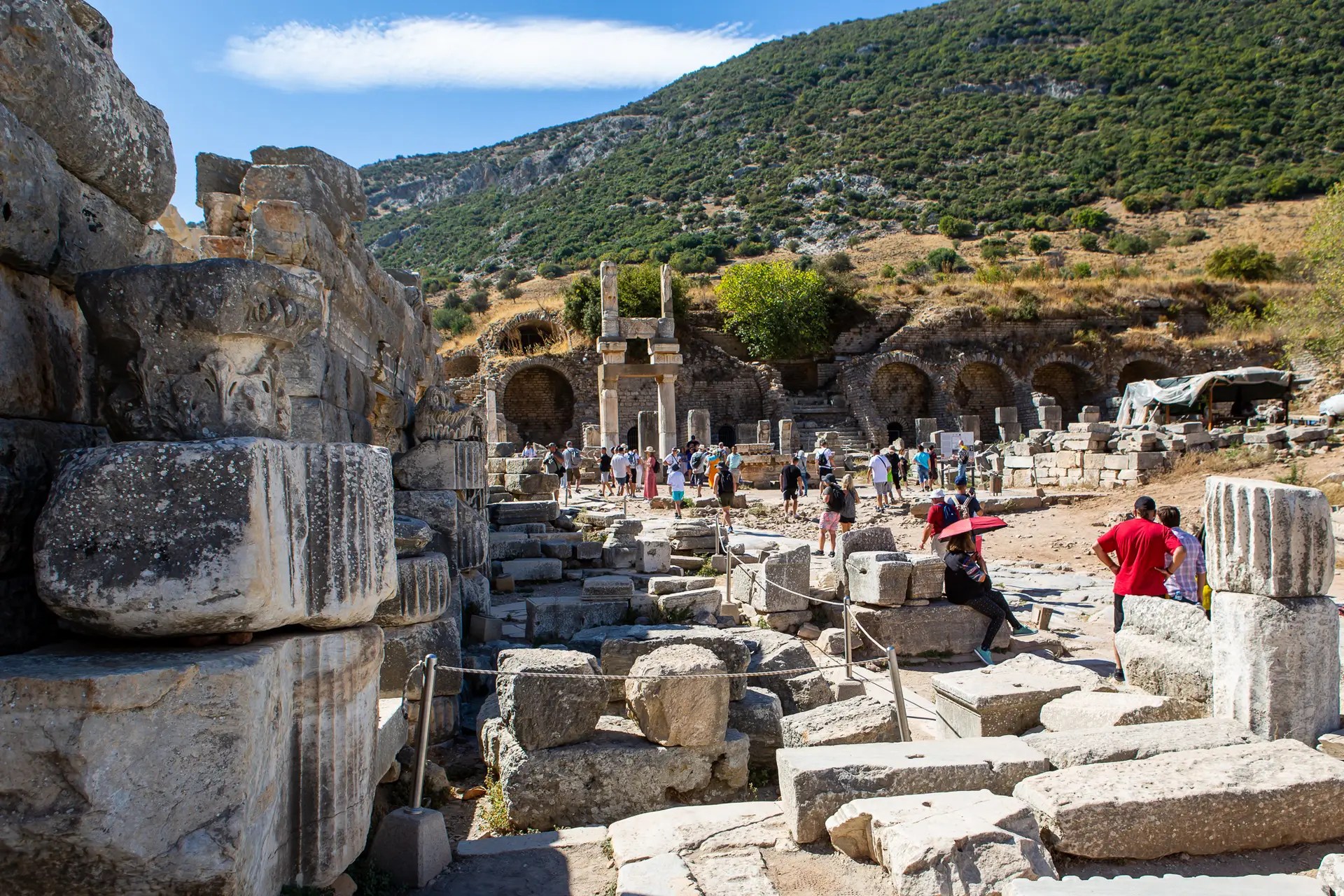
We entered Ephesus from the upper side of the archaeological site, which meant most of the route would gradually work downhill through the ancient city. It was hot, the sun was strong and the site was crowded, but the walking itself was easier than I might have expected from a large archaeological site. Uneven stone and marble were everywhere, although the downhill route kept the physical effort pretty manageable.
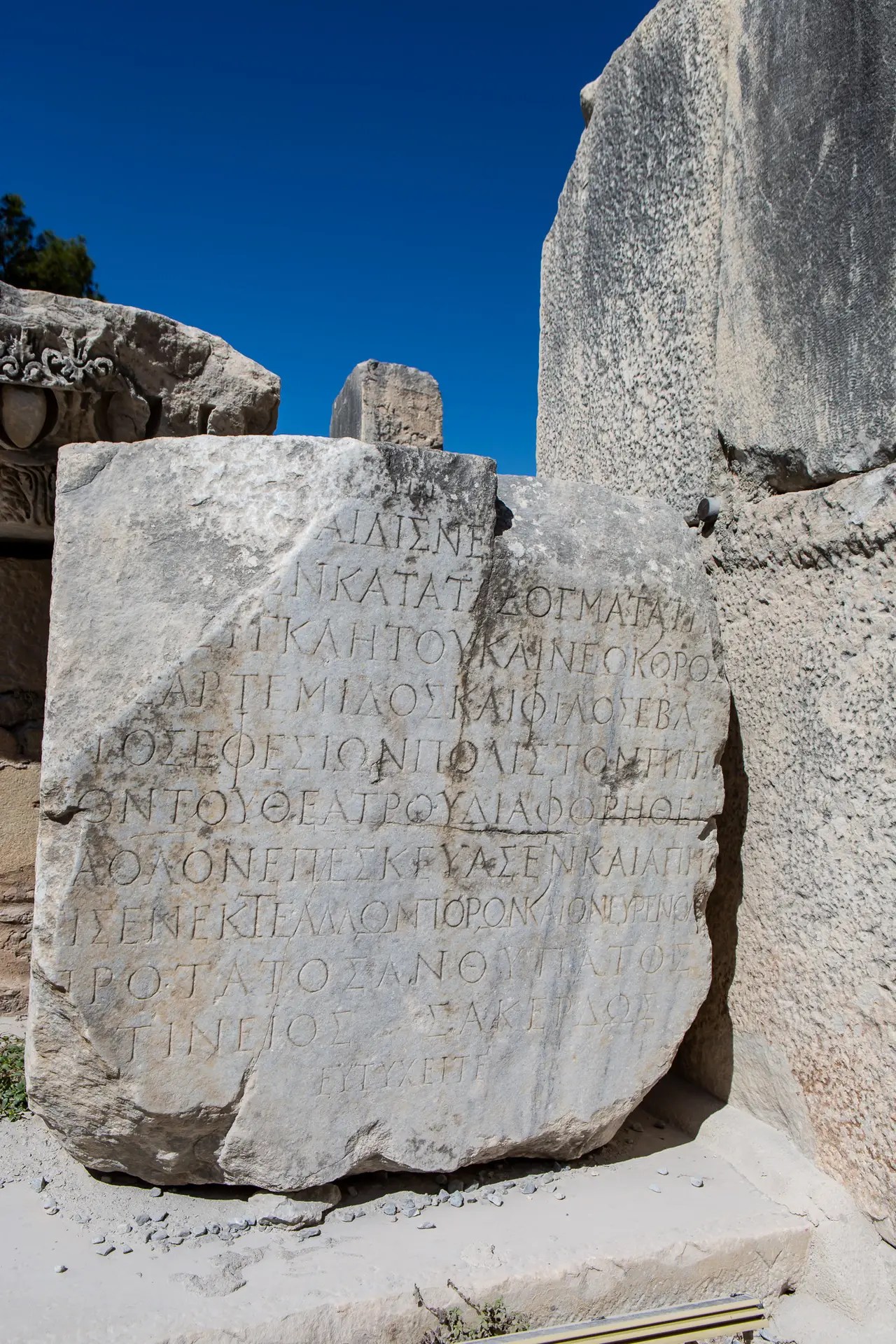
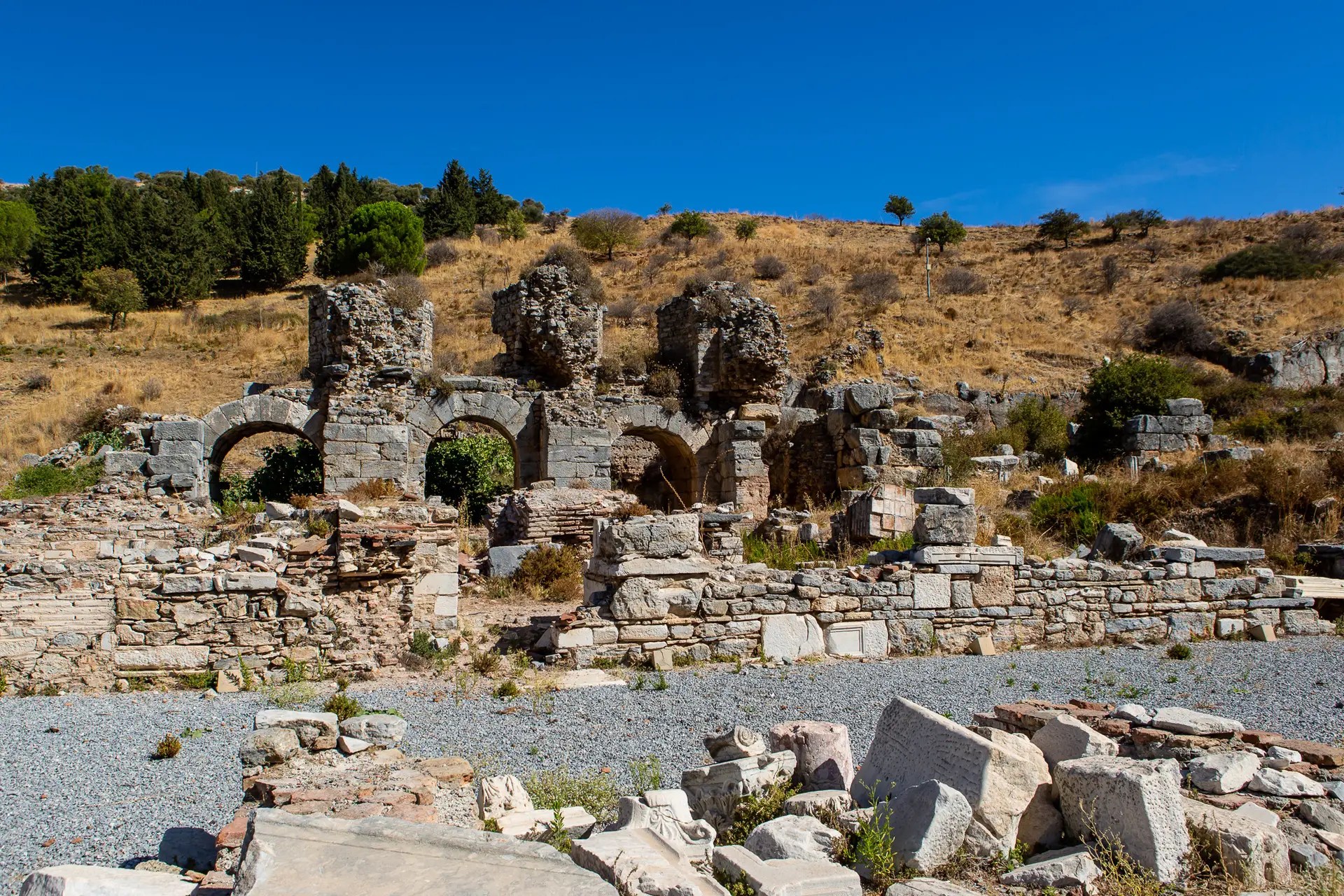
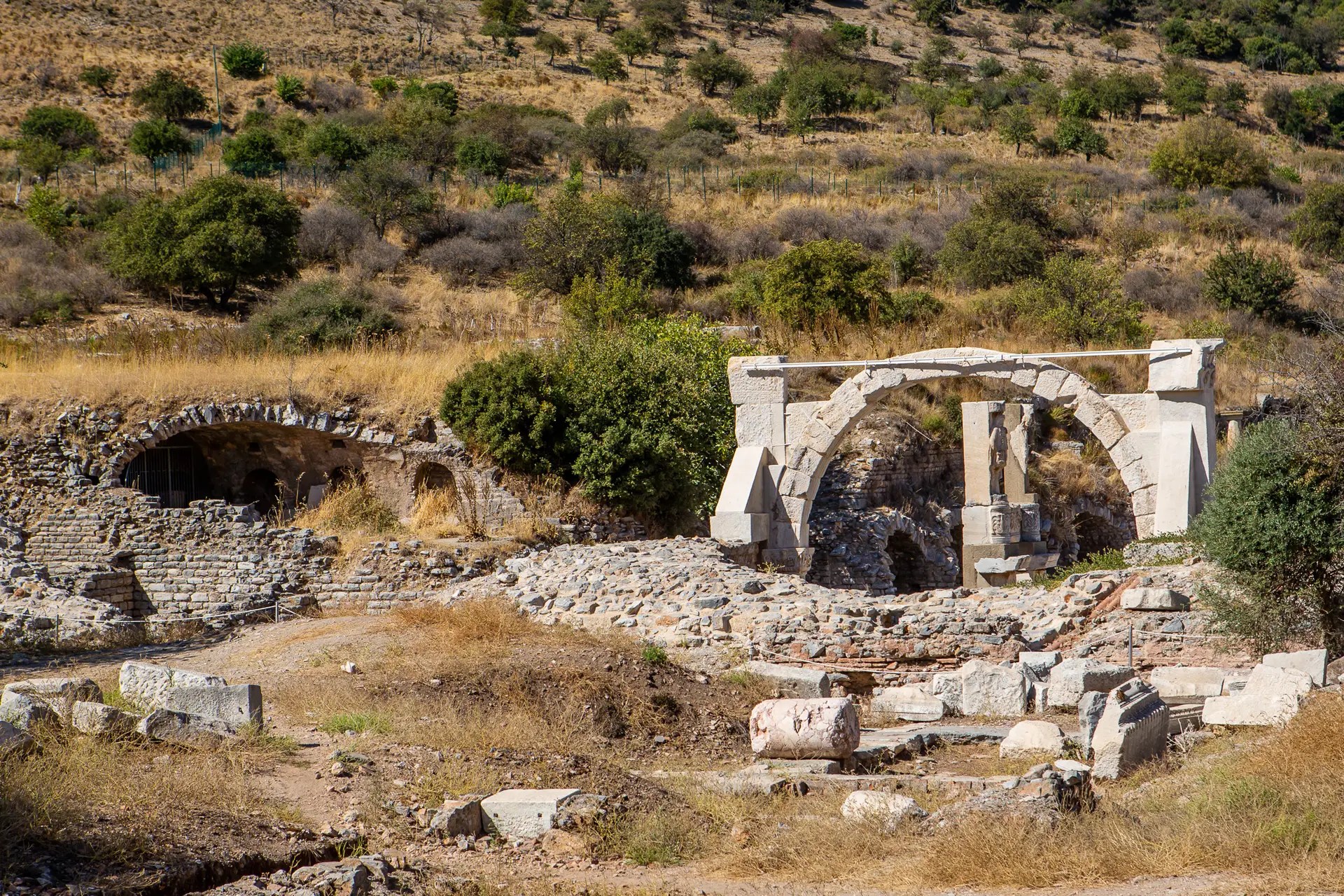
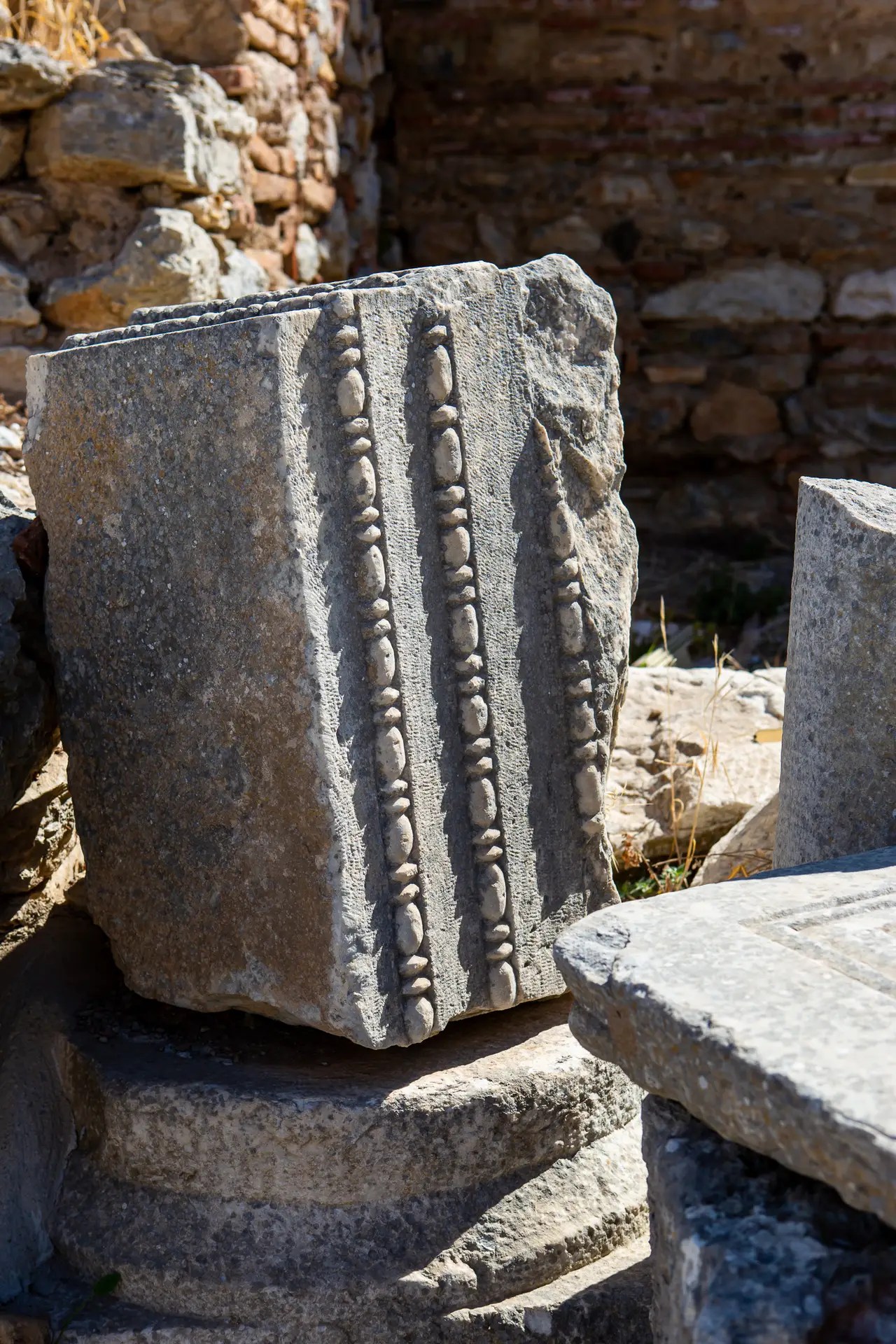
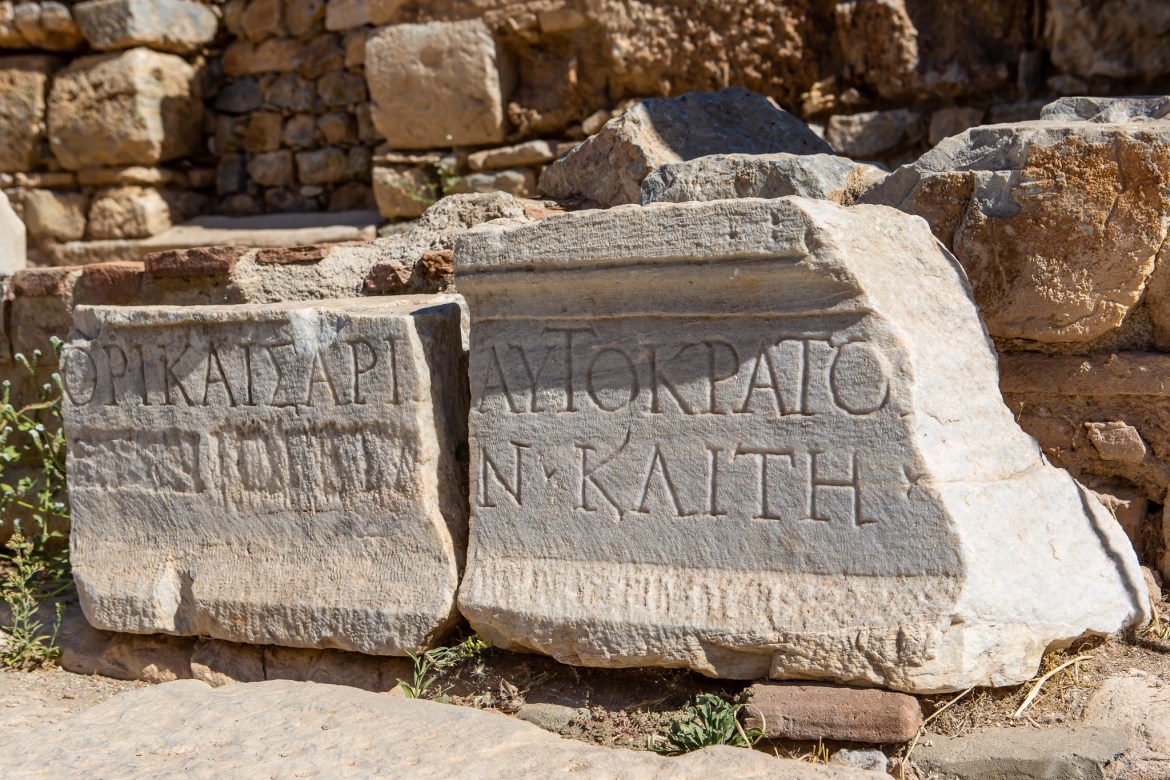
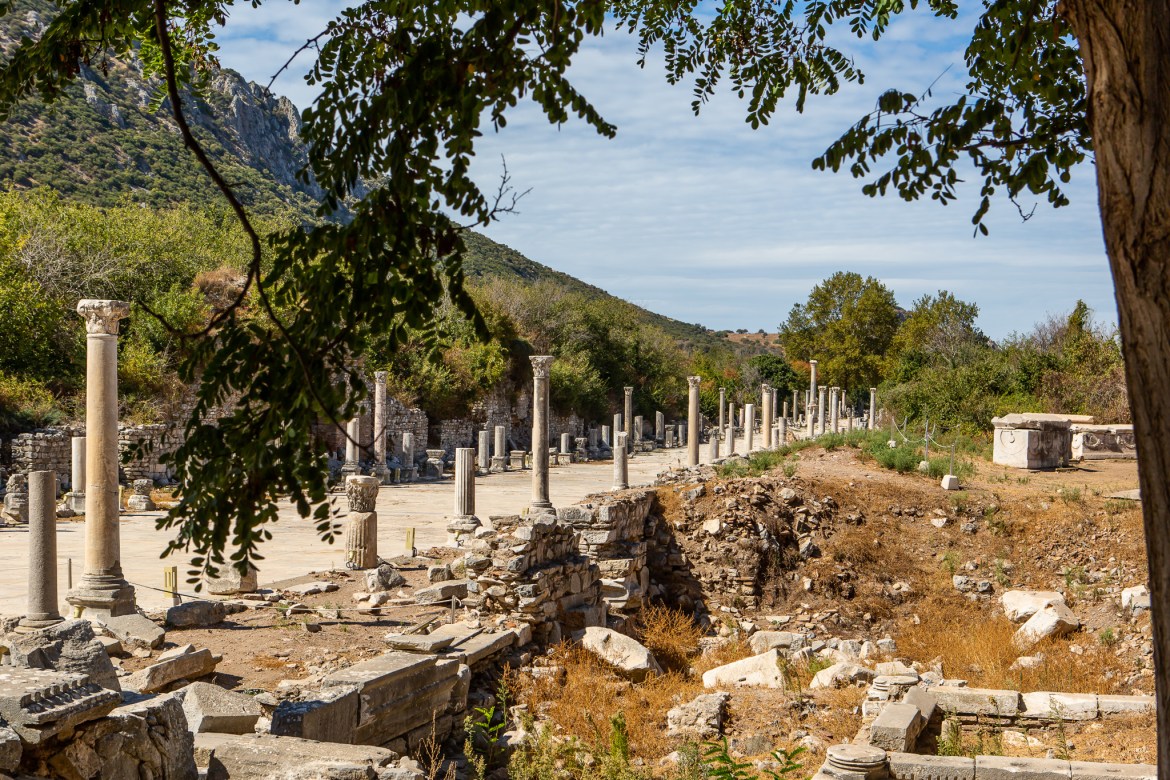
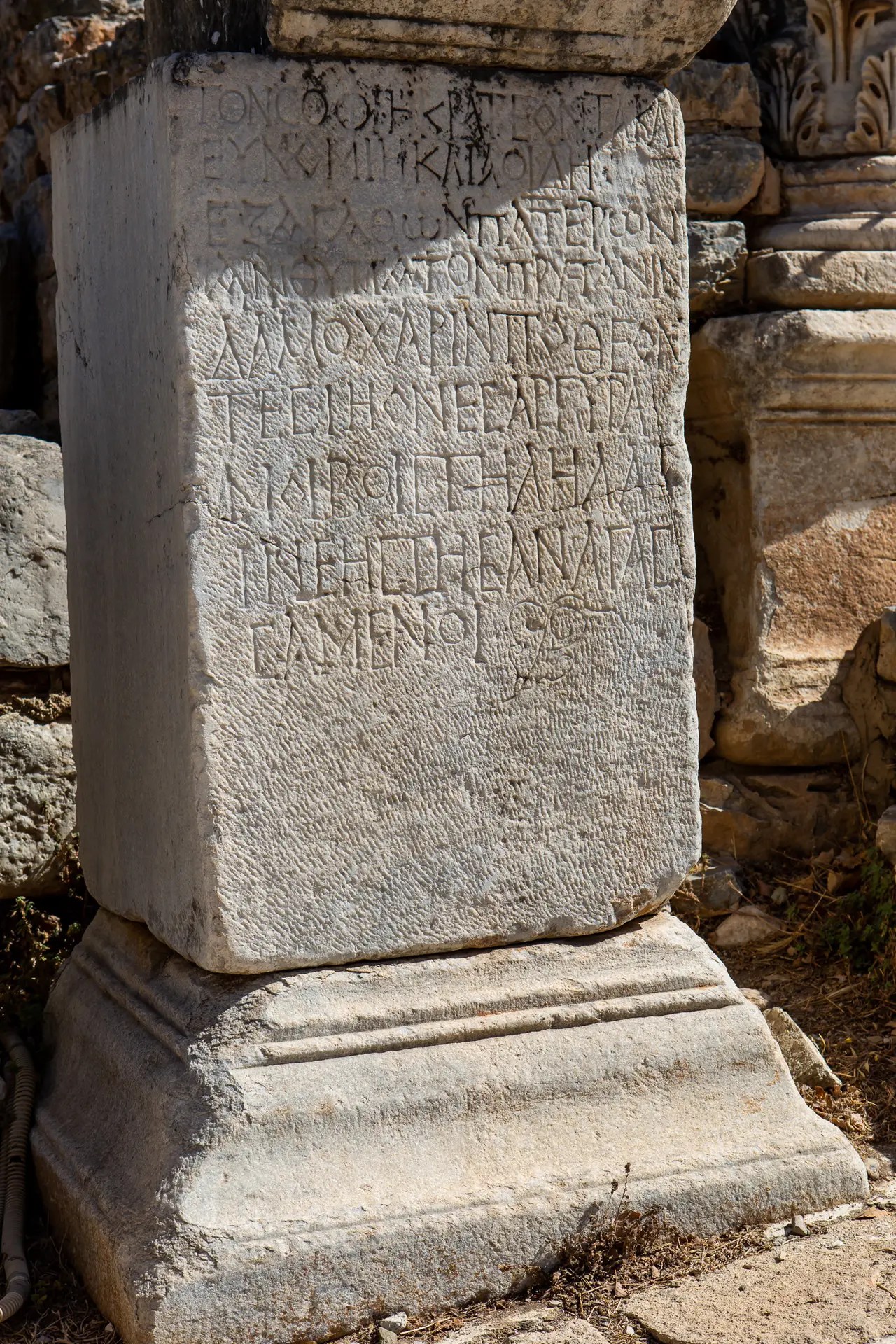
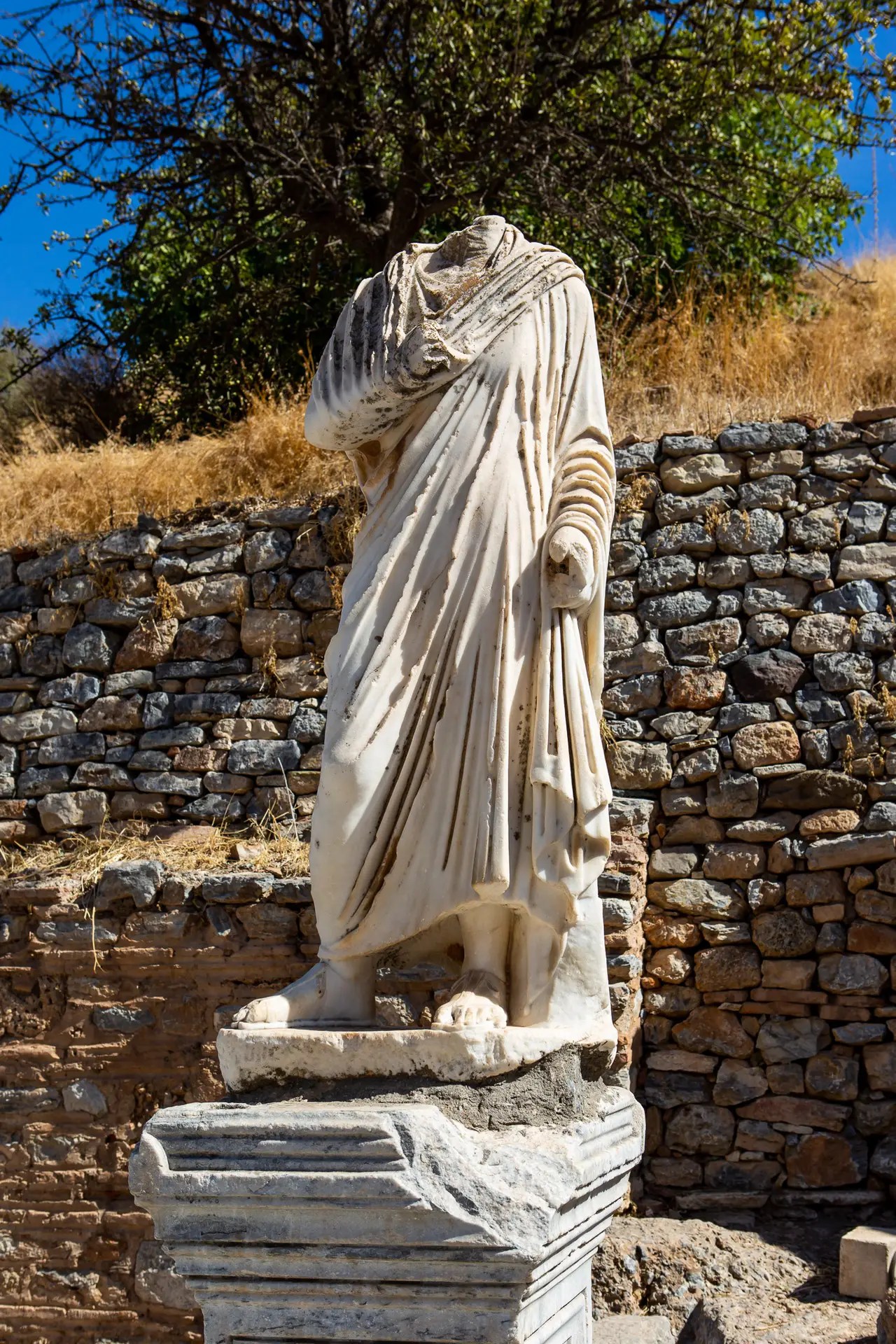
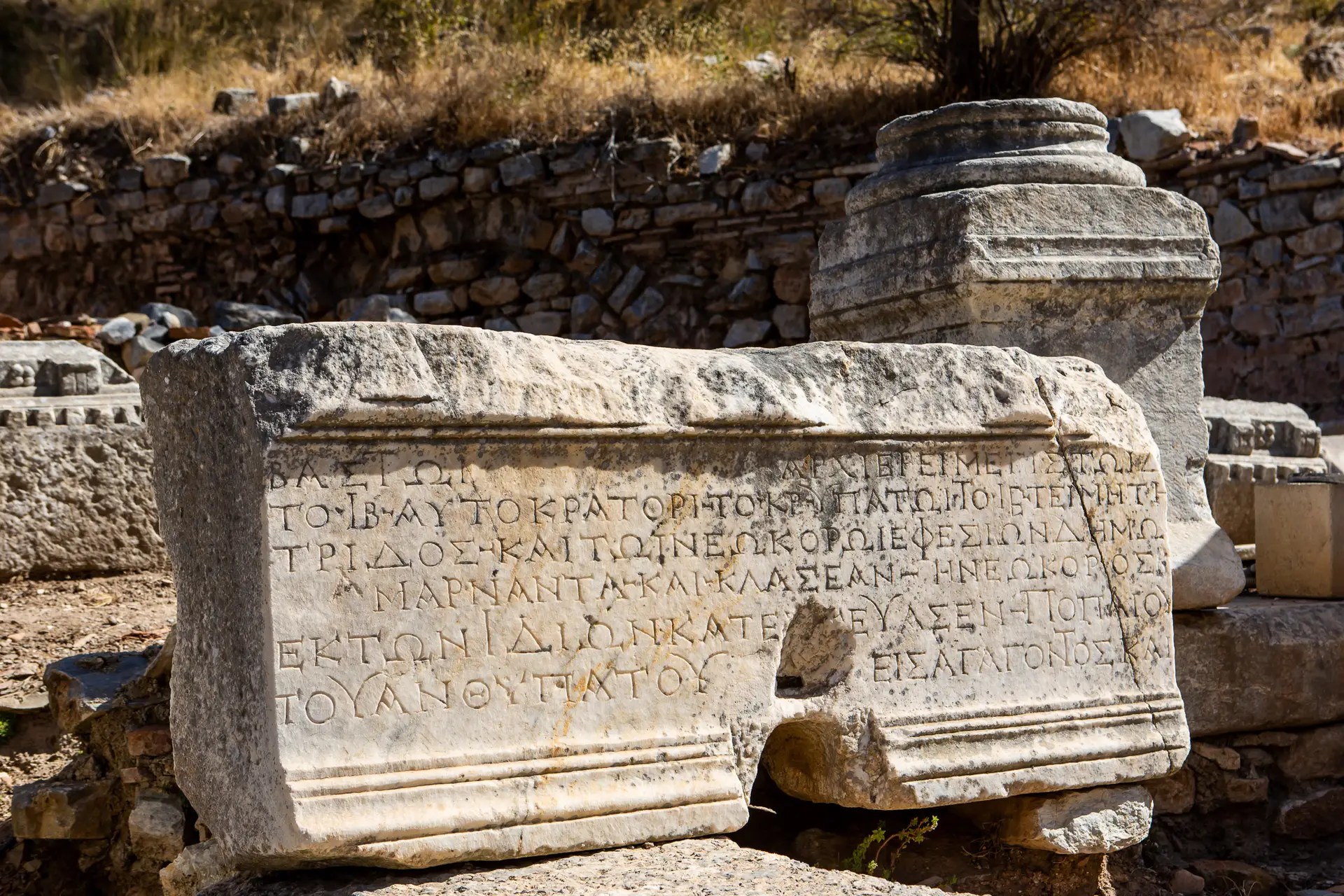
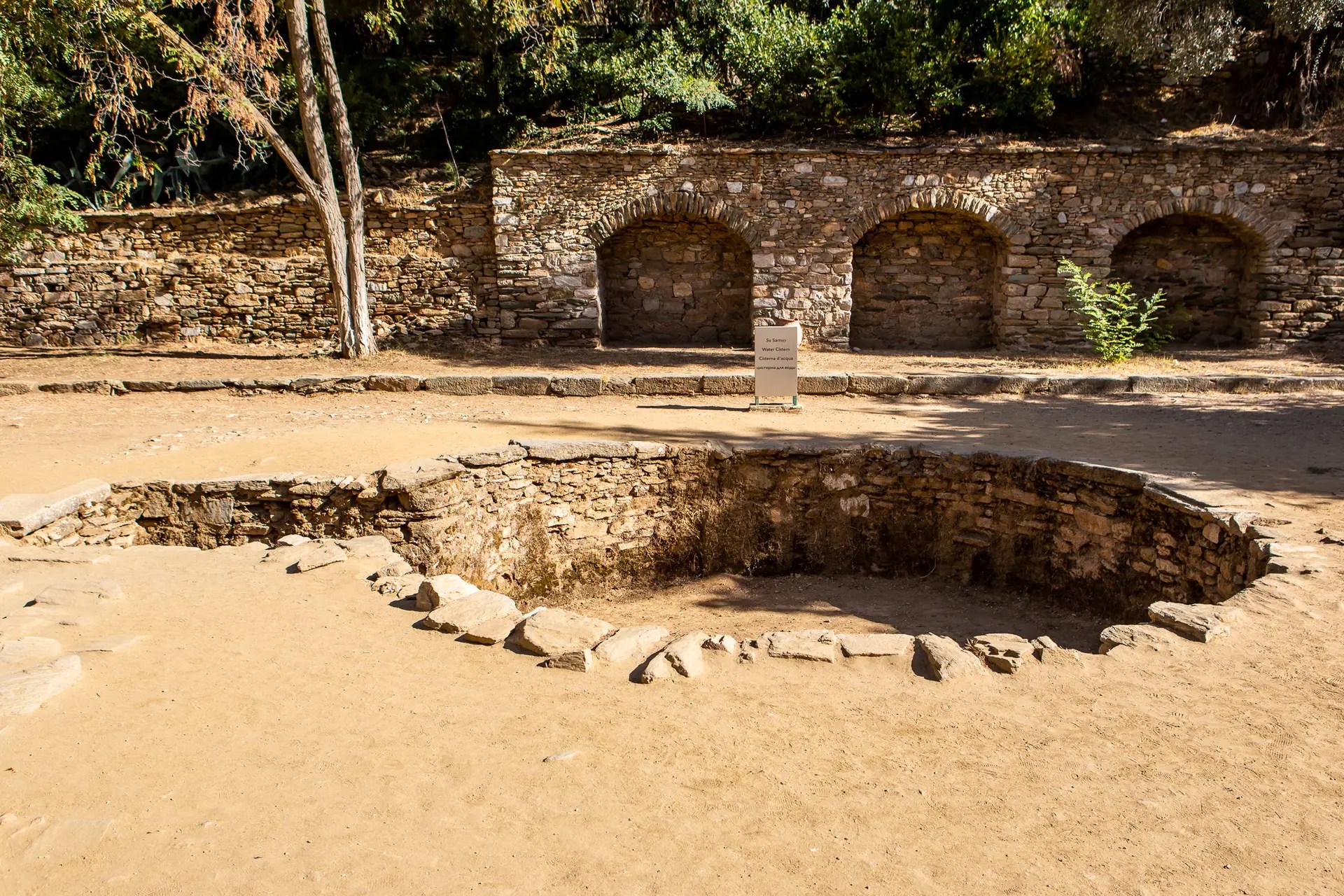
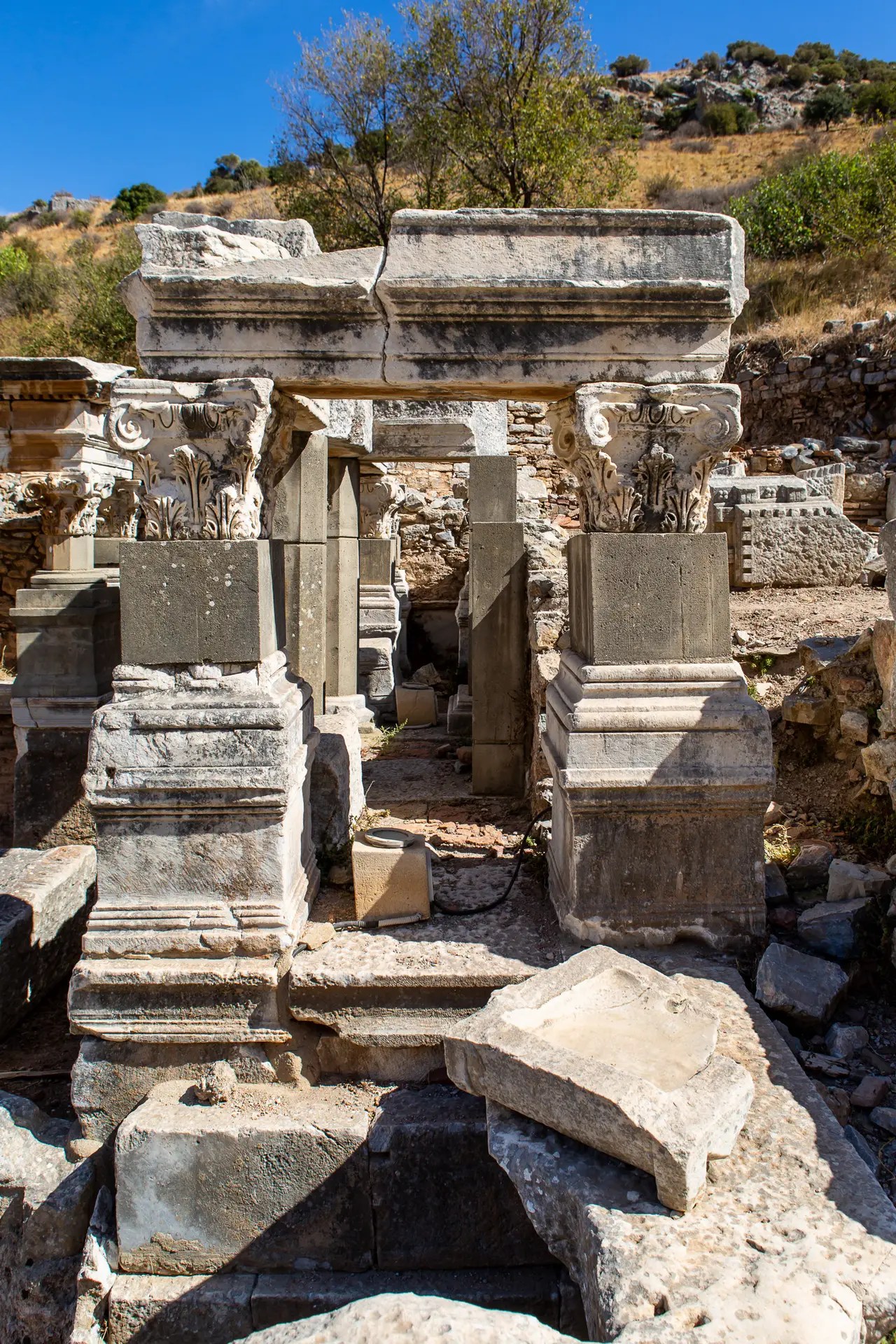
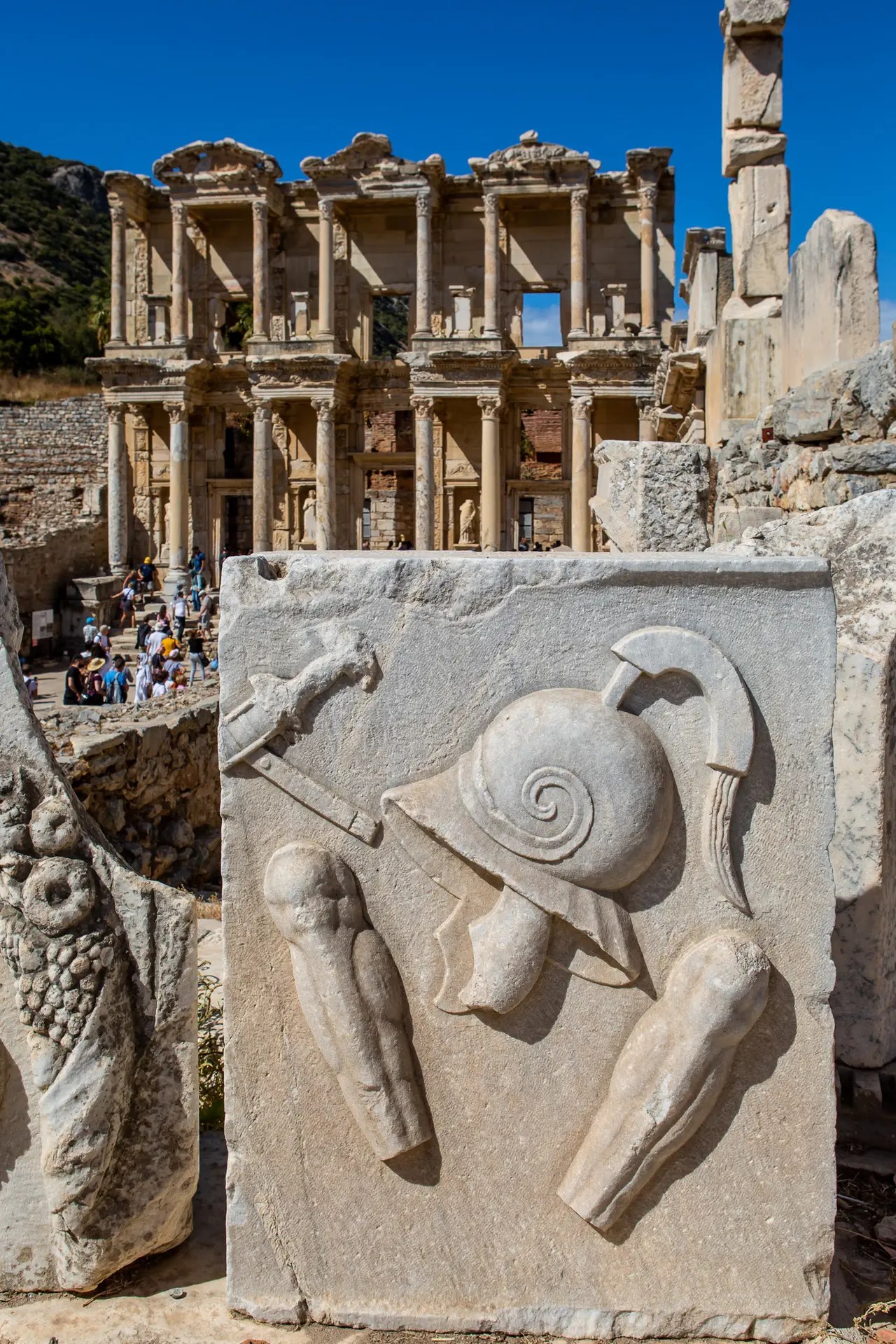
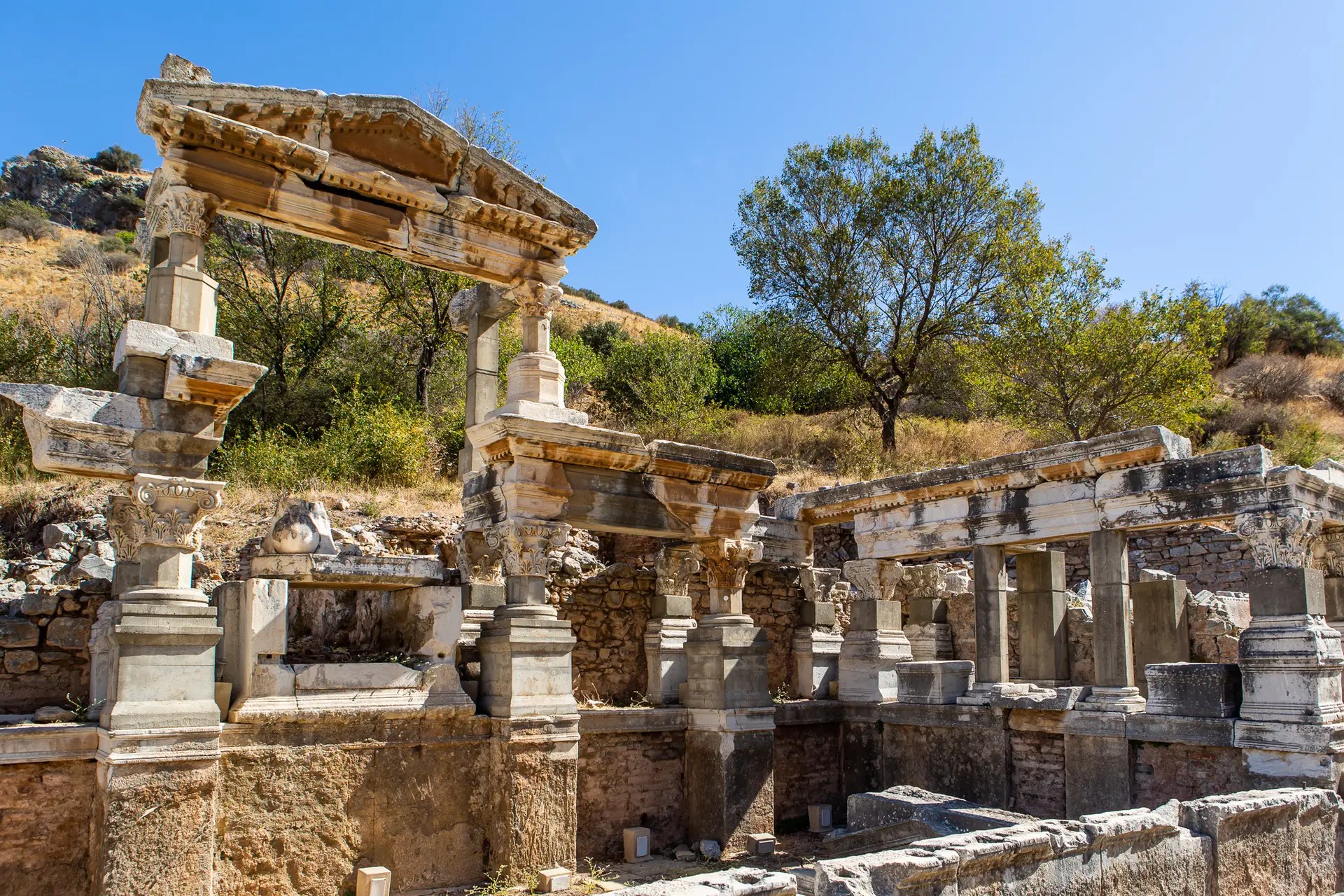
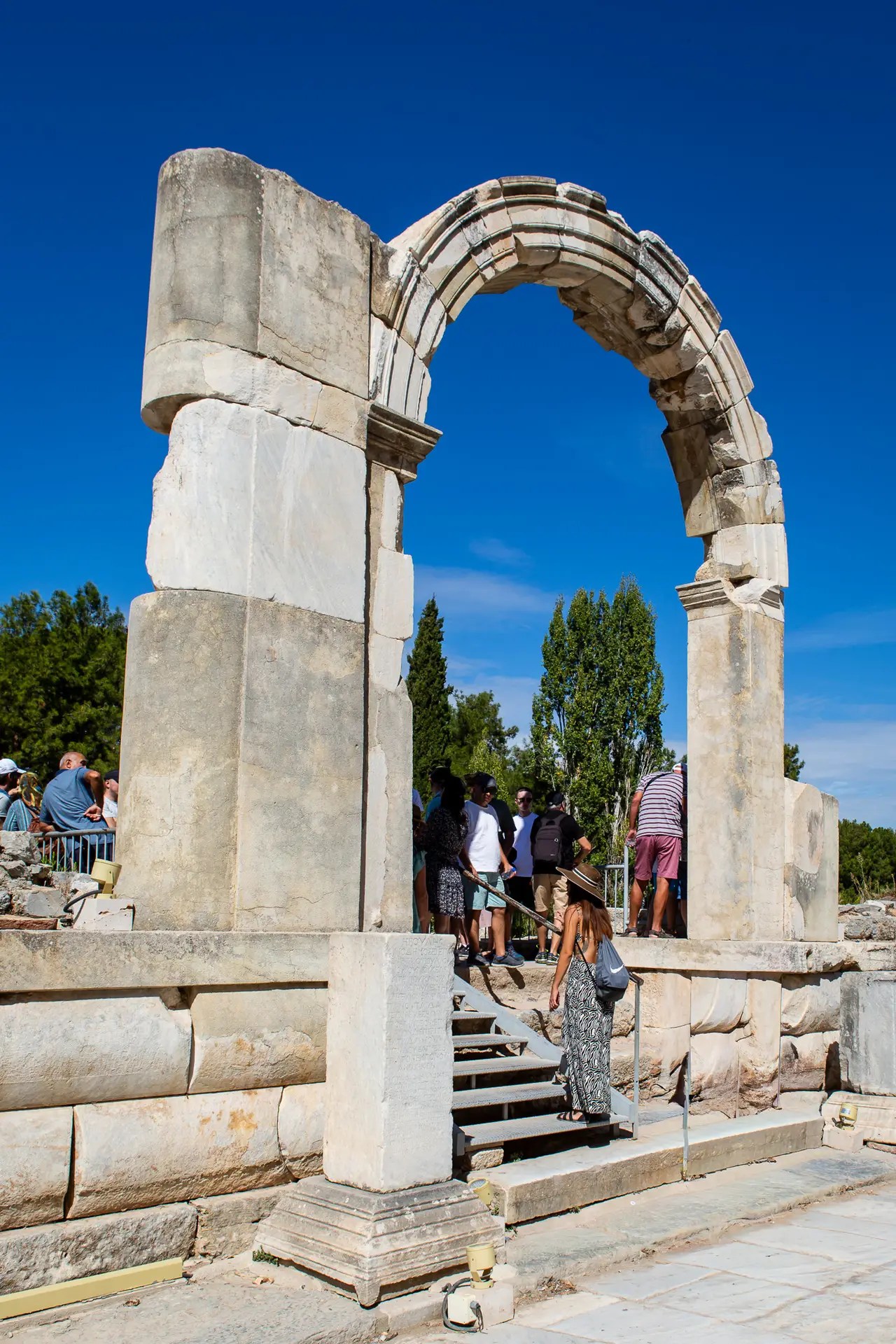
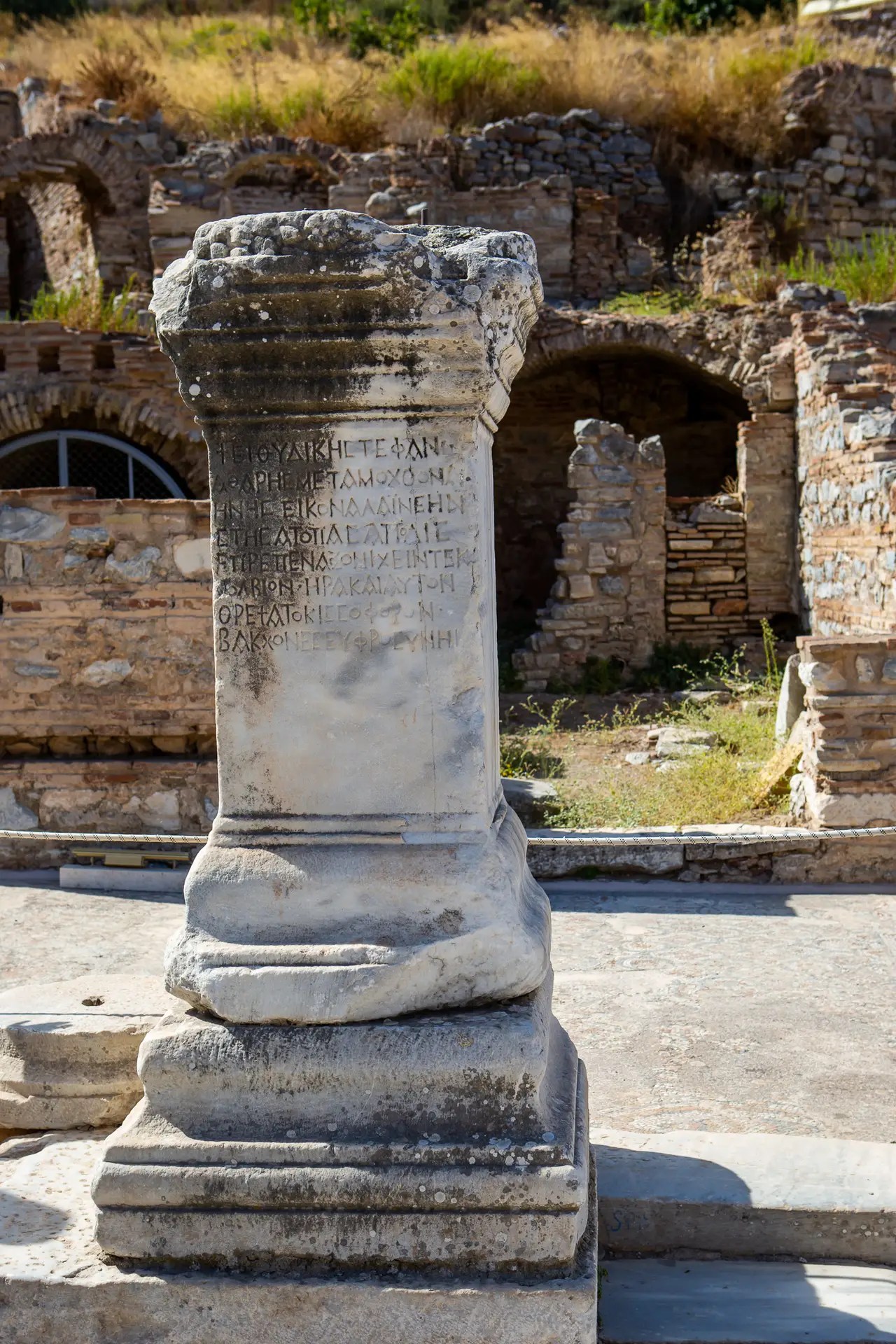
The scale did not necessarily surprise me, but seeing how the city had been laid out did. There was far more surviving stonework than I expected—columns, inscriptions, carved fragments, foundations and pieces of buildings stretching across the hillside. I had probably imagined more reconstructed structures like the Library of Celsus, but even without that level of reconstruction the amount of history still visible was fascinating.
Laura was the one paying close attention to our guide. I was doing what I normally do in a place like this and photographing everything that caught my eye, occasionally tuning back into the guide as we moved from one part of the city to another. Roman plumbing, baths, shops, toilets, wealthy homes, statues, earthquakes and inscriptions all came into the discussion during the walk. I cannot point to one guide story that became the defining memory, but collectively it helped put the ruins around us into context.
Walking Curetes Street
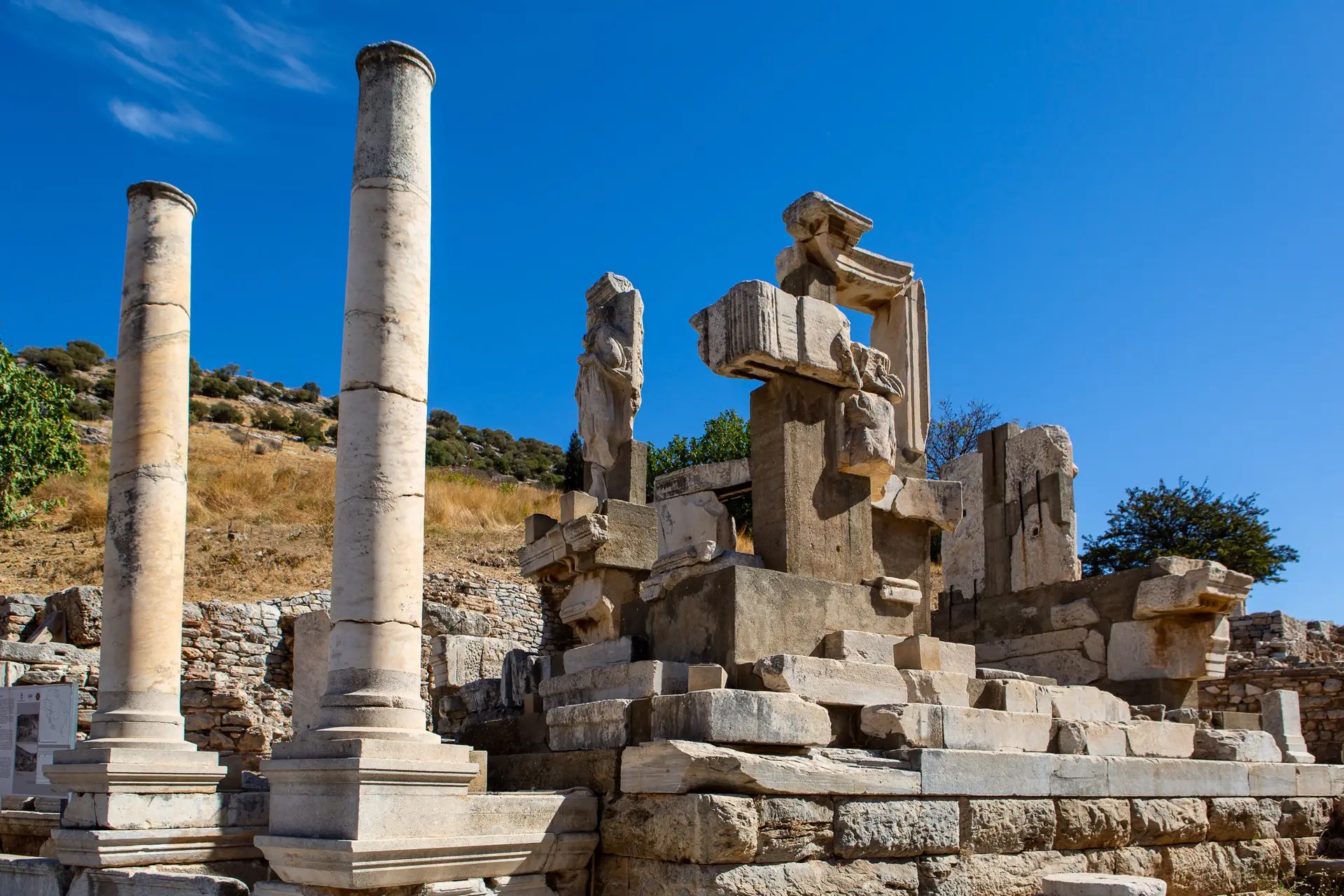
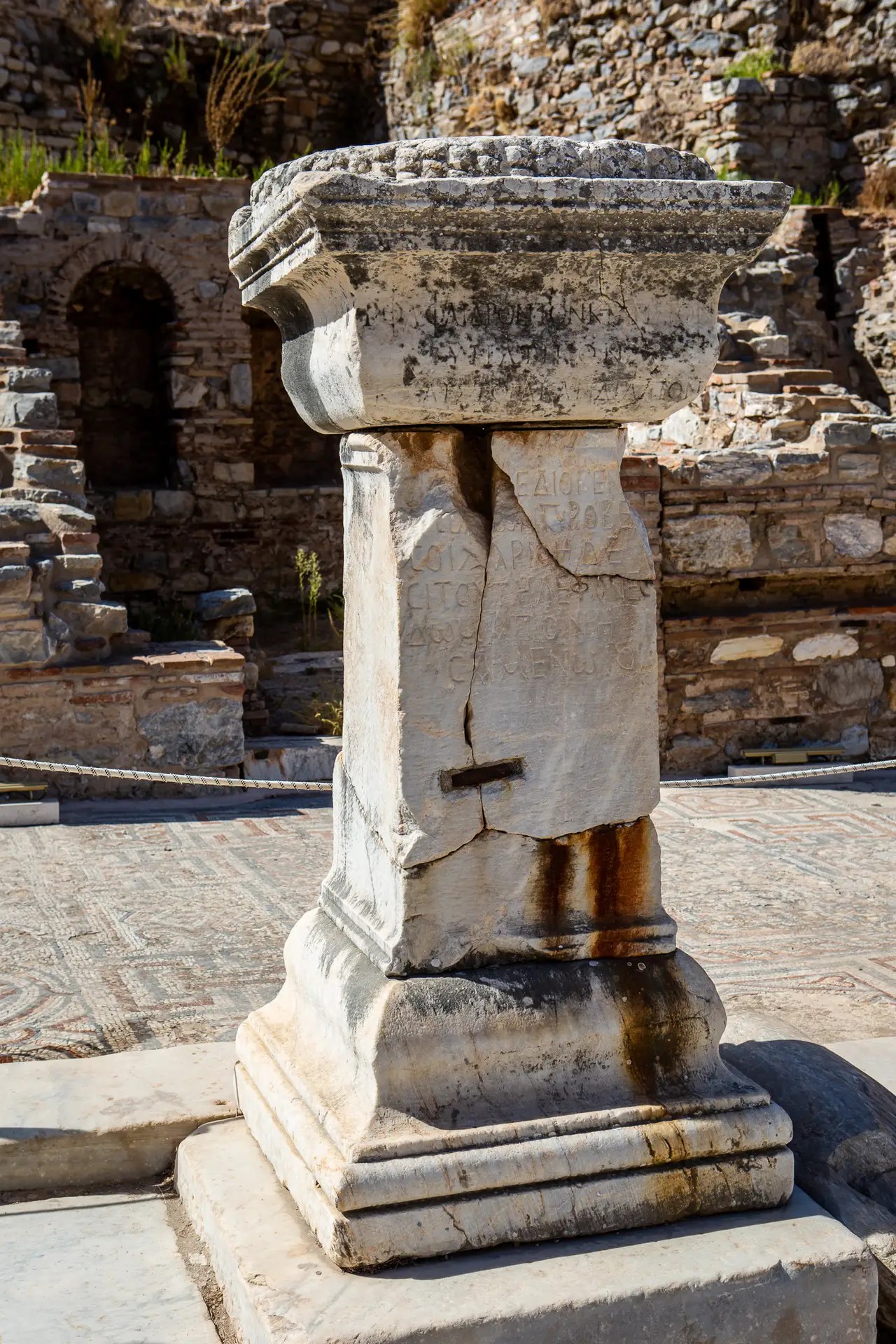
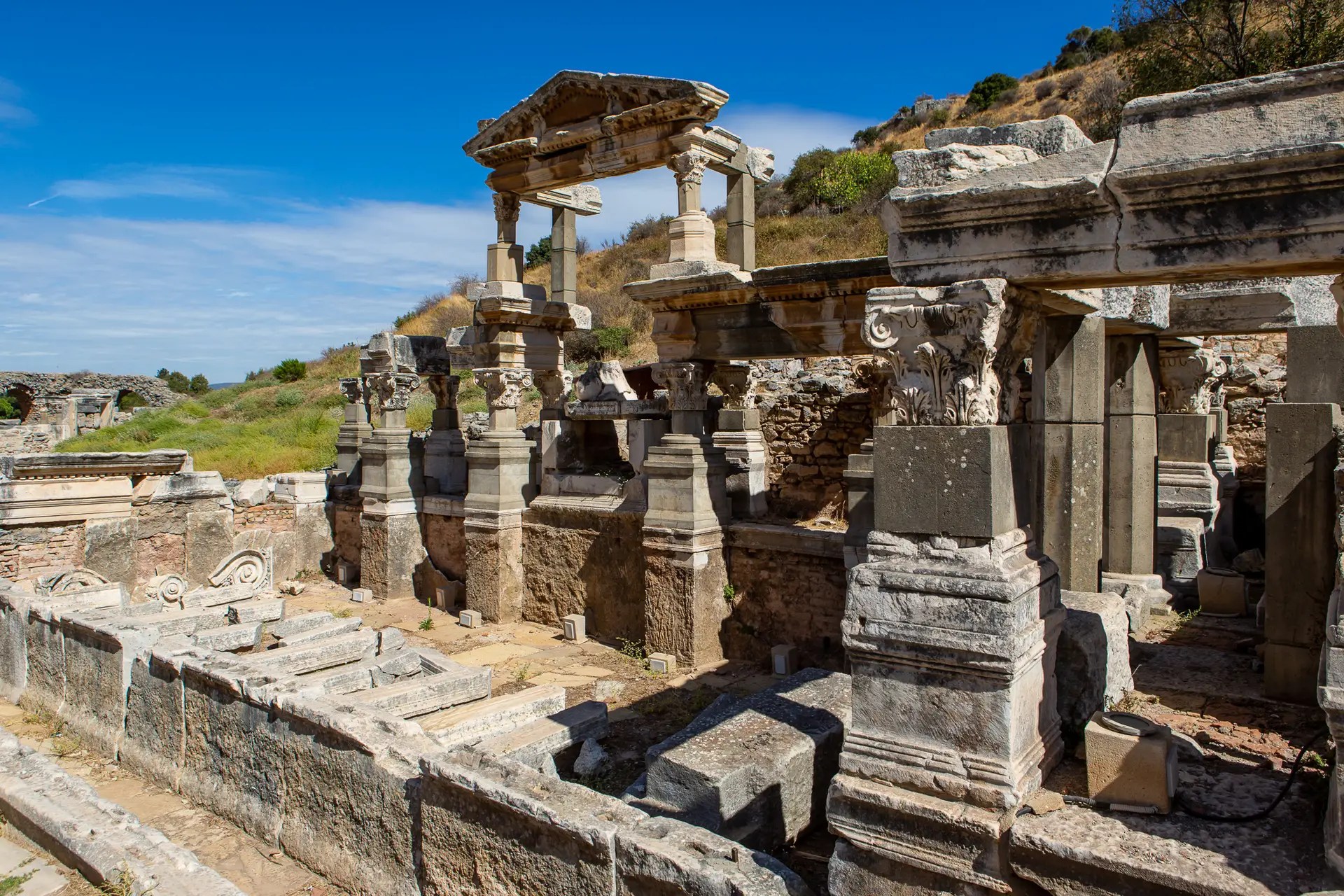
As we moved through the upper civic area and toward Curetes Street, Ephesus began to feel less like a collection of archaeological remains and more like an actual city. We passed the Prytaneion, Memmius Monument, Fountain of Trajan, Baths of Scholastica and other structures while gradually making our way downhill.
Curetes Street was where I started thinking more about the people who had actually walked the same route nearly two thousand years earlier. That thought is almost unavoidable when you are standing on an ancient street surrounded by columns and worn marble. The street was crowded with modern visitors during our visit, but there was still enough freedom to stop, photograph and look around without feeling as though we were being pushed continuously through the site.
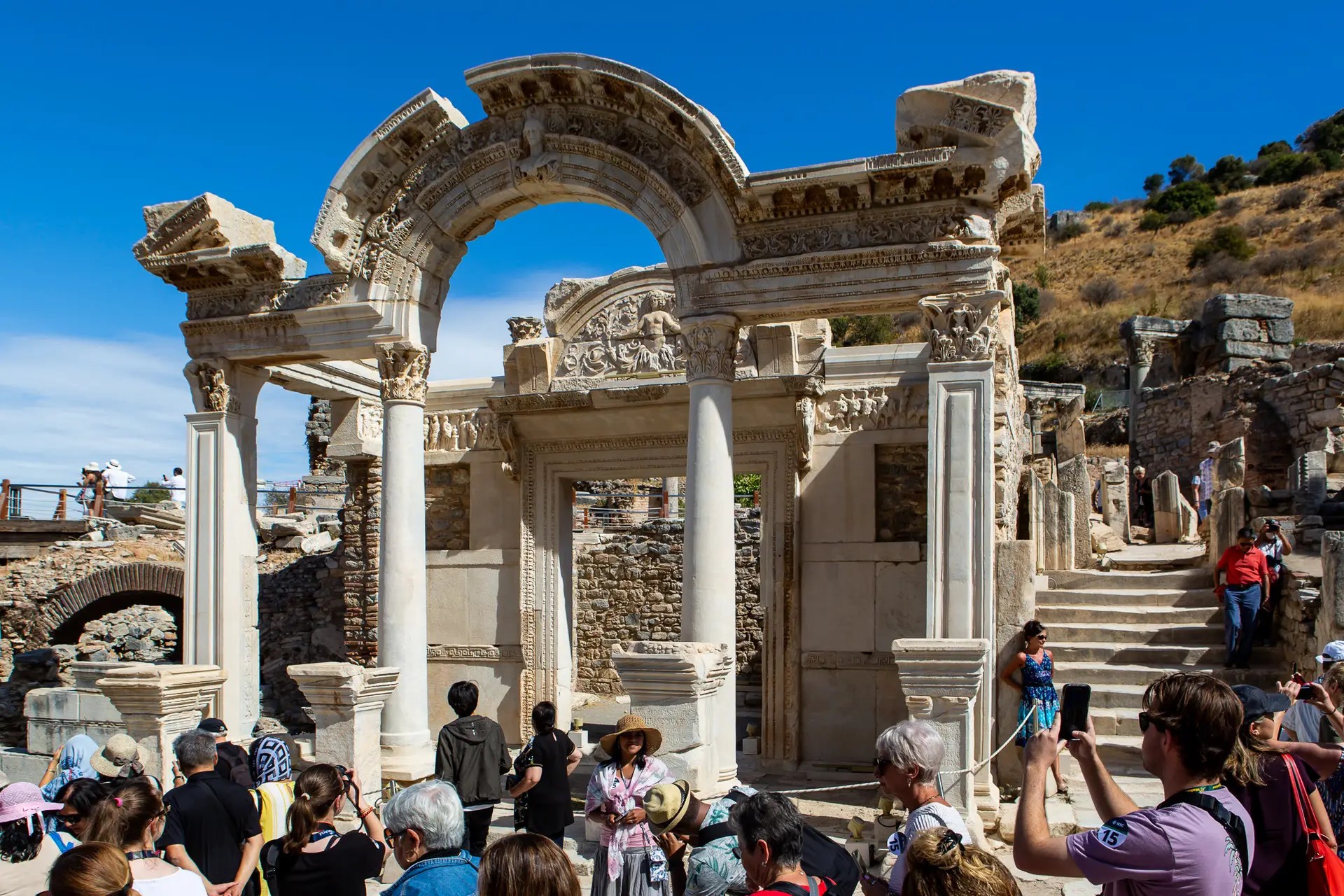
The Temple of Hadrian became one of my favorite structures along the way. I had gone to Ephesus thinking mainly about the Library, but the curved arch, columns and carved details of the temple made it stand out from many of the more fragmentary ruins around it. The amount of decorative stonework surviving throughout this entire section of Ephesus surprised me, particularly when I thought about how much time had passed and how many earthquakes and later generations had affected the city.
The Experience, Told Through the Journey
Finally Reaching the Library of Celsus
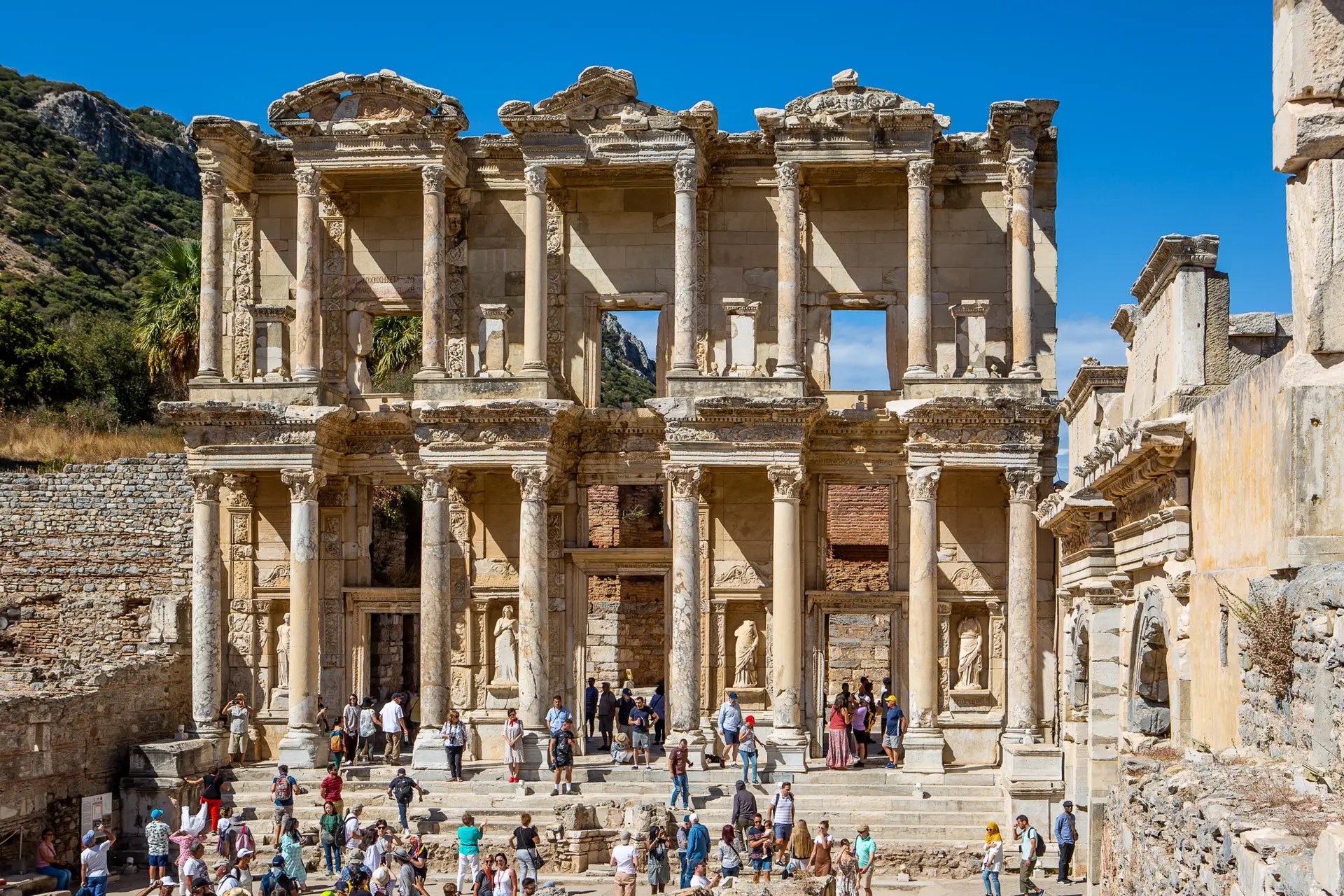
The Library of Celsus was the photograph I had been waiting for, and when the street finally opened into the square in front of it, it lived up to what I hoped I would see. This was the genuine wow moment of Ephesus for me.
Until our guide explained it, I had not realized how much of the façade had been reconstructed using surviving architectural pieces. Knowing that did not diminish it. If anything, standing there made it easier to appreciate how extraordinary it was that enough material survived for the façade to be put back together at all. Columns, niches, sculptural details and multiple levels of stonework gave it a presence that photographs had never quite conveyed.
Laura and I each stopped for photographs in front of it, and I worked through several different compositions of the façade and surrounding square. The crowds were substantial, so there was no realistic version of photographing the Library as though I had ancient Ephesus to myself. That was fine. The people also gave the building scale, and this was one of those occasions where getting the photograph I wanted mattered more than pretending nobody else was there.
Of everything we saw at Ephesus—the long walk down Curetes Street, the Theatre, Arcadian Way and all of the individual monuments—the Library was still my favorite by a wide margin. I had arrived wanting that image, and seeing the façade in person was every bit as satisfying as I had hoped.
The Great Theatre and a Harbor That Disappeared
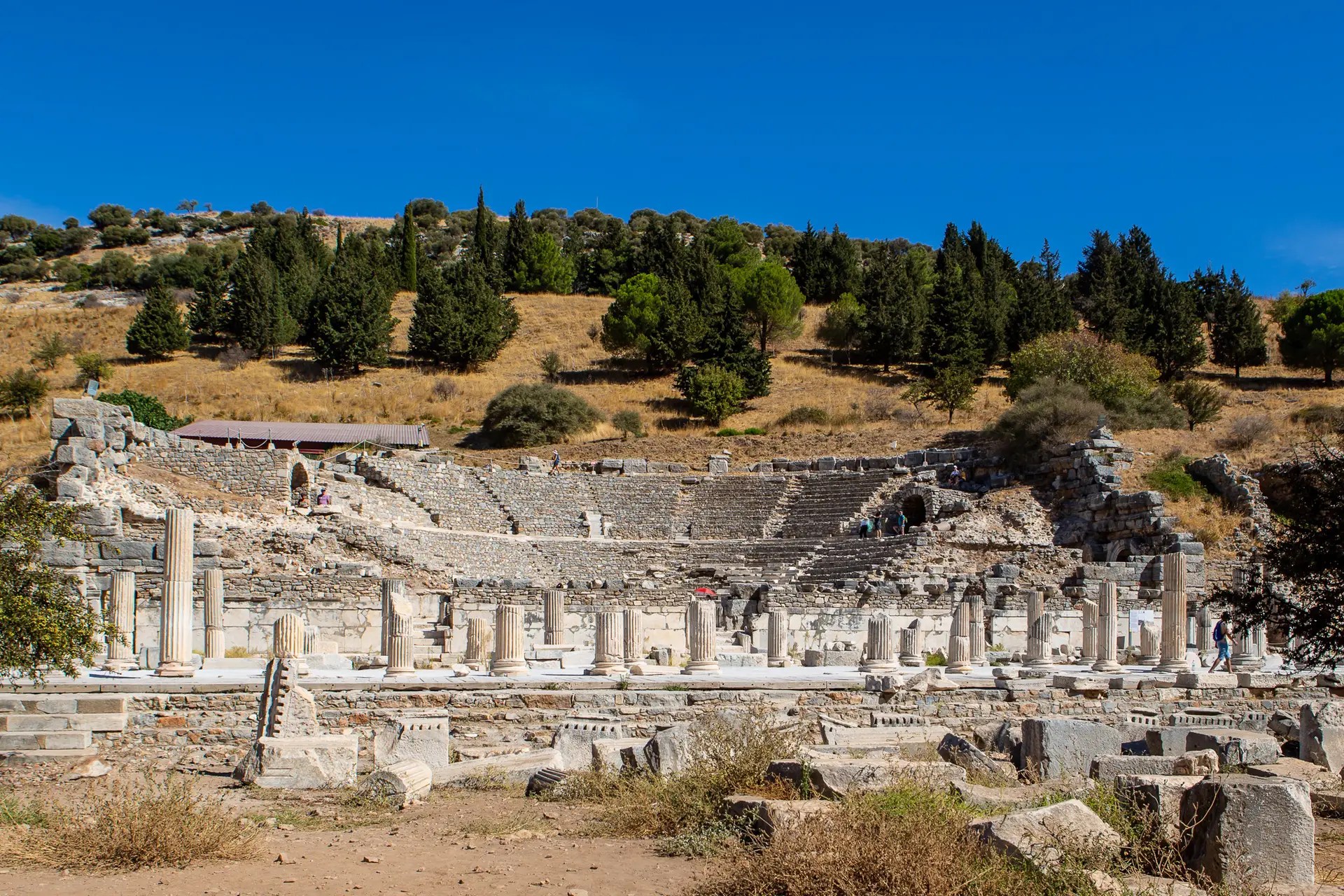
From the Library we continued through the lower city toward the Great Theatre. Built directly into the hillside, the scale of it was immediately apparent, especially once we could see the seating rising above us. Our guide talked about its size and acoustics, its use during the Roman period, gladiatorial events and its association with the story of the Apostle Paul.
Nearby, Arcadian Way stretched toward what had once been the harbor. Learning how much the geography had changed was one of the more interesting parts of the tour for me. The ancient shoreline had been much closer to Ephesus, and centuries of silting gradually pushed the water farther away. Looking down that long street and trying to mentally put a harbor back into the landscape was surprisingly difficult because the modern coastline is now so distant.
By this point I would gladly have spent another hour or two inside Ephesus. The excursion gave us a substantial look at the site, but there was enough there that more time would not have felt repetitive. As ancient places go, the overall experience sits right alongside Athens and Rome for me, not because the three look alike but because each gives you that sense of walking through a place where an enormous amount of history is still physically present.
The Experience, Told Through the Journey
The Museum in Selçuk
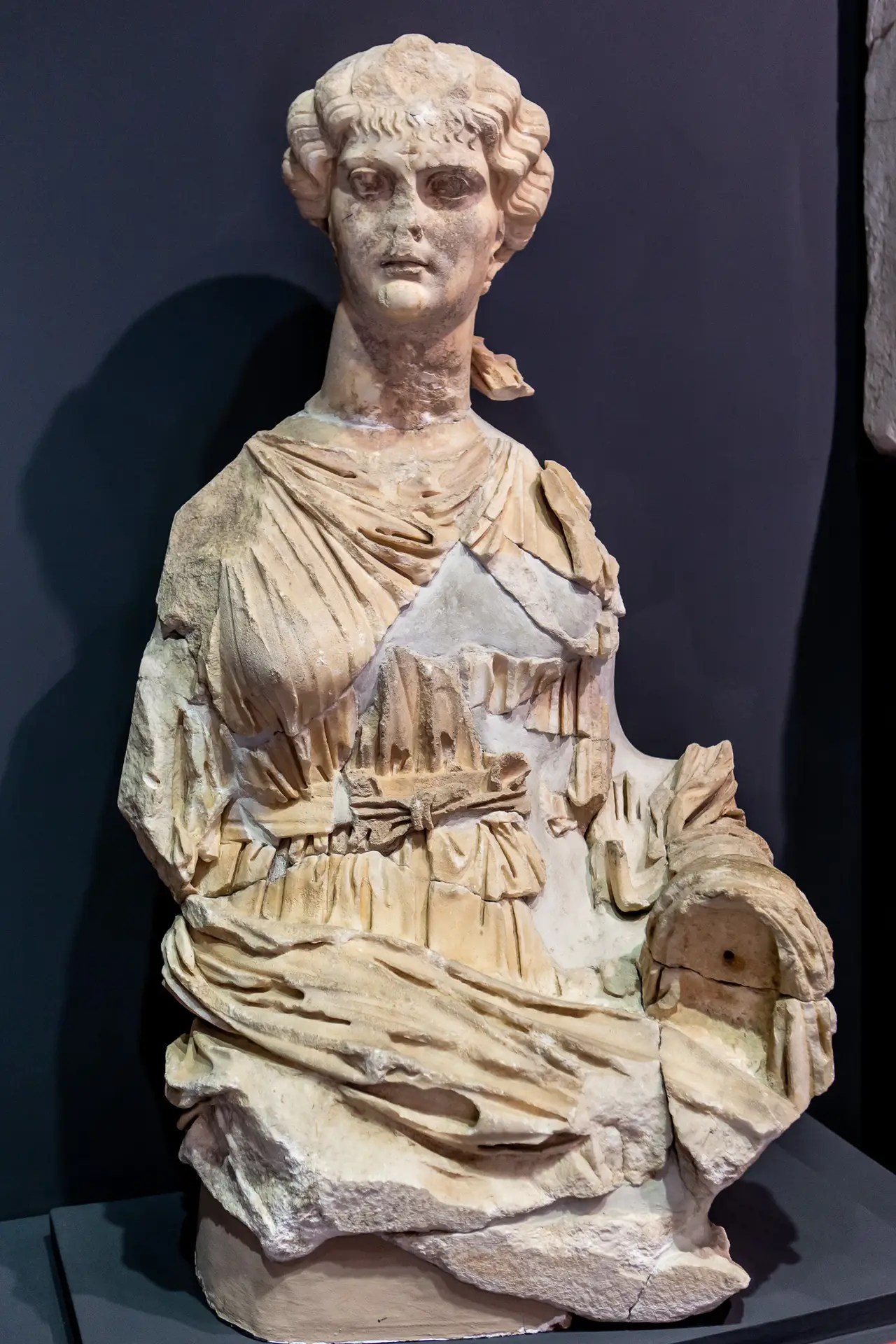
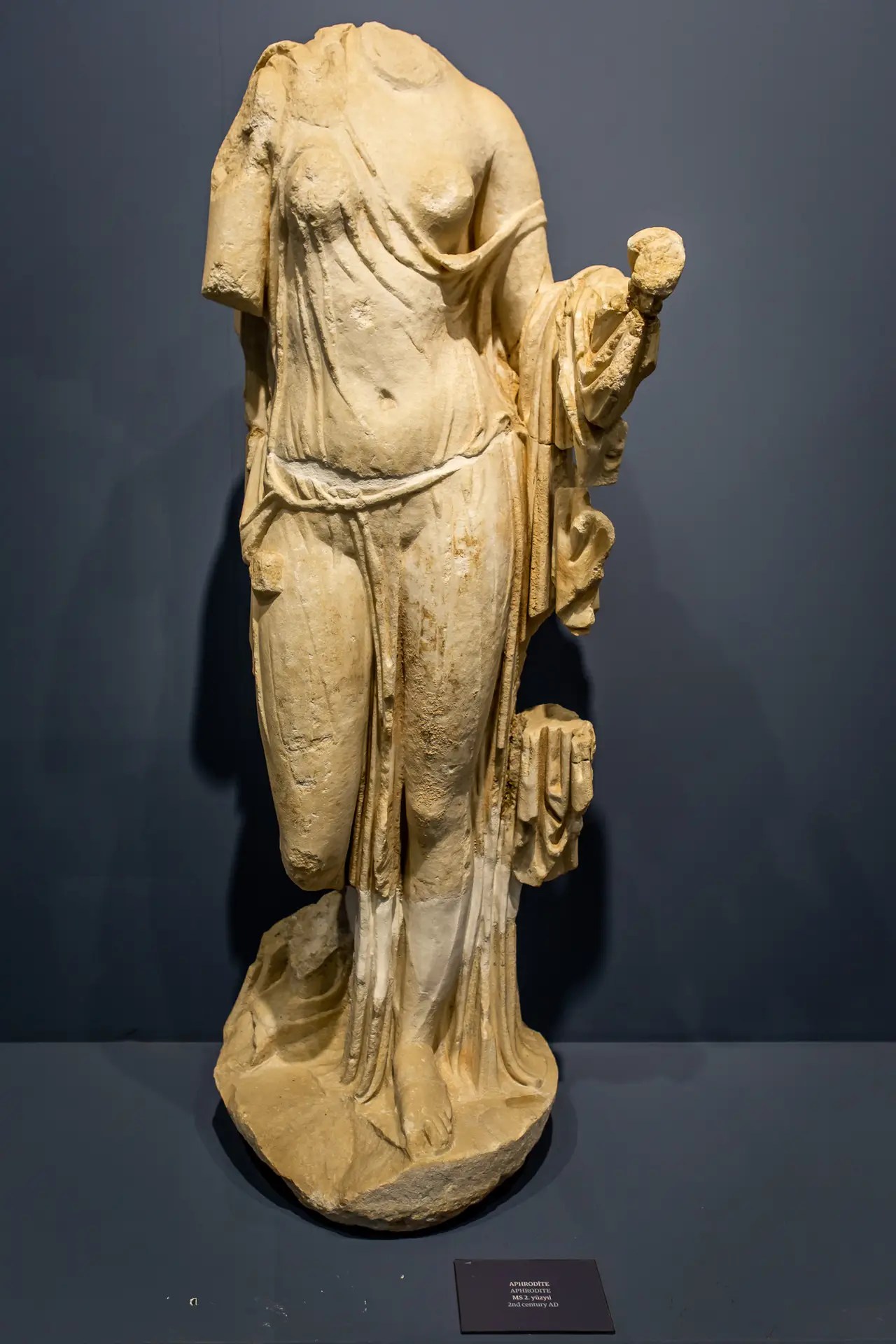
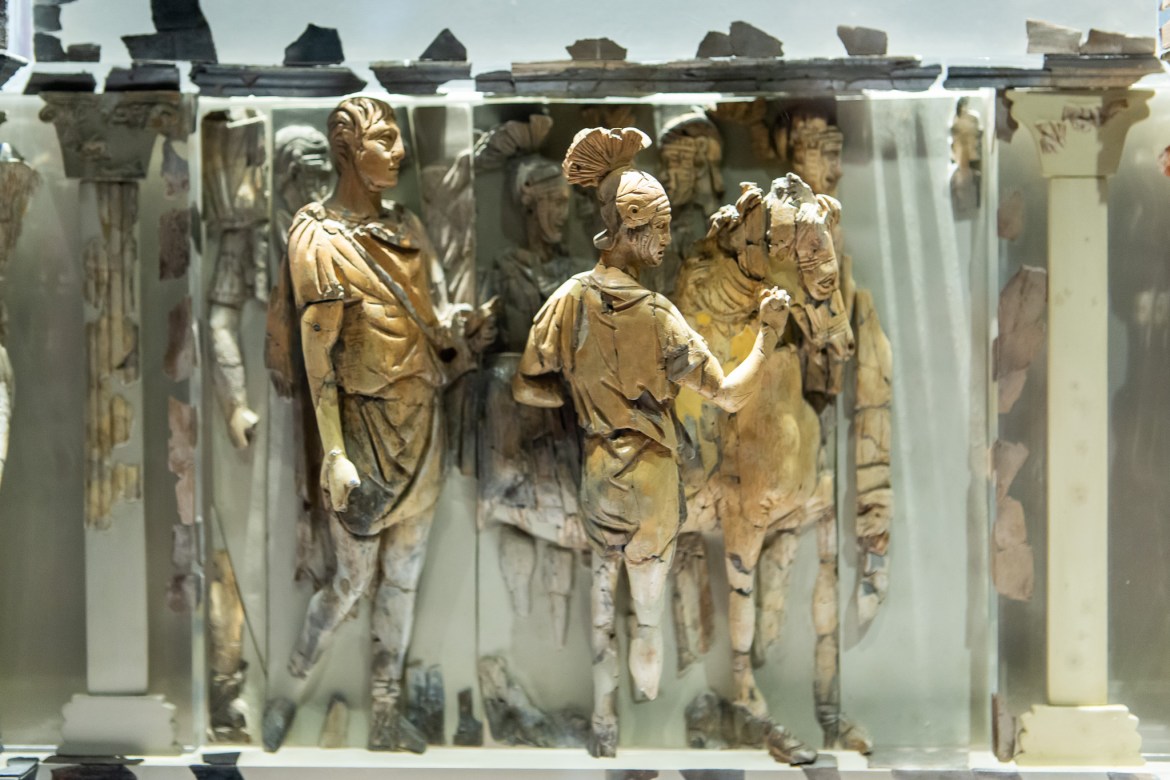
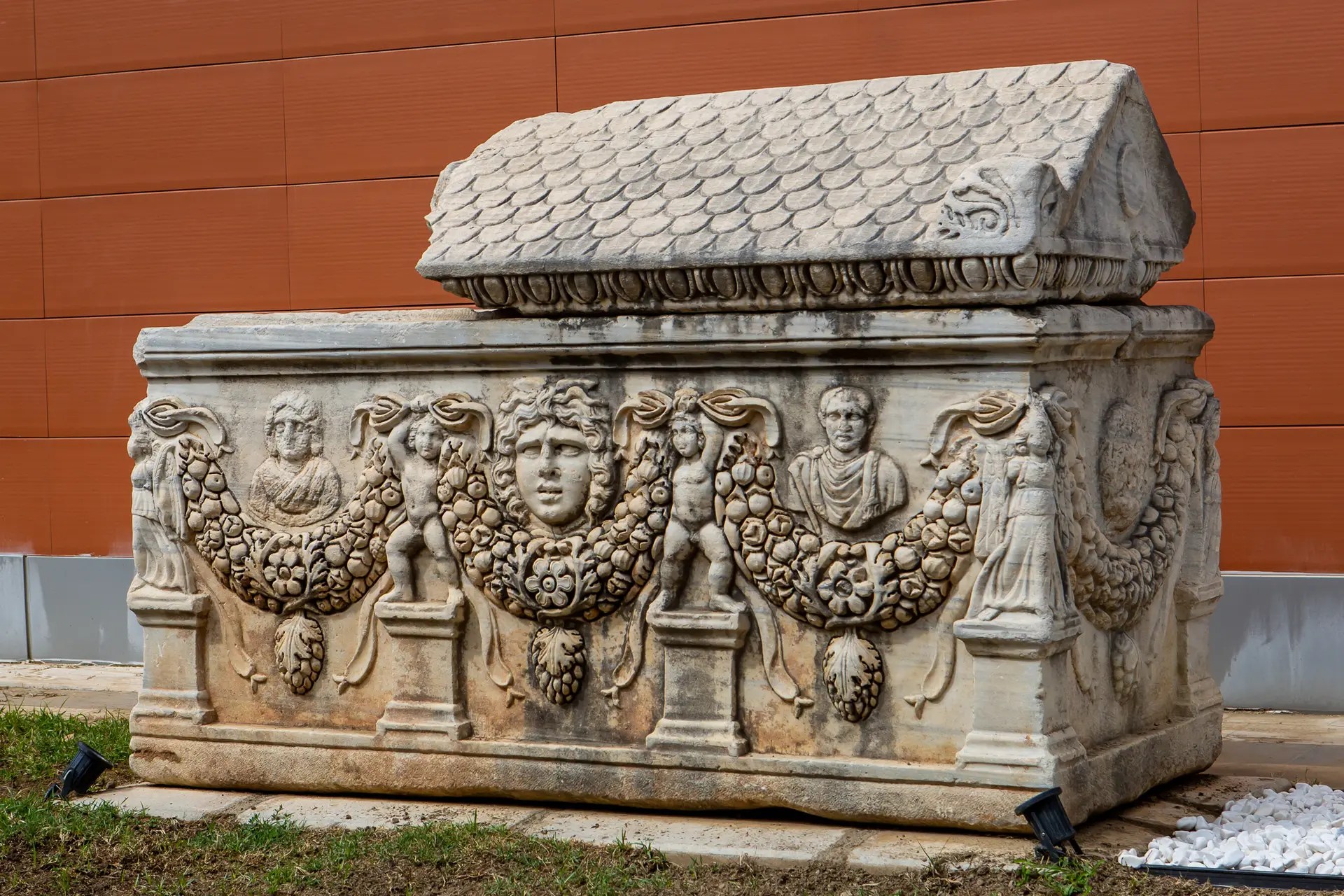
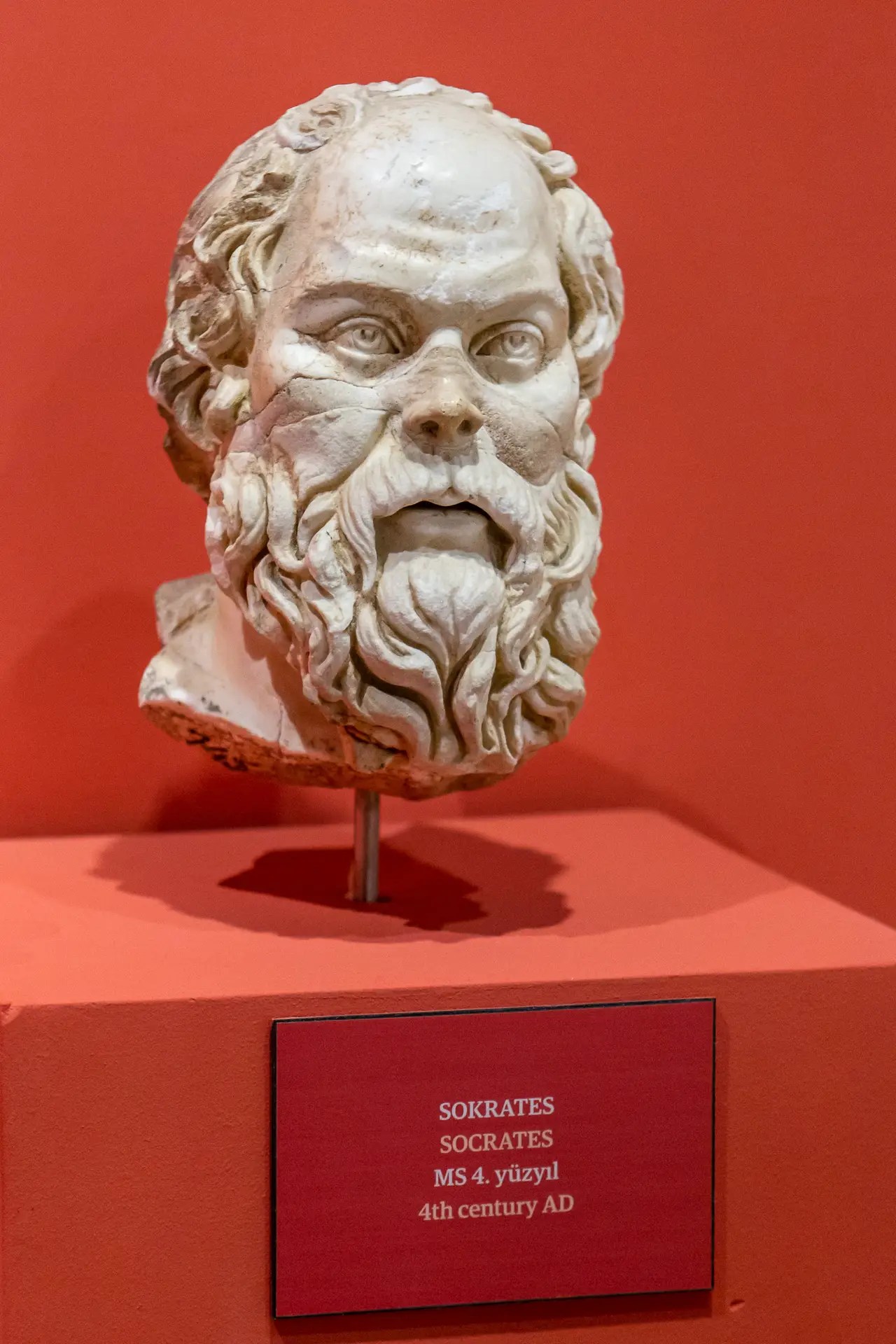
The Ephesus Archaeological Museum was part of the excursion rather than an optional addition, and I was still interested enough at that point to enjoy it. After spending hours looking at buildings, fragments and foundations in situ, the museum gave us a closer look at sculptures, reliefs and smaller objects recovered from the area.
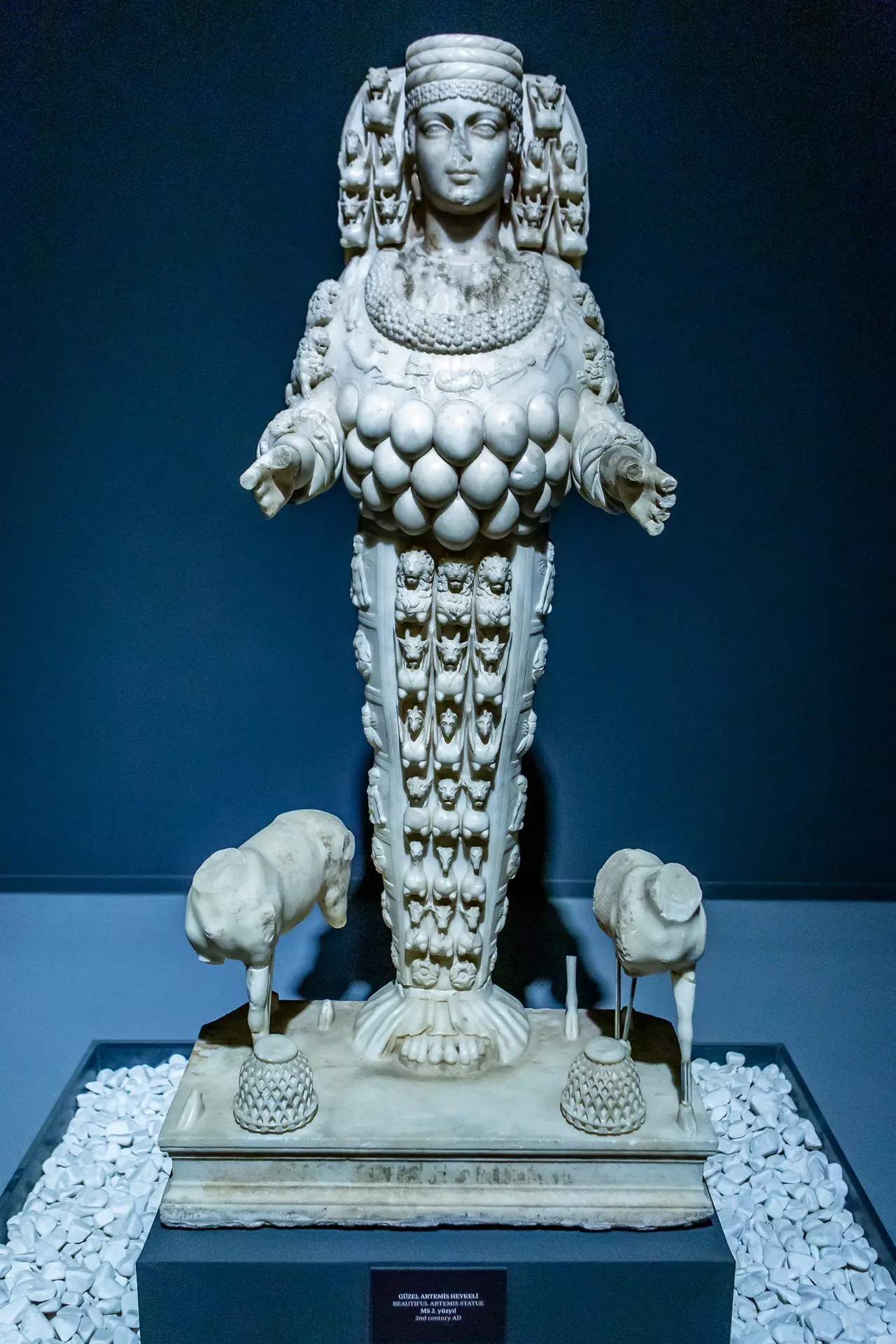
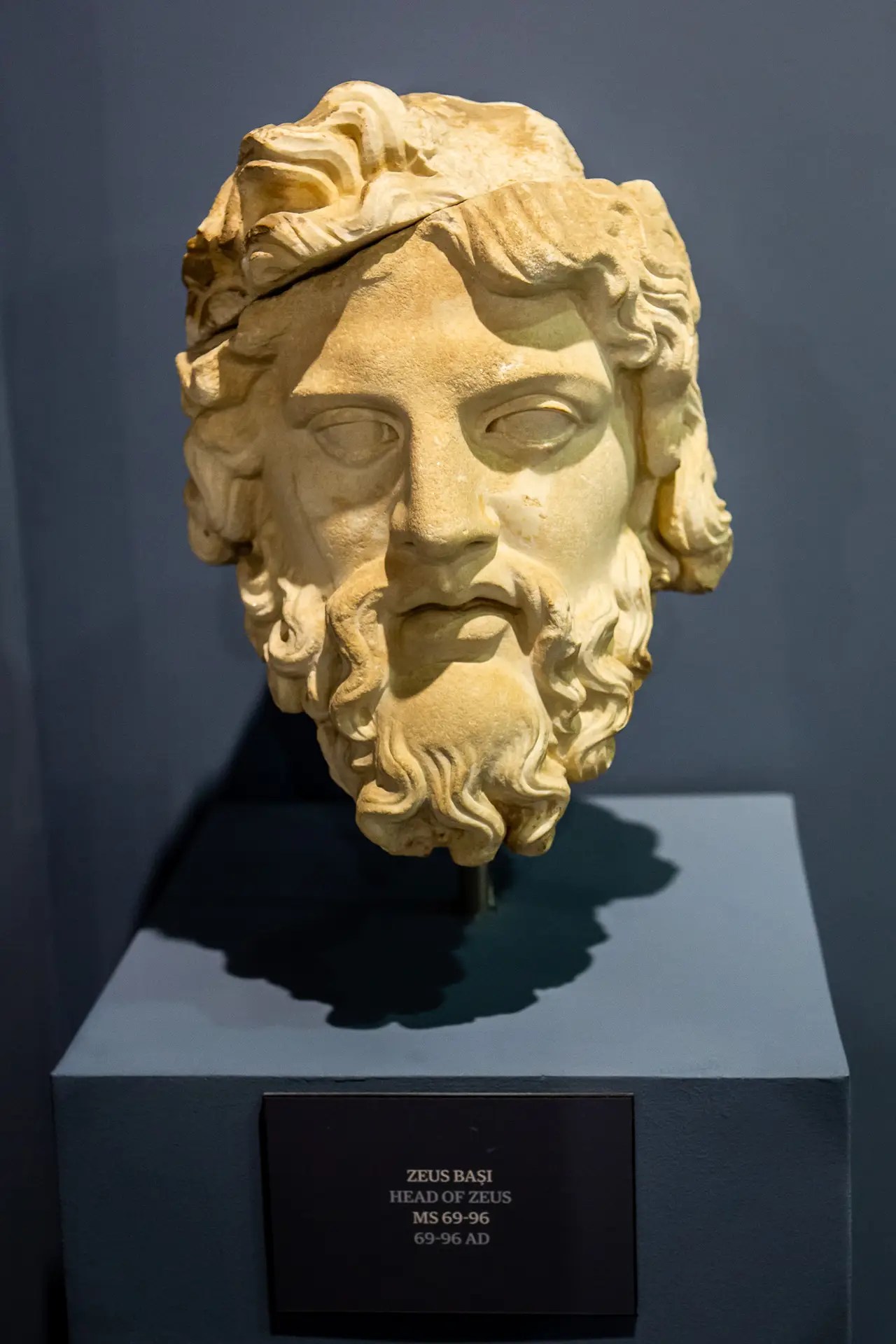
Naturally, I spent extra time looking at the coins. With my own collection at home, ancient coins are always going to pull my attention even when a museum is full of larger and more visually dramatic pieces. The Great Artemis and Beautiful Artemis statues, portrait heads, Egyptian priest and other artifacts were all interesting, although seeing them did not fundamentally change the way I thought about the ruins we had just walked through. I enjoyed the museum on its own terms rather than needing it to complete the Ephesus experience.
Afterward we had some free time in Selçuk while everyone regrouped. Laura and I found a café, sat down and had a drink and a small snack. I had a beer with some nuts, and after hours of walking around in the heat, sitting down in the shade for a while was exactly what I wanted.
Dinner, Looms and a Very Expensive Rug
Our final organized stop was The Loom Weaving Center. We ate first, sitting outside under canopy shades with several other people from the excursion before the demonstration began. The meal gave everyone a chance to slow down after a full day of walking, although the stop itself was clearly built around more than dinner.
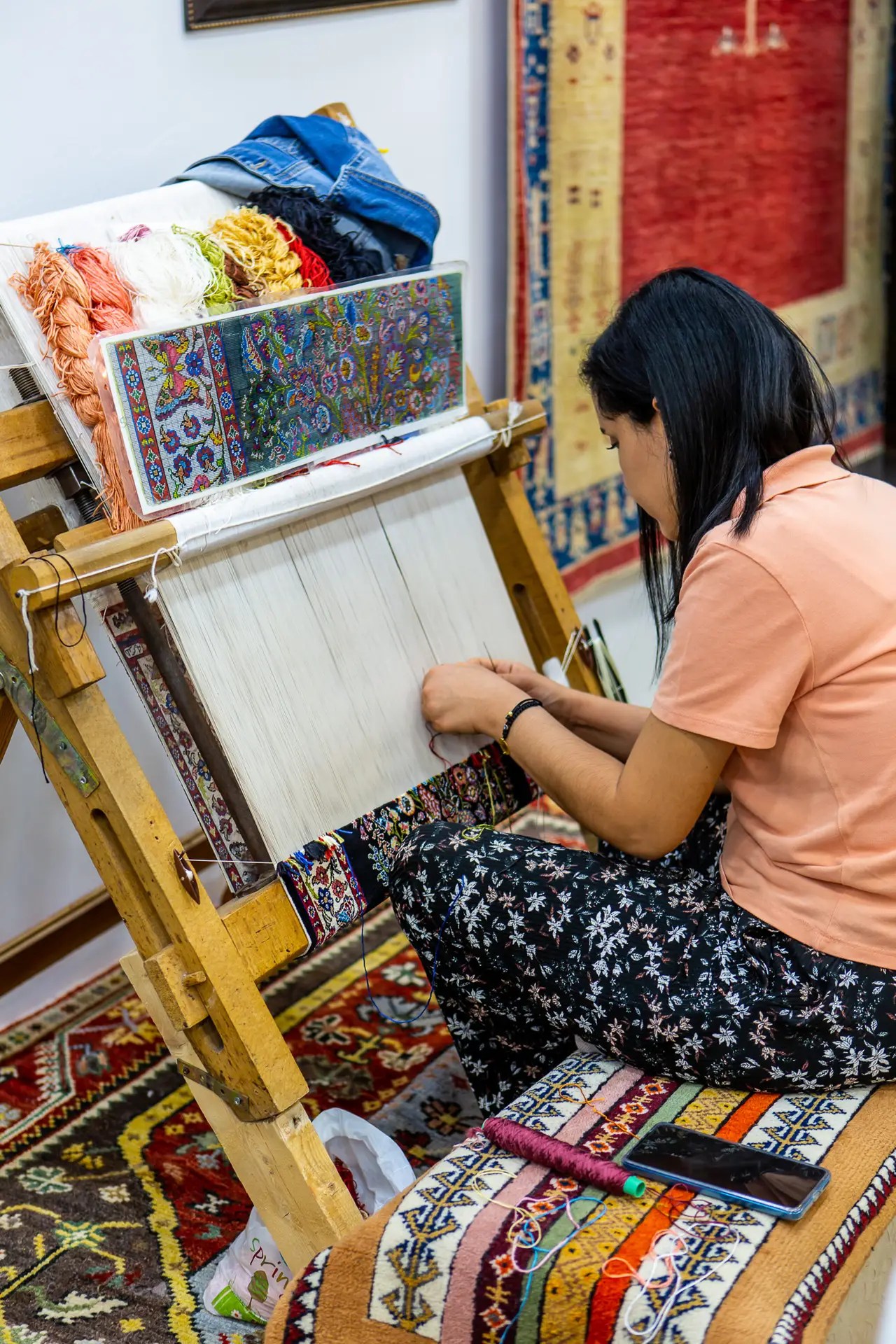
The weaving demonstration was genuinely interesting. We watched a woman working at a loom and saw how the carpets were constructed, although I had already seen similar handwork in India and had a pretty good idea what to expect. The skill and amount of labor involved are impressive, and there is no question that the finished carpets can be beautiful.
Once the demonstration ended, the visit shifted into the showroom. Finished rugs covered the walls and floor, and we were encouraged to take off our shoes and walk across them so we could feel the differences in materials and construction. The prices reflected the workmanship, and shipping was included as part of the purchase, but Laura and I were never seriously considering buying one. I can appreciate how much work goes into a handmade rug without deciding that I need to spend that much money bringing one home.
The stop was fine, but it is also the one part of the excursion I would change if I were planning the day again. I would have been perfectly happy eating the meal and putting the rest of that time back into Ephesus or Kuşadası rather than going through the showroom presentation.
Back to Kuşadası
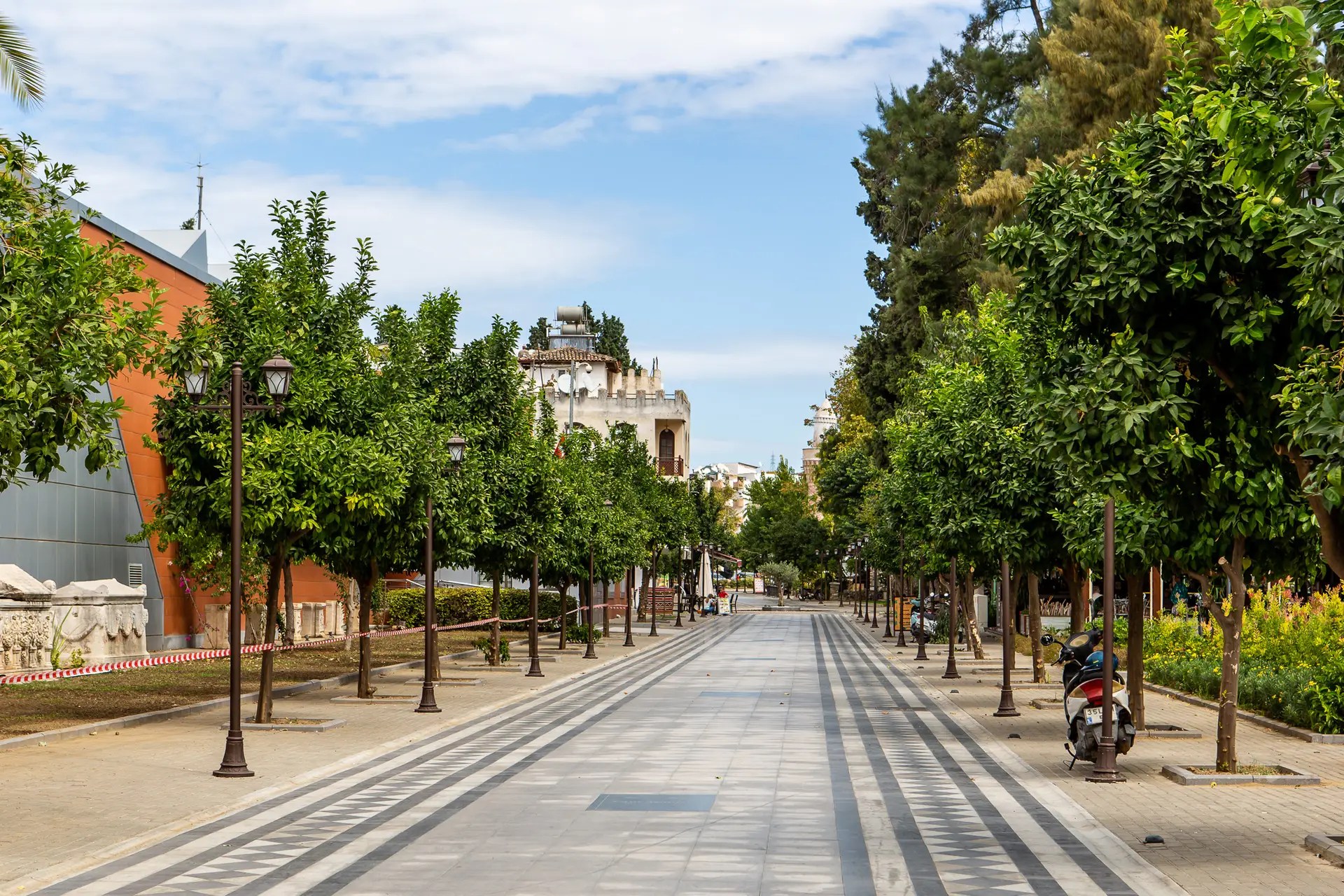
Once the organized excursion returned to Kuşadası, Laura and I still had enough time to explore on our own before going back aboard MSC Lirica. Rather than heading directly to the ship, we walked the waterfront and wandered around the port area, stopping at a few of the merchants set up along the way.
The weather had changed considerably from the hard sunshine we had dealt with at Ephesus. Clouds had moved over the coast, giving the waterfront a much softer late-afternoon look as I photographed the harbor, hillside homes, Turkish flags, the Hand of Peace sculpture and some of the public art along the promenade. The giant shark-shaped topiary was considerably less historic than anything we had seen earlier in the day, but it was hard to miss.
Kuşadası worked well as a cruise stop. The waterfront was pleasant to walk, there was enough around the port to explore independently, and the city made an easy base for reaching Ephesus. I do not think I would plan a separate trip just to stay there, though. When Laura and I eventually return to Turkey for a longer visit, Istanbul is much higher on that list.
We boarded later in the afternoon and spent the rest of the day back on MSC Lirica with snacks, drinks and dinner. Looking back on the entire port call, I still think of it primarily as our day at Ephesus, with Kuşadası serving as the beginning and end of a much larger day ashore.
Food, Drinks & Quick Stops
Selçuk Café
After the museum we had some free time while waiting for the rest of the group, so Laura and I found a café and sat down for a while. I had a beer and some nuts, and there was nothing elaborate about the stop. After walking through Ephesus in full sun, having somewhere shaded to sit with a cold beer was enough.
Dinner at The Loom Weaving Center
Dinner came before the carpet demonstration and was served outside beneath canopy shades. We sat with several other people from the excursion, ate and relaxed before moving into the weaving portion of the visit. The meal itself was more useful to me as a break in a long touring day than as a destination dining experience.
Back Aboard MSC Lirica
After exploring the Kuşadası waterfront, we returned to the ship later in the afternoon and had snacks, drinks and dinner aboard. By then we had been away from the ship most of the day, so there was no motivation to turn the evening into another excursion.
In the Frame
The Faces Behind This Journey
Just Before: Athens, Greece
Before sailing to Turkey, we spent several days exploring Athens and the Saronic Islands before boarding MSC Lirica in Piraeus. The Athens Feature Story follows our time among the Acropolis, ancient ruins and streets of one of our favorite cities in Europe.
Explore the Athens Feature Story
Photography Notes
Ephesus was one of those destinations where I went in with a very specific photograph already in mind. The Library of Celsus was the priority, but once we entered the archaeological site I ended up photographing almost continuously because there was architectural detail everywhere—carved marble, inscriptions, columns, statues, partially reconstructed monuments and wider views showing how the city fit together.
The biggest challenge was not the equipment or the walk; it was the combination of strong midday sun and crowds. Much of the site was sitting under a bright blue sky with hard light hitting pale stone, which meant watching highlights while still trying to preserve detail in the darker recesses of the ruins. The Library was particularly busy, so clean compositions without people were never really practical. Instead of fighting that all afternoon, I concentrated on getting strong architectural views and using the people when necessary to show scale.
The route through Ephesus also gave me a natural progression of wide and tight compositions. I could photograph entire structures such as the Temple of Hadrian and Library of Celsus, then turn toward inscriptions, reliefs and architectural fragments without needing to manufacture variety. Inside the museum, the challenge changed completely to darker indoor light, display cases and spotlit sculptures.
By the time we returned to Kuşadası, the cloud cover had softened the light considerably. Those waterfront photographs have a completely different look from the high-contrast images at Ephesus earlier in the day, which works well when the entire gallery is viewed chronologically.
Practical Notes & Lessons Learned
The upper-to-lower route through Ephesus worked well because most of the archaeological walk was downhill. The heat and direct sun were much more noticeable than the physical difficulty of the route, so water, sun protection and comfortable shoes mattered more than worrying about a strenuous climb. Crowds were heavy, particularly around the major monuments, and anyone expecting empty photographs of the Library of Celsus in the middle of a cruise excursion is setting themselves up for unnecessary frustration.
The House of the Virgin Mary had a substantial line to enter the house, and photography was not permitted inside. The stop did not need much more time than we were given, but Ephesus was different. I would have gladly traded some of the later carpet-center time for another hour inside the archaeological site.
The archaeological museum was worth keeping in the itinerary, especially for the artifacts and coins, and the free café stop afterward was a welcome break. The carpet demonstration was interesting enough once, but knowing what I know now, I would choose an excursion that spent more time at Ephesus and skipped the showroom portion if that option were available.
Kuşadası itself was easy to explore independently once the excursion returned. The waterfront and cruise port are close enough that we could walk around, browse a few merchants and photograph the city without needing another organized activity before going back aboard.
The Journey in Motion
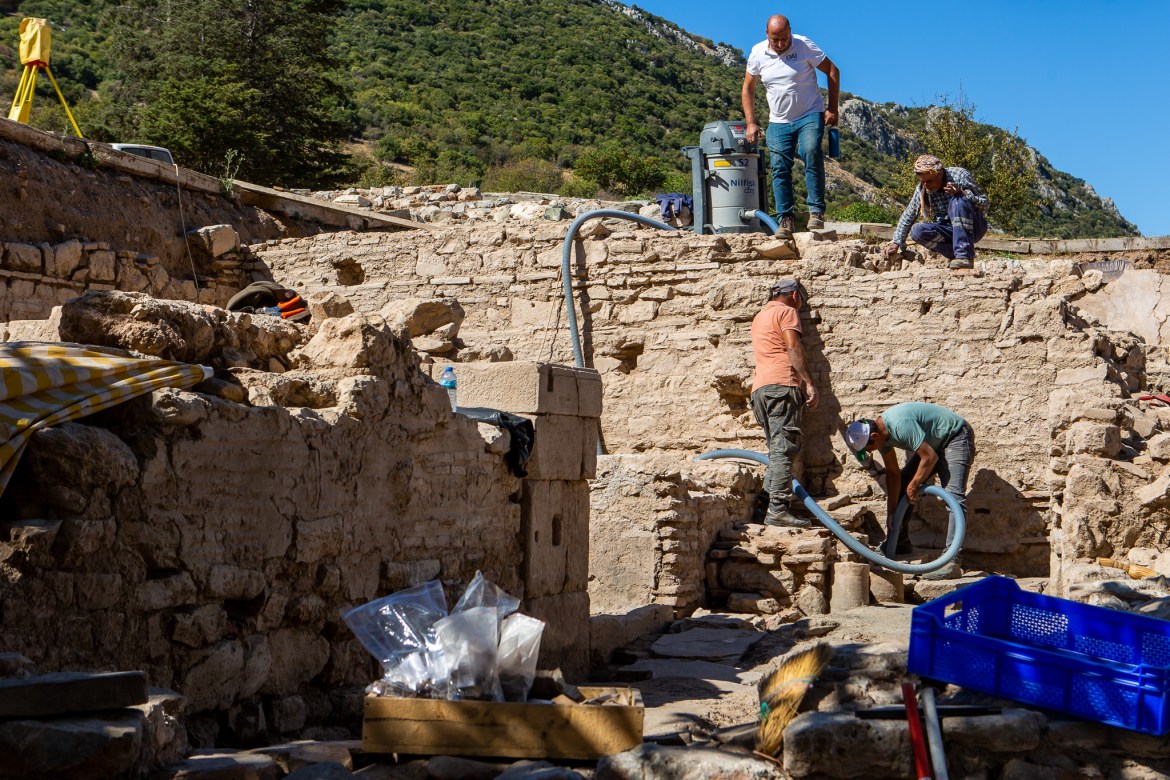
Some parts of the day made more sense in motion than in a still photograph. At Ephesus, I stopped to record archaeologists working directly among the ruins, while back in Kuşadası I filmed the waterfront and cruise-port area as we explored on our own before returning to MSC Lirica.
Archaeologists at Work in Ephesus
Archaeologists working among the ruins of Ephesus, clearing and stabilizing sections of the ancient city while visitors continued through the site around them.
Kuşadası Cruise Port & Waterfront
A walk through the Kuşadası cruise-port area after our excursion, with the waterfront, Turkish flags, shops and hillside city giving us one last look at the port before heading back aboard MSC Lirica.

Behind the Lens
I’m Steve—a retired Army vet who traded rucksacks for camera bags and never stopped exploring. What started with a simple 110 film camera grew into photographing all 50 states and 30+ countries, from quick business-trip detours to adventures with my wife Laura. Shutter Nomadica is where I share those travels through the photographs, stories, and moments that made each place memorable.
Beyond the Story
Next Stop: Limassol, Cyprus
From Kuşadası, MSC Lirica continued across the eastern Mediterranean to Cyprus. Our day outside Limassol traded marble streets and Roman ruins for Land Rovers, mountain roads, reservoirs and the stone village of Lofou.
Explore the Limassol Feature Story