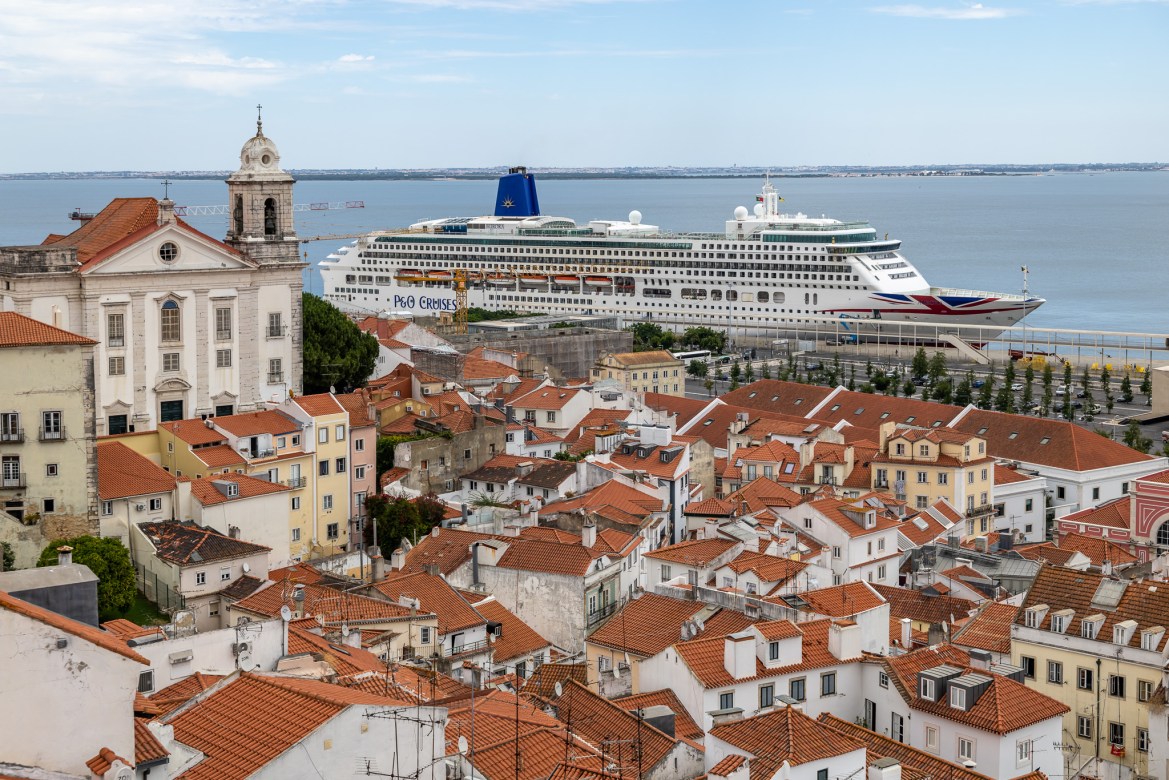
Celebrity Equinox was already tied up below Alfama when we woke that first morning. The sun was out, the sky was blue, and from the upper decks we could already see the hills, churches and rooftops we would be working our way through later in the day.
Todd and Dawn were traveling with Laura and me, and we had two days before the ship left Lisbon. The first would stay mainly in the city, beginning with a private tuk-tuk and ending with the four of us wandering on our own. The second would take us out to Pena Palace, Sintra, Cabo da Roca and Cascais before bringing us back to the ship for one last look at Lisbon from the Tagus.
That combination ended up giving us two very different days: one spent inside Lisbon’s streets and neighborhoods, and another moving through the hills and coastline west of the city.
A stone figure of Santa Maria de Belém stands beneath the tall window above the South Portal, surrounded by intricate Manueline carving.
A procession of Portuguese explorers, navigators, missionaries, writers, and other historical figures climbs the stone prow of Padrão dos Descobrimentos.
The Monumental Gate sits below the colorful walls and towers of Pena Palace amid the thick vegetation of the Sintra hills.
The pointed stone portal and open upper window of Igreja do Carmo stand sharply against the blue Lisbon sky.
A vivid blue sculpted face peers through the greenery covering one of LX Factory’s weathered walls.
The towering Cristo Rei monument stands high above the southern bank of the Tagus as we approach the 25 de Abril Bridge.
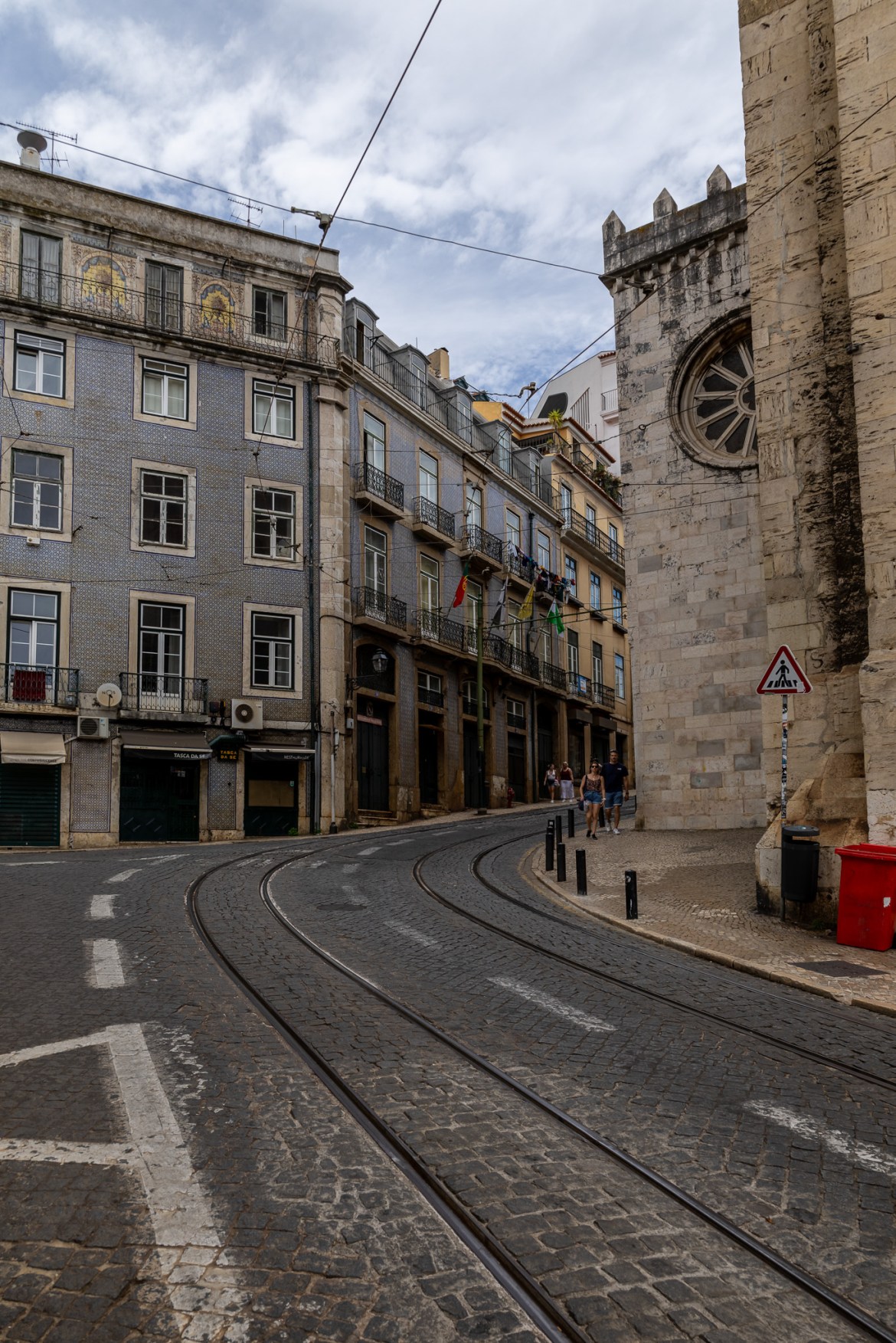
Tram tracks curve directly toward the twin crenellated towers and rose window of Lisbon Cathedral in the heart of the old city.
Journey Timeline
Day 1 — Lisbon by private tuk-tuk: Carmo, Pink Street, LX Factory, Belém, Estrela, Alfama and several overlooks; returned to Celebrity Equinox, then headed back into the city on foot through Rua Augusta, São Pedro de Alcântara and Praça do Comércio
Day 2 — Pena Palace and historic Sintra, followed by Cabo da Roca and Cascais; returned to Celebrity Equinox and sailed down the Tagus past Cristo Rei and beneath the 25 de Abril Bridge
The Experience, Told Through the Journey
Day One — Lisbon by Tuk-Tuk
Celebrity Equinox was already docked below Alfama when we woke up, and the weather was about as good as I could have asked for. The sky was bright blue, the sun was out, and from the ship we already had a clear view across the rooftops and hills we would be exploring later in the day.
Laura, Todd, Dawn and I started with a seated breakfast in the main dining room, grabbed bottled water as we left the ship, and then began the walk toward our meeting point near Praça dos Restauradores. It was more than two kilometers from the cruise terminal, which was farther than I had realized when we booked the tour.
I had used tuk-tuks plenty of times throughout Asia, but this one was considerably nicer than most of those. It was spacious, comfortable and easily handled all four of us. We told the driver we wanted to see the major sights and mostly left the route up to him. He was friendly and knowledgeable, although he wasn’t someone who gave a constant running commentary. If we wanted more detail about something, we usually had to ask.
Our first real stop was Largo do Carmo, where the driver gave us some background on the area before letting us explore on our own. Laura, Todd and Dawn probably heard more of what he said than I did because I was already moving around looking for photographs. We didn’t go inside the ruined convent, but the surrounding area and elevated walkways gave me some of my first good views across Lisbon toward Rossio and Castelo de São Jorge.
From there we made a short stop at Pink Street, where we got out, walked around for a few minutes and took some pictures before moving on.
LX Factory and Belém
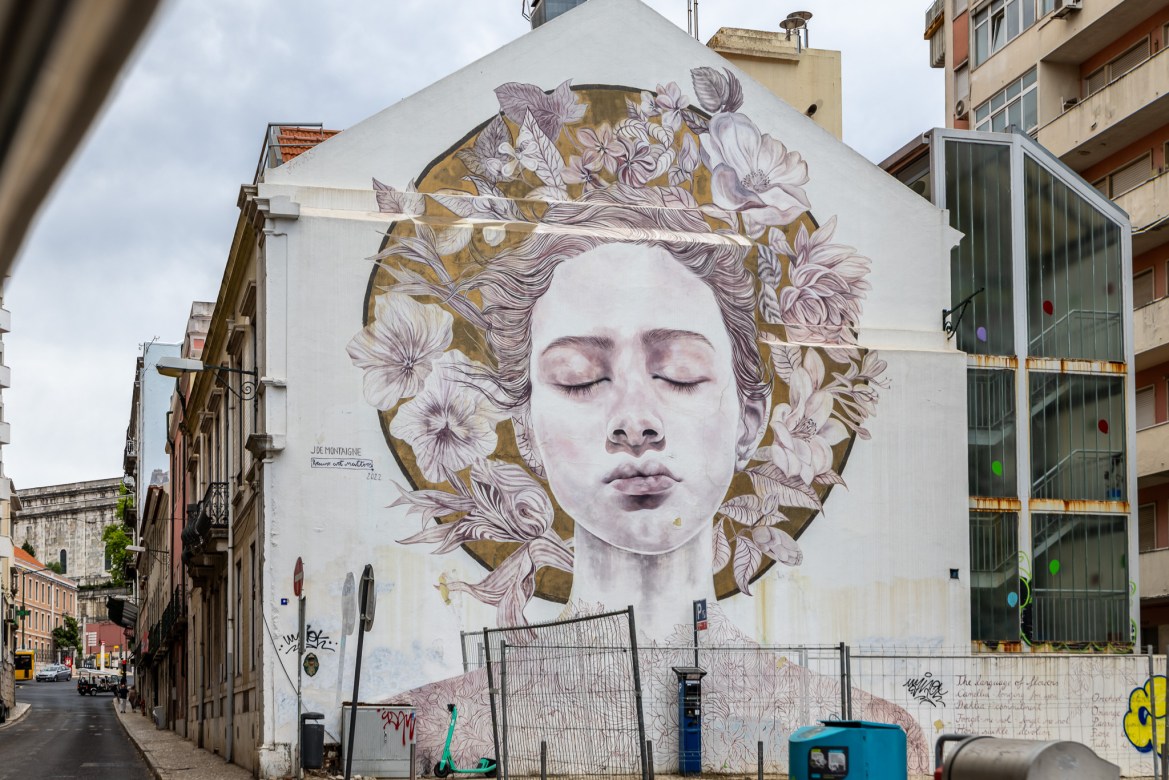
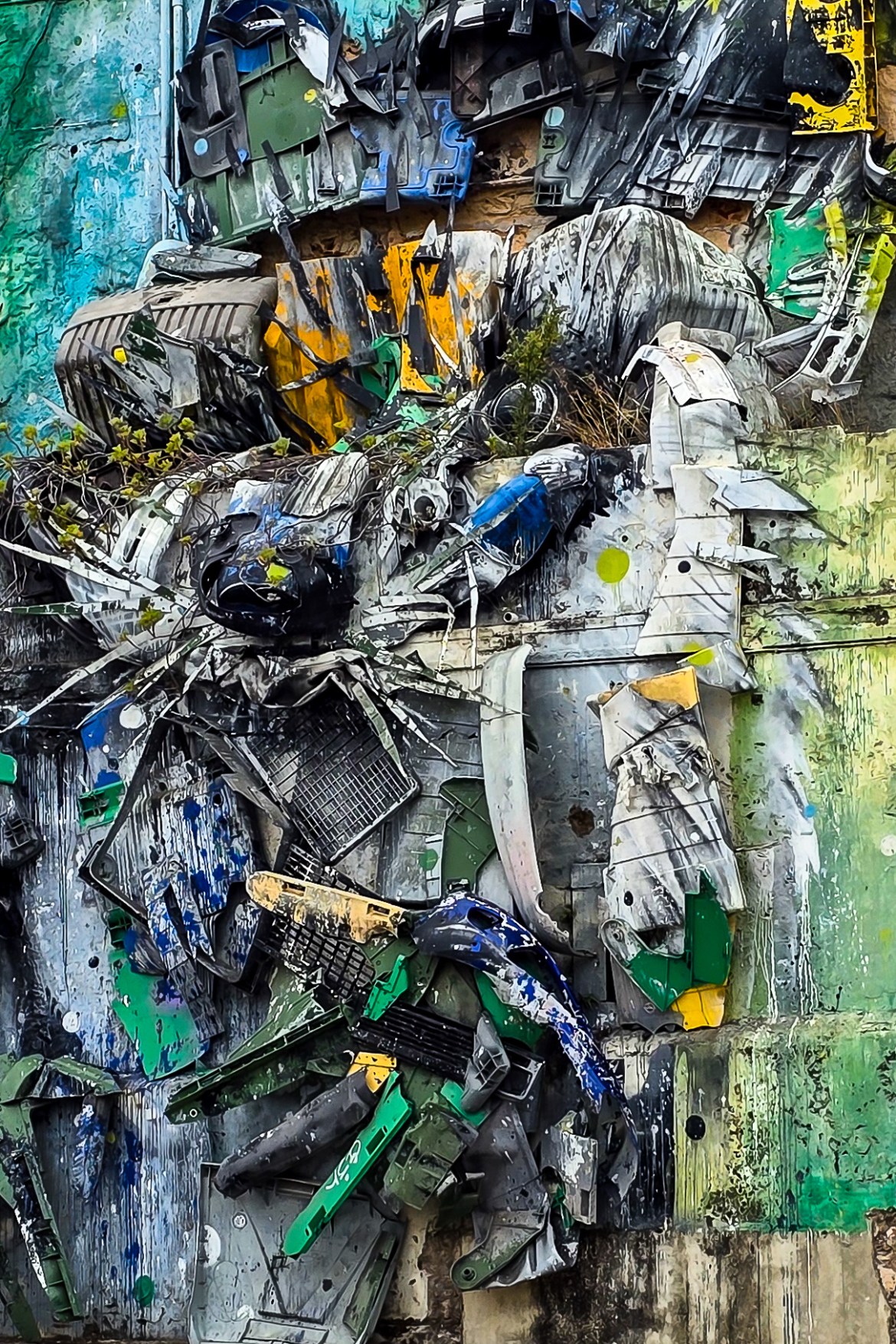
The driver recommended LX Factory, and that turned out to be one of the more interesting stops of the day. The old industrial complex was filled with shops, restaurants, galleries and street art, and the artwork immediately caught my attention. Some of it was large and colorful, some of it was strange, and a lot of it photographed extremely well. We also went inside Ler Devagar, and looking back, I wish I had spent more time there before we moved on.
When we reached Belém, the driver initially seemed ready to show us Jerónimos Monastery from nearby and continue the route, but I wanted to get out and see it properly. I had hoped to go inside, although the line was far too long for that to make sense with the rest of the day still ahead of us. I stayed outside and concentrated on the architecture, especially the stonework around the south portal.
The Monument to the Discoveries was already part of the planned route, and we spent some time walking around it and the surrounding plaza. None of us knew much about Portugal’s maritime history beforehand, so the monument, the figures along its sides and the large compass rose were all new to us.
Somehow, despite spending time in Belém, we never stopped for a pastel de nata. I don’t remember us stopping for food at all during that part of the day.
Estrela, São Bento and Alfama
At Basílica da Estrela, what could have been another quick exterior stop turned into me heading inside. A sermon was underway, so I stayed near the rear of the church rather than walking around while the service was taking place. There was also a donation box for visitors who wanted to take photographs, so I made a donation and worked from the back.
We later passed Palácio de São Bento, where I asked the driver to stop long enough for me to get a photograph. I tried stitching several images together afterward, but the perspective produced so much bowing across the building that Lightroom wasn’t able to correct it in a way I liked.
As we moved into Alfama, the things that kept catching my attention weren’t only the major landmarks. The tram wires overhead, cobblestone streets and tighter lanes were just as interesting to photograph. The tuk-tuk also made a lot of sense in this part of Lisbon because it could handle the hills and narrow streets without turning the entire day into a long walk.
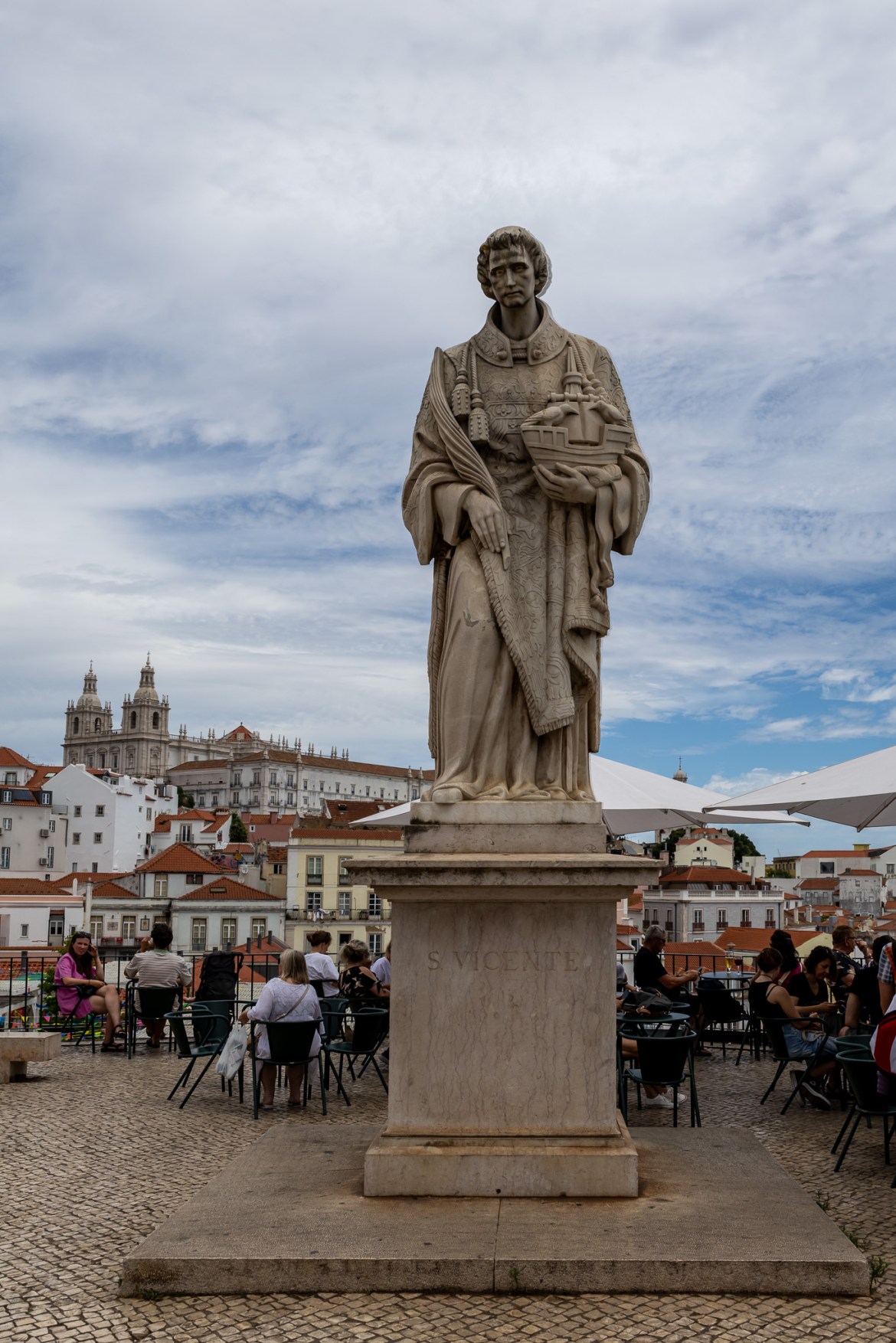
At Portas do Sol and Santa Luzia, we had enough time to get out and walk around. It was busy, but the views over Alfama and the Tagus were excellent, and from up there we could see Celebrity Equinox sitting far below along the waterfront.
The driver later took us higher to Miradouro da Senhora do Monte, where he pointed out some of the buildings across the city while I photographed the wider view. That became one of my favorite viewpoints in Lisbon and eventually produced the image I like best from the city.
The pace of the tuk-tuk tour worked well for us because the driver never made us feel rushed. When we wanted more time somewhere, we took it, and when we were ready to move on, we moved on.
Back Out on Foot
The driver eventually returned us to Celebrity Equinox, where we grabbed something quick to eat and regrouped. Since the tour had only taken up part of the day, none of us felt like staying aboard, so we headed back into Lisbon on foot.
This time there was no guide and no set route. We walked through Rua Augusta, browsed the shopping kiosks and worked our way around central Lisbon at our own pace.
I’m usually keeping an eye out for a baseball cap from wherever we’re visiting. Over the years I’ve accumulated dozens of them, although I’ve been wearing my Shutter Nomadica hat more often lately, so buying another destination cap isn’t as automatic as it once was. I still tend to look whenever we’re walking through shops and street markets.
Near São Pedro de Alcântara, we came across a band playing outside and decided to stop for a while. We grabbed drinks, sat for about half an hour and listened before continuing through the city. It wasn’t something we had planned, but it was a good break in the middle of the afternoon and gave us a chance to slow down for a bit.
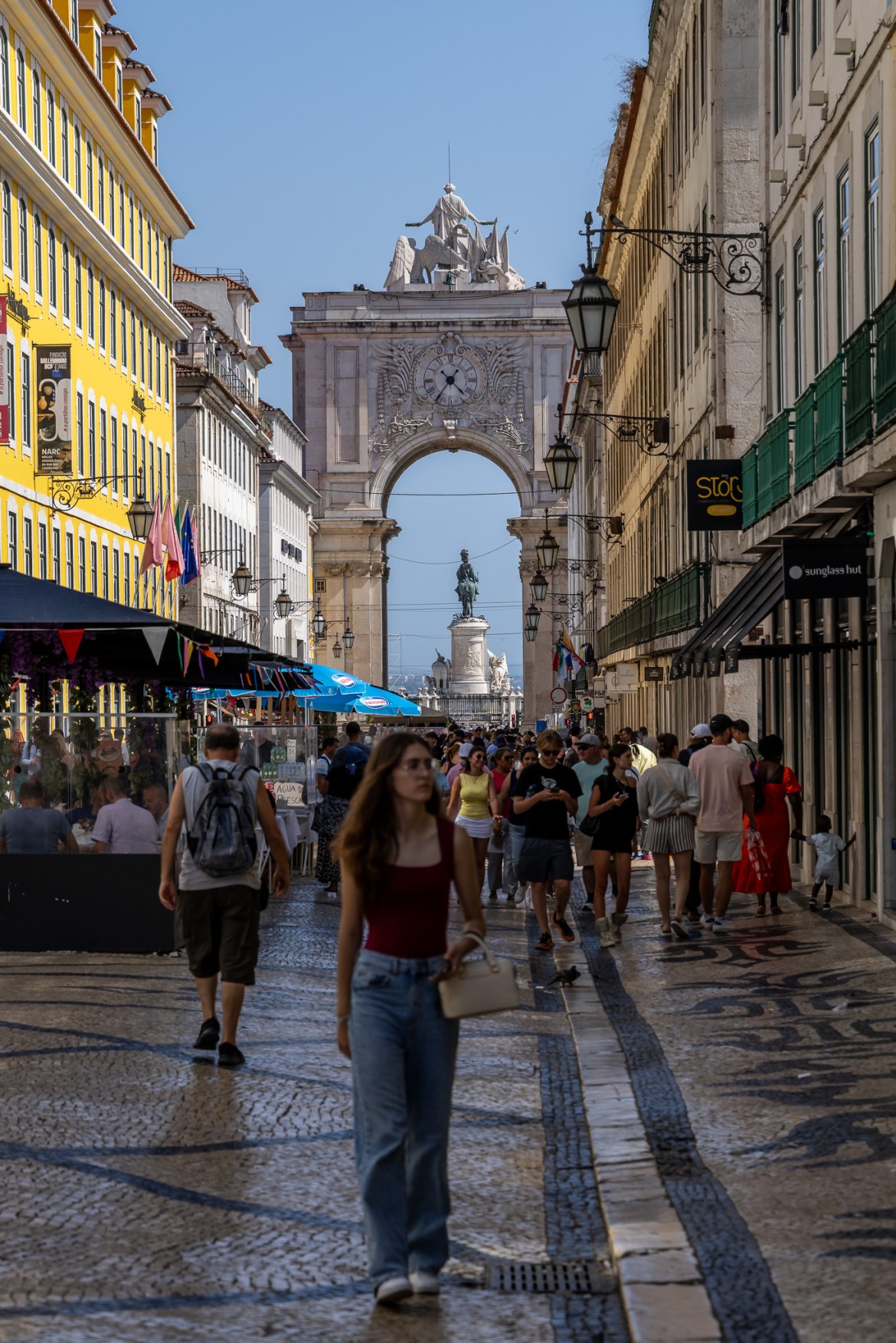
We eventually continued through Igreja de São Domingos, worked our way back toward Rua Augusta, passed beneath the Arco da Rua Augusta and came out into Praça do Comércio. From there we deliberately followed the waterfront back toward the ship because I wanted to see what Lisbon looked like in the later light.
I had left the tripod aboard because this was a vacation rather than one of my dedicated photography trips, something Laura has reminded me of more than once. Even without it, the evening light along the waterfront gave me a few more chances to photograph the city before we headed back aboard to clean up for dinner.
A peacock spreads its full tail across one of Pena Palace’s terraces while visitors stop to watch.
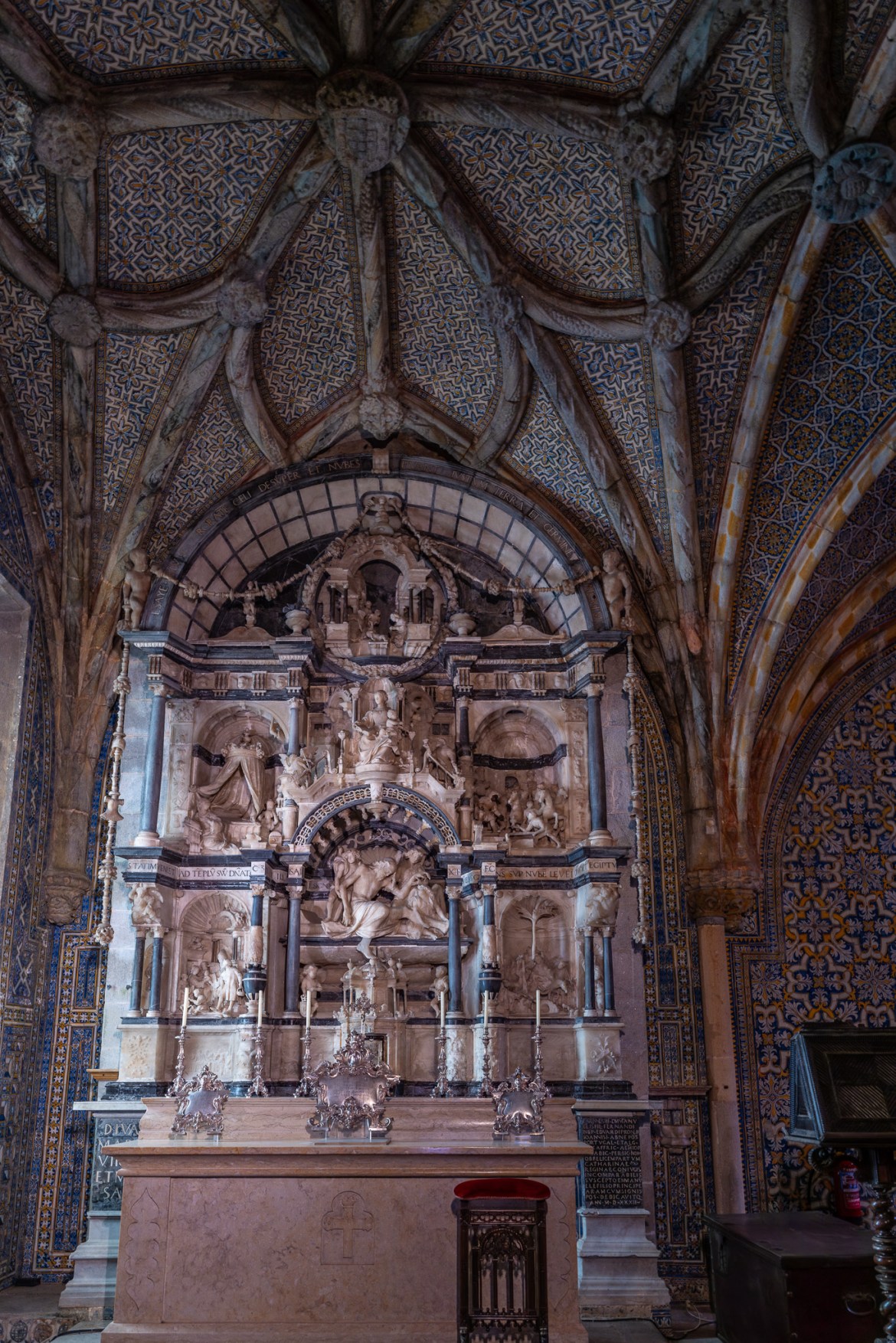
Marble columns and vaulted arches lead through the richly decorated nave toward the illuminated high altar of Basílica da Estrela.
The church tower and ornate limestone walls rise above visitors gathered outside the Jerónimos Monastery complex.
Yellow towers, gray stone, decorative tilework, and a deep red doorway crowd together along the richly ornamented New Palace façade.
A bright yellow Elevador do Lavra funicular sits on the rails of its remarkably narrow, steep passage between the buildings of central Lisbon.
A bronze statue of King Pedro I stands at the center of Praça 5 de Outubro, commemorating the king who granted Cascais its charter as a town in 1364.
Brilliant green decorative panels cover the unusual cabinet that housed Pena Palace’s historic telephone switchboard.
The Experience, Told Through the Journey
Day Two — Heading Back Across Lisbon
The walk back to the ship the previous evening had been slow and painful for me, and I didn’t want Laura, Todd and Dawn having to adjust their pace because of it the next morning. Since our excursion was meeting at the same spot near Restauradores, I left Celebrity Equinox about an hour before they did and told them I’d meet them there.
Leaving early also gave me time to stop for photographs along the way without worrying about anyone waiting on me. The timing worked almost perfectly because I had only just reached the meeting point when the three of them caught up with me.
The second-day excursion was very different from the private tuk-tuk tour. There were around twenty people in the group, and the guide was much more formal, energetic and talkative. She gave us a lot more information throughout the day, although the larger group also meant we were working within a tighter schedule.
Pena Palace
By the time we reached Pena Palace, the weather had changed completely. I had pictured the bright yellow and red walls against a dark blue sky with a few white clouds, but instead we arrived to heavy fog and flat light.
From a photography standpoint, I was disappointed at first because the conditions weren’t anything like what I had hoped for. As we moved around the palace, though, the fog began creating its own kind of photographs. Towers and terraces would disappear into the mist and then come back into view, giving the exterior a much different look than I would have gotten on a clear day.
After a short walk from the shuttle area, we waited for our timed admission. The guide stayed with us initially, but once we were inside we were given a meeting time and allowed to explore on our own. That worked well for me because I could slow down where I wanted without feeling like I needed to stay attached to the group.
The interiors were every bit as elaborate as I expected. We moved through the royal rooms, dining areas, Great Hall, chapel, kitchen and several smaller spaces filled with furniture, stained glass and decorative details. Even with all of that, my favorite feature at Pena was outside.
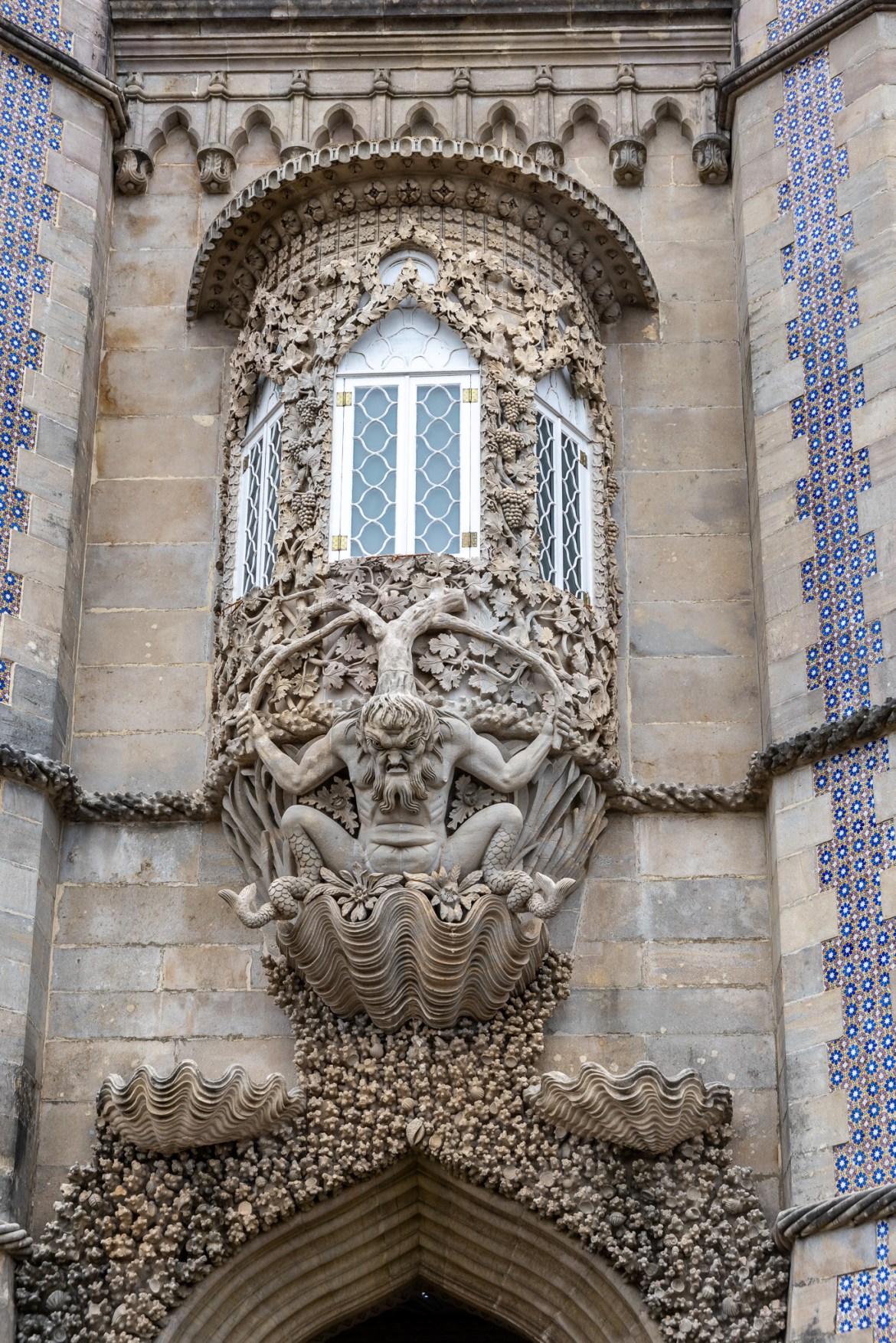
The Triton stood out more than anything else. The strange stone figure surrounded by shells, vegetation and carved detail fit the palace perfectly because Pena itself feels like several architectural ideas layered on top of one another.
Not long after that, we came across a crowd surrounding a peacock with its tail fully spread. The bird kept walking and turning while everyone tried to photograph it, and one woman became so determined to stay directly in front of it that she was constantly blocking everyone else’s view. After trying to work around her for a while, I finally stopped recording the video.
Historic Sintra
After Pena Palace, we headed into historic Sintra and were given some free time around Rua das Padarias. I would have liked enough time to go inside the National Palace, but there wasn’t room in the schedule. That was one of the limitations of the larger excursion: it allowed us to see several places in one day, but the timetable decided when we were finished whether we were ready or not.
One of the recommended stops was Casa Piriquita, and the long line outside made it clear that plenty of other people had received the same recommendation. We waited, bought a pastry and continued through the surrounding shops and streets.
I was also looking for a picture frame, which has become one of my regular travel traditions. I try to bring home a frame for a photo of Laura and me, but I’m picky about what I buy. I prefer something connected to the destination rather than something that simply has the place name stamped across it.
Over the years I’ve found some good ones: banana-leaf designs in the Caribbean, a frame made from part of a Scottish cask that I later added a Scotland pin to, one in India using the same style of inlaid stonework associated with the Taj Mahal, and a hand-carved wooden frame in Maui. Sometimes there just isn’t a great option and I end up buying the more obvious pewter souvenir version, but I still like having a frame from the trip once we’re back home.
Cabo da Roca
At Cabo da Roca, the fog was thick enough when we arrived that we couldn’t even see the Atlantic from the overlook. We spent some time around the monument and lighthouse before gradually walking farther down from the stone cross.
As we moved along the headland, the fog began lifting little by little. First parts of the cliffs came into view, then more of the coastline, and eventually the Atlantic opened up below us. Once we could actually see the water, we started taking photos of each other with the coastline behind us.
The difference between the early pictures around the monument and the later photographs above the ocean is pretty dramatic, even though they were taken during the same stop.
I don’t remember much of what the guide said about the significance of standing at the westernmost point of continental Europe because I was paying more attention to the changing conditions and looking for photographs.
Cascais
Our final stop was Cascais, where the bus dropped us near the Citadel and gave us the next couple of hours to explore on our own, including lunch.
Cascais was somewhere I would have liked more time. The bay, beaches, old buildings and marina were all close together, and it felt like a place where staying overnight would have made sense rather than treating it as a short afternoon stop.
We also immediately wished we had brought bathing suits or at least a change of clothes. Praia da Ribeira was right there, but without either one, we were limited to walking the waterfront and taking pictures.
We eventually started looking for somewhere to eat and chose Dom Manolo ourselves. Paying became part of the experience because several places didn’t seem interested in credit cards, and we weren’t carrying much cash. Todd ended up covering part of our bill.
I ordered the grilled sardines because I wanted to try something different. When they arrived whole, I wasn’t entirely sure how I was supposed to eat them. Our waiter didn’t speak much English, and my question wasn’t getting across very well, so he finally picked up a knife and demonstrated by cutting into one.
The meal was good, and I was glad I tried the sardines, but it wasn’t one of those meals that needs to be turned into something bigger than it was.
Once we finished lunch, it was time to walk back toward the Citadel and meet the group. By the time the bus started heading back toward Lisbon, we were tired enough that we slept for part of the ride.
One Last Look at Lisbon
Back aboard Celebrity Equinox, Dawn and Todd went to shower and get ready for dinner while Laura and I went up top to watch us leave Lisbon.
I already knew we would pass the 25 de Abril Bridge, and I wanted to be outside well before we reached it because I thought the approach from the river would give me the best photograph. Laura stayed with me for a while before eventually heading down to get ready.
I stayed up top with the camera and kept photographing whatever stood out as we moved down the Tagus. Cristo Rei came into view above Almada, the bridge gradually filled more of the frame as we approached, and after we passed beneath it I continued shooting back toward Lisbon and Belém.
The bridge was the photograph I had planned for, but the sailaway gave me several other views of places we had spent the previous two days seeing from the streets and hills.
By the time I finally headed downstairs, Lisbon was well behind us.
I don’t remember the rest of dinner that evening, but I know I had the escargot because I ordered it every night of the cruise.
The grotesque stone Triton emerges beneath the projecting window of Pena Palace surrounded by shells, vines, coral-like forms, and other carved details.
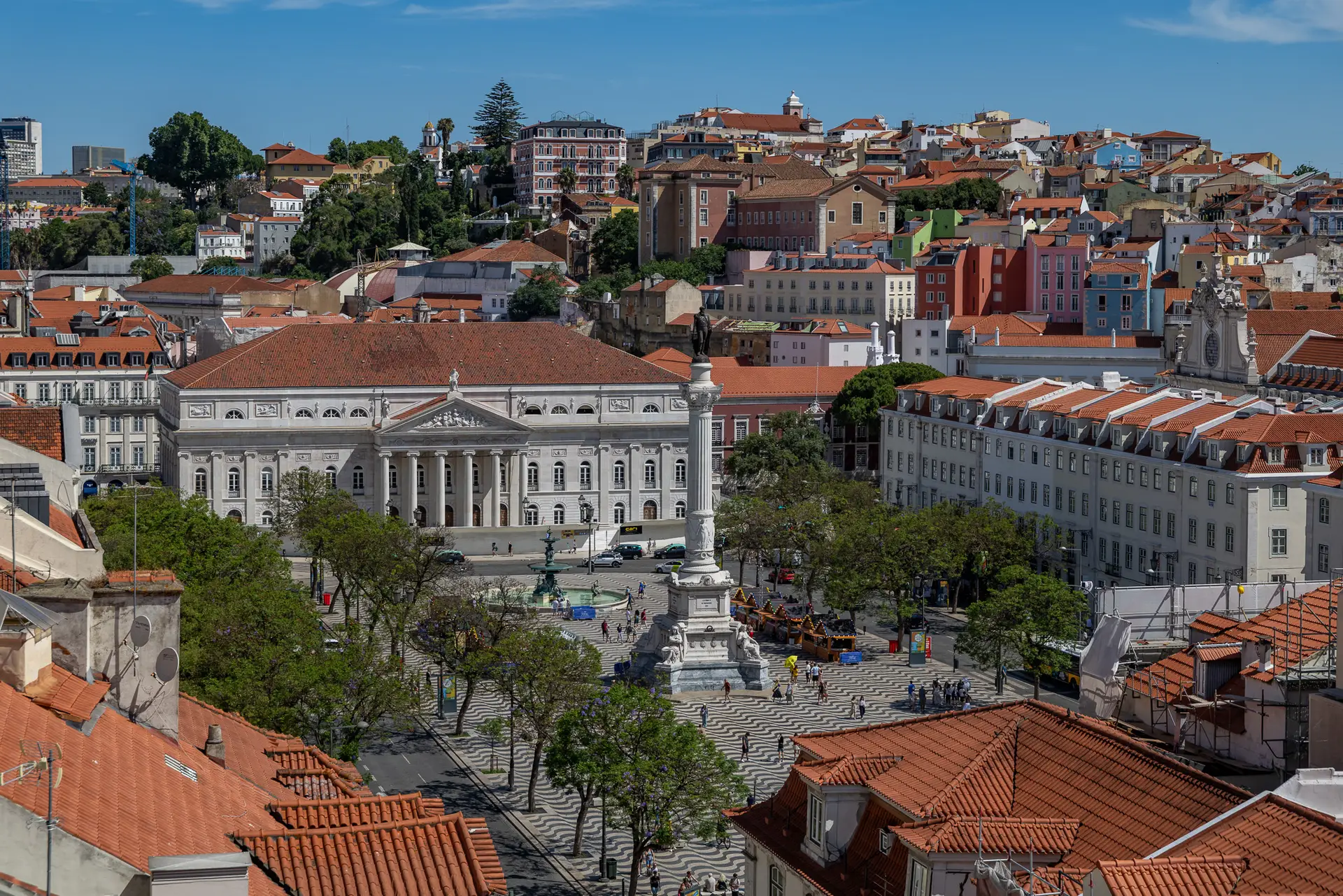
Rossio Square and its surrounding buildings sit below the hills of Lisbon in a broad view from the Carmo area.
Cabo da Roca’s stone monument stands against the open Atlantic horizon at the edge of the windswept coastal plateau.
Blocks of blue, yellow, orange, pink, and turquoise break across a woman’s face in one of the colorful murals hidden among the walls and greenery of LX Factory.
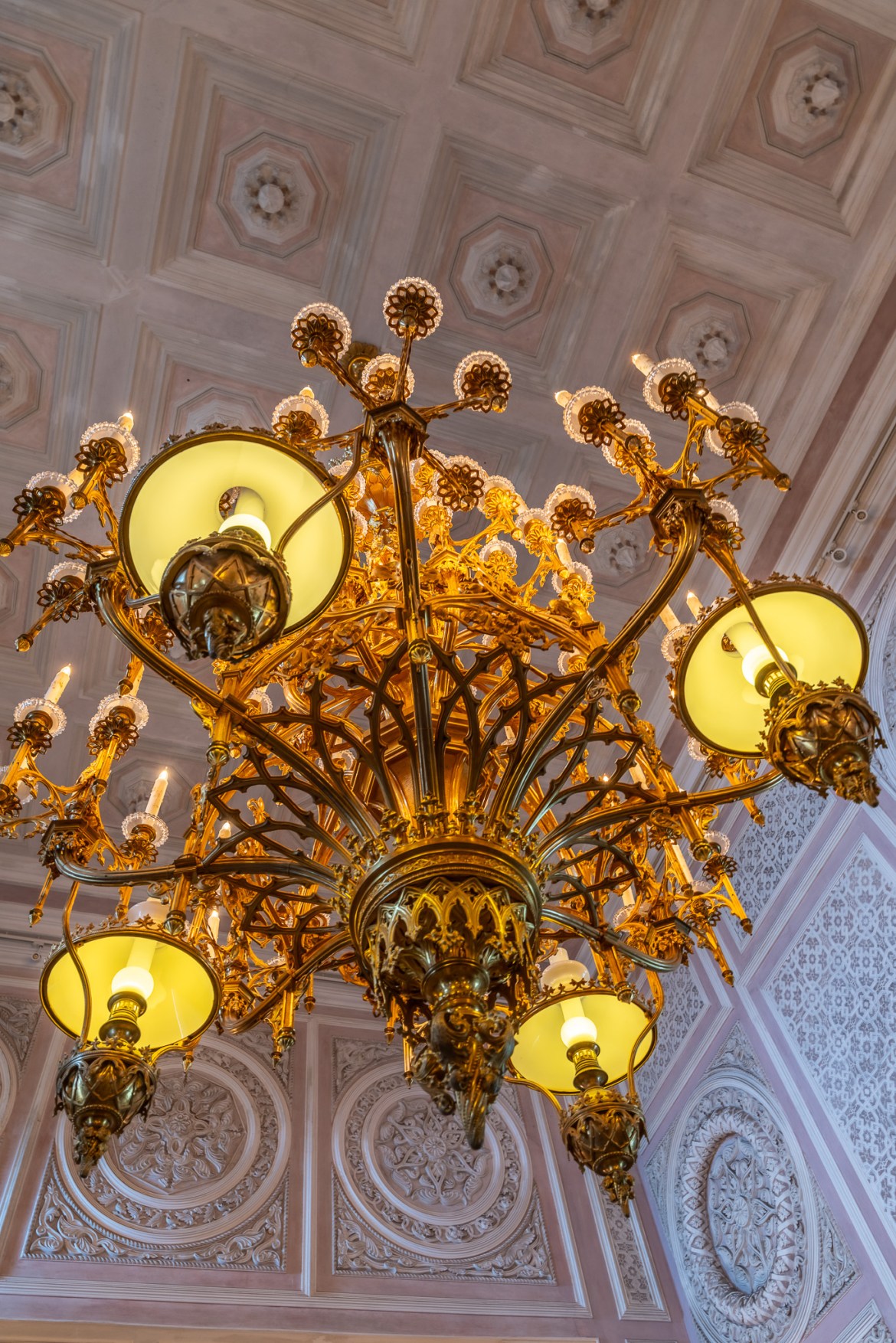
Green glass vines, flowers, and grapes climb through the elaborate Neo-Rococo chandelier hanging beneath the patterned ceiling of Pena Palace’s Smoking Room.
Padrão dos Descobrimentos towers above the waterfront with the Portuguese flag flying beside its massive limestone walls.
A dark sculptural figure holding an elaborate torch stands among the red furnishings and gilded lighting of Pena Palace’s Great Hall.
Food, Drinks & Quick Stops
We didn’t spend Day 1 chasing restaurants. The memorable stop was completely unplanned: the street band near São Pedro de Alcântara convinced us to sit down, order drinks and stay for about half an hour before continuing through the city.
In Sintra, Casa Piriquita was recommended to us and came with a line long enough to confirm its popularity. We waited, picked up a pastry and continued through the shops around Rua das Padarias.
Lunch in Cascais was at Dom Manolo, which the four of us chose ourselves after walking around looking for somewhere to eat. Paying became part of the story because credit cards weren’t much help and we hadn’t brought enough cash. Todd eventually covered part of our bill. I ordered grilled sardines because I wanted something different, then had to ask our waiter how exactly I was supposed to eat them. His English and my Portuguese weren’t getting us very far, so he finally picked up a knife and demonstrated on one.
The food was good and I was glad I tried the sardines. That’s about as much of a restaurant review as it needs.
Back aboard Celebrity Equinox, escargot had become my regular second appetizer. I don’t remember the rest of that particular dinner, but I remember the escargot because I ordered it every night.
Fresh sardines grilled whole and served simply with boiled potatoes at Dom Manolo in Cascais.
Chargrilled chicken arrives with a pile of thin fries at Dom Manolo in Cascais.
A crisp fried cutlet is served over fries with shaved cheese, greens, and roasted red pepper at Dom Manolo.
A whole grilled dourada is opened flat and served with potatoes, broccoli, and lemon at Dom Manolo.
In the Frame
The Faces Behind This Journey
Todd, Dawn, Laura and I at the giant yellow LISBOA letters along Avenida da Liberdade.
Laura and I beneath the columns of the small belvedere overlooking the Park of Pena.
Laura and I above the cliffs at Cabo da Roca after the fog clears enough to reveal the Atlantic behind us.
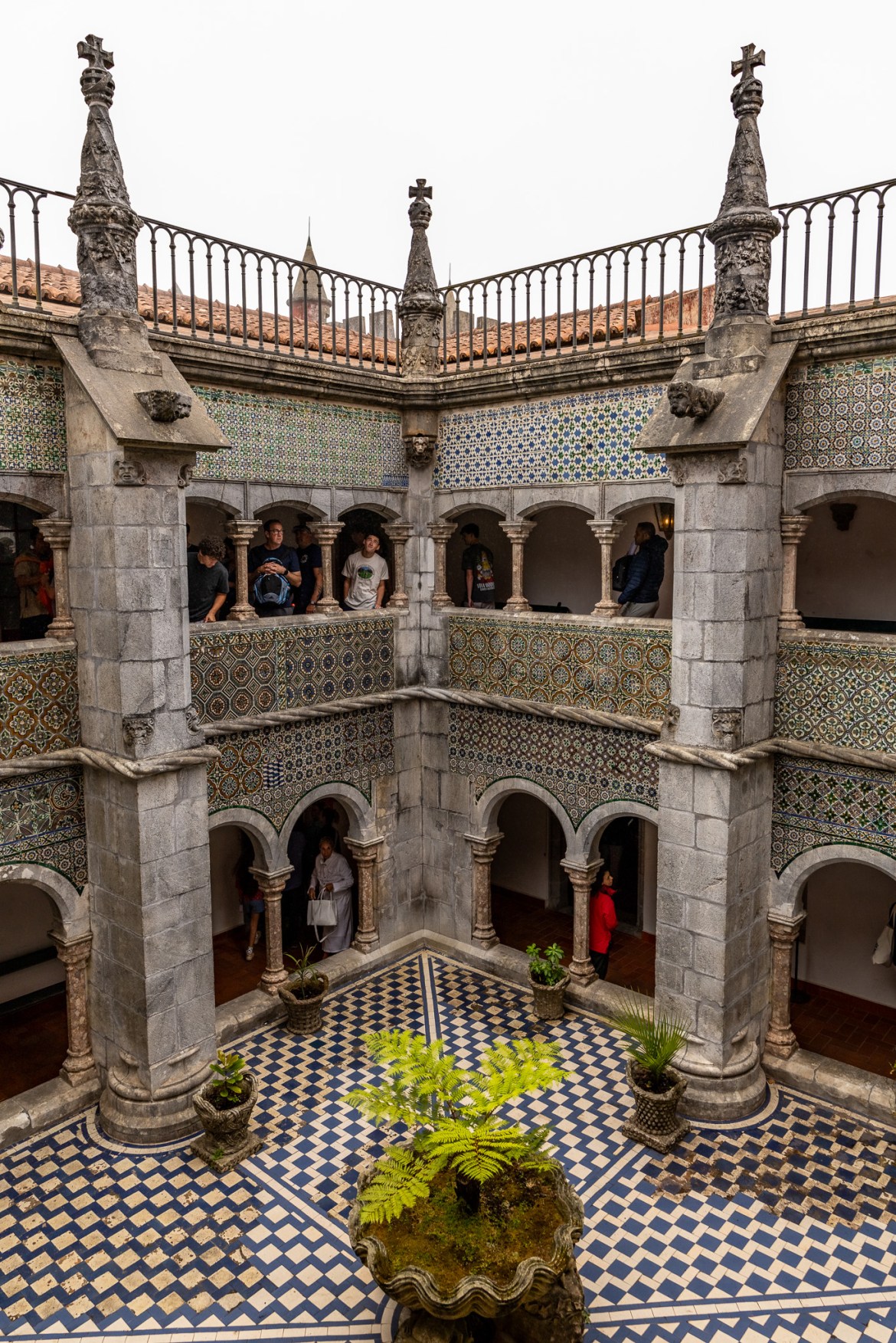
The four of us squeeze together between the small stone arches and colorful tilework inside Pena Palace.
Laura stops beside a brightly colored Careto figure while we wander through Sintra after visiting Pena Palace.
Laura and I beneath the stone cross at Cabo da Roca while heavy fog hangs over the Atlantic headland behind us.
Laura and I stand on deck as Celebrity Equinox sails down the Tagus, with the 25 de Abril Bridge and Cristo Rei behind us.
Laura and I beneath the Rua Augusta Arch as we walk from Baixa toward Praça do Comércio during our Lisbon tuk-tuk day.
Laura and I grab a selfie at Padrão dos Descobrimentos while the four of us explore the Belém waterfront.
Laura and I inside the yellow-domed belvedere on Pena Palace’s Coach House Terrace.
Where I stayed
Celebrity Equinox
Celebrity Equinox was our base for both days, docked at Jardim do Tabaco below Alfama. The location mattered because after the tuk-tuk tour we could return to the ship, grab something to eat and head straight back into Lisbon for the rest of the afternoon.
The less convenient part was that both organized tours met near Restauradores rather than at the cruise terminal. After spending the day walking Lisbon’s hills, that distance felt considerably longer on the way back.
Just Beyond: Porto
Continue through Portugal to Porto, where steep streets, tiled façades, Palácio da Bolsa and the Douro create a completely different city experience from Lisbon.
Cascais Town Hall faces the sweeping black-and-white wave pattern of Praça 5 de Outubro, the civic heart of the old seaside town.
Jagged cliffs plunge into deep blue Atlantic water along the rugged coastline surrounding Cabo da Roca.
The roofless stone walls and surviving arches of the Carmo Convent stand above central Lisbon beside the Santa Justa Lift.
Stone steps climb between Pena Palace’s yellow and red walls toward the towers above.
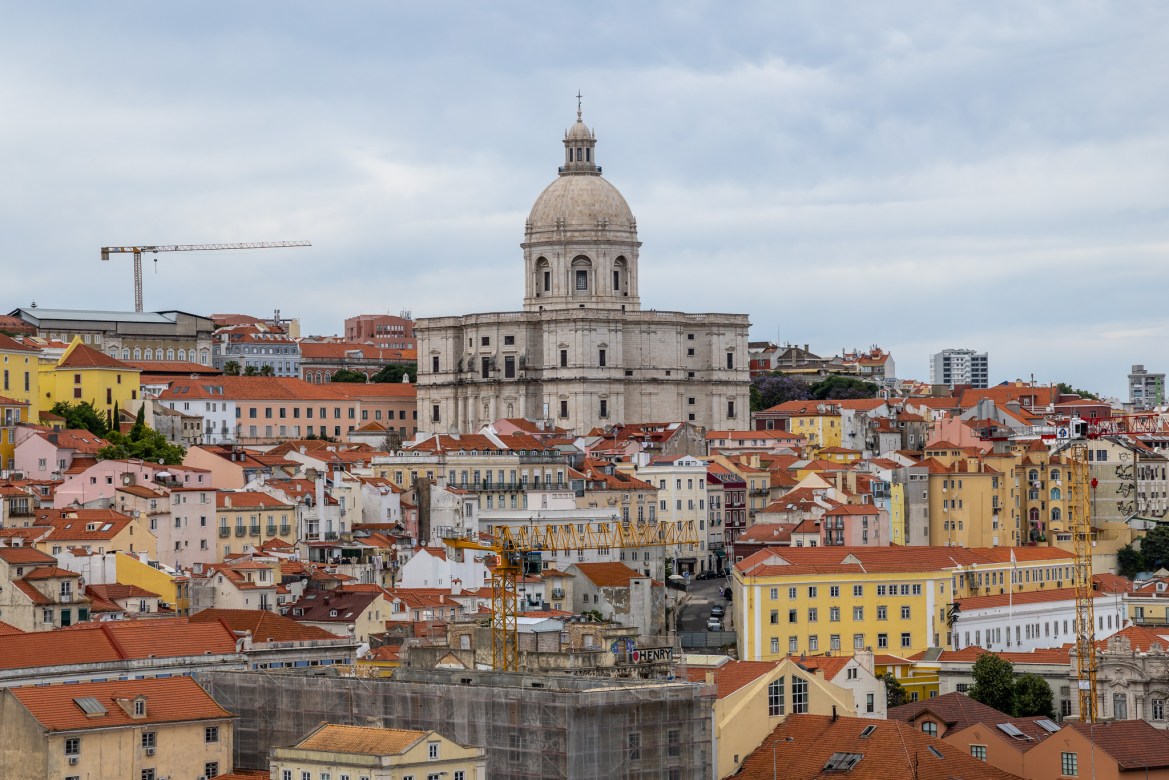
The massive white dome and Baroque façade of Portugal’s National Pantheon dominate Campo de Santa Clara above Santa Apolónia.
Ornate villas with towers, bay windows, tiled roofs, and landscaped gardens climb the green hillside surrounding Sintra’s historic center.
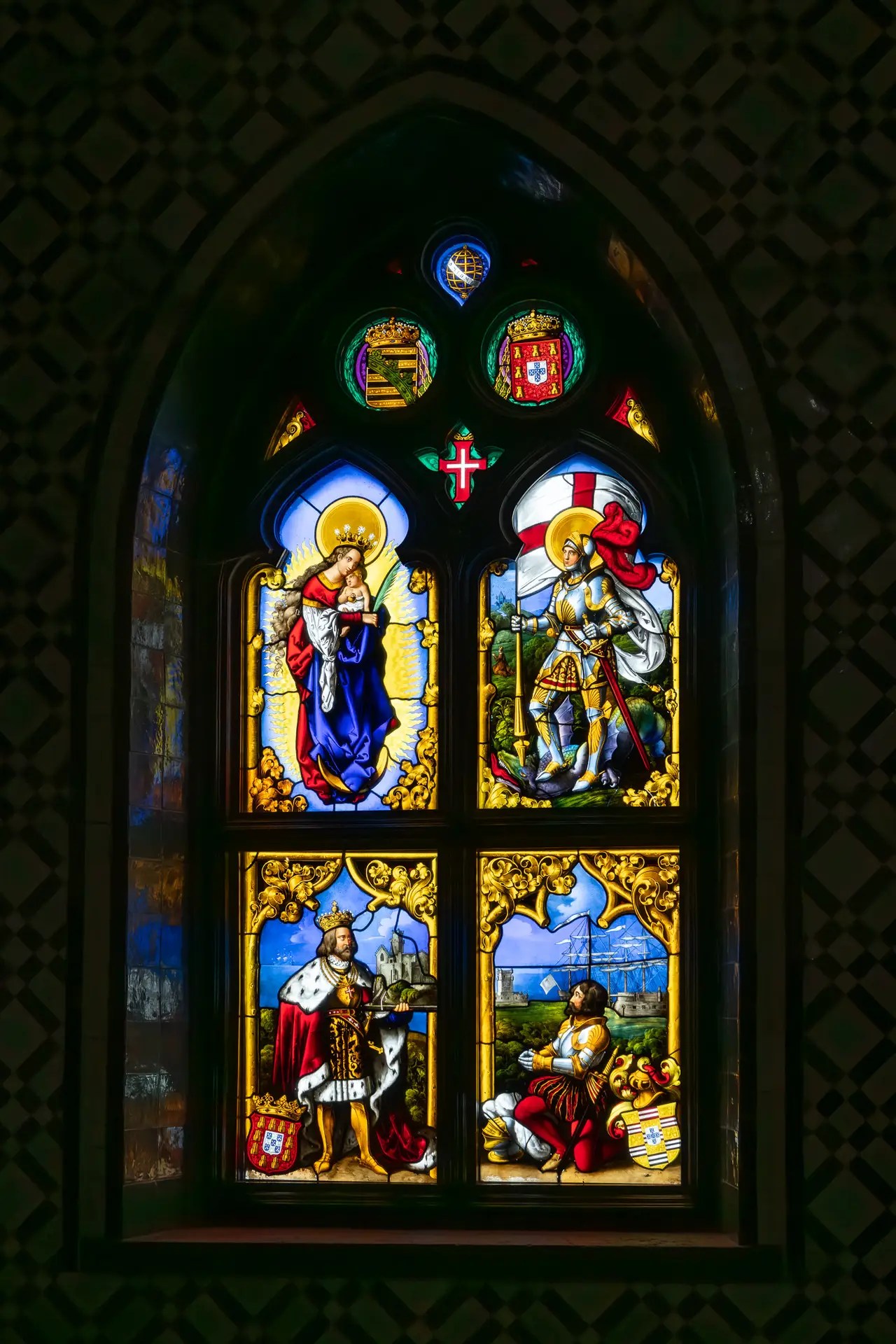
Brilliant stained glass glows against the dark chapel walls inside Pena Palace.
Photography Notes
I carried my Canon setup along with my Samsung phone but left the tripod aboard the ship. Day 1 gave me bright sun, blue skies and strong elevated views from Carmo, Santa Luzia and especially Miradouro da Senhora do Monte. Crowds occasionally made clean compositions difficult, while the enormous line at Jerónimos meant the interior wasn’t going to happen at all.
Day 2 flipped the conditions completely. Fog and flat light at Pena Palace wiped out the blue-sky photographs I’d imagined, but the mist worked around the towers and terraces once I stopped fighting it. Cabo da Roca changed again as the fog slowly cleared, giving me two different looks during one stop. My favorite opportunities from the two days were the Lisbon panoramas, Pena’s Triton and the planned approach to the 25 de Abril Bridge during sailaway.
I was also balancing photography with traveling with Laura, Todd and Dawn rather than treating every stop like a dedicated shoot. If I did the trip again, I’d want more time at Pena, Sintra and Jerónimos rather than more equipment.
Brick industrial buildings and outdoor cafés sit beneath the massive elevated approaches of the 25 de Abril Bridge at LX Factory.
The stone tower and neo-medieval details of Palacete Seixas rise above the waterfront buildings along Cascais Bay.
Visitors cover the sand at Praia da Ribeira while boats float in the sheltered water of Cascais Bay.
A simple stone cross tops the monument marking Portugal’s dramatic western Atlantic headland at Cabo da Roca.
Bells hang above the weathered clock face of Torre do Relógio, one of the civic landmarks overlooking historic Sintra.
A detailed ceramic hunting scene with a falcon, figures, and animals forms part of the decorative collection displayed inside Pena Palace.
Blue tilework, carved stone, towers, and the Triton gateway crowd together along one of Pena Palace’s most elaborate façades.
Practical Notes & Lessons Learned
The biggest thing I would plan differently is the walk between the cruise port and Restauradores. After the slow, painful return to the ship on Day 1, leaving an hour early the next morning let me move at my own pace, take photographs along the way and still meet everyone on time.
The private tuk-tuk suited Lisbon well because we could stay longer when something interested us. The larger Day 2 excursion came with more structure and less flexibility, especially in Sintra. If I returned, I’d give Sintra and Cascais more time, carry more cash in Cascais and bring swimsuits if we were heading anywhere near the beach.
Castelo de São Jorge crowns its wooded hill above the tightly packed neighborhoods of central Lisbon, seen from Miradouro da Senhora do Monte.
Colorful umbrellas hang above the bright pink pavement of Rua Nova do Carvalho in Lisbon’s Cais do Sodré district.
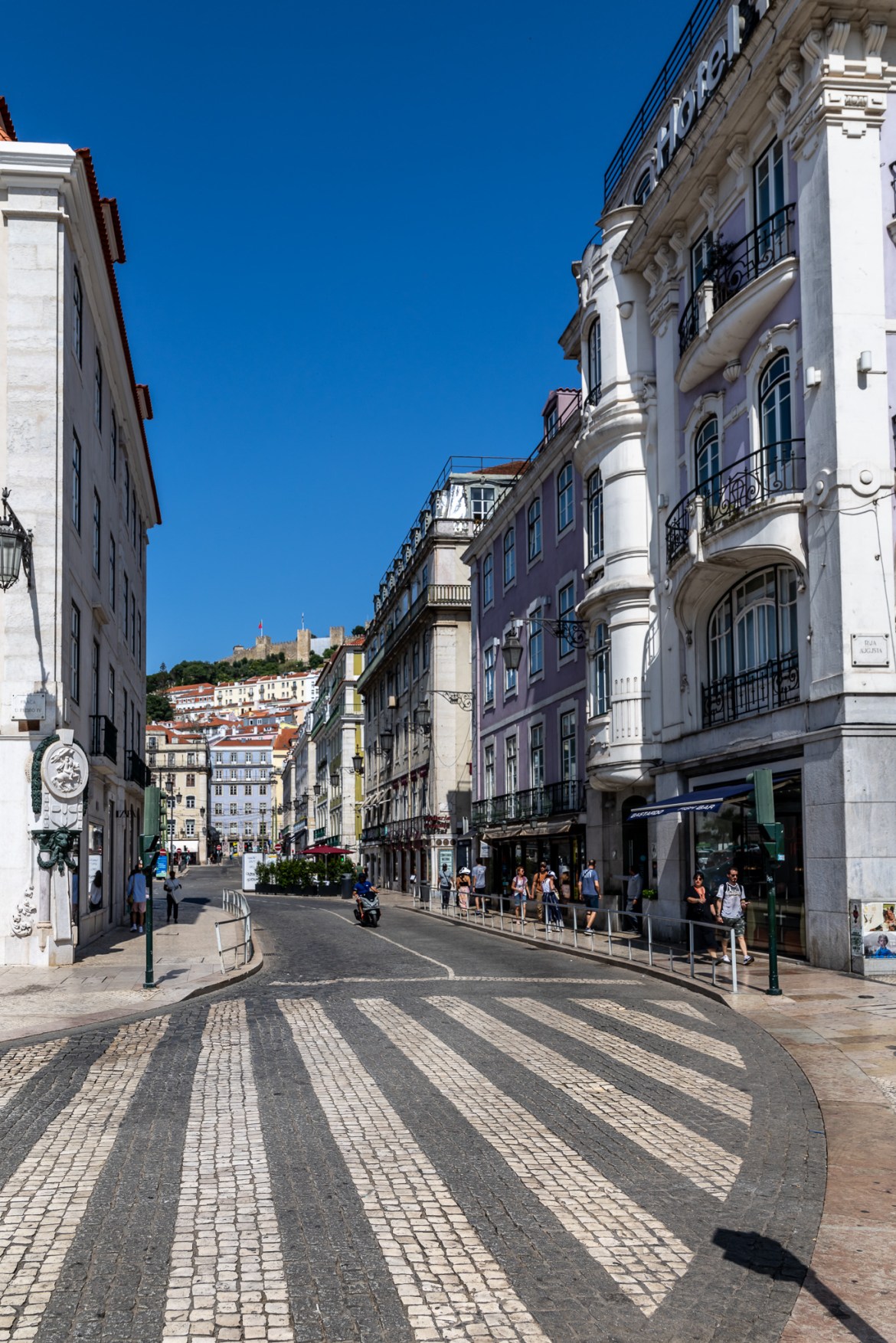
The ornate late-19th-century façade of Hotel Avenida Palace faces Praça dos Restauradores near Rossio in the heart of Lisbon.
The arched Monumental Gate sits below the palace walls with the forest of Pena Park disappearing into the mist beyond.
A blue-and-white portrait patterned like Portuguese azulejos is paired with a bright red carnation, a symbol closely associated with Portugal’s April 25 revolution.
A vivid red Phrygian cap contrasts with blue-and-white azulejo patterns across the face of O Gringo’s modern interpretation of Marianne.
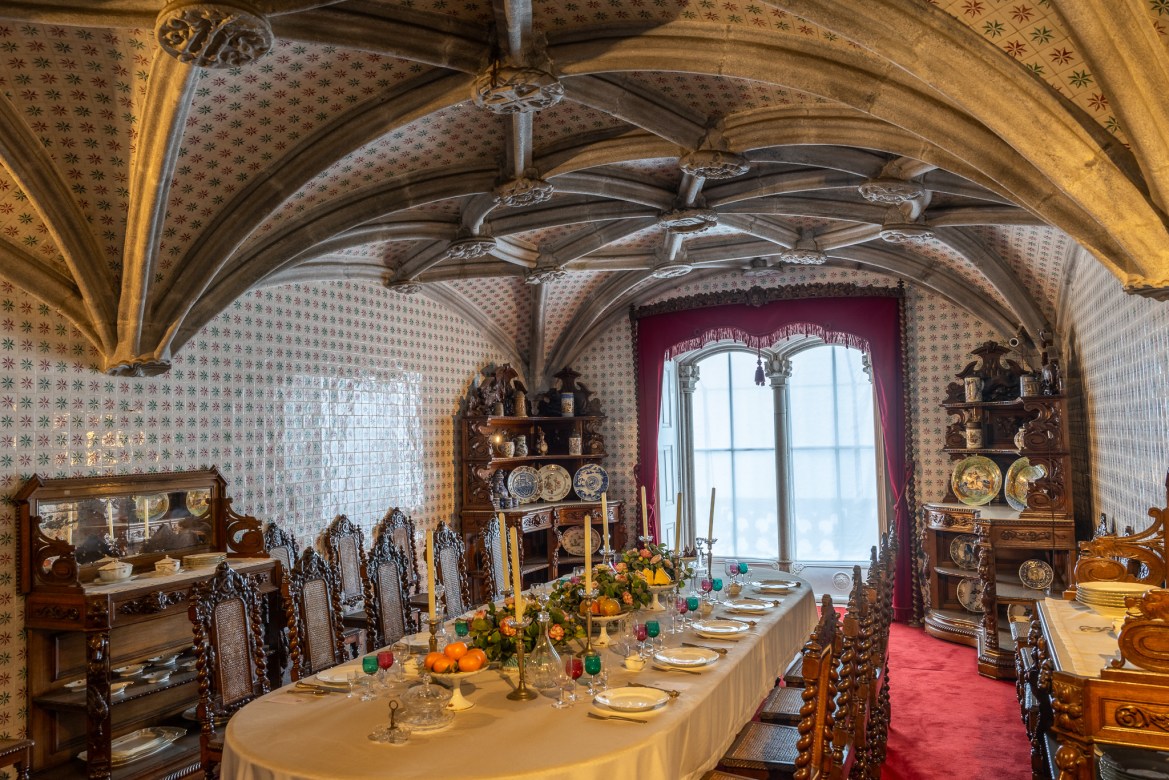
A long formal table fills the former monastic refectory beneath the ribbed Manueline ceiling of Pena Palace’s royal dining room.
The Journey in Motion
Some parts of these two days make more sense once they’re moving: Lisbon’s streets, the crowds around Pena Palace, the fog crossing the terraces, the peacock working its audience and the changing view from the ship as we left the city.
Lisbon in a Day – The first video follows our day through Lisbon, from Belém and LX Factory into the older streets and central neighborhoods. It also catches some of the smaller details I remember from the day—the sidewalks, street musicians, movement through the city and our later walk toward Praça do Comércio.
Palace in the Clouds – The Pena Palace video shows what the still photographs can’t: fog drifting across the walls and towers, people moving through the terraces and interiors, and the peacock that briefly became the most photographed thing at the palace.
From Belém and LX Factory to Lisbon’s hills, street music and Praça do Comércio, our first day covered the city by tuk-tuk and then on foot.
Fog rolls through Pena Palace as we explore its terraces, colorful architecture and ornate interiors—with one very determined peacock stealing part of the show.
I’m Steve—a retired Army vet who traded rucksacks for camera bags and never stopped exploring. What started with a simple 110 film camera grew into photographing all 50 states and 30+ countries, from quick business-trip detours to adventures with my wife Laura. Shutter Nomadica is where I share those travels through the photographs, stories, and moments that made each place memorable.
Head back to Madrid for grand boulevards, royal landmarks, historic plazas and the city that started this part of our trip before we continued on to Barcelona and the cruise.