

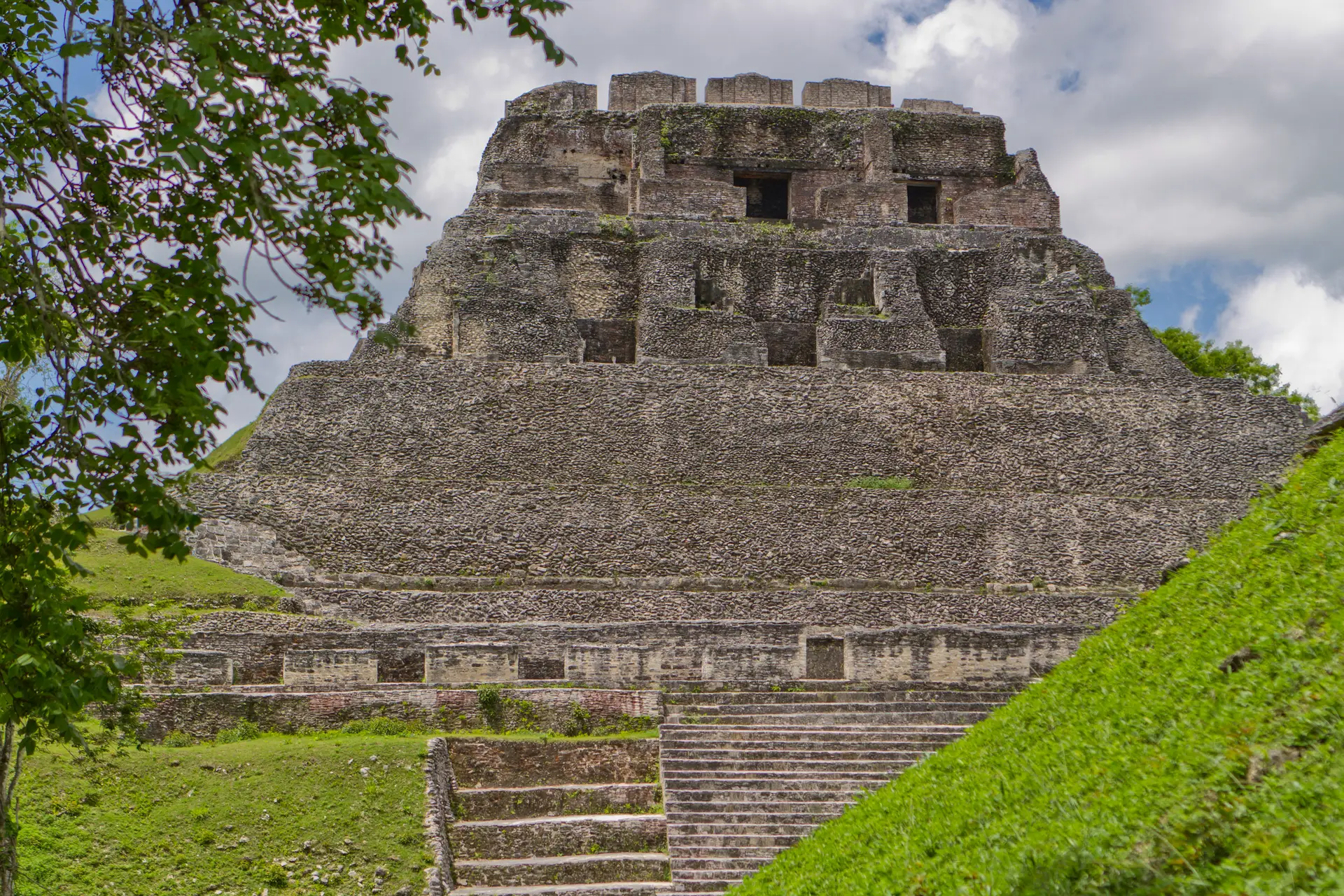
Belize’s Stone Woman: A Traveler-Photographer Deep Dive into Xunantunich
You arrive to the rhythmic squeak of a hand-cranked ferry and the shimmer of the Mopan River—then the jungle parts to reveal El Castillo, a limestone giant etched with myth. Climb its terraces and you’ll read the day in layers: parrots skittering across the canopy, heat rising like a veil, the Belize–Guatemala ridgeline floating on the horizon.
This is Xunantunich—compact, cinematic, and wildly photogenic, where every plaza is a natural light studio and every carved frieze whispers a creation story. If you love travel and photography, it’s the rare site that delivers both clean compositions and goosebump-level context in a single morning. Expect short approaches, sweeping views, and a story arc you can actually feel underfoot.


🏛️ Story & Significance: The Soul of Xunantunich
Perched above the Mopan River in western Belize, Xunantunich tells a story that fuses myth, power, and persistence. Its name—“Stone Woman” in the Yucatec Maya tongue—stems from a ghostly legend said to wander the upper terraces, but its real heartbeat began over a millennium ago. During the Late to Terminal Classic period (circa 700–900 CE), this hilltop acropolis became both an administrative hub and a sacred theater for ceremony and politics. Traders hauling jade, cacao, and obsidian up the river would glimpse its limestone crown glinting through jungle haze—a clear message of control and connection. Today, it’s one of Belize’s most accessible Maya cities, a site where ancient artistry still catches tropical light in ways no modern design quite can.
Notable People & Patrons
Unlike Tikal or Copán, Xunantunich’s rulers remain partially veiled in mystery, yet epigraphers have decoded glimpses of alliances with the powerful Naranjo dynasty across today’s Guatemalan border. These regional patrons funneled artisans and tribute through the Mopan Valley, commissioning monuments that blended local iconography with broader Maya cosmology. Archaeologists believe an elite lineage governed from palatial compounds beside El Castillo, orchestrating trade taxes and ceremonial calendars that synchronized with nearby centers like Cahal Pech and Caracol. Their signatures appear not in portraits but in building phases—each layer of plastered stucco an ancient executive order rendered in lime and pigment.
Architecture in a Nutshell
The skyline belongs to El Castillo, a 130-foot pyramid that dominated regional sightlines and served as both observatory and stage. Its core predates the ornate frieze you see today, but successive expansions created the monumental silhouette that defines the site. Craftsmen shaped soft local limestone into block courses, then overlaid decorative stucco reliefs—mythic figures, celestial bands, and the Maya world tree linking earth, sky, and underworld. The main plazas unfold in tidy succession around it: Plaza A with residential elites, Plaza B for civic gatherings, and smaller courts likely reserved for rituals of renewal. Modern preservation work has stabilized stairways and covered fragile carvings, letting travelers trace fine tool marks that have survived centuries of tropical rain.
Living Traditions Today
While the city itself fell silent around the ninth century, its spiritual gravity still draws pilgrims, shamans, and everyday Belizeans who honor Maya heritage through ceremony and storytelling. Locals in San Jose Succotz recount the Stone Woman legend as a cautionary tale and a blessing—she appears to the respectful, not the reckless. Annual Maya cultural days in nearby San Ignacio feature dances and music that echo rhythms once heard across these plazas. Guides trained under Belize’s Institute of Archaeology keep oral tradition alive, blending archaeology with myth so that each visitor climbs El Castillo not just as a tourist but as part of an ongoing conversation between past and present. Stand on the summit at golden hour and you’ll feel it: a hilltop city that never truly stopped watching the jungle breathe.
🧠 Fascinating Facts & Hidden Meanings
Every carved face and shadow line at Xunantunich hides more than meets the eye. The Maya didn’t just build upward—they encoded time, cosmos, and myth into stone geometry. From the supernatural “Stone Woman” that gave the site its name to the astronomical choreography of El Castillo’s stairways, meaning hums beneath the limestone surface. Take a closer look, and you’ll find that every angle here whispers a story about rebirth, duality, and the human reach for the heavens.
Five Quick “Did-You-Knows”
The Name Lives in a Ghost Story: “Xunantunich,” meaning Stone Woman, comes from local sightings of a radiant female spirit ascending El Castillo before dawn—a legend that still colors sunrise tours.
Numbers That Rule the Sky: Architects used sacred numerology—stair counts echoing 13 and 9—to mirror the upper and underworld tiers of Maya cosmology.
A Frieze of Creation: The massive stucco frieze depicts the World Tree and celestial band, symbolizing the axis mundi where gods and mortals connect.
El Castillo’s Alignment: Its central axis faces roughly north-south, marking solar events that guided agricultural rituals and ceremonial calendars.
Belize’s Second Tallest Temple: At around 130 feet (40 meters), El Castillo is surpassed only by Caracol’s Caana pyramid—yet it offers clearer ridge-top views for modern travelers and photographers alike.
A few links and ads here are affiliate portals. If you click through and snag something, you’ll be fueling my next photo-quest at no extra cost to you. Thanks for keeping the adventure rolling!
If you’ve made it all the way to Xunantunich, don’t stop the adventure at the ferry. Two unforgettable day trips expand the story beyond the ruins, blending Belize’s wild heart with its living heritage.
First up: Xunantunich and Inland Blue Hole Tour – a full-day escape that pairs ancient stone with the shock of sapphire water. You’ll explore El Castillo’s terraces in the morning, then plunge into the cool limestone sinkhole of the Inland Blue Hole National Park, ringed by jungle vines and birdsong. It’s a dream itinerary for travelers who crave both archaeology and a rinse-off swim in the same frame.
If you’re drawn to the mystical side of the Maya world, the Actun Tunichil Muknal Cave Tour and Picnic dives even deeper—literally. Wading through cathedral-like caverns, you’ll see ancient offerings and crystalized artifacts left untouched for centuries. Guides illuminate the rituals, the geology, and the rare quiet that comes only when the outside world disappears behind stone and dripping echo. The riverside picnic afterward feels earned: sunlight, fresh fruit, and the taste of Belizean adventure.
Both tours run comfortably from San Ignacio, and both complement the Xunantunich story—one above ground in golden light, the other beneath in timeless darkness.


📌 Plan Your Visit: Hours, Tickets & What to Expect
Visiting Xunantunich feels like stepping through a lens between centuries—where limestone plazas glow under the Belize sun and tree-frogs call from the shadows of carved stairways. The rhythm of the visit begins at the Mopan River, where a hand-cranked ferry delivers you slowly to another time. From there, a short uphill road leads to the site entrance, passing through canopies alive with toucans and the occasional iguana basking on fence posts. Once inside, the layout is compact and remarkably walkable, making it perfect for travelers who want deep history without an exhausting trek. The air at the summit of El Castillo hums with the same breeze that once carried the scent of copal resin from ritual fires—photographers will find it a living classroom in light and shadow.
Give yourself at least two to three hours to fully absorb the site’s rhythm. Mornings are the most comfortable: cooler air, crisp definition in the stone textures, and far fewer crowds on the pyramid stairs. Late afternoons trade stillness for cinematic skies as tropical clouds layer gold and violet across the ridge. A small visitor center offers restrooms, cold drinks, and displays that decode the frieze’s iconography—worth a few minutes before your climb. If you’re traveling independently, a licensed local guide can be hired on-site for richer storytelling, including the Stone Woman legend that inspired the city’s name. Bring water, sunscreen, and curiosity—you’ll need all three.
🎫 Ticketing Tips
Admission is typically around US $5 (locals pay less), payable in cash at the gate. Keep small bills handy since credit isn’t always accepted, and bring a valid ID for verification. Guides can be arranged directly at the entrance for an additional fee; most are trilingual and happy to tailor their pace to photographers.
🎉 Festival / Peak-Day Watch
Weekend crowds surge slightly, especially when cruise excursions or local holidays align. For serenity and best light, plan your visit near opening (8:00 a.m.) or in the final two hours before closing. Early December and late April tend to offer mild air with clear, cinematic haze—ideal for wide-angle panoramas.
| 📍 Location | 🕒 Hours | 💵 Entry | 🚡 Access | 📸 Top Shot |
|---|---|---|---|---|
| Xunantunich Archaeological Reserve, near San Jose Succotz, Cayo District, Belize | Usually 8:00 a.m. – 5:00 p.m. daily | Approx. US $5 (cash only) | Hand-cranked Mopan River ferry + 1-mile uphill walk/ride | El Castillo summit panorama over the Mopan Valley |
| Best Light | Early morning & late afternoon | Guides available on site | Parking near visitor center | Frieze detail under open-shade canopy |
🚶 Getting There, Entry & Accessibility
Reaching Xunantunich is half the charm. The site lies just west of San Ignacio in Belize’s Cayo District, about 20–25 minutes by car or taxi. The journey ends with a smile-inducing throwback: a hand-cranked ferry across the Mopan River, operated by local attendants who slowly pull you from one bank to the other using steel cables. From there, a short but steep uphill road leads to the visitor center and main plaza entrance. The lush roadside teems with tropical birds and flashes of turquoise lizards, making even the approach feel cinematic. Whether you come by rental car, private guide, or a Viator tour, the transition from highway to jungle ridge feels like crossing a timeline from modern Belize to the Classic Maya world.
Parking & Drop-offs
A small parking area sits just past the visitor center at the top of the hill, with space for both private vehicles and tour vans. If you’re arriving via taxi from San Ignacio, arrange a pickup time—cell signal fades inside the site. The Mopan ferry can carry only a few cars at a time, so during cruise-day excursions or holidays, expect a short queue and use the wait to capture candid local shots of the ferryman at work. The parking area is shaded and secure, ideal for leaving extra gear in the vehicle.
Accessibility Notes
The site’s ancient terrain is rugged by nature: steep staircases, uneven limestone blocks, and minimal handrails. Visitors with limited mobility may find the climb to El Castillo challenging, but the lower plazas still offer engaging views and interpretive signs. The ferry ramp has a modest incline suitable for assisted wheelchairs, though the road beyond it is gravelly. Bringing water, sturdy shoes, and sun protection is essential—shade is limited once you’re above the plaza.
Wayfinding Inside
Navigation is refreshingly straightforward. Paths loop in a clockwise circuit around Plaza A and Plaza B, both leading naturally toward El Castillo at the center. Signs identify key structures, and guides stationed near the summit often offer quick historical tidbits if you pause. For the best photo flow, start your route early on the eastern flank to catch morning light hitting the pyramid, then work counter-sun across the plazas as the day warms—no map needed, just a photographer’s instinct and a bit of curiosity.


🧭 How to Explore: Smart Routes for Any Timeline
Think of Xunantunich as a rising sequence that tells its story in layers. Your entry “courtyard” is the riverside approach and hand-cranked Mopan ferry, a mood-setting threshold that slows you to the site’s pace. From there, the path opens into the highlight “halls” of Plaza A and Plaza B, where palatial ranges cast clean shadows and the frieze replica invites a first close read of myth-in-stone. Climb onto the terraces of El Castillo—your “gardens in the sky”—to let breeze, birdsong, and rolling Belize Valley ridges fill the frame. The finale is the summit vantage: a 360° panorama that stitches jungle, river corridor, and limestone geometry into one hero view, perfect for a wide establishing shot or a stitched pano before you descend.
60-Minute “Essentials” — the cannot-miss loop
Beeline from the ferry to Plaza A, pausing for a wide establishing frame that layers palace arcades against the pyramid. Climb El Castillo in two stages: mid-terrace for a look-back over both plazas, then the summit for your hero panorama. On descent, stop at the frieze replica zone for even-light detail shots (open shade = crisp relief). Exit via Plaza B and finish with a low, symmetrical look-back that exaggerates height and sky drama.
90–120 Minutes “Deeper Look” — adds one terrace and a quieter court
After your summit, loop the eastern palace ranges where reflected light turns limestone soft and portrait-friendly. Spend ten unhurried minutes at the frieze replica to sequence three tight frames (celestial band, world tree, deity birth). Add a stroll to the quieter south edge of Plaza B for texture studies—tool marks, erosion lines, tiny lizards on warm stone—then return to mid-terraces for compressed ridge layers at ~100mm.
Cruise Clock (2–3 Hours) — timestamped mini-plan with 2 hero views + 1 detail + 1 reflective moment + quick snack
00:00–00:20 — Arrival & Ferry: Shoot a POV clip of the hand crank and a wide of the river crossing (reflective moment: breathe into the slower rhythm).
00:20–00:45 — Plaza A to Mid-Terrace: Hero View #1 from mid-levels of El Castillo framing plazas and canopy; mind your verticals.
00:45–01:15 — Summit Sweep: Hero View #2—360° panorama; capture a 3–4-frame stitch to hold cloud texture and distant ridgelines.
01:15–01:35 — Frieze Replica: Detail shot locked—three tight panels in open shade for clean relief and teaching captions later.
01:35–02:00 — Quiet Court Pause: Sit along the south edge of Plaza B; record ambient audio of wind and birds (reflective moment sealed).
02:00–02:15 — Quick Local Snack: Back at the river in San Jose Succotz, grab a cold drink and a Belizean snack before you roll—your narrative closes where it began, by the water.
🖼️ Spaces & Highlights You’ll Love
Each corner of Xunantunich unfolds like a compact chapter—tight setting, clear stakes, and a reveal that rewards patience. Start where the site breathes widest, then narrow your gaze to details that link myth to masonry. Give yourself time to feel the breeze along stair edges and hear birds stitching sound across the plazas; this is as much atmosphere as archaeology. Watch how light moves: pale limestone glows early, then turns sculptural by late afternoon. If you let the site set the tempo, you’ll leave with images that feel lived-in, not rushed.
El Castillo
This hilltop pyramid is the city’s heartbeat and your best “everything at once” view—architecture, jungle, and sky in a single sweep. Climb in stages, using the mid-terraces to frame Plaza A and the ridge beyond before committing to the summit. Up top, pause; let the wind carry the valley’s hush while you compose clean horizontals at 24–35mm or stitch a short pano. On the way down, study stair proportions and worn treads—quiet proof of centuries of footsteps that gives your close-ups a human scale.
Plaza A Palaces
Along the plaza’s edges, low rooms and doorways build a rhythm of shade and symmetry perfect for portraits, context shots, and detail studies. Late morning reflected light turns walls soft and even, so textures read beautifully without harsh contrast. Work door-within-door compositions, or place a person small against the colonnade to show scale without crowding the frame. Linger; the slower you move, the more micro-stories emerge—tool marks, lizards sunning, a breeze catching leaves like confetti in your bokeh.
Frieze Replica Zone
Beneath the protective canopy, myth comes into focus: celestial bands, the world tree, and deity motifs that once wrapped El Castillo in sacred narrative. The open shade is a gift—shoot tight panels with crisp edges and gentle contrast, then step back for a teaching frame that shows placement and proportion. Look for repeating curves and diagonals you can echo across three images to “read” the story left to right. Take your time here; these carvings are the site’s voice, and the quiet lets it speak.


🌿 Nearby Pairings & Pleasant Pauses
After the summit glow at Xunantunich, keep things easy and unhurried within a short hop of the ferry. Roll a few minutes into San Jose Succotz for a river-view pause—fresh juices, roadside tacos, and the kind of shade where you can replay your favorite frames. If you’ve got a little more time, drift up to San Ignacio (about 20–25 minutes) for a low-stress loop: the riverfront path for a breezy stroll, the small town market for artisan lanes and hand-woven souvenirs, and a café balcony to watch the ridge turn gold. Late afternoon is your sweet spot for soft edges and long shadows; blue hour rewards rooftop perches with twinkle-light ambience over the valley. Keep the camera handy but let the day exhale—this is the mellow Belize rhythm travelers fall in love with.
Family-Friendly Stops
Riverbank snack shacks near San Jose Succotz are stroller-friendly and come with built-in entertainment: the hand-cranked ferry drifting past every few minutes. In San Ignacio, the riverside park offers benches and open space for kids to roam while you sort photos. Ice-cream shops and fruit stands cluster near the main drag—quick wins when energy dips. Paths are mostly flat; a lightweight stroller handles the town’s short inclines just fine.
Rain/Heat Refuge
When the sun bites or a tropical shower rolls through, slip into café verandas or hotel lounges in San Ignacio—open-air, shaded, and breezy without feeling shut-in. Small galleries and artisan co-ops double as culture breaks and cooling stops while you browse textiles and carvings. If the air is heavy, choose spots with ceiling fans and cross-breezes; you’ll cool down fast and keep your gear dry. Use the lull to back up images, hydrate, and plan that blue-hour perch before the sky turns cobalt.
🎥 Reels on the Road
Xunantunich is built for bite-size storytelling—textures, wind, and that gasp-worthy summit view all pack neatly into under a minute. Start riverside, let the hand-cranked ferry slow your pacing, then build momentum through plazas and stairs until the panorama hits like a drumroll. Mix wide reveals with tight relief details so the reel feels like a journey, not a slideshow. Cap it with a calm beat—ambient jungle audio or a slow tilt to your boots—so viewers feel the Belize breeze right through their screens.
🎥 Mopan Ferry — POV of the hand crank turning, river sliding past; begin with natural ambient audio at sunrise to set the vibe.
🎥 Plaza A Reveal — Wide walk-through from shadow to sun, whip-pan left to land on El Castillo; late morning for crisp textures.
🎥 El Castillo Stair Climb — Chest-level ascent with quick cuts per landing; mid-morning for soft raking light across the stone.
🎥 Summit 180° Arc — Slow gimbal arc or handheld sweep capturing the Belize-Guatemala ridgeline; golden hour for layered skies.
🎥 Frieze Macro Glide — Close glide along the world-tree and celestial bands; open shade mid-day for clean, contrast-rich relief.
🎥 Plaza B Look-Back — Low angle push-in that exaggerates pyramid height, then a 3–5 sec timelapse of clouds stacking for the outro; late afternoon into blue hour.
🧳 What to Pack for Picture-Perfect Memories
The jungle sun and ridge breeze at Xunantunich can switch moods fast, so think practical first and photo-ready second. Lightweight, breathable clothes, a wide-brimmed hat, and sturdy shoes with socks will keep you comfortable on the limestone stairs. Bring plenty of water, a small towel, and respectful attire—shoulders covered and non-slip soles go a long way on slick stone. For photographers, a microfiber cloth saves you from lens haze, while a pocket-sized stabilizer or mini-tripod (where permitted) steadies hand-held frames in shade. Keep your kit light—this is a climb-and-wander site, not a gear-haul day—and leave a little room for souvenirs from the ferry-side stalls.
👉 The Nomad’s Kit: Gear That Earns Its Miles
Canon RF 15–35mm f/2.8L — Ultra-wide for El Castillo’s terraces, temple staircases, and sweeping jungle horizons where stepping back means “hello, 130-foot drop.”
Canon RF 24–105mm f/2.8L — Your river-to-ridge workhorse: portraits by stelae, mid-tele carvings of serpent masks, and quick vendor-market vignettes near the ferry crossing.
Canon RF 100–500mm f/4.5–7.1L IS USM — From the summit, compress the Belize–Guatemala border jungle, isolate temple friezes, and pick out howler monkeys or birds without crowding the trail.
Lowepro ProTactic BP 350 AW III — Compact, weather-tough, and ferry-ready; keeps filters dry, dust out, and snacks close for the return climb.
Peak Design Travel Tripod — Ideal for sunrise or blue-hour silhouettes from the base; keep folded on summit terraces—space and safety are limited.
JOBY GorillaPod 3K Kit — Clamp to railings or rest on ledges for steady long exposures of mist and motion in the jungle canopy—tiny footprint, big stability.
Cut Glare. Shape Time. Make Every Frame Sing.
Xunantunich glows in extremes—bright limestone and deep jungle shadow. A circular polarizer tames glare on carved stone and brings life to the greens, while a variable ND lets you slow the rhythm—soften waving palms, smooth clouds racing above the temple, and turn passing tourists into whispers of motion as the ruins hold still.
🌿 Control Reflections & Punch Up Color
Circular Polarizer Filter — Reduce glare on pale limestone, deepen sky hues over El Castillo, and enrich the jungle’s lush greens. Pro tip: rotate gently—over-polarizing can make skies patchy near the equator’s high sun; aim for even tone and balanced warmth.
⏱️ Drag the Shutter Above the Jungle
Neutral Density Variable Filter — Drop 3–6 stops to paint drifting clouds over the ridge, blur foliage in the breeze, and smooth tourist motion on the stairways. Pro tip: start around 1/4–1 s for soft motion; push to 2–10 s for cloud trails and ethereal vegetation.
Pack both for any Maya marvel: the polarizer reveals ancient artistry; the ND sculpts time into serenity. Together, they transform sunlight into story.
Photo Policy Reminders — No flash inside temple chambers or near carved stelae; tripods/stands are discouraged atop pyramids and terraces for safety. Drones are prohibited without Belize Institute of Archaeology permits. Respect roped areas and guards—do not climb restricted zones or touch carvings. Stay hydrated, protect your gear from sudden showers, and watch your footing—the Maya built breathtaking views, but not handrails.
💰 On-Site Costs Snapshot
Most travelers at Xunantunich spend for three things: the entry ticket, an optional local guide, and a cold drink or small souvenir on the way back to the ferry. Figure the gate fee is modest, while a licensed guide (shared or private) is the upgrade that pays off in richer stories and smarter photo flow. Drinks and snacks are inexpensive, and the hand-cranked Mopan ferry itself is free—save a few dollars for tips if someone goes the extra mile. If you’re going to splurge anywhere, make it the guide (context) or a combo tour day that pairs the ruins with a swim stop—time and experience both scale up nicely.
| 🧾 Item | 💵 Typical Cost (USD) | 📌 Notes & When to Upgrade |
|---|---|---|
| Entry Ticket | $5–$10 | Carry cash and small bills. Prices can vary by residency; confirm day-of. |
| Local Guide (Shared) | $10–$20 per person | Great value for history + photo pacing. Join a small group at the gate. |
| Local Guide (Private) | $35–$60 total | Upgrade if you want custom timing, frieze iconography, and quieter routes. |
| Drinks & Snacks | $2–$8 | Cold sodas, juices, or water near the Mopan River and in San Jose Succotz. |
| Souvenir (Small) | $5–$20 | Handmade crafts and textiles; pay a touch more for artisan-made items. |
| Tips | $2–$10 | Thank the ferryman or your guide for standout help or extra time. |
| Transport Add-On | $10–$30 | Round-trip taxi from San Ignacio; confirm fare before boarding the ferry. |
| Typical Spend (Per Visitor) | $20–$45 | Includes entry, a shared guide, and one drink/snack; more with souvenirs. |
🤝 Etiquette & Respectful Visiting
Visiting Xunantunich isn’t just about admiring ruins—it’s about honoring a living cultural legacy. Dress modestly and comfortably: breathable clothes that cover shoulders and knees show respect for local norms and shield you from the strong tropical sun. Keep voices low in the plazas and especially near El Castillo’s summit, where guides may be sharing stories or quiet reflections with their groups. Step aside courteously on the narrow stairways—many are steep, and a quick smile or “thanks” in English or Spanish goes a long way. If you encounter a guide or visitor leaving offerings or speaking a quiet prayer, observe respectfully and avoid photographing without permission. As always in Belize, a genuine friendliness—asking before taking portraits, tipping thoughtfully, and packing out all trash—turns a quick visit into an exchange rooted in respect.


🕰️ Historical Timeline at a Glance
Each layer of Xunantunich’s history shifts how you see the site today—from the materials underfoot to the stories written in plaster. Early construction used simple limestone blocks, but later rulers commissioned intricate stucco friezes and ritual terraces reflecting growing wealth and cosmic ambition. Knowing when these phases unfolded lets you spot transitions in style, purpose, and ritual use—the difference between civic court and celestial stage is literally carved in the stone.
| 📅 Era | 🏛️ Key Development | 🔍 What to Notice Today |
|---|---|---|
| ~600 CE | Early settlement on the Mopan ridge begins | Foundations of simple limestone platforms—look for rougher masonry at base levels. |
| 700–800 CE | City flourishes under regional influence of Naranjo | Finely carved stucco friezes and elite residences appear in Plaza A. |
| ~830 CE | Construction of El Castillo reaches its final monumental form | Spot distinct building phases—smooth newer plaster over older rubble cores. |
| 900–950 CE | Gradual abandonment during the wider Classic Maya collapse | Notice uncarved, reused blocks and halted projects on outer terraces. |
| 1890s | Rediscovery and first documented excavations | Early British surveys noted the Stone Woman legend—a tale still retold by local guides. |
| 1990s–Present | Modern excavations and preservation by NICH Belize | Protective roofing, frieze replicas, and signage allow safe, close study for visitors. |

📓 Through My Lens: Field Notes from the Road
Visiting Belize was part of our cruise itinerary—just one day to taste what this lush country offered beyond its famous turquoise waters and sugar-white beaches. The moment we stepped off the ship, the humid air carried that mix of salt, jungle, and possibility that always tells me it’s going to be a good photography day. Our guide was waiting with an easy grin, and before long, we were bouncing along the short drive toward Xunantunich, the jungle thickening until it swallowed the highway noise completely. Crossing the Mopan River on the hand-cranked ferry felt like a time warp—metal groaning, water glinting, and every crank pulling us closer to another century. Then came the reveal: a clearing, sunlight on stone, and El Castillo rising like a monument to persistence. Standing at its base, I couldn’t help thinking how astonishing it was that this city was built long before our timelines even began. The climb was steep but thrilling; every terrace offered a new composition—shadow lines, frieze curves, a sudden bird darting across the frame. When we reached the top, the view stopped conversation. Below lay the plazas in perfect geometry, and beyond, a sea of green rolling all the way to Guatemala. For a single-day stop, it felt like a lifetime memory etched in limestone and
☀️ When to Go & Weather Sweet-Spots
Dry season makes Xunantunich feel crisp and color-true, with steady breezes on the ridge and long, shadowy edges that flatter limestone textures. Late November–April is the sweet spot for cooler mornings and clearer skies, while May–October brings the green—lush canopies, dramatic clouds, and short, soaking showers that turn plazas reflective. In wetter months, plan early starts to beat heat and pop-up storms; the ridge funnels breezes that keep climbs pleasant and give you that gentle rustle in audio clips. Crowds swell on weekends and during holiday windows; shoulder weeks on either side of peak dry season deliver space to breathe, kinder sun angles, and easier summit time. If rain rolls through, use palace shade and frieze canopies as “monsoon cover” before skies open for a saturated, post-storm glow.
| 🌞 Season | 🧘♂️ Vibe Check | 🌦 Rain Factor | 🏛 Tourist Traffic |
|---|---|---|---|
| 🌴 Winter (Dec–Feb) | Cooler mornings, steady ridge breezes, crisp textures for limestone detail. | Lower overall; quick passing showers possible. | Higher—holiday travelers and cruise days; arrive at opening for calm. |
| 🌸 Spring (Mar–Apr) | Dry, bright, and photo-friendly; golden hour lasts longer on clear days. | Minimal; hydrate and favor shade loops by late morning. | Moderate to high near Easter breaks; shoulder weeks are ideal. |
| ☀️ Summer (May–Aug) | Lush greens, dramatic cloud build-ups, warm and humid. | Frequent afternoon showers; plan early climbs, use frieze canopy as cover. | Moderate; families and tour groups midday—go early or late. |
| 🍂 Fall (Sep–Nov) | Moody skies, quieter paths, rich post-rain color. | Highest in Sep–Oct; tropical systems possible—watch forecasts. | Lower overall; excellent for unhurried shooting windows. |
🎯 Peak Tourist Season Months: December–February, late March–April (holidays).
🏖️ Off-Season Sweet Spot Months: Late April–early May and late October–November (clear mornings, softer crowds).
💡 Insider Pro Tip: On showery days, climb right after a squall—the limestone darkens, greens saturate, and clouds backlight El Castillo for cinematic contrast.
🛡️ Practical & Safety Notes
Xunantunich is a relaxed and friendly site, but a few simple habits keep the day smooth. The ferry platform and pyramid steps can turn slick after rain—walk slowly, use the center line of each stair, and hold camera gear securely on descents. Keep valuables close when crowds bunch at the El Castillo summit or ticket area; pickpocketing is rare but easier in tight thresholds. If you’re visiting with others, set a regroup point near the visitor center or plaza entrance—cell signal fades inside the complex. Finally, carry water, apply sunscreen often, and respect closure cues near day’s end when staff start releasing groups; lingering for “one last shot” isn’t worth missing the return ferry before it docks for the night.
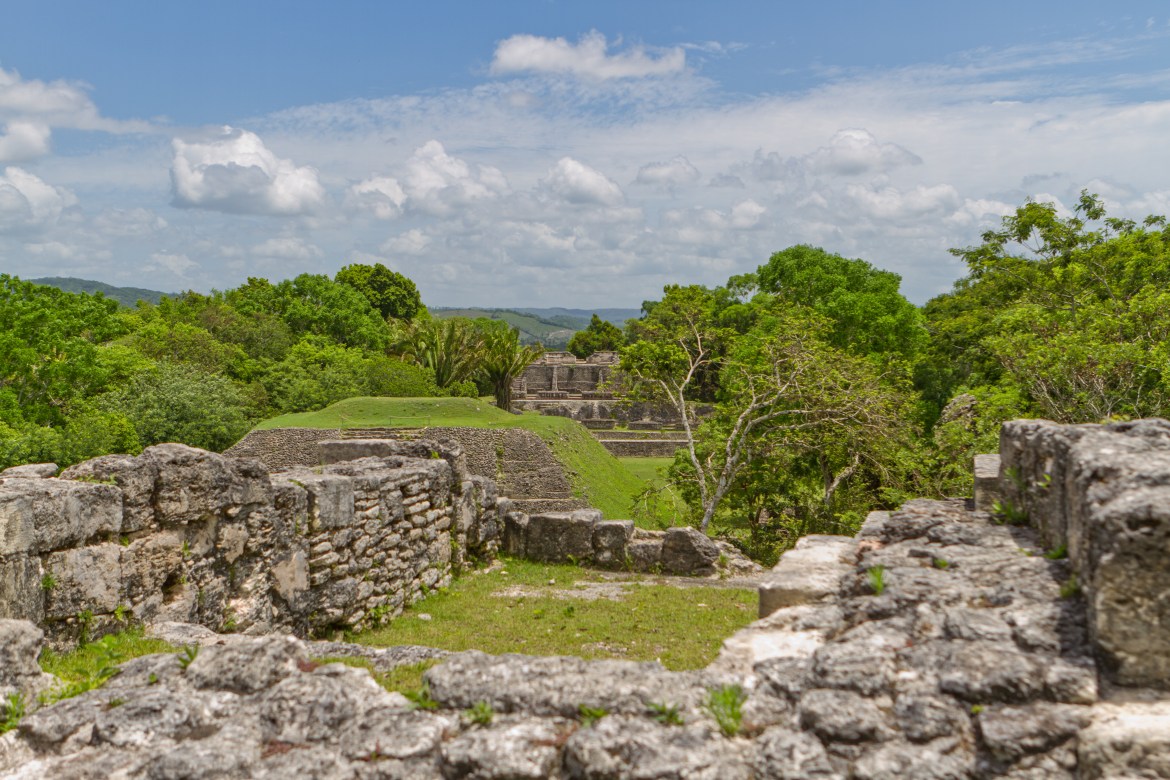
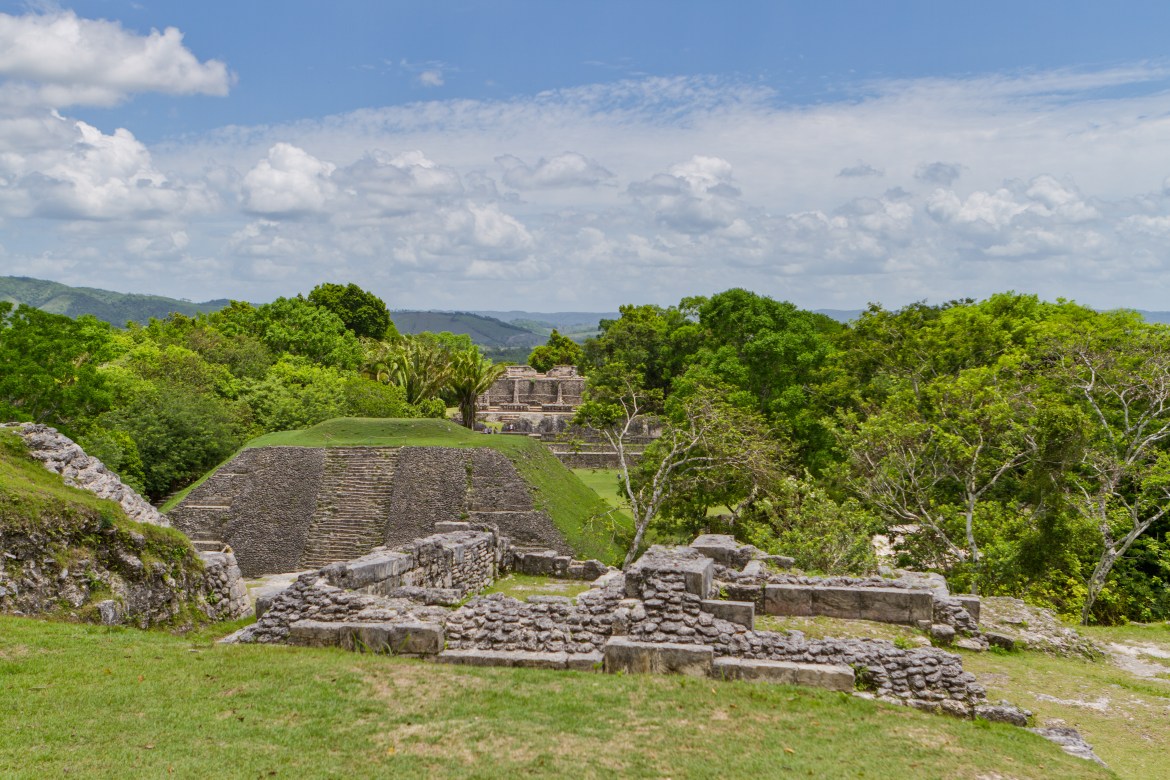
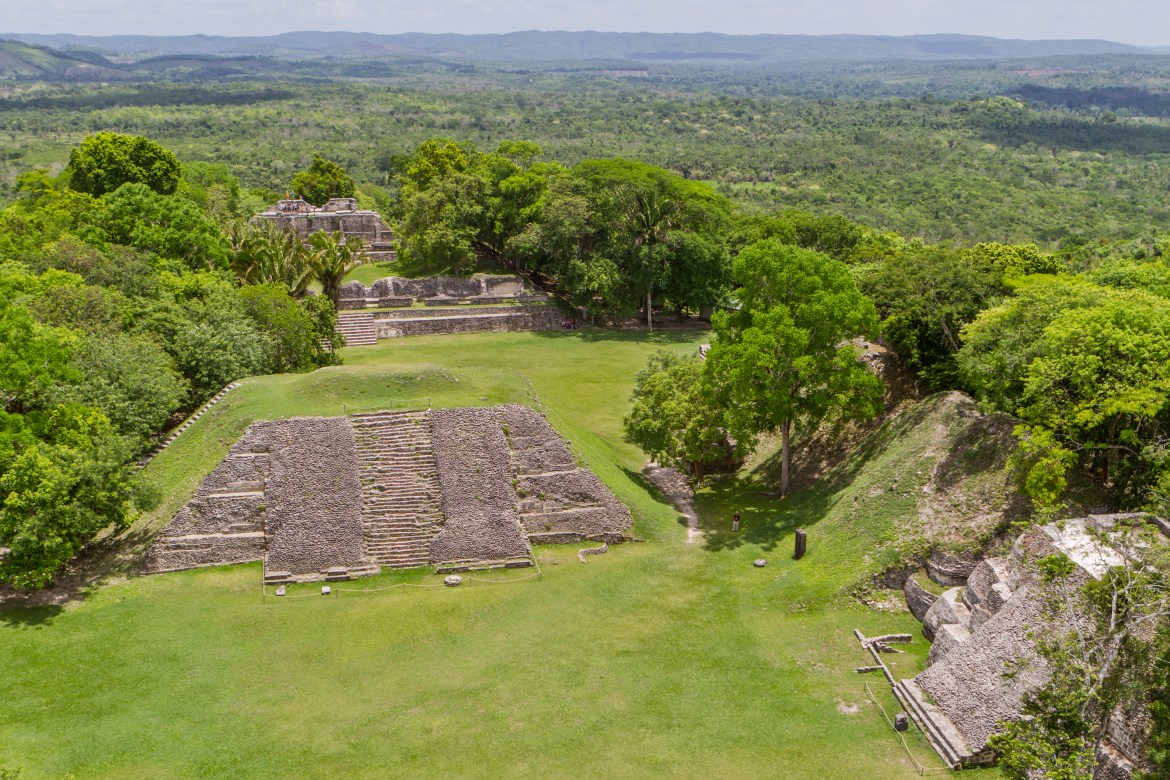
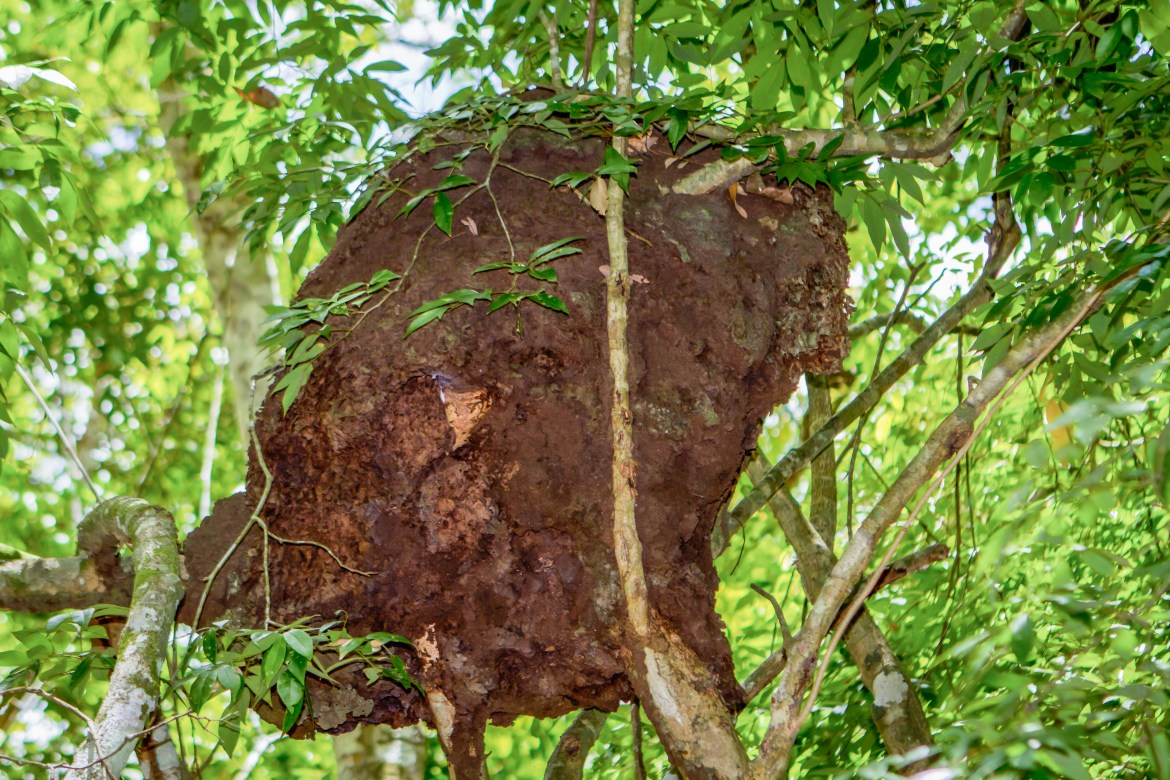
🎞️ More Frames From the Road: Scenes Worth Stopping For

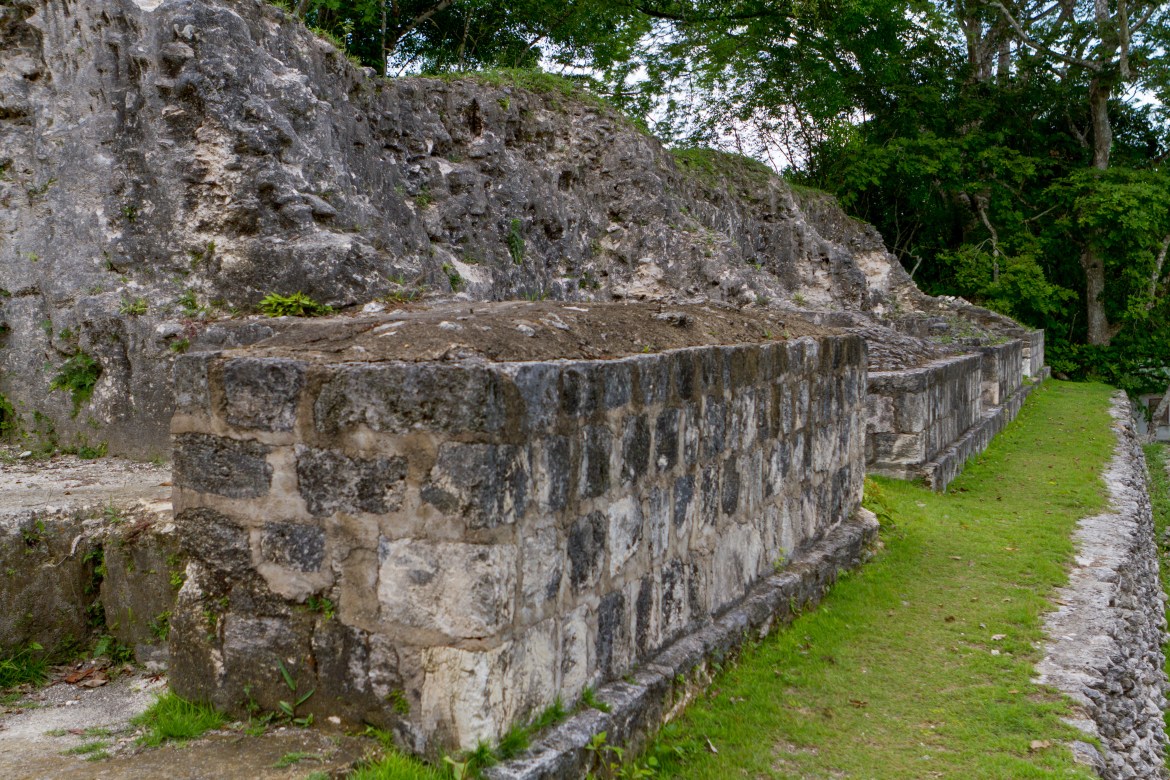
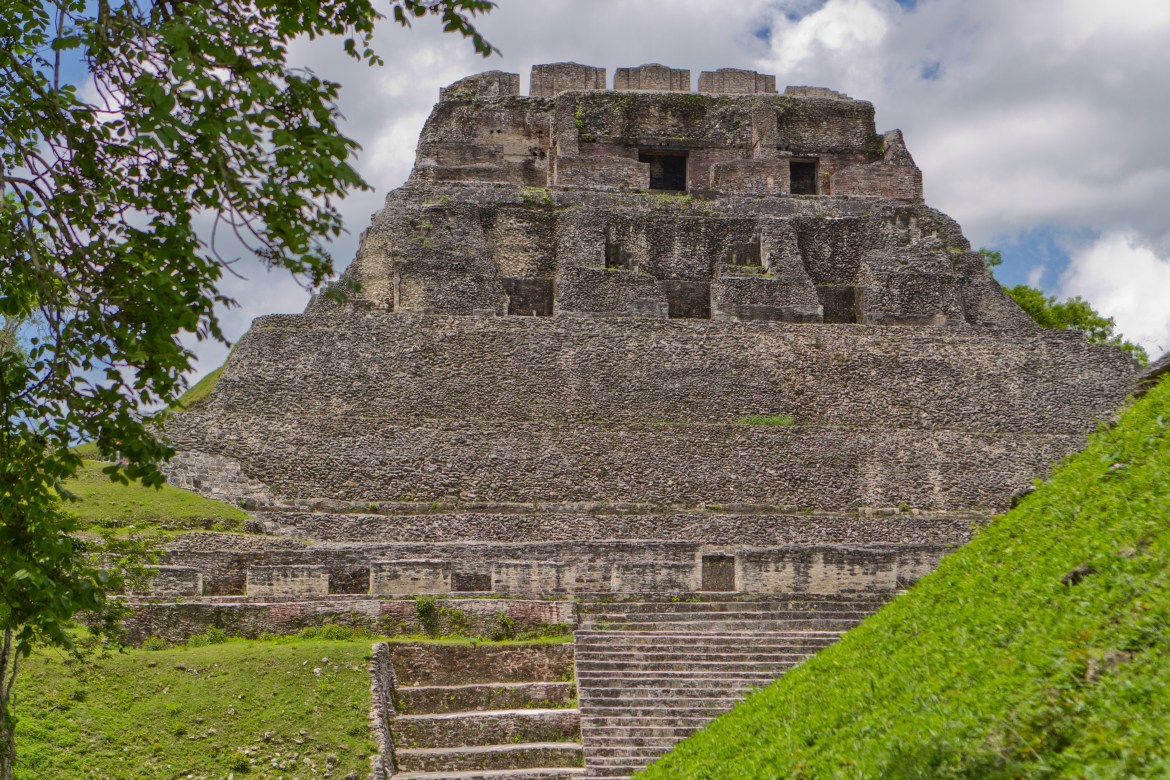

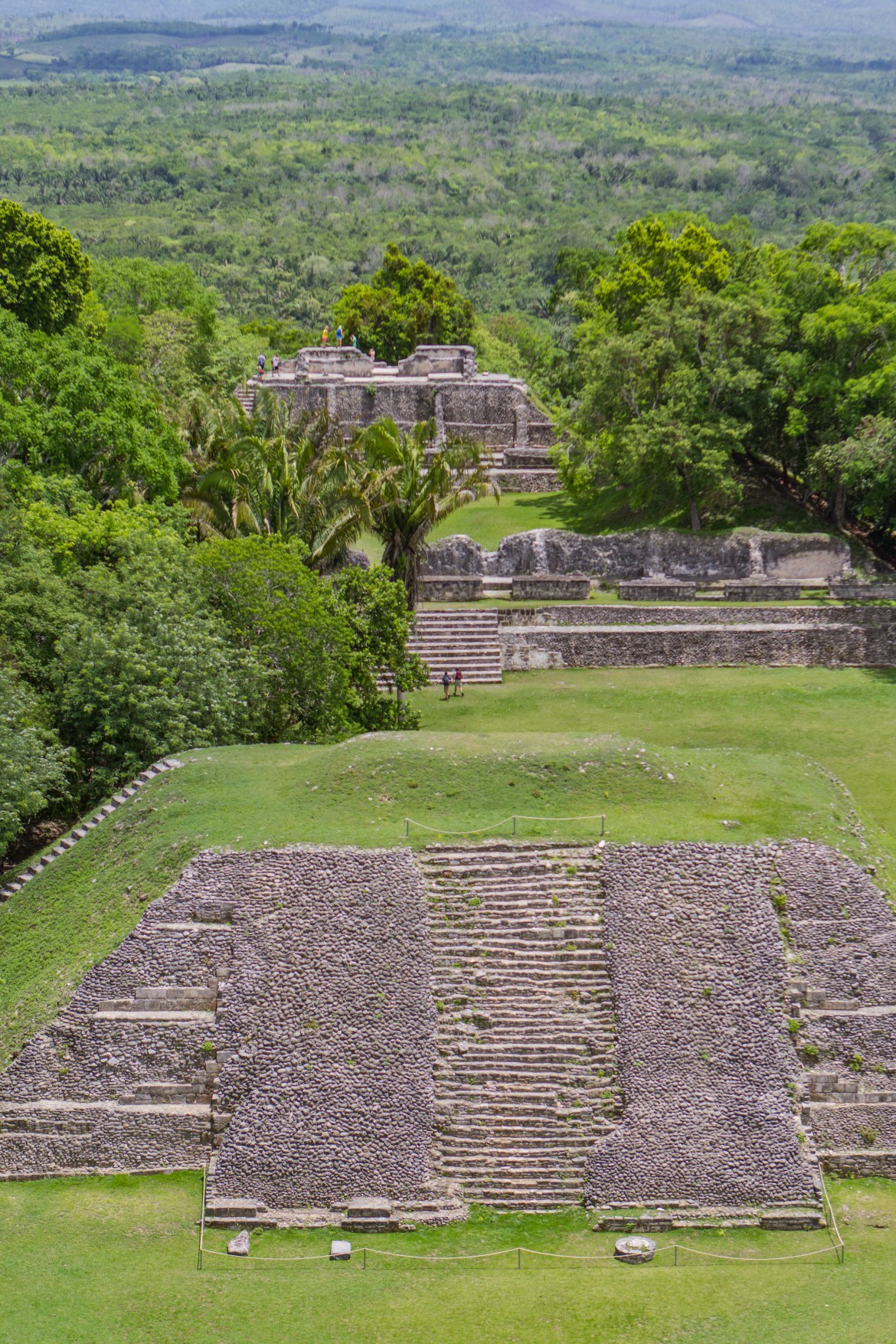
🗣️ Cheat Sheet for Friendly Encounters while in CITY
Language & Culture in Belize
Belize is a linguistic crossroads—English is the official language, but you’ll hear Kriol, Spanish, and Maya all weaving through conversations around Xunantunich. Locals switch tongues effortlessly, especially in the Cayo District, where market chatter sounds like music stitched from three worlds. Learning even a few friendly phrases earns genuine smiles and smoother exchanges with guides and vendors. You don’t need fluency to connect here—just warmth, patience, and curiosity.
💡 Reason to learn a few words: Knowing a “good morning” in Kriol or a “thank you” in Maya can melt formal barriers faster than a Belizean sunbeam—it’s how you turn a quick hello into a story swap.
| 🇺🇸 English | 🇧🇿 Belizean Kriol / Spanish / Maya | 📖 Phonetic Spelling |
|---|---|---|
| Hello | Kriol: Weh di go aan? | weh dee goh ahn |
| Good morning | Spanish: Buenos días | bwe-nos dee-ahs |
| Good afternoon | Kriol: Gud ahf-ta-noon | good ahf-tah-noon |
| Thank you | Maya: B’aantyox | bahn-tee-yosh |
| Please | Spanish: Por favor | por fah-vor |
| How are you? | Kriol: How yu di do? | how yuh dee doo |
| Fine, thanks | Kriol: Ah gud, tank yuh | ah good, tank yuh |
| Yes / No | Spanish: Sí / No | see / noh |
| Excuse me | Spanish: Perdón | pehr-dohn |
| Goodbye | Kriol: Tek care | tek kehr |
| Where is the ferry? | Spanish: ¿Dónde está el ferry? | don-deh es-tah el feh-ree |
| Beautiful view | Maya: Utzil wilik | oot-seel wee-leek |
| See you soon | Kriol: Si yu lata | see yuh lah-tah |
| Thank you very much | Spanish: Muchas gracias | moo-chas grah-syahs |

Behind the Lens
I’m Steve—a retired Army vet who traded ruck sacks for camera bags and now chases light across every latitude I can reach. From 110 point & shoot film camera beginnings to a Canon R5 Mark II and Mavic Pro II drone, I’ve logged shots in 36 countries and all 50 states, squeezing solo photo runs between corporate flights and longer adventures with my wife. Shutter Nomadica is where I share the hits, misses, and field notes so fellow roamers can skip the guesswork and grab the shot!