Deep Dive Post Template Title
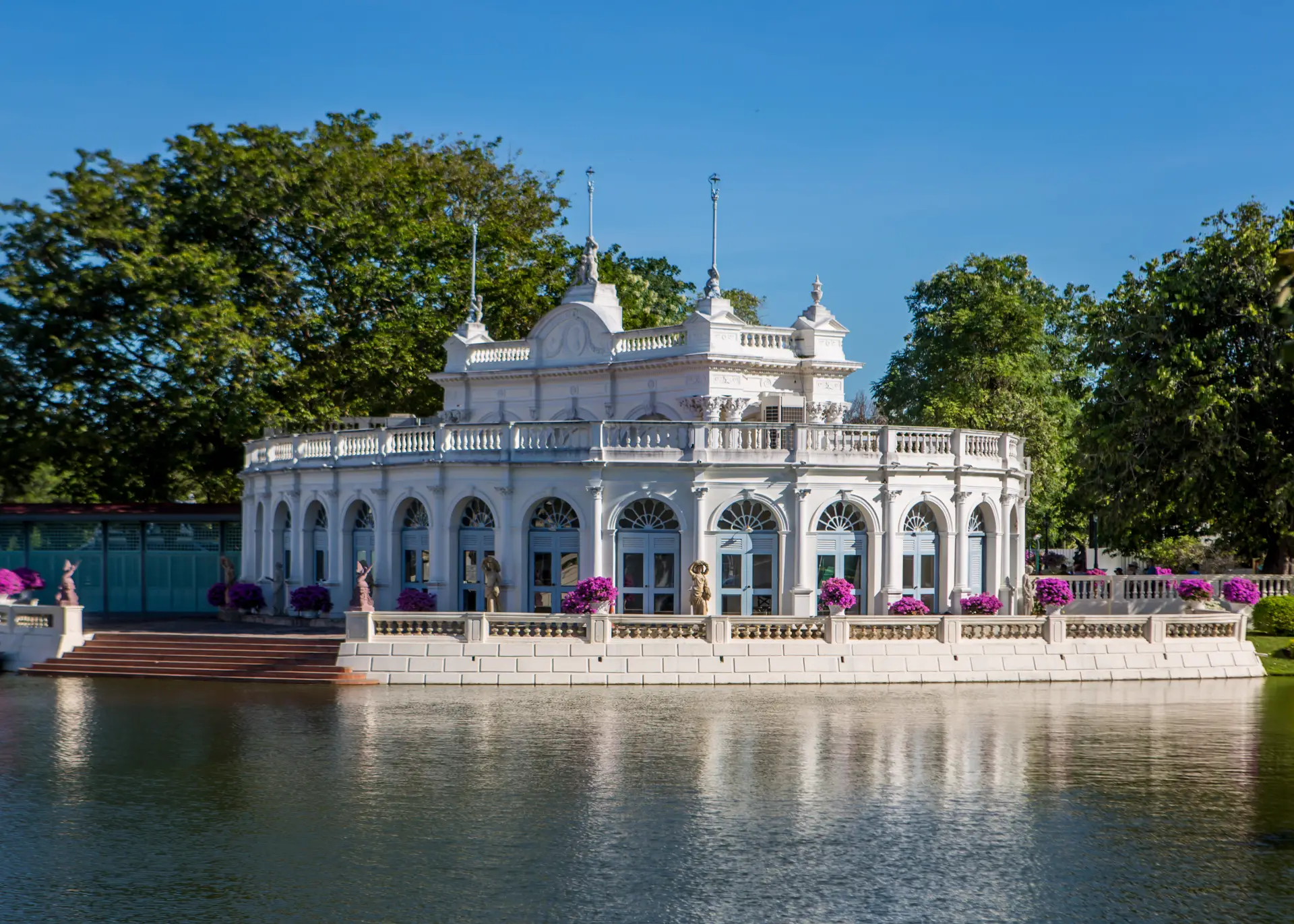
Just an hour north of Bangkok, Bang Pa-In Royal Palace feels like stepping into a watercolor of serenity and splendor. Once the summer retreat of Siamese kings, this lakeside sanctuary weaves Thai, Chinese, and European architecture into one harmonious dreamscape. Bridges arch over lotus-filled ponds, golden spires shimmer in still reflections, and manicured gardens whisper of centuries when elegance was the language of power. It’s not just a palace — it’s Thailand’s quiet conversation between East and West, told in marble and sunlight.
For travelers and photographers, Bang Pa-In is pure geometry and grace. Capture sunrise spilling across the Aisawan Dhiphya-Asana Pavilion, the palace’s delicate teak jewel floating on water; frame the ornate beauty of Wehart Chamrun, its red-lacquered Chinese mansion glowing against the greenery; or seek symmetry in the colonnades and clock towers that hint at Europe’s influence. Every reflection here feels deliberate — crafted for both contemplation and the camera.
The best months to visit are November–February, when breezes ripple the ponds and the heat eases into comfort. Most visitors arrive via Ayutthaya, just 20 minutes away by car or riverboat, making it a perfect companion stop to the ancient city’s ruins. Allow half a day to a full day to wander its lakes, verandas, and shaded paths. Because in Bang Pa-In Royal Palace, beauty isn’t displayed — it glides, effortlessly, across the water’s mirrored calm.
🏛️ Story & Significance: The Soul of Bang Pa-In Royal Palace
The royal story begins in the 1600s, when King Prasat Thong picked this bend in the Chao Phraya for a waterside retreat. After Ayutthaya’s fall in 1767, the site slumbered, its vistas and verandas fading into the river haze. In the mid-19th century, King Mongkut (Rama IV) revived the grounds; his son Chulalongkorn (Rama V) then layered on the iconography you see today, commissioning buildings between 1872–1889 in a spectrum of Thai, Chinese, and European styles. That architectural blend mirrored Siam’s outward gaze and diplomatic balancing act in a changing world.
The palace reads like a cultural mood board. The ethereal Aisawan Thiphya-Art pavilion shimmers with classic Thai lines; the riverside Wehart Chamrun enthrones Qing-inspired grandeur; Warophat Phiman whispers neoclassical formality; and the whimsical Ho Withun Thasana tower pairs an observatory’s purpose with carnival-bright stripes. Together they tell a story of a monarchy conversant in multiple visual languages—curating foreign influence, not surrendering to it. It’s a living lesson in how design can carry nuance, power, and pragmatism across borders.
Beyond aesthetics, Bang Pa-In marks where royal leisure met statecraft. Garden promenades doubled as stages for diplomacy; reflective water turned buildings into metaphors for poise and continuity. Today, the complex serves the crown on select occasions while welcoming visitors most days, with modest dress rules echoing its royal status. For travelers, it’s a rare chance to experience Thai history in a contemplative setting—less ruin, more reverie—before or after Ayutthaya’s temple drama.
🧠 Fascinating Facts & Hidden Meanings
Think of Bang Pa-In as a royal conversation with the world. Each structure “speaks” a design dialect—Thai, Chinese, European—while the water stitches them into one language of calm. Roam with these ideas in your pocket and the details sharpen: dragons inlaid in ebony, sightlines engineered for ceremony, and a striped tower that makes you grin before it teaches you something about observation and control.
Five Did-You-Knows
Aisawan Thiphya-Art floats by design—its placement turns the pond into a mirror, doubling auspicious imagery in ceremonial processions.
Wehart Chamrun was a Chinese-style throne hall gifted to Rama V; inside, look for ornate red lacquer, ebony furniture, and a dragon motif said to be carved from bone.
Ho Withun Thasana (“Sages’ Lookout”) rises roughly 30 meters with a spiral climb—built by Rama V in 1881 for panoramic observation.
Many buildings you see today date to 1872–1889, when Rama V reshaped the estate during a period of intense modernization.
The complex also includes a royal temple, Wat Niwet Thammaprawat, built in an English Gothic style—one of Thailand’s most surprising sacred spaces.
What Kids Love
The striped tower climb (when open) and spotting water monitors gliding through the ponds—mini “safari” moments between halls.
Golf-cart “chariots” (rental available) that make the circuit feel like a park ride on hot days.
A few links and ads here are affiliate portals. If you click through and snag something, you’ll be fueling my next photo-quest at no extra cost to you. Thanks for keeping the adventure rolling!
Prefer a smooth, story-rich visit? Consider a Bangkok→Ayutthaya day trip that includes Bang Pa-In en route; guides connect the palace’s cross-cultural design to the ruins that follow. Good operators bundle Ayutthaya River Cruises back to the city for a soft-landing sunset.
📌 Plan Your Visit: Hours, Tickets & What to Expect
Aim for opening time to enjoy glassy water and low crowds; the palace typically operates around 08:30–17:00, with some sources noting the ticket office may close mid-afternoon, so don’t push a late arrival. Dress with covered shoulders and knees; think sleeves and long trousers/skirts. If you forget, rentals are usually available at the gate. Tickets are modestly priced (commonly cited at 100 THB for foreign visitors), and the stroll is gentle with benches, shade pockets, and café stops near the entrance.
The grounds are spread out; in heat, rent a golf cart or plan a loop with shady breaks. Photographers should sequence pavilion-on-water shots early, then shift to interiors and the Chinese hall as the sun climbs, finishing with the striped tower and long garden axes when shadows add depth. Pair the palace with Ayutthaya Historical Park the same day, or reverse if you’re chasing late-day glow on temple brickwork. Trains and taxis make quick work from Ayutthaya town; from Bangkok, drivers or tours save the transfers.
🎫 Ticketing Tips. Carry small cash; posted details vary by season, but foreign adult tickets are commonly cited at ~100 THB and dress-code checks happen at the gate.
🎉 Festival/Peak-Day Watch. Royal or local events can restrict access to certain halls; check the week’s notes before you go (your hotel or tour provider will know).
| 📍 Location | 🕒 Usual Hours | 💵 Typical Ticket | 👗 Dress Code | 🚶 Mobility |
|---|---|---|---|---|
| Bang Pa-In, Ayutthaya Province | ~08:30–17:00 (arrive early) | ~100 THB (adult foreigner) | Shoulders & knees covered | Flat paths; golf carts available |
| Nearest Hubs | Bangkok (BKK/DMK) | Ayutthaya day-trip friendly | Clothing rental at gate (often) | Shade pockets & benches |
🚶 Getting There, Entry & Accessibility
From Ayutthaya, hop a local train to Bang Pa-In then grab a songthaew or moto-taxi for the short final leg; timing is forgiving and fares are light. From Bangkok, a private driver or guided day tour keeps the day tidy, especially if pairing with multiple ruins. At the gate, expect a dress check, a quick ticket buy, and the option to rent a golf cart—worth it in midday heat or for travelers who prefer minimal walking. Pathways are generally flat with gentle bridges, and seating appears often enough to pace your visit.
Parking & Drop-offs: Private cars and tour vans use the main lot near the entrance; drop-offs are straightforward with clear signage. If you’re ridesharing from Ayutthaya, pin “Bang Pa-In Palace Entrance” to avoid being let off by the river footbridge.
Accessibility Notes: Exterior grounds are mostly level; some halls have steps and interior access may vary. Golf carts reduce exposure to heat and distance; bring a hat/umbrella and water. If climbing the Ho Withun Thasana tower, expect a spiral stair with many steps.
Wayfinding Inside: The complex is a gentle loop: begin with the Aisawan Thiphya-Art pavilion, sweep the lawns toward Warophat Phiman, cross to Wehart Chamrun, then finish at Ho Withun Thasana for elevated views. Map boards and obvious sightlines make it hard to get lost.
🧭 How to Explore: Smart Routes for Any Timeline
60–75 Minutes — The Essentials. Start at the water pavilion while the pond is glassy. Work the reflections, then drift along the main axis to frame Warophat Phiman across lawns that act like negative space. Skip deep interiors and save time for a slow garden walk to Wehart Chamrun for that red-lacquer pop before looping back.
90–120 Minutes — Deeper Look. Add interior peeks where permitted, then cut across to the striped tower for an overview that explains the plan: water, lawns, axes. If conditions allow, climb for a panoramic read of symmetry and shade. Break for a drink, then replay your favorite angle with the sun higher for contrasty texture.
2–3 Hours — Cruise Clock. Pair a leisurely golf-cart loop with unhurried garden time. Photograph detail studies—eaves, fretwork, dragon motifs—then sit for five minutes just to watch water monitors carve ripples in the ponds. If you’re heading to Ayutthaya after, exit before lunch to beat the heat at the ruins.
🖼️ Spaces & Highlights You’ll Love
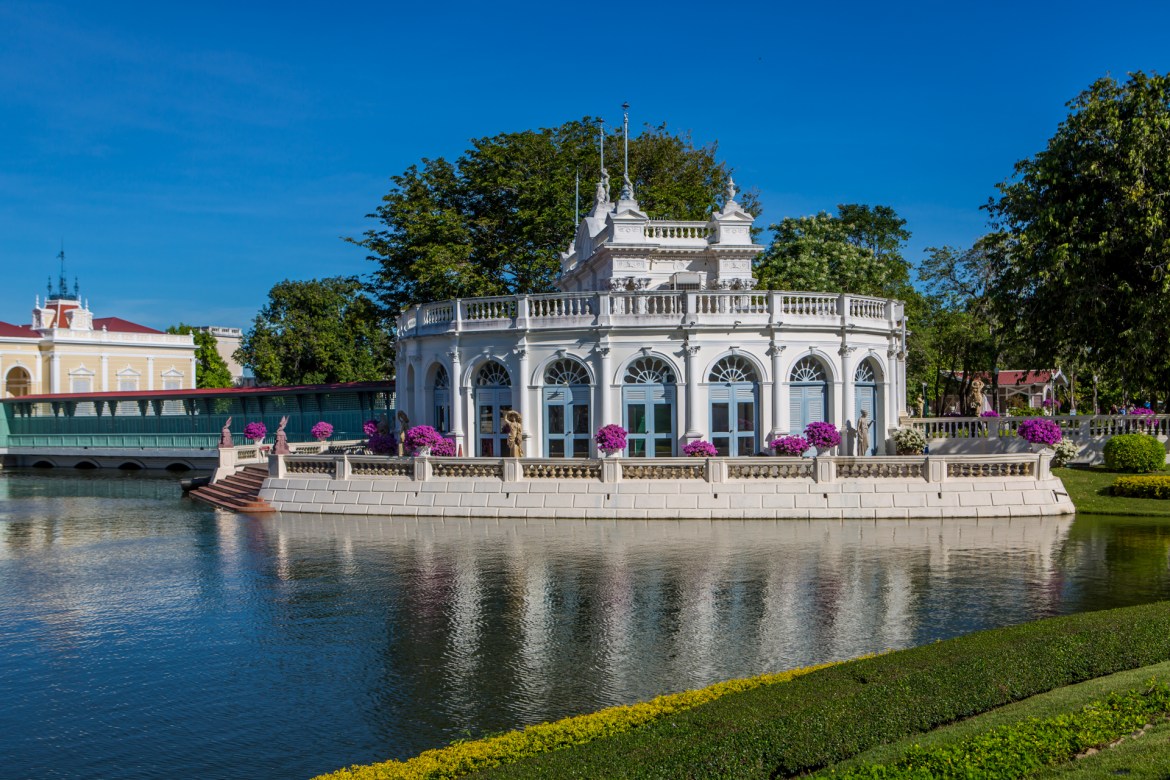
Aisawan Thiphya-Art — A Pavilion That Paints with Water. Floating at the heart of the main pond, this Thai pavilion is Bang Pa-In’s signature. Arrive early for mirror-calm reflections, then edge around the pond to align the structure with trimmed hedges and white colonnades beyond. Midday glare can be harsh; use the pavilion’s shadows for contrast and try a low angle near lotus clusters. Late morning, wind often adds texture to the water—swap symmetry for ripple abstracts.
Warophat Phiman — The Neoclassical Whisper. Across manicured lawns, this European-style residence brings balance to the Thai pavilion’s ornament. Compose long with a walkway foreground to emphasize axial perspective, or step close to play with columns and window rhythm. On bright days, a polarizer tames glare off stucco and water. Even without entering, the façade alone tells a story about Rama V’s cosmopolitan eye.
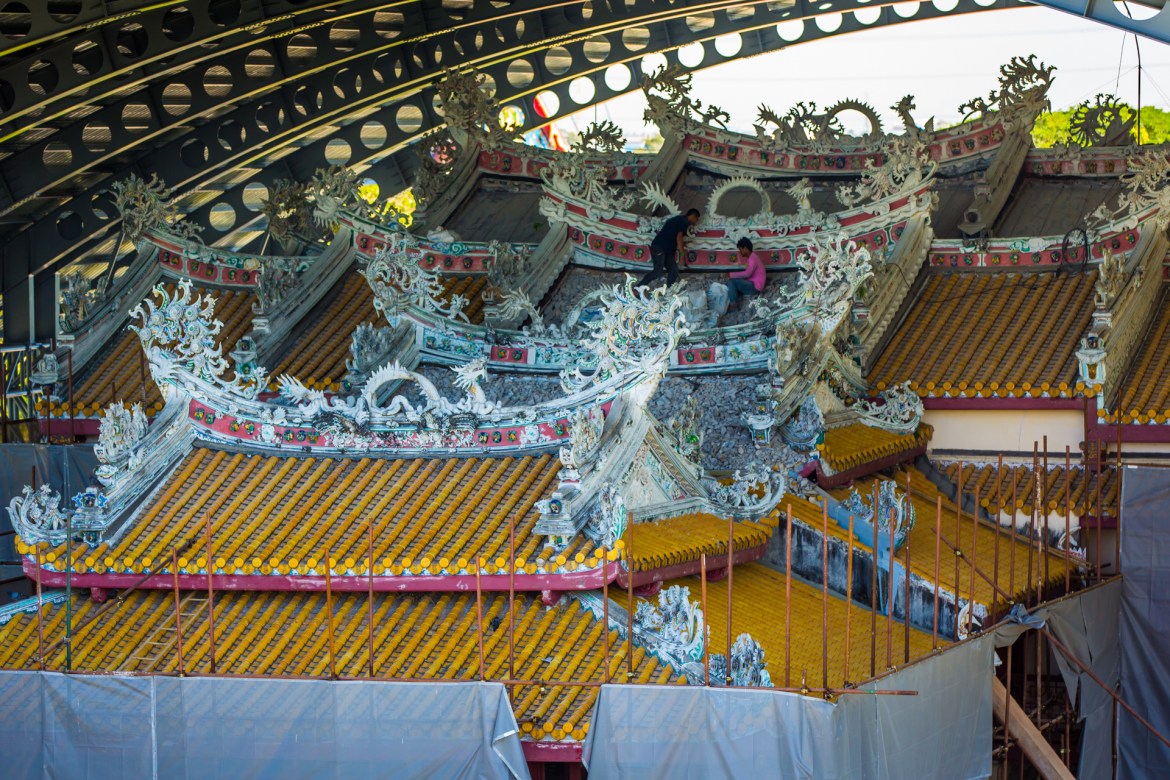
Wehart Chamrun — Red Lacquer & Dragon Dreams. This Chinese-style throne hall steals your attention with saturated reds and heavy ebony. Inside (when open), hunt for layered patterns and ceremonial objects; outside, pull back to frame the hall with palms and pale balustrades for color contrast. It’s the complex’s most overt nod to Sino-Thai ties—and an interior treat on hot days.
Ho Withun Thasana — The Striped Surprise. Part observatory, part exclamation mark, the tower’s 30-meter height and jaunty bands make a joyful subject. Shoot tight abstracts of color bands, then go wide to anchor it with pond edges and leading paths. If you climb, brace for a spiral stair; from the top, the plan’s geometry becomes obvious—great for a final establishing shot.
Hidden Angles (quick hits).
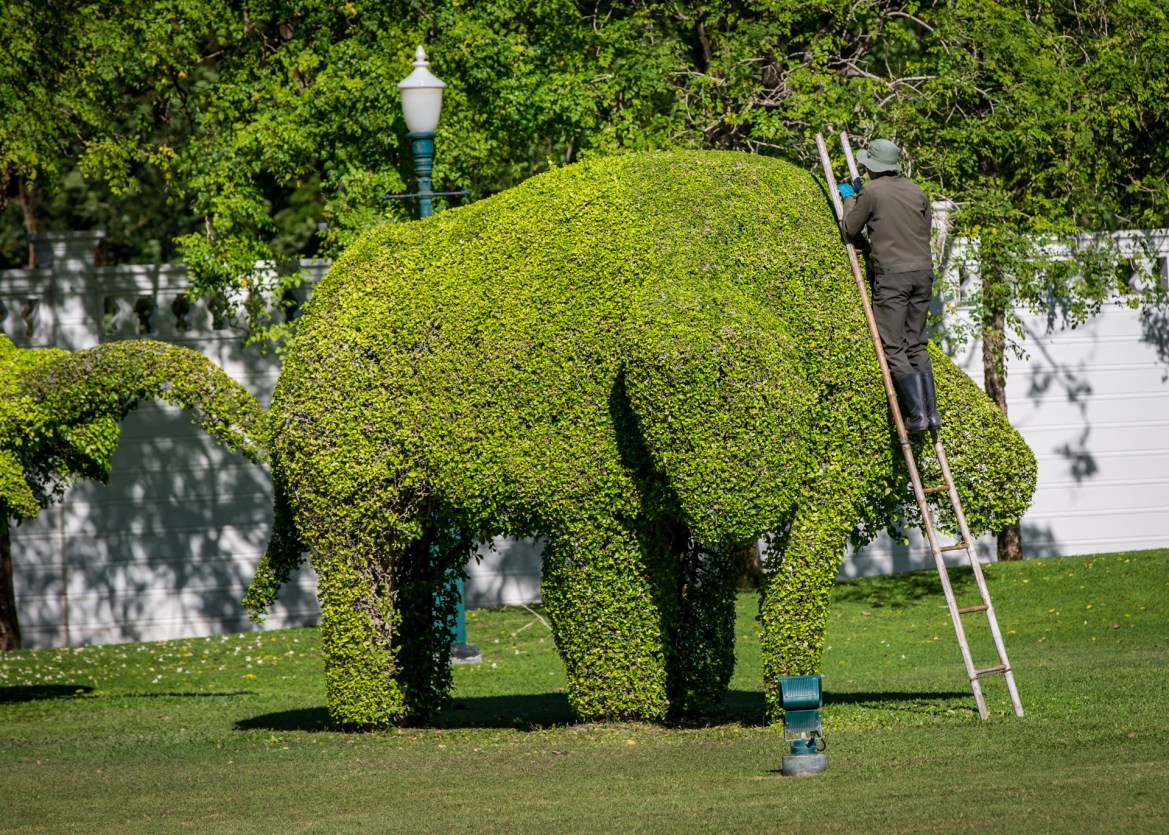
Long lens through topiary gaps to compress pavilion + bridge layers.
Reflective studies of dragon motifs in window glass.
Shadow-play along colonnades beside the lawns at midday.
Lotus-level low shots with tower bokeh in the background.
🍽️ Nearby Pairings & Pleasant Pauses
Slip out of Bang Pa-In Royal Palace for a few low-stress add-ons within minutes: a breezy riverside café stop, the quirky Wat Niwet Thammaprawat across the cable car, and quiet garden lanes ideal for a stroller-friendly wander. Late afternoon is best for easy temps and soft light on the river; if you’re heading back to Ayutthaya, plan a blue-hour pause around the island for mellow traffic and pretty silhouettes. Keep things simple—iced coffee, a short temple peek, and a shady bench beat over-planning here. If you’re touring from Bangkok, tuck one café or temple stop on either side of the palace to break up the drive and keep everyone fresh.
Family-Friendly Stops.
Ice-cream or iced-coffee pit stop near the river; plenty of courtyard benches for quick cooldowns.
Wat Niwet cable-car hop is fun for kids; grounds are compact and stroller-friendly on paved paths.
Short pond-side loops back at the palace if little legs still have energy.
Rain/Heat Refuge.
Shaded rooms and breezy arcades around the entrance cluster make easy time-outs.
Pop into small indoor galleries/temple interiors (when open) during midday scorchers or sudden showers.
If the sun’s unforgiving, trade walking for a quick golf-cart loop, then resume from the coolest corner.
In the Frame: My Journey in Thailand
🎥 Reels on the Road: Content Creators
Bang Pa-In is built for motion: water ripples, breeze-tossed fronds, and that candy-striped tower begging for a reveal. Keep clips short and varied—panning reflections, walking reveals, and point-of-view steps across bridges. Pair calm ambient audio with a single upbeat track to punctuate transitions. Aim for a gentle narrative arc: arrival at the gate, first reflection gasp, cultural juxtaposition, and an elevated finale from the tower.
🎥 Aisawan Thiphya-Art — Sunrise reflection pan, 5–7 seconds.
🎥 Wehart Chamrun — Interior detail walkthrough, 6–8 seconds.
🎥 Ho Withun Thasana — Spiral-stair POV climb + balcony reveal, 8–10 seconds.
🎥 Garden Axis — Slow push along the lawn toward Warophat Phiman, 6–8 seconds.
🧳 What to Pack for Picture-Perfect Memories
Reflections, Royal Gardens, and Architectural Grace by the Chao Phraya
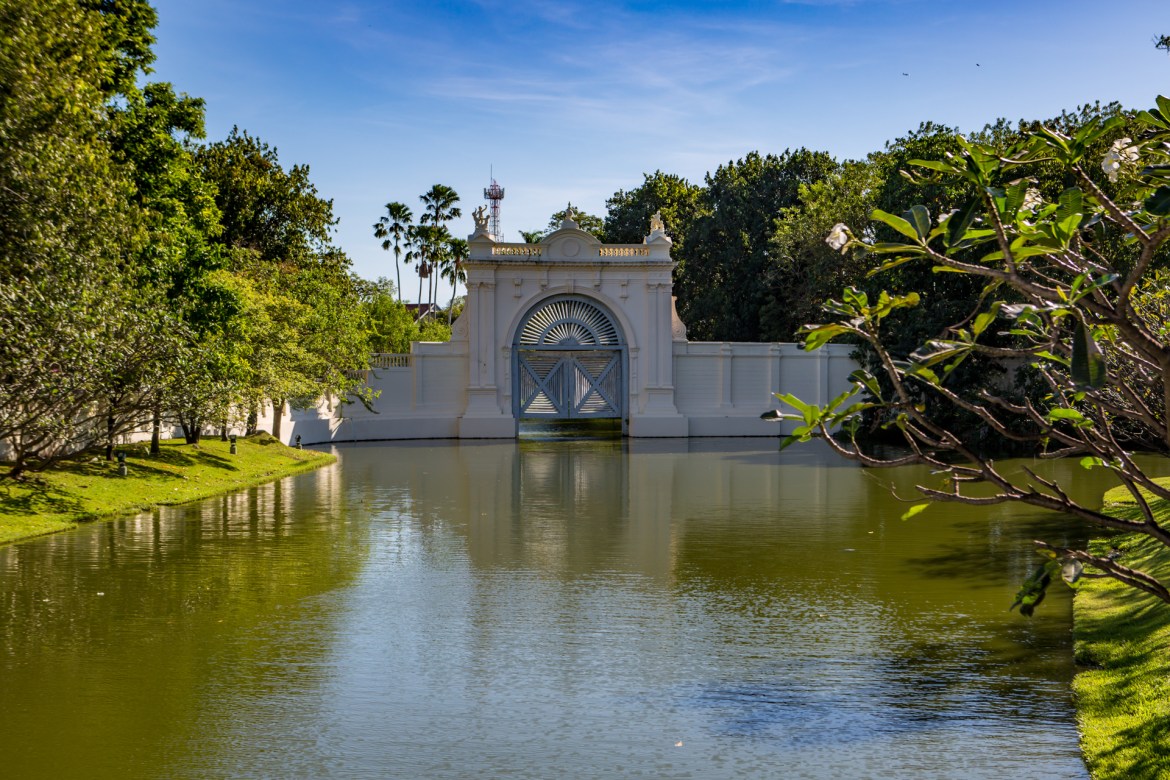
Bang Pa-In is Thailand’s royal retreat in full bloom—mirror-still ponds, European-Thai fusion architecture, and spires glowing under the central plains’ fierce light. Packing right helps you stay cool, respectful, and ready for palace-worthy compositions. Bring water, a sun hat, and modest, breathable clothing (shoulders/knees covered—strictly enforced); tuck light socks for shoes-off interiors. Paths swing from marble and tile to shaded garden walks, so grippy shoes beat sandals. Keep a soft lens cloth handy—humidity, fountains, and river breeze love your glass—and use low-key stabilization (columns, railings, calm breath) where tripods aren’t permitted. Plan for sunrise sparkle over the Aisawan Thiphya-Art Pavilion, midday symmetry around Ho Withun Thasana, and golden-hour silhouettes by the river bridge.
👉 The Nomad’s Kit: Gear That Earns Its Miles
Canon RF 15–35mm f/2.8L — Ultra-wide for pavilion reflections, interior ceilings, and palace corridors where stepping back means “hello, guard rope.”
Canon RF 24–105mm f/2.8L — Your garden-to-gallery workhorse: portraits in arcades, mid-tele details on gilded carvings, and quick café scenes under the colonnades—no lens shuffle.
Canon RF 100–500mm f/4.5–7.1L IS USM — From the bridge or upper pavilions, compress domes, lakes, and spires; isolate statues and floral symmetry from a respectful distance.
Lowepro ProTactic BP 350 AW III — Lightweight, security-friendly, and shade-loving; keeps filters tidy and gear discreet between manicured gardens.
Peak Design Travel Tripod — Great for sunrise reflections or blue-hour elegance outside main courtyards; keep folded indoors—tripods are restricted on palace grounds.
JOBY GorillaPod 3K Kit — Clamp to railings by the lakeside or pavilion fences for silky water or long exposures—tiny footprint, royal-level stability.
Cut Glare. Shape Time. Make Every Frame Sing.
Bang Pa-In glitters—water, marble, gold leaf, and lush gardens. A circular polarizer tames glare on ponds and gilding, bringing texture to architecture and greenery; a variable ND lets you slow the scene—turn strolling visitors into ghostly motion, fountains into silk, and river shimmer into smooth serenity beneath palace arches.
🌊 Control Reflections & Punch Up Color
Circular Polarizer Filter — Reduce glare on marble floors and still ponds, reveal cloud reflections behind pavilions, and hold detail in gilded ornament. Pro tip: rotate gently—over-polarizing can dull the gold; aim for balanced glow and clarity.
⏱️ Drag the Shutter in Broad Daylight
Neutral Density Variable Filter — Drop 3–6 stops to smooth fountains and canal ripples, blur walking tourists across bridges, and add serenity to bright-midday gardens. Pro tip: start around 1/4–1 s for people blur; go 2–10 s for dreamy water.
Pack both for any trip: the polarizer reveals the scene; the ND sculpts time. Together, they’re a portable “wow” switch.
Photo Policy Reminders — No flash inside buildings or royal exhibition rooms; tripods/stands restricted on palace grounds without prior permission. Dress modestly (covered shoulders/knees, no sleeveless tops). Drones are strictly prohibited. Stay behind rope lines, remove shoes when entering halls, and move quietly—Bang Pa-In rewards grace and patience with reflections fit for royalty.
💰 On-Site Costs Snapshot
Bang Pa-In is a low-stress, good-value stop: simple tickets, optional add-ons, and only a few extras to budget for. Expect a modest entry fee, with optional golf-cart rentals helpful in midday heat. Light snacks/drinks sit near the entrance, and clothing rentals can save the day if your outfit misses the dress code. Prices below are typical ranges to help you plan without overthinking.
| 🎟 Entry | 🧭 Guided Access | ➕ Extras |
|---|---|---|
| Foreign Adult ~100 THB (≈ $3); Thai Citizens lower/varies. | Local Guide (on-site or pre-booked): pricing varies by duration/language; expect private or small-group options. | Golf Cart Rental (hourly; typical deposit); Clothing Rental if needed; Drinks/Snacks at entrance cafés. |
| Kids/Students may receive reduced pricing (bring ID). | Combo Day Trips with Ayutthaya often include transport and commentary. | Tower/Interior Access opens selectively; availability can change on event days. |
🤝 Etiquette & Respectful Visiting
This is an active royal site, so think temple-level courtesy with a park’s easy vibe. Keep shoulders and knees covered, remove hats in solemn interiors, and speak softly around shrines or when ceremonies are underway. Ask before photographing staff or maintenance crews, and avoid blocking walkways or bridges while setting up shots. Drones and large light stands are a no-go; keep gear compact and unobtrusive. Litter is taken seriously—use bins, skip feeding wildlife, and treat the ponds and gardens as living heritage.
🕰️ Historical Timeline at a Glance
Bang Pa-In’s story arcs from 17th-century river retreat to 19th-century cosmopolitan showcase, then into today’s ceremonial calm.
| 📅 Year/Period | 🏛 What Happened | 🌏 Why It Matters |
|---|---|---|
| 1630s | King Prasat Thong establishes a riverside royal retreat. | Begins the palace’s link to the Chao Phraya and water-garden design. |
| 1767 | Fall of Ayutthaya; the site declines. | Retreat slips into dormancy during a turbulent era. |
| Mid-1800s | Rama IV revives Bang Pa-In. | Prepares the canvas for the next wave of building. |
| 1872–1889 | Rama V commissions hallmark structures (Thai, Chinese, European styles). | Creates the palace’s cross-cultural architectural blend. |
| 1881 | Ho Withun Thasana (striped lookout tower) constructed. | Symbol of observation, modernity, and playful design. |
| 20th Century | Ongoing restorations and garden refinements. | Conserves formality and ceremony within a public-friendly park. |
| Today | Open to visitors; selective royal functions continue. | Balancing heritage, hospitality, and gentle tourism. |

📓 Through My Lens: Field Notes from the Road
I rolled into Bang Pa-In on a small-group run out of Bangkok. The gate check was quick, and I bee-lined for the Aisawan Thiphya-Art pavilion while the pond was still sheet-glass—two breaths, then that first click. Heat hit fast, but the grounds reward momentum: long strides under trimmed shade, a pause at Wehart Chamrun to let the red lacquer punch through the glare, and a slow climb up the candy-striped Ho Withun Thasana for a breeze and a map-from-above moment. Back on the lawns, I worked low angles near the lotus, let ripples wreck my symmetry on purpose, and traded wide frames for tight details—eaves, dragon curls, the rhythm of colonnades. When the sun went hard, I throttled down with an iced coffee near the entrance, then rode the day out on a riverboat back to the city, the palace shrinking to color bands and water lines. It’s an easy place to move with intent—no fuss, no maze—just a clean sequence of scenes where the story unwraps as you keep walking.
☀️ When to Go & Weather Sweet-Spots
“Monsoon Moods & Mirror-Calm Mornings” — When to Go & Weather Sweet-Spots
Central Thailand runs on two big rhythms: a cool-dry season perfect for strolling ponds and lawns, and a hot-then-rainy stretch where heat and storms shape your pacing. Aim for early mornings year-round for calmer water and thinner crowds; late afternoons trade heat for soft, honeyed light on façades. Sudden showers? They’re short—use arcades or interiors as a reset, then enjoy the post-rain gleam and reflections.
| 🌞 Season | 🧘♂️ Vibe Check | 🌦 Rain Factor | 🏛 Tourist Traffic |
|---|---|---|---|
| 🌴 Winter (Nov–Feb) | Cool-dry comfort; crisp mornings, pleasant shade. | Low—occasional sprinkles. | High—peak season; arrive at opening. |
| 🌸 Spring (Mar–May) | Hot by late morning; plan breaks and carts. | Low–Moderate—isolated storms late May. | Moderate—heat thins crowds mid-day. |
| ☀️ Summer (Jun–Aug) | Green & humid; moody skies, vibrant gardens. | Moderate—brief downpours common. | Moderate—showers create ebb-and-flow. |
| 🍂 Fall (Sep–Oct) | Rainiest stretch; soft light after showers. | High—carry a light rain layer. | Lower—pleasantly quiet on weekdays. |
🎯 Peak Tourist Season Months: November–February.
🏖️ Off-Season Sweet Spot Months: May–June (early rains, lush greens, calmer paths).
💡 Insider Pro Tip: Be at the gate at opening for glassy-still water around the Aisawan Thiphya-Art pavilion; save Wehart Chamrun and shaded colonnades for the noon hour, then finish with the tower and long axes as shadows lengthen.
🛡️ Practical & Safety Notes
Heat & Hydration. Central Thailand warms up fast—carry water, wear a hat, and pace with shade stops or a golf cart hour at midday.
Footing & Wildlife. Paths are mostly flat; bridges have steps. You may spot water monitors—give them space and keep kids calm.
Dress & Gear. Shoulders and knees covered; bring a light scarf as backup. Keep rigs compact; some interiors restrict tripods/flash.
Money & Access. Keep small cash for tickets, clothing rental, and drinks. Event days can limit access to specific halls—have a flexible plan.
Transfers & Timing. If pairing with Ayutthaya, leave Bang Pa-In by late morning to beat heat at the ruins; reverse the order if you’re chasing a sunset silhouette day.
🎞️ More Frames From the Road: Scenes Worth Stopping For
🗣️ Cheat Sheet for Friendly Encounters while in CITY
Most staff and vendors around Ayutthaya speak some English, but a few Thai phrases unlock smiles and smoother moments—especially for dress-code clarifications, golf-cart rentals, or asking permission for a photo angle. Keep it simple, warm, and polite with khrap/ka depending on your voice (male/female). Here’s a quick-use card you can screenshot.
| 🇺🇸 English | 🇹🇭 Thai | 📖 Phonetic |
|---|---|---|
| Hello | สวัสดี | sa-wat-dee |
| Thank you | ขอบคุณ | khop-khun |
| Please | กรุณา | ka-ru-na |
| Excuse me / Sorry | ขอโทษ | khor-thot |
| How much? | ราคาเท่าไหร่ | ra-kha thao-rai |
| Where is the entrance? | ทางเข้าอยู่ที่ไหน | thang-khao yuu thi-nai |
| Open until what time? | เปิดถึงกี่โมง | pœt-thueng gi-mong |
| May I take a photo? | ขอถ่ายรูปได้ไหม | khor thai-ruup dai-mai |
| Water, please | ขอน้ำหน่อย | khor-nam noi |
| Bathroom? | ห้องน้ำอยู่ที่ไหน | hong-nam yuu thi-nai |
| Thank you very much | ขอบคุณมาก | khop-khun mak |
| Goodbye | ลาก่อน | la-gon |

Behind the Lens
I’m Steve—a retired Army vet who traded ruck sacks for camera bags and now chases light across every latitude I can reach. From 110 point & shoot film camera beginnings to a Canon R5 Mark II and Mavic Pro II drone, I’ve logged shots in 36 countries and all 50 states, squeezing solo photo runs between corporate flights and longer adventures with my wife. Shutter Nomadica is where I share the hits, misses, and field notes so fellow roamers can skip the guesswork and grab the shot!