The Soul of San Diego: Balboa Park in Frames and Footsteps
There’s a reason photographers whisper about Balboa Park the way painters talk about Paris light. It’s an open-air cathedral of palm-lined promenades, tiled fountains, and colonnaded pavilions glowing gold by late afternoon. Whether you’re here to frame facades or chase street musicians through sunlight and shadow, Balboa Park delivers an ever-changing canvas.
Visit in March through May, when bougainvillea ignite every walkway and crowds are thinner, giving you space to compose. Fly into San Diego International Airport (SAN) — you’ll be wandering the park within 15 minutes of touchdown. You can explore the major museums, gardens, and photo hot spots comfortably in a full day, though every lens will beg you to stay for one more golden-hour shot.
Balboa Park isn’t just a collection of buildings — it’s San Diego’s heartbeat draped in Spanish arches and jacaranda blooms. You’ll find classical musicians playing under tiled domes, couples dancing beside koi ponds, and camera lenses hunting that perfect play of shadow on stucco. For photographers, it’s an irresistible puzzle of geometry and light; for travelers, a cultural love letter written in stone and petals.
🎨 The Visual Story: “Why This Niche Captures Hearts”
Balboa Park isn’t simply visited — it’s felt, like walking through a living postcard where every step hums with California’s artistic ambition. Born from the 1915 Panama–California Exposition, its Spanish Colonial Revival architecture was meant to showcase the city’s sophistication — and it still does, a century later, with intricate façades and archways bathed in San Diego sun. Each courtyard whispers of a different era: the artists sketching along El Prado, the mariachi trumpets echoing under tiled domes, the aroma of gardenias drifting from the Alcazar Garden. For photographers, it’s not just about framing a shot; it’s about translating emotion — the way late-afternoon light slides over stucco, or how palms silhouette against the Museum of Man’s blue-tiled tower.
What makes Balboa Park so magnetic is its fusion of stillness and motion — one moment you’re lost in reflection beside the Lily Pond, the next you’re surrounded by color, movement, and laughter at a cultural festival. Every frame tells a layered story of creativity, community, and that distinctly San Diegan ease where history never feels heavy. You’ll capture the interplay of old-world craftsmanship and modern vibrance, where photographers find harmony between architectural precision and spontaneous street moments.
To see this artistry unfold beyond the lens, book the San Diego Balboa Park Highlights Small Group Tour with Coffee — the guide’s storytelling turns each fountain and frieze into a cinematic frame. Or, for those craving hands-on exploration, the Balboa Park Walking Tour: Art, Architecture & Gardens lets you wander through hidden courtyards and artist enclaves that most visitors never find.
A few links and ads here are affiliate portals. If you click through and snag something, you’ll be fueling my next photo-quest at no extra cost to you. Thanks for keeping the adventure rolling!
🎯 Top 10 Can’t-Miss Subjects in San Diego’s Balboa Park
Balboa Park is the kind of place that rewards wanderers who look up. Every tile, tower, and trellis seems purpose-built for the camera’s frame — yet the park’s real magic lies in how light dances across culture. From ornate Spanish Revival façades to tranquil reflecting pools, from rose-scented gardens to street performers in sunlit plazas, this is San Diego’s open-air studio. Whether you’re chasing symmetry, color, or candid human energy, these ten subjects will keep your shutter finger twitching happily from sunrise to twilight.
1. The California Tower — Icon of the Skyline
Framed against endless blue, the California Tower defines Balboa Park’s silhouette. Its tiled dome and stonework details change character with every hour, from soft pink dawns to golden hour brilliance.
🕒 Best Time to Shoot: Sunrise or late afternoon for warm glow on tiles.
💵 Access Cost: $10 for tower access (museum entry included).
💡 Insider Tip: Use a 35 mm lens to capture the tower with palm framing from the El Prado walkway.
2. El Prado Promenade — The Park’s Architectural Runway
This pedestrian avenue links many of the park’s gems, lined with arcades, columns, and performers. The interplay of shadow and sunlight offers rhythm and contrast.
🕒 Best Time to Shoot: Mid-morning when sun filters through arches.
💵 Access Cost: Free.
💡 Insider Tip: Try a wide angle lens for depth and leading lines down the walkway.
3. Botanical Building & Lily Pond — Mirror of Tranquility
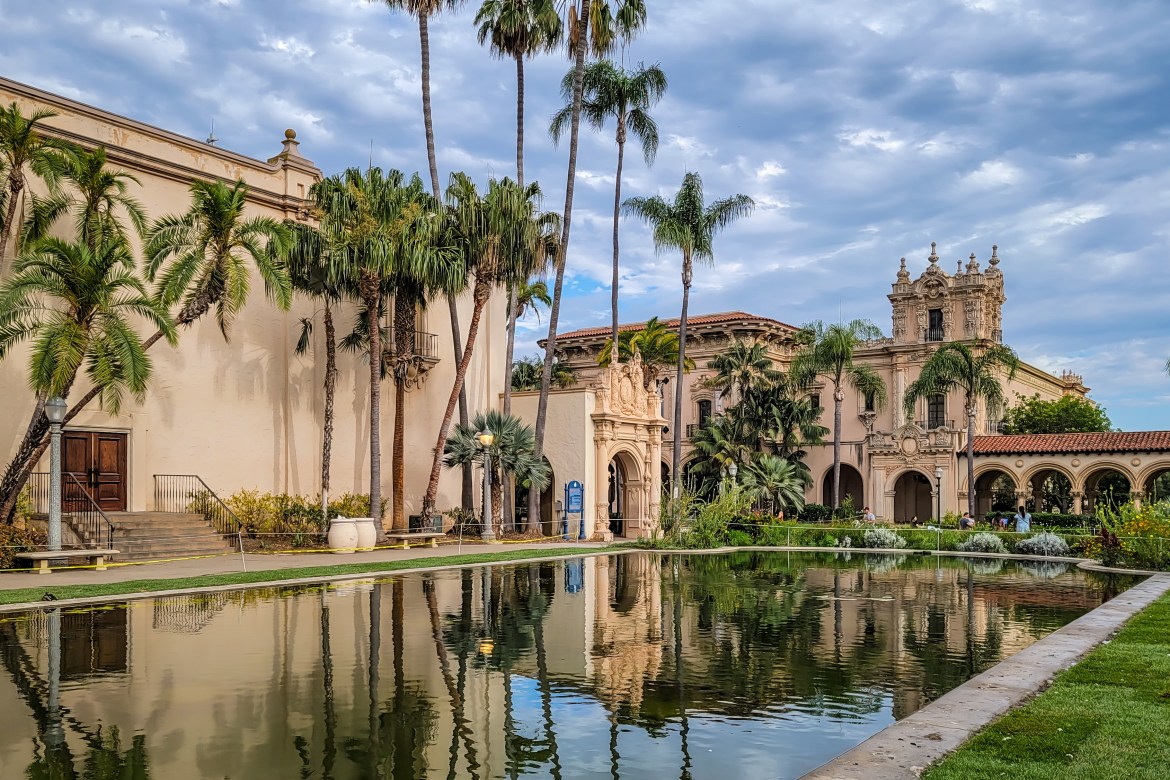
One of the most photographed spots, this open-air wooden conservatory reflects perfectly in the long pond fronting it. Lily pads, koi, and passing ducks complete the frame.
🕒 Best Time to Shoot: Early morning for still water reflections.
💵 Access Cost: Free.
💡 Insider Tip: Step back toward the El Cid statue for a balanced composition of sky, pond, and structure.
4. The Old Globe Theatre — Drama in the Details
Modeled after Shakespeare’s original, this intimate theatre’s half-timbered façade and ivy-draped setting make for striking black-and-white shots.
🕒 Best Time to Shoot: Golden hour before evening shows.
💵 Access Cost: Exterior free; performance tickets from $35+.
💡 Insider Tip: Capture crowds arriving for performances to add motion to the frame.
5. Japanese Friendship Garden — Harmony and Reflections
Curved bridges, koi ponds, and bonsai groves deliver serenity and color. A long exposure softens flowing water under dappled light.
🕒 Best Time to Shoot: Late morning for glowing greens.
💵 Access Cost: $14 adults.
💡 Insider Tip: Use a polarizer to cut glare and deepen pond colors.
6. Spreckels Organ Pavilion — Sound and Symmetry
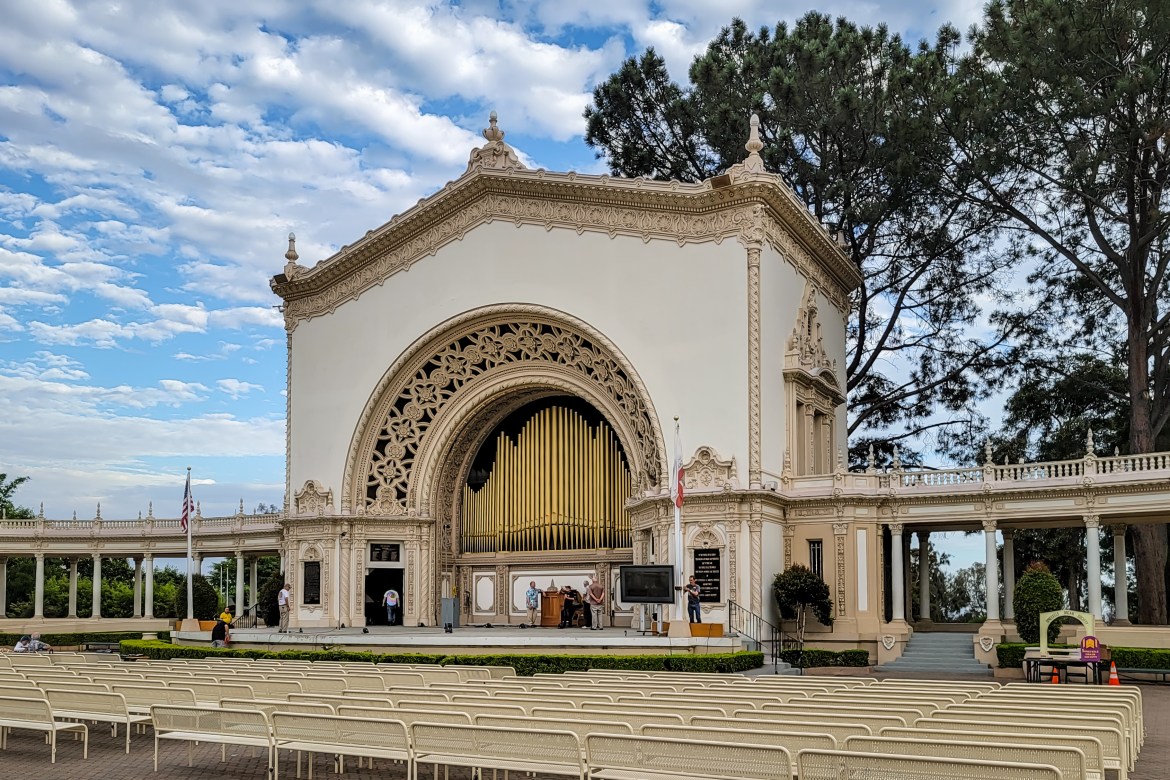
The grandest outdoor pipe organ in the world sits within an ornate white colonnade. The symmetry is irresistible; the acoustics, unforgettable.
🕒 Best Time to Shoot: Early evening concert light.
💵 Access Cost: Free concerts on weekends.
💡 Insider Tip: Center your shot directly in the aisle for perfect balance — tripod recommended.
7. Alcazar Garden — Moorish Patterns and Color
Inspired by Seville’s royal gardens, this compact oasis glows with tiled fountains and manicured flower beds.
🕒 Best Time to Shoot: Midday for vivid tile colors.
💵 Access Cost: Free.
💡 Insider Tip: Shoot from the balcony above for a geometric top-down pattern.
8. Casa del Prado — Baroque Details in Sun and Shadow
The building’s sculpted façade practically begs for close-ups — angels, shells, and floral carvings all in ornate relief.
🕒 Best Time to Shoot: Late afternoon for side lighting that defines texture.
💵 Access Cost: Free.
💡 Insider Tip: Use a telephoto like the Canon RF 100–500 mm to isolate architectural ornaments.
9. Desert Garden — Textures of Thorns and Light
Over 1,300 succulent species create a stunning study of form and shadow. Macro photographers will find endless subjects here.
🕒 Best Time to Shoot: Golden hour for soft backlight on spines.
💵 Access Cost: Free.
💡 Insider Tip: Bring a macro lens or extension tube for abstract close-ups.
10. The Museum of Man Courtyard — People and Perspective
This plaza bridges old and new, where locals linger beside art installations. Capture interactions, patterns of tile, and framed archways.
🕒 Best Time to Shoot: Late afternoon to sunset for golden glow and activity.
💵 Access Cost: Free plaza access; museum entry $15.
💡 Insider Tip: Compose with foreground arches to draw eyes into human moments.
🔍 Hidden Gems & Photographer Favorites
Balboa Park hides its quiet poetry in the in-between spaces — the stairways that slip into palm shade, the tucked courtyards where tile, shadow, and song mingle, the overlooks where San Diego’s skyline peeks between canary palms. These are the places where you can breathe, compose, and let the golden light do the heavy lifting while crowds drift elsewhere. Expect texture-rich architecture, lush botanicals, and a soundtrack of rustling fronds and distant guitar. Come for originality, stay for the solitude — and leave with frames that feel personal, not postcard.
Palm Canyon Footbridge & Wash — A zigzag stairway drops you into a pocket jungle of towering palms and filtered light that feels a world away from El Prado.
Insider Tip: Arrive mid-morning after the sun crests the rim; shoot low with a wide lens to exaggerate the boardwalk’s leading lines.Zoro Garden (Butterfly Grotto) — A sunken stone garden once used for exposition-era performances, now reborn as a butterfly haven with soft, dappled light.
Insider Tip: Bring a quiet shutter mode and a longer focal length to isolate wings against stone backdrops; best on warm, still days.Spanish Village Art Center Back Courtyards — Everyone photographs the pastel pavers out front; slip behind the studios for painterly doorways, terracotta pots, and calm.
Insider Tip: Visit just after opening when artists prop doors and brooms out — perfect for candid, permission-friendly environmental portraits.Cabrillo Bridge (West Rim Lookouts) — Step off the main flow to the bridge’s west-facing pullouts for layered views of arches, palms, and skyline.
Insider Tip: Golden hour adds rim light to the arches; brace your camera on the parapet for crisp frames without hauling a tripod.Florida Canyon Native Plant Paths — A lightly trafficked web of trails with sagebrush textures, agave silhouettes, and big-sky compositions that scream California.
Insider Tip: Go late afternoon for backlit chaparral glow; a polarizer deepens the blue and tames glare on waxy leaves.
📸 In the Frame: Our Journey in San Diego’s Balboa Park
💵 Sleep • Eat • Move: Cost Snapshot
San Diego isn’t the cheapest city in California, but Balboa Park rewards every traveler tier — whether you’re editing shots from a hostel bunk or sipping wine at a boutique inn overlooking palm-lined boulevards. Lodging costs shift with proximity to the park and the ocean, meals range from grab-and-go tacos to fine-dining sunsets, and transport is refreshingly simple thanks to walkable streets and rentable scooters. Activities lean affordable too — most museums and gardens are free or modestly priced, leaving room in your budget for coffee, color, and creativity. Here’s a snapshot of what a Balboa Park photography escape typically costs.
| 🏨 Lodging | 💵 Range (USD) | 📌 Example / Value |
|---|---|---|
| Budget | $80–$150 | Hostels or motels near Hillcrest; basic, safe, and close to bus lines. |
| Mid-Range | $160–$300 | Stylish boutique hotels or B&Bs within a mile of Balboa Park; comfort with character. |
| Luxury | $320–$600+ | High-end stays in Bankers Hill or Gaslamp Quarter; rooftop views and valet convenience. |
| 🍽 Meals | 💵 Range (USD) | 📌 Example / Value |
| Budget | $20–$40 | Taco stands, local cafés, and park-side coffee carts for grab-and-go energy. |
| Mid-Range | $45–$90 | Casual bistros and gastropubs with California fusion menus and craft beer. |
| Luxury | $100–$200+ | Fine-dining restaurants in downtown or Little Italy with curated tasting menus. |
| 🚌 Transportation | 💵 Range (USD) | 📌 Example / Value |
| Budget | $10–$20 | Public buses and Balboa Park Circulator; walkable routes for most attractions. |
| Mid-Range | $25–$60 | Rideshares or day scooter rentals for flexible photo hops between neighborhoods. |
| Luxury | $80–$150 | Private car service or convertible rental for coastline extensions and comfort. |
| 🏛 Activities | 💵 Range (USD) | 📌 Example / Value |
| Budget | $0–$25 | Free gardens, trails, and exterior architecture shoots throughout the park. |
| Mid-Range | $30–$75 | Entry to top museums or cultural centers like the Museum of Us and Japanese Garden. |
| Luxury | $90–$180+ | Guided photography tours or private scooter experiences with pro photo stops. |
Average Cost Per Day in San Diego’s Balboa Park
Think of Balboa Park as a high-yield playground for your lens and your wallet: most gardens, plazas, and façades are free to roam, while museum entries and the occasional guided experience add curated depth without wrecking the budget. Your daily total swings with how you lodge (hostel bunk vs. boutique balcony), how you move (feet and scooters beat private cars), and how deeply you dip into exhibits or tours. Photographers can keep costs lean by timing golden hour walks and using free architectural exteriors; travelers may splurge on a coffee-forward morning tour or a scooter glide to cover more ground. Below is a realistic snapshot for three wanderers styles chasing architecture, art, and sunlight.
| 🧳 Traveler Type | 💵 Daily Estimate (USD) | 📌 What’s Included |
|---|---|---|
| 🎒 Budget – Wander Smart | $70–$120 | Hostel/motel, coffee + taco stand meals, walking and bus, free gardens/plazas, 1–2 low-cost museums or a discounted combo. |
| 🏖️ Mid-Range – Wander Well | $160–$260 | Boutique hotel near the park, cafés and casual bistros, a mix of rideshare/scooter, 2–3 museum entries or the Japanese Garden. |
| 🏰 Luxury – Wander Luxe | $320–$520+ | High-end stay with views, upscale dining, private car service or full-day scooter hire, multiple museums, and a guided tour. |
📸 Essential Photo Tips for Capturing in San Diego’s Balboa Park
Chasing Light and Lines Beneath San Diego’s Spanish Arches
Balboa Park is a masterclass in how architecture and sunlight flirt. Every hour reshapes its character — cool blue shadows under colonnades at dawn, warm amber glows on tiled domes by afternoon, and twinkling fountains by night. The biggest challenge here isn’t exposure; it’s timing and angle — catching texture before crowds fill the frame. A wide-angle lens brings grandeur to those archways, while a mid-zoom isolates the sculptural carvings that crown every façade. Early light paints the stucco with subtle pastels; golden hour adds drama you can almost hear in the organ’s last notes drifting across the plaza.
Here’s the gear I trust when shooting Balboa Park’s blend of geometry and glow — all road-tested, carry-on ready, and perfect for both travelers and photographers alike:
👉 The Nomad’s Kit: Gear That Earns Its Miles
Canon RF 15–35mm f/2.8L — Embrace the Botanical Building and lily pond in one sweep, exaggerate the Cabrillo Bridge arches, and work tight Spanish-Colonial courtyards without stepping into the fountain.
Canon RF 24–105mm f/2.8L — Your Prado-to-palm-canyon workhorse: portraits under bougainvillea arbors, mid-tele tilework and ironwork, quick café and food-truck vignettes on the Promenade.
Canon RF 100–500mm f/4.5–7.1L IS USM — From California Tower overlooks and lawn edges, compress arcades against sky; pick off architectural griffins, dome details, or distant organ pipes at Spreckels Pavilion.
Lowepro ProTactic BP 350 AW III — Museum-friendly and light; slides through bag check, stows under benches, keeps filters safe from desert dust and ocean breeze.
Peak Design Travel Tripod — Break it out at blue hour for mirror-still reflections in the lily pond or Plaza de Balboa; keep legs short during performances and weekend crowds.
JOBY GorillaPod 3K Kit — Clamp to railings by the Cabrillo Bridge or Prado balustrades for silky fountain shots and car-light ribbons—tiny footprint, rock-steady in coastal wind.
Cut Glare. Shape Time. Make Every Frame Sing.
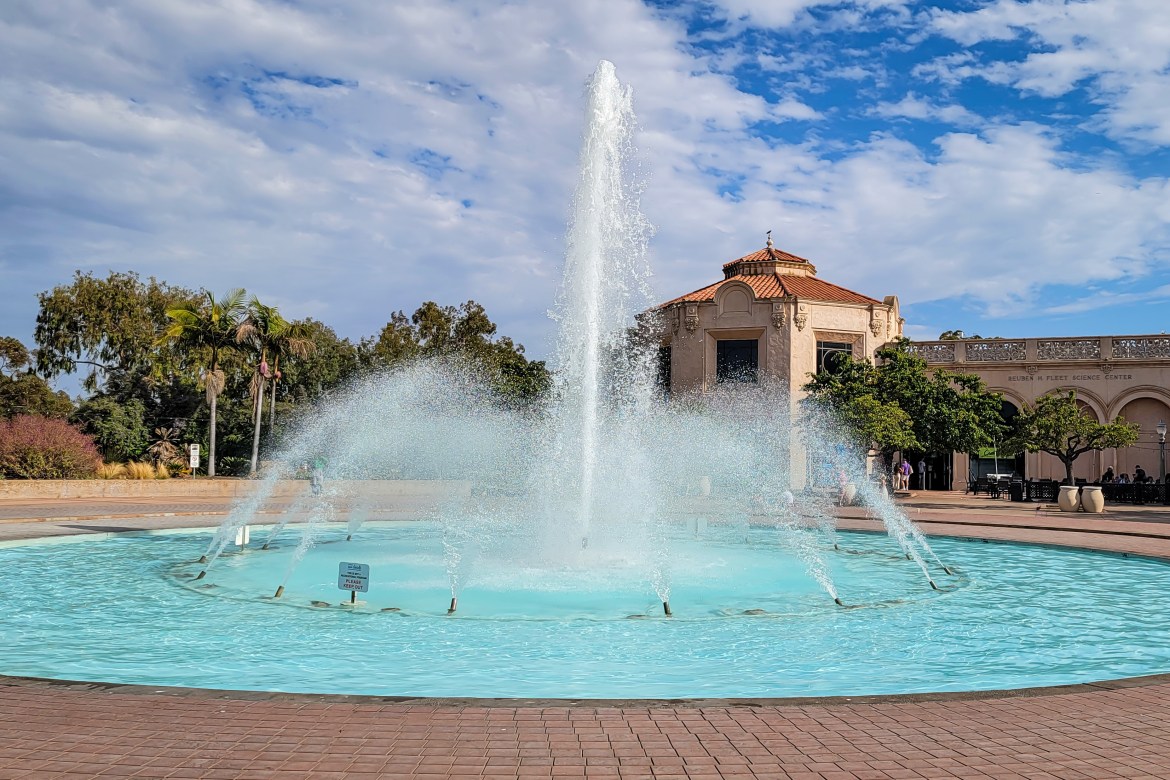
This park gleams: glazed tiles, glassy water, polished terrazzo, and sunlit stucco. A circular polarizer tames glare and deepens terracotta and sky, revealing texture in carved façades; a variable ND lets you slow the stroll—blur foot traffic beneath the colonnades, turn the Baér Fountain to silk, and keep the California Tower razor-sharp as palms sway.
🌊 Control Reflections & Punch Up Color
[sn_polarized] — Use to cut shine on the lily pond and greenhouse glass, enrich bougainvillea magentas, and pull cloud detail over the Organ Pavilion. Pro tip: rotate just shy of maximum—leave a hint of sparkle on water for that classic Balboa shimmer.
⏱️ Drag the Shutter in Broad Daylight
Neutral Density Variable Filter — Knock a few stops off to smooth fountain spray, ghost crowds along the Prado, and paint bike lights around Plaza de Panamá at dusk. Pro tip: start around 1/4–1s for people blur; go 2–10s for dreamy water.
Pack both for any trip: the polarizer reveals the scene; the ND sculpts time. Together, they’re a portable “wow” switch.
Photo Policy Reminders — No flash in museums (e.g., San Diego Museum of Art, Fleet Science Center, Museum of Us); tripods/stands are often restricted inside galleries and during Spreckels Organ performances. Drones are generally not permitted in most city parks. Stay off planted beds and historic tiles, mind posted rules at the Japanese Friendship Garden and Casa del Prado Theater, and be courteous to performers and wedding parties—share the light and everyone wins.
| 📍 Where & What to Shoot | ⏰ When to Shoot | 📷 How to Nail the Shot | 🏛 Tourist Traffic | 💡 Insider Tip |
|---|---|---|---|---|
| Botanical Building & Lily Pond | Sunrise | Use a tripod for mirror-smooth reflections; expose for highlights to retain sky texture. | Low | Arrive 30 minutes after sunrise to catch the first golden ripples across the pond. |
| El Prado Promenade | Mid-Morning | Balance shadow detail under arcades with the bright courtyards using slight HDR bracketing. | Moderate | Wait for performers or cyclists to pass for a dynamic human element within leading lines. |
| Japanese Friendship Garden | Late Morning | Shoot at f/2.8–4 to blur foreground blossoms; polarizer removes glare from ponds and leaves. | Low–Moderate | Focus on bridges reflected in water — a symmetry shot that pops with mid-day color. |
| Casa del Prado Façade | Afternoon | Use side light to emphasize carvings; telephoto compression makes reliefs appear sculptural. | Moderate | Shift a few feet off-center to avoid harsh shadow splits across faces and angels. |
| Spreckels Organ Pavilion | Golden Hour | Long exposure (1/10–1/4 s) blurs crowds while retaining column sharpness — tripod required. | High during concerts | Arrive early, center frame the archway, and use symmetry for classic postcard composition. |
| California Tower & Plaza de Panama | Blue Hour / Night | Expose for highlights; combine a low ISO with 4–8 s shutter for clean light trails from scooters. | Low | Back up toward the reflecting fountain for foreground sparkle and tower reflection. |
Meet the giants. Our Sequoia guide maps an easy, low-stress loop from the General Sherman Tree to Moro Rock, with timing tips for hush-quiet morning groves and flame-gold sunsets over the Great Western Divide. You’ll get trail picks for all levels, photo-forward advice for forest light and granite overlooks, and smart seasonal notes on snow, shuttle routes, and parking. If you’re road-tripping from Los Angeles, we’ve included a crisp 1–2 day game plan that balances big-tree awe with chill picnic pauses.
View Our Sequoia Guide
🌎 Cultural & Historical Context
Balboa Park’s story is as layered as the Spanish Revival façades that define it. Conceived for the 1915 Panama–California Exposition, it was designed to dazzle the world — a statement that San Diego had cultural weight, architectural taste, and a flair for theatrical beauty. The ornate towers, tilework, and courtyards drew from Old World Spain and Mexico’s colonial artistry, blending Moorish motifs with Californian sunlight to create a unique West Coast identity. What began as a temporary fairground quickly evolved into a permanent cultural epicenter, with museums, gardens, and performance venues filling in the once-ephemeral pavilions.
Today, Balboa Park remains San Diego’s cultural heart, its grand plazas still echoing with music, conversation, and the rhythm of footsteps on mosaic stone. Locals jog past history on morning runs, artists paint beneath colonnades, and families picnic under the same arches that once welcomed world expositions. For photographers and travelers alike, it’s a rare case where heritage and modern life coexist in the same light — living architecture that still serves the community it once sought to impress.
🗣️ Language & Local Lingo You’ll Hear
Balboa Park hums with a chorus of languages — a mix of English, Spanish, and Californian chill that perfectly reflects San Diego’s cross-border soul. You’ll hear “buenos días” exchanged as often as “good morning,” and local phrases that roll effortlessly between cultures. Photographers might overhear slang for shots and light, while locals sprinkle in surfside shorthand even in this landlocked oasis of museums and gardens. Understanding a few Spanish basics not only makes navigation easier but also earns smiles when you’re ordering coffee or chatting with street performers.
💡 Reason to learn a few words: You’ll connect faster, get warmer portraits, and maybe earn that subtle head nod that says, “You’re not just a tourist — you’re tuned in.”
| 🇺🇸 English | 🇲🇽 Español | 📖 Phonetic Spelling |
|---|---|---|
| Hello / Hi | Hola | OH-lah |
| Good morning | Buenos días | BWEH-nos DEE-ahs |
| Please | Por favor | POR fah-VOR |
| Thank you | Gracias | GRAH-syahs |
| Excuse me | Perdón | Pehr-DOHN |
| Where is…? | ¿Dónde está…? | DOHN-deh es-TAH |
| How much? | ¿Cuánto cuesta? | KWAN-toh KWEHS-tah |
| Restroom | Baño | BAHN-yoh |
| Water | Agua | AH-gwah |
| Photo | Foto | FOH-toh |
| Beautiful | Hermoso / Bonito | Air-MOH-so / Boh-NEE-toh |
| Goodbye | Adiós | Ah-dee-OHS |
| Good night | Buenas noches | BWEH-nahs NOH-chess |
| Cheers! | ¡Salud! | Sah-LOOD |
🍽 Where to Refuel Nearby
If Balboa Park is San Diego’s open-air museum, then its surrounding neighborhoods are the culinary exhibits that keep your senses buzzing long after the camera powers down. Food here is as diverse as the city’s architecture — a collision of Baja flair, Pacific freshness, and California creativity. You can snack on tacos under palms, savor decadent desserts that look like art installations, or dine in haciendas where chandeliers sway above mosaic-tiled courtyards. Every meal within a mile of Balboa Park has a story — and usually, a view worth framing.
🍽 Top Local Restaurants & Their Must-Try Specialties
Panama 66 (💲💲) — Nestled in the San Diego Museum of Art’s Sculpture Court, this open-air café makes lunch feel like a gallery exhibit. The menu leans fresh and locally sourced — think ahi poke bowls, grilled cheese with tomato bisque, and rotating craft beers from local microbreweries.
💡 Don’t miss their weekend brunch when live jazz spills across the plaza and morning light filters through the museum colonnade.The Prado at Balboa Park (💲💲💲) — A Balboa Park landmark inside the historic House of Hospitality, where Spanish-tiled fountains meet white-linen elegance. The Mahi Mahi fish tacos are famous citywide, and the Prado Paella blends saffron rice with local seafood and roasted peppers for pure culinary theater.
💡 Request a patio table near sunset — the courtyard light here could make your camera jealous.Extraordinary Desserts (💲💲) — This Bankers Hill dessert temple is exactly what it sounds like — cakes as tall as domes and plated like fine art. The Viking cake, layered with chocolate mousse, hazelnut praline, and caramelized nuts, is a photographic (and literal) showstopper.
💡 Arrive just before dusk to capture the golden light through its glass façade — and save room for the edible rose petals.Lucha Libre Taco Shop (💲) — Over in North Park, this wildly colorful taquería brings lucha-lucha energy to every bite. Its claim to fame? The Surfin’ California Burrito — grilled steak, shrimp, fries, and avocado wrapped in a golden tortilla that breaks all the rules in the best way.
💡 Snap a shot inside the “Champion’s Booth” — metallic pink walls, gold belts, and your reflection mid-bite make for legendary content.Born & Raised (💲💲💲💲) — A retro steakhouse-meets-modern rooftop in nearby Little Italy that takes indulgence seriously. Try the dry-aged ribeye, flamed tableside, or the tableside Caesar prepared with a flair worthy of its own photo reel. The skyline views here glow as the lights of San Diego flicker on.
💡 Book just before blue hour — your steak dinner will come with a free skyline timelapse.
🥩🥗☕🍰 Savor the Shot in San Diego’s Balboa Park
🗺️ Quick Itinerary for Capturing the Niche
Sunlight, arches, and fountains—pace your day so the park keeps handing you new light every hour.
Balboa Park shines when you treat it like a moving gallery: start with soft reflections at sunrise, weave through arcades and gardens as the sun climbs, and close with golden stonework and blue-hour sparkle. This one-day route balances photographer priorities (light, compositions, fewer crowds) with vacationer comforts (coffee breaks, easy walking, delicious meals, and optional tours). If you have two days, split the museums and gardens across mornings and save late afternoons for California Tower angles and Plaza de Panama people-watching. Families, couples, and solo shooters can all follow this pace without rushing—there’s time to breathe, compose, and actually enjoy the moment.
🕒 6:30 AM — Botanical Building & Lily Pond (Sunrise Reflections)
Slip in before the crowds and work mirror-calm water for symmetrical frames. Compose wide to include palms and the conservatory’s lattice, then switch to a mid-zoom for lily pads and koi abstracts. Non-shooters can enjoy a quiet stroll and coffee thermos time while you finish your long exposures.
🕒 Open: Grounds daily (exteriors accessible at dawn).
💵 Cost: Free.
💡 Insider Tip: Step back toward El Prado for a centered axis and use a tripod for 1–2s exposures.
🕒 8:00 AM — Coffee & Context: Small-Group Highlights Tour
Kickstart the day with stories behind the façades on the Balboa Park Highlights Small Group Tour with Coffee; it orients everyone and surfaces hidden angles you’ll want to revisit. Vacationers love the breezy narrative; photographers get scouting intel for later light.
🕒 Open: Morning departures; check schedule.
💵 Cost: From $— (tour pricing varies).
💡 Insider Tip: Jot quick shot lists as you go—then loop back at golden hour for the keepers.
🕒 9:45 AM — El Prado Arcades & Casa del Prado Details
Work the colonnades for shadow-and-light rhythm, then zoom in on angels, shells, and scrollwork at Casa del Prado. Non-shooters can browse nearby shops and enjoy street musicians along the promenade.
🕒 Open: Walkways daily.
💵 Cost: Free.
💡 Insider Tip: Expose for highlights and bracket a subtle HDR to keep the courtyards bright but natural.
🕒 11:00 AM — Japanese Friendship Garden (Serenity & Color)
Glide through bridges, koi ponds, and maples; use a polarizer to tame glare and deepen greens. It’s tranquil for travelers and a playground for composition nerds.
🕒 Open: Daily, late morning–late afternoon (varies by season).
💵 Cost: From $14 adults.
💡 Insider Tip: Shoot through leaves at f/2.8–4 for painterly foreground bokeh.
🕒 12:30 PM — Lunch at Panama 66 (Sculpture Court)
Fuel up with fresh salads, sandwiches, and local beer surrounded by outdoor art—easy for families and ideal for a mid-day reset. Photographers can frame diners against museum arches for candid, lively context.
🕒 Open: Daily, lunch through dinner (hours vary).
💵 Cost: $12–$25 per entrée.
💡 Insider Tip: Sit along the edge of the court for a clean backdrop of sculpture silhouettes.
🕒 1:45 PM — Spanish Village Art Center (Color & Character)
Work the pastel pavers, hand-painted doors, and artisan studios. Travelers can chat with makers while you chase textures and candid portraits (always ask politely).
🕒 Open: Daily, late morning–afternoon (studios vary).
💵 Cost: Free to wander.
💡 Insider Tip: Slip behind the studios for quieter courtyards and terracotta vignettes.
🕒 3:15 PM — Electric Scooter Tour with Pictures
Cover more ground with an easy glide past gardens and plazas on the Balboa Park Electric Scooter Tour with Pictures. Non-photographers will love the breezy sightseeing while you pick up dynamic motion shots and guide-snapped group photos.
🕒 Open: Afternoon departures; check schedule.
💵 Cost: From $— (tour pricing varies).
💡 Insider Tip: Ask to pause near the Cabrillo Bridge pullouts for skyline-plus-arches frames.
🕒 4:30 PM — Alcazar Garden & Cabrillo Bridge (Pre-Golden Geometry)
As the sun angles, tiles pop and arch shadows lengthen—work top-down patterns from the balcony, then hop to Cabrillo Bridge for layered palms and city hints. Great “wow” views for everyone.
🕒 Open: Daily.
💵 Cost: Free.
💡 Insider Tip: A mid-zoom compresses arches and skyline; keep verticals straight for architectural polish.
🕒 5:30 PM — Spreckels Organ Pavilion (Golden Hour)
If there’s a concert, settle in; if not, center the pavilion for symmetry while long exposures blur passersby. Families can relax on benches while you fine-tune compositions.
🕒 Open: Grounds daily; concerts typically weekends/seasonal.
💵 Cost: Free concerts; donations welcome.
💡 Insider Tip: Level your tripod at chest height for a classic, balanced frame.
🕒 6:30 PM — California Tower & Plaza de Panama (Sunset into Blue Hour)
Work the last warm light on the tiled dome, then stay for cobalt skies and sparkling fountains. Vacationers can people-watch or grab a patio table while you finish the day’s hero shots.
🕒 Open: Plaza daily; tower access by timed ticket when available.
💵 Cost: Plaza free; tower access from ~$10 with museum entry.
💡 Insider Tip: Back up toward the fountain for reflections; 4–8s shutter adds elegant light trails.
🕒 7:45 PM — Dessert Victory Lap at Extraordinary Desserts
Celebrate with the Viking cake or a seasonal showpiece—perfect for a final flat-lay or fork-in-motion reel before you call it. Non-shooters: this is your sweet reward for patient golden hours.
🕒 Open: Evenings; hours vary by day.
💵 Cost: $8–$16 per dessert slice.
💡 Insider Tip: Snag a window seat; street glow plus glass reflections make dessert shots pop.
🎥 Reels on the Road
Balboa Park in Motion 🎥
Balboa Park was practically designed for short-form magic — every plaza, arch, and fountain shifts mood with the light, creating instant storytelling moments in 15 seconds or less. This is a place where videographers and travelers can thrive side by side: the textures of old-world stone, the movement of fountains, the breeze through palms, and the occasional guitarist all lend natural rhythm to your clips. Think cinematic pans through architecture, quick transitions from shadow to sun, and those smooth reveals where history and color collide. Whether you’re using a gimbal, drone, or just steady hands, every turn of the path gives you new content — and that soft San Diego light does half the editing for you.
🎥 California Tower Sunrise Reveal — Begin with a low tilt-up from tiled floor to sky-blue dome as first light hits the tower. Best at sunrise.
🎥 El Prado Arcade Walkthrough — Glide your camera through repeating arches for hypnotic symmetry; end the shot with a performer strumming in frame. Best mid-morning.
🎥 Japanese Friendship Garden Bridge Cross — Slow-motion walk over the bridge, letting koi movement ripple below. Best late morning when reflections are sharp.
🎥 Cabrillo Bridge Drone Pass — Fly low across the arches toward the skyline for a seamless transition from park to city. Best golden hour.
🎥 Spreckels Organ Pavilion Crowd Sweep — Pan across the colonnades as music swells; end on a slow zoom toward the organ pipes. Best during evening performances.
🎥 Plaza de Panama Light Trails — Lock your camera low by the fountain to catch scooter and car lights streaking across twilight stone. Best at blue hour.
🌲 Wrap-Up: Why This Niche Matters
The Living Soul of San Diego’s Creativity 🌅
Balboa Park isn’t just a destination — it’s a living dialogue between art, architecture, and atmosphere. Few places in the U.S. blend cultural depth with visual drama so seamlessly: a Spanish Revival dreamscape where every arch tells a story, every garden feels cinematic, and every face in the plaza adds a brushstroke of humanity. This niche matters because it captures the heart of how travel and creativity intersect — where photographers become storytellers, and everyday visitors step into their own frame.
Spending a day here teaches more than exposure or composition; it’s a masterclass in seeing beauty in motion — in laughter bouncing through a colonnade, in afternoon light gilding stone, in history living effortlessly alongside modern joy. For travelers, Balboa Park is a reminder that the best journeys aren’t about escaping the world — they’re about finding it, fully alive, right where culture and sunlight meet.
🎞️ Frames From the Road: Scenes Worth Stopping For in San Diego’s Balboa Park

Behind the Lens
I’m Steve—a retired Army vet who traded ruck sacks for camera bags and now chases light across every latitude I can reach. From 110 point & shoot film camera beginnings to a Canon R5 Mark II and Mavic Pro II drone, I’ve logged shots in 36 countries and all 50 states, squeezing solo photo runs between corporate flights and longer adventures with my wife. Shutter Nomadica is where I share the hits, misses, and field notes so fellow roamers can skip the guesswork and grab the shot!