Wat Saket: Climbing Toward Light in the Heart of Bangkok
It’s impossible to miss Wat Saket, Bangkok’s golden-tipped crown shimmering above the city’s tangled streets like a quiet sentinel. The temple rises atop the Golden Mount, a man-made hill built centuries ago to house sacred relics, yet today it feels like an unexpected island of calm in a metropolis that never stops buzzing. The climb—300 gentle steps coiling beneath fluttering bells and banyan shade—becomes its own pilgrimage of sound and light.
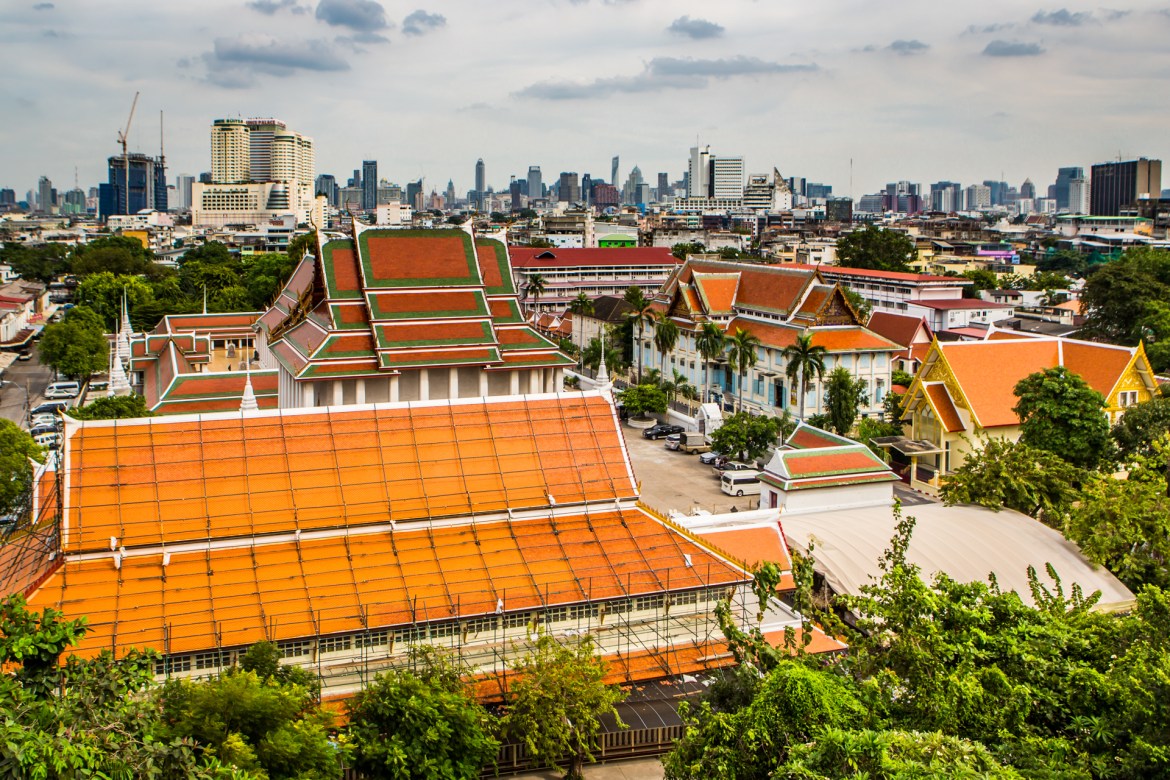
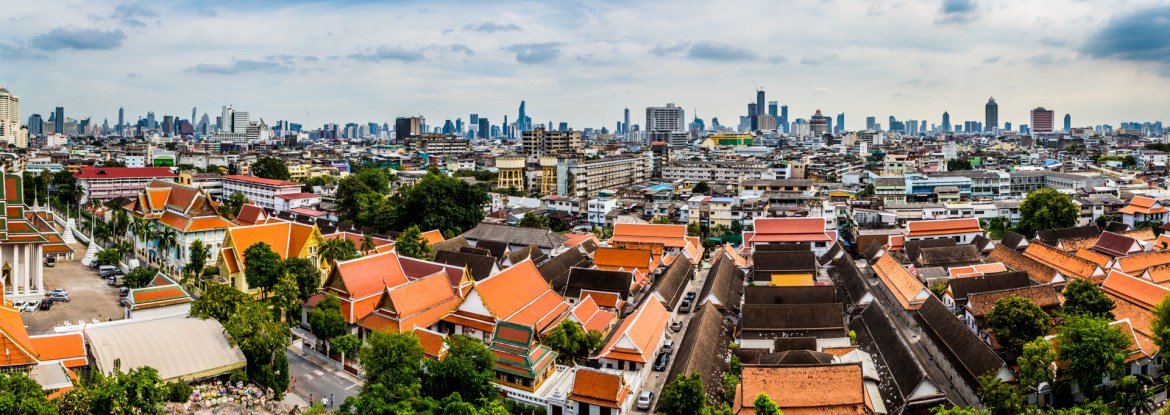
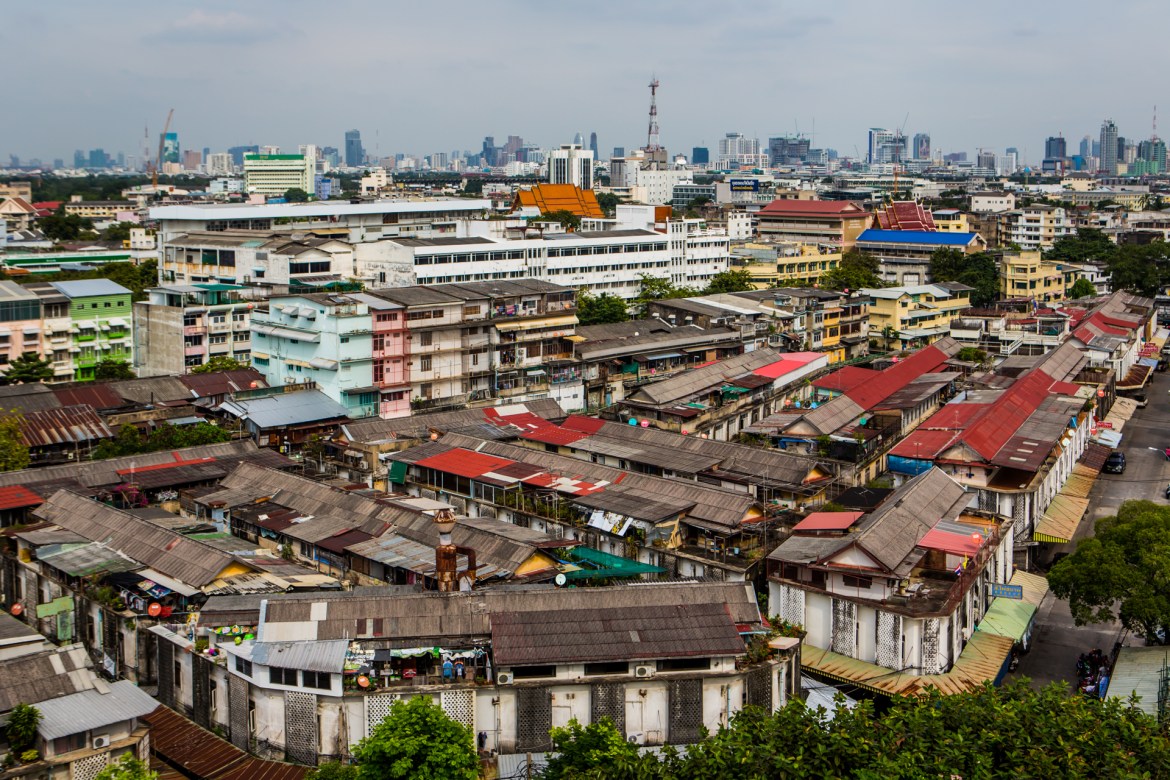
From the summit, the reward is pure Bangkok poetry: 360-degree panoramas over old temples, glinting skyscrapers, and the slow river haze beyond. Come at sunset, when saffron robes catch the last gold streaks of day and the air hums with the city’s changing rhythm. For travelers, it’s a moment of stillness in the swirl. For photographers, it’s a stage of shifting shadows, echoing chants, and gilded geometry. Whether you arrive with faith or a lens, Wat Saket gives you both a view and a feeling that lingers long after you descend its steps.
The story of Wat Saket is one of persistence—Bangkok’s golden phoenix rising from failure into faith. Its roots stretch back to the Ayutthaya Kingdom, but the temple we know today took shape under King Rama I, founder of modern Bangkok, who restored it as part of the new capital’s sacred core. Later, King Rama III dreamed of building a grand chedi atop the city’s swampy ground, but the soil refused to cooperate—the structure collapsed, leaving behind a mound of rubble that would become the Golden Mount. Instead of abandoning the idea, successive kings transformed the accident into art, reinforcing it with brick and stucco and finally crowning it with a golden stupa gleaming in the tropical sun.
Crafted with humble materials—clay, bricks, and local lime plaster—the Golden Mount represents the Thai virtue of turning impermanence into beauty. Inside, sacred Buddha relics from India, gifted in 1899, connect Bangkok’s spiritual lineage to the very heart of Buddhism. Over time, Wat Saket evolved into a community anchor; during 18th- and 19th-century epidemics, it served as a cremation ground, and locals still visit to honor lost loved ones with lanterns and flowers. The temple’s annual Loy Krathong festival transforms the quiet hill into a glowing sea of light, a moment when city dwellers and pilgrims alike climb the 300 steps together—praying, photographing, and breathing as one. Today, for Bangkok residents, Wat Saket isn’t just a monument; it’s a ritual, a view, and a reminder that grace often grows from imperfection.
🏛️ Story & Significance: The Soul of Wat Saket
There’s a serenity to Wat Saket that belies its turbulent origins. The temple traces back to the Ayutthaya period, long before Bangkok rose as Thailand’s capital, but it was King Rama I who rebuilt it into the sacred site we know today. The famed Golden Mount itself came later—a monumental feat started by King Rama III, who envisioned a towering chedi but found the swampy soil of old Bangkok too unstable for such ambition. The original structure collapsed, leaving behind an earthen mound that nature soon claimed. Later, Rama IV and Rama V turned that failed foundation into brilliance, encasing it in white walls and crowning it with a golden stupa that gleams across the skyline—a phoenix reborn in gold.
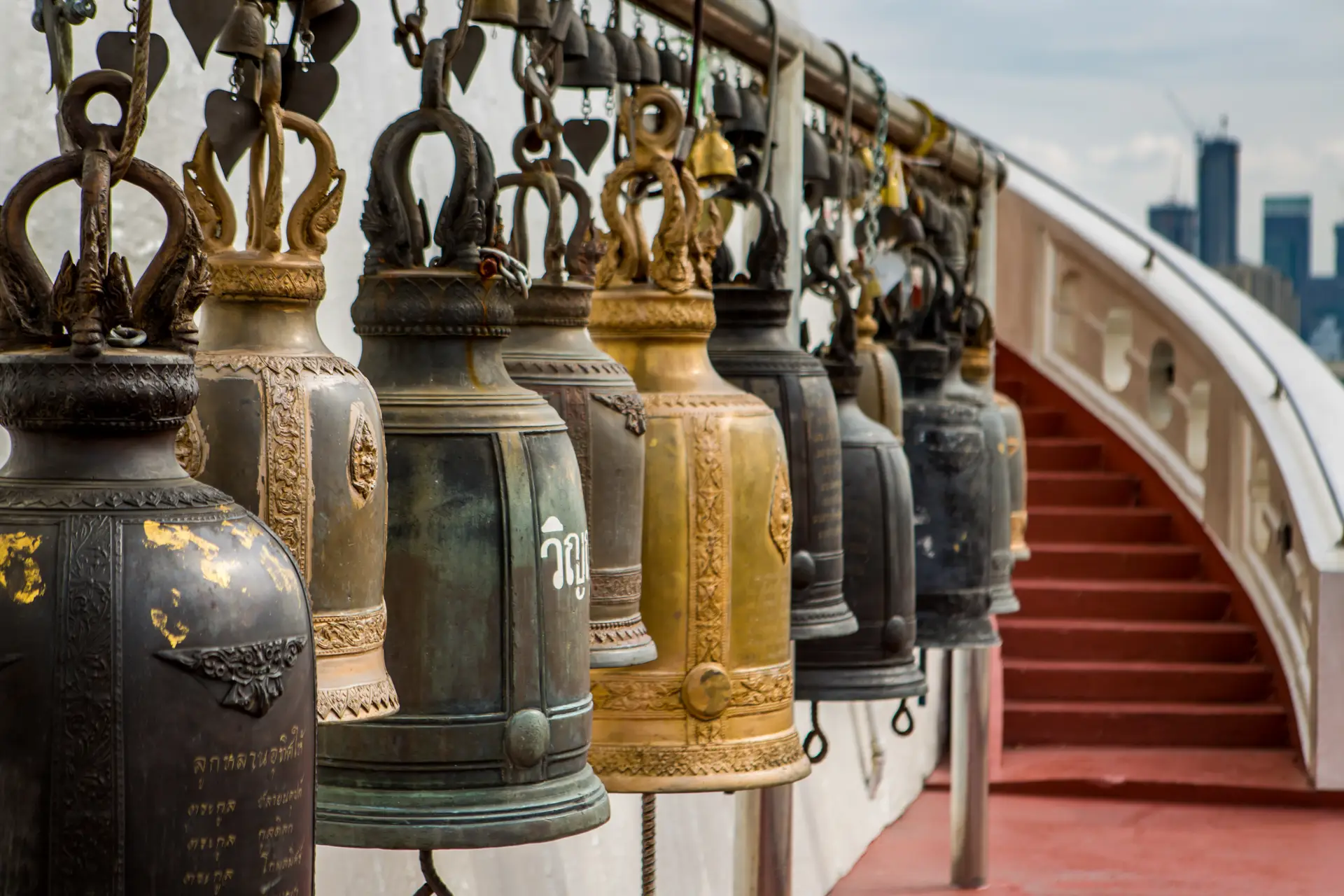
Architecturally, Wat Saket is a study in contrasts—simple in form yet rich in symbolism. The spiraling ascent past hundreds of bells, the rhythmic clang echoing with each step, evokes both the Buddhist cycle of rebirth and the photographer’s chase for perspective. Each curve of the path reveals new compositions: weathered statues peeking through banyan roots, saffron robes fluttering in soft morning light, and the glint of the chedi framed by prayer flags. Inside, the relic chamber atop the mount holds fragments believed to be of the Buddha himself—a luminous core that attracts both devotees and dreamers seeking peace amid Bangkok’s pulse.
Today, the temple beats with a modern spirit that honors its ancient soul. During Loy Krathong, Wat Saket transforms into a glowing carnival of faith—lanterns floating skyward, candles reflected in visitors’ eyes, and music rolling through the night air. Yet even on ordinary days, it offers a quiet reprieve for monks, artists, and wanderers. For photographers, the temple’s golden hour magic is unmatched: rooftops flushed with amber, the city fading into blue haze, and the golden chedi radiant against twilight. Wat Saket endures not just as a temple, but as Bangkok’s spiritual balcony—where light, devotion, and perspective meet.
🧠 Fascinating Facts & Hidden Meanings
Beneath the serene chants and golden light of Wat Saket, layers of meaning ripple through every stone and sound. This temple is more than a vantage point—it’s a living archive of Bangkok’s evolution, blending faith, artistry, and resilience. Each step up the Golden Mount mirrors a spiritual ascent, while each bell chime reminds visitors to stay present amid chaos. For travelers, it’s an architectural marvel; for photographers, a study in geometry and devotion. And for locals, it’s a heartbeat of continuity—proof that even in a fast-moving city, tradition still finds its way skyward.
Five Did-You-Knows
Wat Saket’s soil hides history. When Rama III’s original chedi collapsed, its ruins formed the base of the modern Golden Mount—literally, Bangkok’s faith rising from its own rubble.
It once served as a cremation ground during late-18th-century epidemics, earning the haunting nickname Wat Sakae Charn (“Temple of the Dead”). The quiet atmosphere you feel here is steeped in compassion for lives once lost.
The chedi enshrines Buddha relics gifted by the government of India in 1899, placing the temple within Buddhism’s global sacred geography.
Wat Saket hosts one of Thailand’s largest annual temple fairs each November during Loy Krathong, when the mount glows under thousands of lanterns—a dreamlike scene for long-exposure photography.
The panoramic view is uniquely circular. Unlike most Thai temples, Wat Saket’s summit walkway loops fully around the chedi, letting photographers shoot every cardinal direction without obstruction.
What Kids Love
Children love the gentle spiral climb—ringing bells, spotting bright koi in ponds below, and counting how many “ting-ting-ting” echoes they can make before reaching the top. The 300 steps are shallow and safe, making it a surprisingly fun family micro-adventure that ends with ice cream stalls and cold coconut water waiting below.
A few links and ads here are affiliate portals. If you click through and snag something, you’ll be fueling my next photo-quest at no extra cost to you. Thanks for keeping the adventure rolling!
To deepen the story, pair your visit with a Bangkok by Private Guide: Full Day Tour In and Around — a personalized route through the city’s oldest quarters that often includes Wat Saket’s summit stop. Or take the Bangkok Highlights: Grand Palace & Three Famous Temples for a day weaving through marble courtyards and incense haze—ending with golden-hour shots from the mount itself. Both experiences keep the story connected, blending devotion, design, and street-level life into one sweeping frame.
📌 Plan Your Visit: Hours, Tickets & What to Expect
Visiting Wat Saket feels like pressing pause on Bangkok’s blur. The temple sits near the edge of the city’s old quarter, about a 15-minute drive from Khao San Road, yet the mood couldn’t be more different. As you approach, the golden stupa peeks between rooftops like a beacon—an unhurried call to ascend. The entry path begins beneath a shaded archway where birds and monks share the morning air. Every few steps, the soundscape changes: water trickling, bells chiming, then city horns fading below. It’s an easy climb of about 300 steps, wrapped in gentle curves and punctuated with shrines that reward you for slowing down.
The best hours to visit are early morning (around 7:30–9:30 AM) or late afternoon before sunset, when Bangkok’s humidity softens and the light plays magic tricks across the gold dome. Photographers can expect richly saturated tones as the city glows beneath you. Modest dress is required (shoulders and knees covered), and shoes come off at the chedi’s entrance. While Wat Saket is rarely crowded, the Loy Krathong festival in November draws immense local turnout—worth the squeeze for photos of lanterns, offerings, and monks in rhythmic procession.
🎫 Ticketing Tips:
Entrance to the Golden Mount is about 50 THB (≈ $1.40 USD), cash only. Arrive early if you want parking close to the gate, or pair your climb with a tuk-tuk drop-off from Rattanakosin Island. No reservation needed unless joining a private or guided tour.
🎉 Festival / Peak-Day Watch:
The Loy Krathong temple fair lasts roughly ten days each November. Expect crowds, food stalls, music, and vibrant night lighting—ideal for handheld night shots but best enjoyed before 7 PM when the stairs narrow with worshippers.
| 📍 Location | 344 Chakkraphatdi Phong Road, Pom Prap Sattru Phai, Bangkok, Thailand |
| 🕒 Opening Hours | Daily, 7:30 AM – 7:00 PM |
| 💵 Entrance Fee | 50 THB (≈ $1.40 USD) |
| 🚶 Climb Distance | ≈ 300 steps / 10–15 minute ascent |
| 📸 Best Shooting Time | Sunrise & Golden Hour (5:45 – 6:15 PM) |
| 🎧 Audio Environment | Soft chanting, ringing bells, and breeze through prayer flags |
| 🕌 Dress Code | Shoulders & knees covered; remove shoes at the chedi |
| ☕ Nearby Café | Baan Bat Café – Thai coffee & street view of the mount |
🚶 Getting There, Entry & Accessibility
Reaching Wat Saket feels like slipping between eras—Bangkok’s ultramodern skyline gives way to the textured calm of the old city. The temple is easily accessible yet tucked just far enough from the main tourist trails to retain its meditative aura. From Khao San Road or Ratchadamnoen Avenue, it’s a quick 10–15 minute taxi or tuk-tuk ride; from Siam or Silom, expect 25–30 minutes depending on traffic. The approach along Boriphat Road offers some of the most photogenic first glimpses of the chedi, especially in morning mist. Street parking is limited but navigable, and the entrance path begins at ground level beside small souvenir kiosks and incense vendors.
Parking & Drop-offs
There’s limited parking along Boriphat Road, just before the main temple gate. Early arrivals (before 9 AM) usually find spots, though most travelers prefer to arrive by tuk-tuk or Grab taxi and get dropped at the archway entrance. Tour groups typically unload farther down the road, so independent travelers often enjoy a quieter start.
Accessibility Notes
The climb to the top includes about 300 shallow steps without elevators, but handrails and shaded rest areas make it manageable for most visitors. Those with mobility limitations can still enjoy the lower grounds, prayer halls, and reflection ponds, which offer peaceful angles for photography and shaded seating. Restrooms and refreshment stands are located mid-way and near the exit.
Wayfinding Inside
Once through the entry arch, follow the spiral path clockwise around the hill—signage in both Thai and English keeps navigation simple. Halfway up, you’ll pass small shrines and bronze bells inviting gentle rings. At the summit, move counter-clockwise to photograph the skyline’s four directions, then descend via the opposite staircase for a smoother crowd flow. Monks are often present for blessings; approach respectfully, and remember: photos are welcome outdoors but discouraged inside the relic chamber.
🧭 How to Explore: Smart Routes for Any Timeline
60-Minute Essentials — one golden loop to feel the mount.
Enter under the shaded arch and follow the clockwise spiral, keeping a gentle, steady pace so the temple’s soundscape changes with you: water murmurs, bells trill, Bangkok softens below. Pause at the mid-way shrines to frame the golden chedi through banyan leaves—an easy handheld shot even in morning shade. At the summit, walk the full circular terrace for 360° city panoramas, shooting wide to capture rooftops and river haze, then tighter for chedi details against the sky. Duck inside the relic chamber briefly (no flash, no close portraits), then step back out to let the breeze lift the prayer flags into your composition. Descend the opposite staircase to balance crowd flow, lingering at the koi ponds for a last calm frame before you rejoin the city.
90–120 Minutes Deeper Look — slow climb, layered stories, better light.
Begin earlier (around 8 AM) or aim for late-afternoon glow; both windows soften contrast and keep stairs comfortable. Take the ascent in short “stations”: bells and flags for texture, tree-root shrines for organic framing, and wall niches where saffron robes often catch side light. At the top, work a cardinal-points sequence—north for old Bangkok rooftops, east for hazy spires, south for the skyline, west for the warmest late light—letting each direction anchor a distinct narrative panel. After the terrace, explore the lower grounds: quiet prayer halls, small courtyards, and vendor lanes where incense smoke and sunlight create easy backlight silhouettes. Finish with a cool drink outside the gate and review your set; this route yields a tidy mix of vistas, details, and human moments without rushing.
Cruise Clock (2–3 Hours) — contemplative pacing with city pairings.
Arrive an hour before sunset to watch Wat Saket shift from gold to blue hour, and budget time to sit—truly sit—on the terrace ledge as the city lights awake. Work triptych sequences: (1) warm pre-sunset chedi, (2) twilight cobalt with luminous stupa, (3) night city sparkle with bell silhouettes in the foreground. Between light changes, circle down to the grounds for street-level vignettes—offerings, lanterns, and soft ambient music during festival periods—then climb again for the after-glow. If you’re pairing neighborhoods, slide to nearby Rattanakosin for riverside snacks or a post-shoot stroll; the contrast between terrace calm and river bustle makes a perfect closing beat. End with a final handheld night frame looking back at the mount—Bangkok’s lighthouse of quiet—before heading out.
🖼️ Spaces & Highlights You’ll Love
Wat Saket rewards you in layers, revealing quiet vignettes between bursts of skyline drama. The experience moves from tactile—cool stone, fluttering flags, the bright ring of bells—to cinematic: a slow tilt from city roofs to gleaming gold. Think of it as three acts: the meditative spiral ascent, the luminous golden chedi and relic chamber, and the sweeping summit terrace that frames Bangkok in all directions. Unhurried travelers will find shady pauses and soft breezes; photographers will find rhythm in repeating lines, prayer ribbons, and changing color temperature. Let the temple set the pace—this is a place to gather moments, not just shots.
The Spiral Ascent — bells, banyans, and a slow-breath climb.
This gentle, clockwise path is the temple’s prologue, guiding you past koi ponds, tucked shrines, and rows of bells inviting a light ting. Notice how the curve reveals the chedi in fragments; compose with partial frames—gold through banyan leaves, flags as foreground motion. Sound becomes part of the scene: water trickle, city hush, and the occasional chant folding into your steps. The light is kindest in early morning; aim for side-lit textures on stone and roots, and keep your shutter ready for saffron robes slipping through slats of shade. Pause at the mid-landing alcoves—they’re natural breathers and perfect for a portrait with depth behind the subject.
The Golden Chedi & Relic Chamber — Bangkok’s beacon, up close.
Crowned in gold, the chedi is both subject and stage, reflecting warm tones that shift from honey to ember as the sun slides. Walk its base slowly to find repeating lines—balustrades, lamp posts, prayer ribbons—that anchor your compositions. Step respectfully into the relic chamber for a quiet minute; the light is low and contemplative, so go high ISO and protect the mood. Outside again, work detail studies: the chedi’s gold against blue sky, bell silhouettes, and hands-in-prayer moments. This is where reverence meets geometry—give it time and you’ll come away with frames that feel still, even in a city that never is.
The Summit Terrace — a 360° balcony over old and new Bangkok.
The top loop is your panorama playground, a continuous walkway that serves every compass point with a different city story. Start with wide lenses for skyline context, then switch to mid-range for rooflines, canal glints, and temple spires layered in haze. Golden hour paints the city warm; blue hour pulls a cobalt backdrop behind the glowing stupa—work both for a tidy, two-tone set. Winds often tease the prayer flags here; time your shots so a ribbon arcs into the frame like a leading brushstroke. When the lights flick on below, grab a final handheld at 1/60–1/125—Bangkok sparkling, the chedi calm, and you between them, balanced.
Hidden Angles (quick hits):
Terrace corner niches for flag-in-foreground panoramas.
Mid-stair alcove window framing a chedi reveal.
Lower-grounds reflection in shallow koi ponds (polarizer helps).
Sunset silhouettes of bell yokes against the city.
Post-rain puddles for golden stupa mirror shots near the exit path.
🍽️ Nearby Pairings & Pleasant Pauses
Just beyond Wat Saket, you’ve got easy, low-stress add-ons that keep the mood gentle and the feet happy. Stroll five minutes to Baan Bat—the monk-bowl artisan lanes—where copper clinks and smiling craftspeople make a soft, human counterpoint to skyline panoramas (late afternoon light warms the alley textures). Hop a short tuk-tuk to Loha Prasat (Wat Ratchanatdaram) for cloistered corridors and graphic shadows, then drift toward Rommaninat Park for benches under tall trees while kids burn off steam. If a view with a cup calls, slip into a nearby café facing the mount; come back at blue hour to watch the chedi glow while the city blushes cobalt. Travelers get comfort and calm; photographers get texture, rhythm, and changing light—without ever breaking the day’s easy cadence.
Family-Friendly Stops
Courtyard benches around the lower grounds and shaded pockets near the koi ponds are perfect cooldown zones, with ice-cream carts and coconut water close by. Strollers are fine on the flat temple approaches and parks nearby, but the 300-step climb isn’t stroller-friendly—bring a lightweight carrier for little legs. Rommaninat Park adds open paths and soft lawns for a breather, while a quick café stop keeps everyone sugared and smiling. Plan your climb early or late to dodge midday heat and keep the family pace mellow.
Rain/Heat Refuge
When Bangkok turns steamy or a shower rolls through, duck into Loha Prasat’s shaded cloisters or the quieter prayer halls near Wat Saket’s base for breezy arcades and soft, even light. Nearby cafés offer reliable A/C, cold drinks, and windows toward the mount so you can wait out a squall without losing the view. Museums and libraries around Rattanakosin (a short tuk-tuk away) provide dry, calm rooms to reset before you resume. After the rain, surfaces gleam—step back outside for reflective puddle shots and a freshly washed golden stupa.
🎥 Reels on the Road
🎥 Reels on the Road
Wat Saket was made for motion—its layered climb, golden symmetry, and natural soundtrack turn even a 10-second clip into a story. Every curve of the staircase gives a door-reveal moment, the sound of bells punctuating your steps while sunlight filters through banyans. Let ambient sound lead—monk chants, soft wind, distant horns—because the temple’s calm carries better than any soundtrack. Experiment with light shifts: morning mist, golden flare, and blue-hour glow all play differently against the gold stupa. Keep edits slow and fluid; your reel should feel like breathing, not cutting.
🎥 Sunrise walk-in down the main axis — follow the spiral steps as morning light drifts across the walls and bells shimmer.
🎥 Balustrade sweep at golden hour — pan from fluttering prayer flags toward Bangkok’s skyline wrapped in amber haze.
🎥 Reflection lock-off after rain — hold a steady frame as the chedi mirrors in puddles, ripples dancing with sound.
🎥 Lantern glow during Loy Krathong — focus tight on hands releasing offerings, background bokeh of city lights.
🎥 Bells in motion sound capture — close-mic a single row of bronze bells for a minimalist audio reel.
🎥 Twilight reveal from terrace corner — rotate slowly to unveil the glowing stupa above the awakening city.
🧳 What to Pack for Picture-Perfect Memories
Climbing the Golden Mount is easygoing but warm work, so pack light and practical. A refillable water bottle, wide-brimmed hat, and breathable attire that covers shoulders and knees will keep you comfortable and respectful in temple zones. Bring a pair of thin socks—you’ll remove shoes before entering the relic chamber, and stone floors can heat up fast under the Thai sun. For photographers, a soft microfiber cloth keeps lenses clear of humidity haze, and a discreet stabilizer or compact tripod substitute helps steady shots without drawing attention. Keep your kit minimal and quiet—Wat Saket rewards travelers who move slowly and blend in with the hush of bells and breeze.
👉 The Nomad’s Kit: Gear That Earns Its Miles
Canon RF 15–35mm f/2.8L — Perfect for tight spiral stairways, close-quarters around the golden chedi, and sweeping Old-City skylines from the upper terrace without backing into the balustrade.
Canon RF 24–105mm f/2.8L — Your street-to-stupa workhorse: candid monk portraits (with permission), mid-tele shots of prayer bells and lotus offerings, and quick market vignettes along Boriphat Road on the walk in.
Canon RF 100–500mm f/4.5–7.1L IS USM — From the summit, compress Bangkok’s rooftops and temple spires; isolate the Giant Swing or Wat Arun against sunset haze without leaning over the edge.
Lowepro ProTactic BP 350 AW III — Compact, temple-friendly sling that glides through security and keeps filters, scarf, and water organized on the climb.
Peak Design Travel Tripod — Deploy off-site at Phu Khao Thong Park or nearby bridges for blue-hour light trails along Ratchadamnoen Klang; keep legs short or stow it on the terrace if staff request.
JOBY GorillaPod 3K Kit — Clamp to terrace railings or stair landings for steady long exposures of fluttering flags and city-light panoramas—tiny footprint, big stability in the evening breeze.
Cut Glare. Shape Time. Make Every Frame Sing.
Wat Saket glows—gold leaf, whitewashed stucco, lacquered wood, and mirror-bright tiles. A circular polarizer tames glare on gilded surfaces and glass reliquaries while pulling color from Bangkok’s often hazy sky. A variable ND lets you slow the pilgrimage: blur devotees circling the chedi, smooth the little waterfall on the ascent, and turn traffic far below into silky ribbons as the sun drops behind the Old City.
🌞 Control Reflections & Punch Up Color
Circular Polarizer Filter — Reduce hot spots on the golden chedi and shrine glass, deepen blue slivers between clouds, and keep leafy courtyards rich after a rain shower. Pro tip: rotate gently—over-polarizing wide skies can cause banding and may dull the warm sheen of gold leaf.
⏱️ Drag the Shutter at Golden Mount
Neutral Density Variable Filter — Take 3–6 stops off to blur visitors on the spiral stair, soften the grotto-style cascades midway up, and capture twilight light trails along Mahannop Rd. from the top. Pro tip: start around 1/4–1 s for people-motion; push to 2–10 s for silky water and sunset cloud streaks.
Pack both for any Bangkok day: the polarizer reveals the sanctum’s textures; the ND sculpts time. Together, they’re your portable “wow” switch.
Photo Policy Reminders — No flash inside the ordination hall or shrine rooms; cover shoulders and knees and remove shoes where signed. Tripods/stands may be restricted on narrow terraces—follow staff direction and never block the circumambulation path around the chedi. Drones are not permitted. Be discreet when photographing worshippers, avoid touching offerings or bells in mid-ritual, and mind footing on dewy steps—golden views are best enjoyed with both hands free.
💰 On-Site Costs Snapshot
Even among Bangkok’s grand temples, Wat Saket remains refreshingly affordable—proof that serenity doesn’t need a luxury price tag. Most of your spend goes toward small comforts: a modest entry fee, a cool drink, and maybe a few baht dropped into the bell boxes for luck. Photographers will find that the real value lies in time, not tickets—the longer you linger, the better the light. The temple’s fair pricing also makes it an easy add-on to any Bangkok day tour without budget stress. Whether you’re chasing golden-hour shots or soaking up spiritual calm, every baht here feels well spent.
| 🎟️ Entry | 50 THB (≈ $1.40 USD) |
| 🧭 Guided Access (Private Tour Add-On) | Included with most Bangkok temple tours (≈ $30–60 USD total day rate) |
| 🥤 Drinks & Snacks | 20–50 THB ($0.60–$1.40 USD) for coconut water or local coffee near the gate |
| 🕯️ Offerings & Donations | Optional 20–100 THB ($0.60–$3 USD) — supports temple upkeep and monks’ needs |
| 📸 Photography | Free — no permit required for handheld cameras and small stabilizers |
🤝 Etiquette & Respectful Visiting
Grace at Wat Saket begins with quiet presence. Dress modestly—shoulders and knees covered, hats off once you enter temple grounds, and shoes removed before stepping into any sanctum. Keep voices low on the climb; the bells are meant for soft chimes, not clamor, and monks’ chants deserve space to breathe. If you arrive during prayers or offerings, stand back, lower your camera, and simply observe for a moment—participation here means respect, not performance. Avoid touching sacred relics or statues, and never point your feet toward altars when sitting. Most importantly, let the temple’s rhythm set yours: move slowly, smile gently, and leave every step a little quieter than you found it.
🕰️ Historical Timeline at a Glance
Wat Saket’s story is literally built into its hill: collapsed ambitions became the Golden Mount’s foundation, and royal restorations turned failure into a gleaming beacon. Knowing these milestones helps you spot materials (earthen core under white stucco), motifs (Rattanakosin-era ornament), and room uses (the relic chamber’s quiet centrality versus open-air terraces for processions).
| 📅 Year / Era | 🏛️ Milestone | 👀 What to Notice On-Site |
| Ayutthaya Period (pre-1767) | Early temple presence before Bangkok became the capital. | Simple forms beneath later layers; echoes of older shrine layouts. |
| Late 1700s — Reign of Rama I | Temple rebuilt within the new Rattanakosin capital plan. | Classic Rattanakosin ornament and axial approaches around the base. |
| Early–Mid 1800s — Rama III | Ambitious large chedi collapses on swampy soil; earthen mound remains. | The hill’s earthen core under today’s white stucco terraces. |
| Mid–Late 1800s — Rama IV–V | Golden Mount formalized with ring walls; stupa crowned atop the mound. | Spiral processional path, drum-beat rhythm of bells, and tiered terraces. |
| 1899 | Buddha relics from India enshrined in the chedi. | Quiet relic chamber at the summit; shoes-off zone and soft lighting. |
| Early 20th c. | Structural strengthening and stucco refinements. | Contrast of masonry + stucco; clean white curves against gold. |
| Mid–Late 20th c. | Ongoing conservation; improved stairs and visitor flow. | Uniform step heights, handrails, and shaded rest landings. |
| Annual (Nov.) | Loy Krathong temple fair becomes a major city tradition. | Night lanterns, processional routes, and festival lighting rigs. |
| 21st c. — Present | Preservation with visitor amenities and interpretive signage. | Bilingual signs, defined photo terraces, and managed crowd flow. |

📓 Through My Lens: Field Notes from the Road
By the time I reached Wat Saket, I’d already been wandering Bangkok’s maze for hours—sweating through alleyways, chasing light across rooftops, pausing at every shrine and street vendor that caught my eye. The sun was relentless, and finding the entrance took a moment of patient circling—tuk-tuks whirring, bells faint in the distance like a compass call. When I finally stepped beneath the archway, the bustle thinned into rhythm: the clink of metal bells, soft chants, and that golden glow floating above the city. Armed with my two Canon 5D Mark III bodies—one fitted with a medium zoom, the other stretching deep into long-range—I probably looked like a slightly over-prepared, National Geographic–wannabe tourist with a mission. Yet the scene made the gear feel justified: lines, light, and layers everywhere. The way sun bounced off the chedi and slid over prayer flags turned every step into a new frame. Within minutes, I forgot the crowd and the heat—just me, the lenses, and the heartbeat of a city seen from above, where even chaos looked perfectly composed.
☀️ When to Go & Weather Sweet-Spots
Golden Mount, Golden Light — Timing Wat Saket for Comfort and Calm
Bangkok’s heat is real, but Wat Saket rewards those who work with the weather, not against it. Mornings bring cooler air and soft side-light on the Golden Mount, while late afternoons offer breeze corridors on the terrace and that rich amber glow. In the rainy season, fast showers can clear crowds and leave reflective puddles that double the chedi in your frame—just shelter under arcades and resume as the sky rinses clean. The cool season (roughly Nov–Feb) is the sweet spot for comfort, though festivals spike foot traffic; shoulder months deliver balance if you time sunrise or golden hour. Whatever the season, shade on the spiral path and frequent rest ledges make the climb kind, so plan your visit around light first, temperature second.
| 🌞 Season | 🧘♂️ Vibe Check | 🌦 Rain Factor | 🏛 Tourist Traffic |
| 🌴 Winter (Nov–Feb) | Cooler mornings, crisp horizons; festival buzz adds energy without losing serenity. | Low to moderate; brief sprinkles possible near November festivals. | High around holidays and Loy Krathong; arrive early or for sunset. |
| 🌸 Spring (Mar–May) | Hot but photogenic haze; slower climbs, longer terrace pauses. | Low; occasional heat-storm relief late day. | Moderate; heat thins midday crowds—aim for sunrise or late golden hour. |
| ☀️ Summer (Jun–Aug) | Lush greens, dramatic clouds, quick showers that turn to sparkle. | Moderate to high; carry a compact umbrella for 20–40 minute bursts. | Moderate; showers cycle visitors and open clean viewpoints post-rain. |
| 🍂 Fall (Sep–Oct) | Moody skies, beautiful after-rain reflections, comfortable evenings. | High but helpful for cooling and puddle reflections. | Low to moderate; great shoulder-season light with fewer lines. |
🌧️ Rainiest Months: September–October (quick, heavy showers; superb reflections afterward)
🎯 Peak Tourist Season Months: December–January and festival week in November
🏖️ Off-Season Sweet Spot Months: Late October–early November and late February–March (cooler edges, softer crowds)
💡 Insider Pro Tip: If a shower starts, hold your spot under an arcade—post-rain air clears haze, flags lift in the breeze, and the golden stupa glows against freshly washed blue.
🛡️ Practical & Safety Notes
Wat Saket is one of Bangkok’s gentler temple climbs, but a few smart habits keep your visit stress-free. Keep valuables zipped and front-facing when weaving through the narrow entry lanes—crowds thicken near the gate, especially during festival days. After rain, tiles on the upper terraces can turn slick, so tread slowly and use the handrails on the descent. The temple’s closing hour (7 PM) prompts a polite crowd release—step aside at landings to let tour groups pass and enjoy a quieter final view. If you lose your party, regroup easily at the base courtyard near the koi ponds, where benches, shade, and drink stalls make a calm rendezvous before you rejoin the Bangkok flow.
🎞️ More Frames From the Road: Scenes Worth Stopping For
🗣️ Cheat Sheet for Friendly Encounters while in Bangkok
A few Thai words go a long way at Wat Saket, where warmth and courtesy are the language of welcome. Even small efforts—smiling, greeting monks softly, thanking vendors—earn genuine smiles and open doors. Thai tones may feel musical, but intent matters more than precision; just keep your voice gentle and your body language relaxed. Try a few of these basics and you’ll find Bangkok becomes even friendlier, one “sawasdee” at a time.
| 🇺🇸 English | 🇹🇭 Thai | 📖 Phonetic Spelling |
| Hello (male/female) | สวัสดีครับ / สวัสดีค่ะ | Sah-wah-dee krap / Sah-wah-dee kah |
| Thank you | ขอบคุณ | Khop khun |
| Excuse me / Sorry | ขอโทษ | Khor-thot |
| Yes / No | ใช่ / ไม่ใช่ | Chai / Mai chai |
| Please | กรุณา | Ka-ru-na |
| How much? | ราคาเท่าไหร่ | Ra-kha tao-rai |
| Where is...? | อยู่ที่ไหน | Yoo tee nai |
| Beautiful | สวย | Sŭay |
| Delicious | อร่อย | A-roi |
| Water | น้ำ | Naam |
| Where is the restroom? | ห้องน้ำอยู่ที่ไหน | Hong naam yoo tee nai |
| Goodbye | ลาก่อน | La gorn |
| Good luck / Bless you | โชคดี | Chok dee |
| Very good | ดีมาก | Dee mak |
| Peaceful / Calm | สงบ | Sa-ngop |

Behind the Lens
I’m Steve—a retired Army vet who traded ruck sacks for camera bags and now chases light across every latitude I can reach. From 110 point & shoot film camera beginnings to a Canon R5 Mark II and Mavic Pro II drone, I’ve logged shots in 36 countries and all 50 states, squeezing solo photo runs between corporate flights and longer adventures with my wife. Shutter Nomadica is where I share the hits, misses, and field notes so fellow roamers can skip the guesswork and grab the shot!