Delhi’s Timeless Spire: A Deep Dive into Qutab Minar Complex
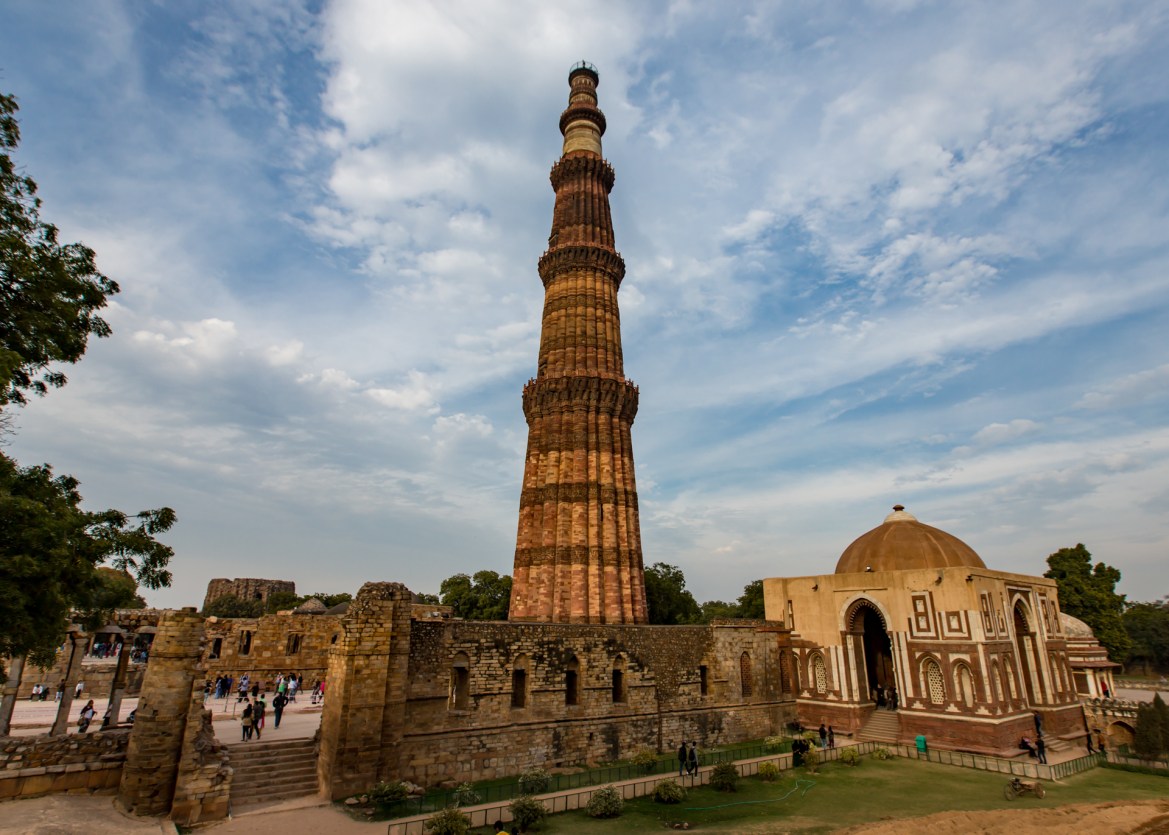
Few places in Delhi capture the sweep of India’s layered history like the Qutab Minar Complex, where Afghan craftsmanship, Indo-Islamic artistry, and centuries of royal ambition rise in spiraling harmony. Standing 73 meters tall, the Qutab Minar isn’t just the world’s tallest brick minaret—it’s a sandstone time capsule etched with verses and victory. Around it, a constellation of ruins, mosques, tombs, and courtyards whisper stories of dynasties who came, built, and blended cultures long before Delhi’s modern skyline rose around them.
Walking through the complex feels like slipping between centuries. Morning light turns the carvings honey-gold, birds circle the top like faithful guardians, and the geometry of every arch dares you to compose one more shot before moving on. Whether you’re tracing the calligraphy on the Quwwat-ul-Islam Mosque, puzzling over the Iron Pillar’s rust-proof secret, or just chasing silhouettes at sunset, Qutab Minar rewards the curious eye. This Deep Dive will guide you through the architecture, hidden meanings, and practical details—so you’ll not only photograph it better, but truly understand the story carved into every stone.
🏛️ Story & Significance: The Soul of The Qutab Minar Complex
The Qutab Minar Complex rose from the ambitions of the early Delhi Sultanate at the turn of the 13th century, when Qutb-ud-din Aibak set its foundations to signal a new political and spiritual era. What began as a victory symbol quickly became a statement of engineering nerve: fluted shafts of red and buff sandstone stacked skyward, each ringed with Qur’anic calligraphy and geometric bands. His successor Iltutmish extended the minar and shaped the precinct into a campus of prayer, learning, and memory—anchored by the Quwwat-ul-Islam Mosque whose colonnades famously incorporate carved spolia from earlier Hindu and Jain temples. Later rulers—most notably Firoz Shah Tughlaq—repaired quake and lightning damage and added their own flourishes, leaving a palimpsest you can still read tier by tier. From that charged beginning, the complex evolved into Delhi’s enduring emblem: a place where power, craftsmanship, and faith braided into stone.
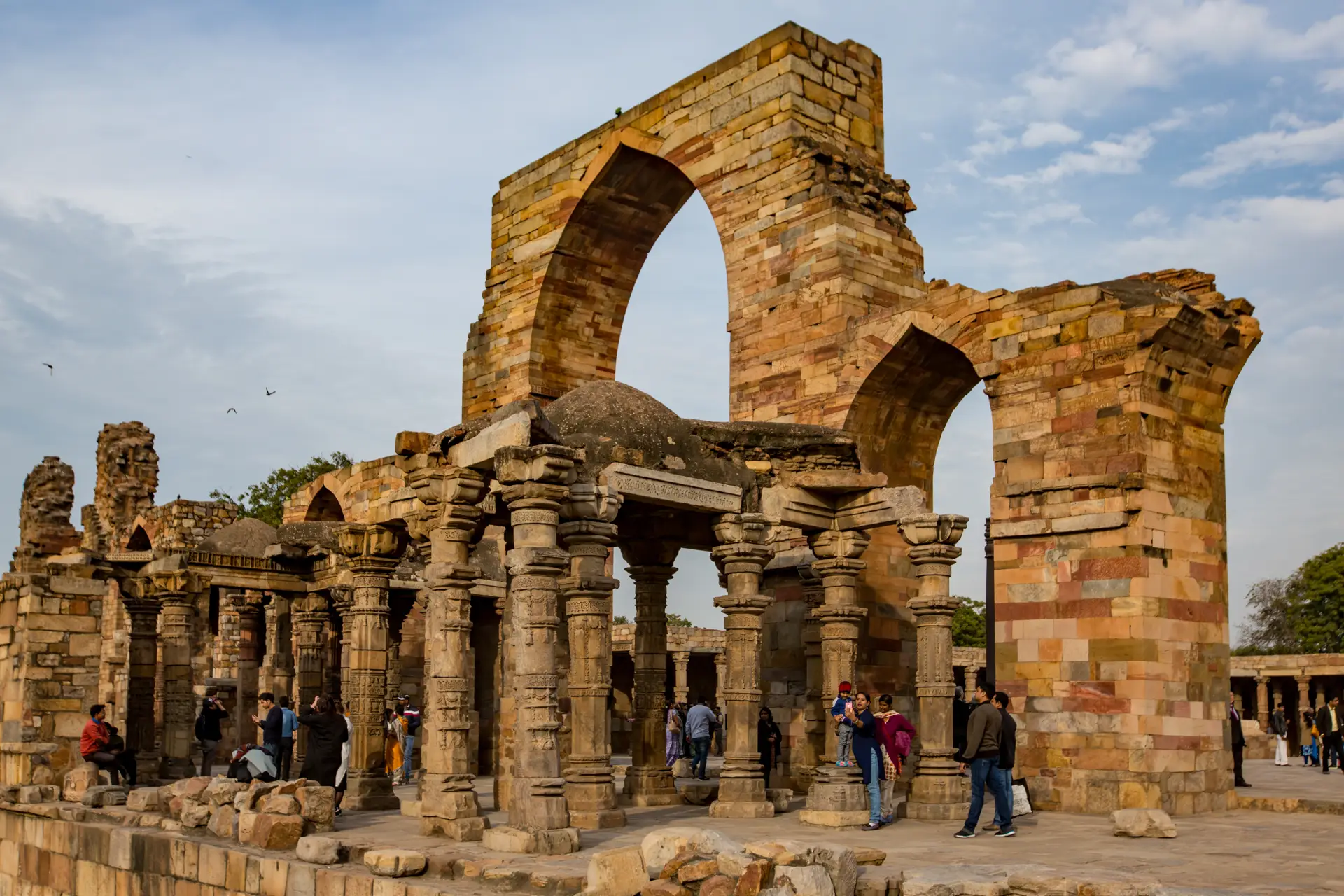
Yet Qutab Minar was never meant to stand alone. Its meaning lives in the ensemble—mosque, screen walls, gateways, tombs, and the enigmatic Iron Pillar whose corrosion-resistant sheen predates the Sultanate itself. In those cloisters, you read a dialogue across centuries: lotus scrolls beside kufic bands, vine tracery meeting stern geometry, indigenous motifs conversing with imported aesthetics. The effect is not a neat merger so much as a tense, fascinating duet—one that shaped the DNA of Indo-Islamic architecture from Delhi to the Deccan. Walk slowly and the site becomes a field guide to techniques: chiselled sandstone micro-relief, stalactite brackets, muqarnas-like corbelling, and meticulous brick-and-stone bonding that keeps the minar’s taper true.
Today the complex thrives as UNESCO World Heritage and as a lived public space. School groups sketch capitals under banyan shade; families picnic on the lawns; heritage walkers trace the Mehrauli Archaeological Park beyond the walls; and blue hour pulls photographers back for silhouettes and long-lens balcony studies. Conservation teams battle pollution and time, balancing careful cleaning with respect for patina. The result is a site that still “performs”—not with a muezzin’s call from the minar, but with a steady rhythm of learning, leisure, and quiet awe. To visit Qutab Minar is to feel Delhi in cross-section: dynastic shifts, artisanal genius, and a city’s habit of repurposing its past into something strikingly new.
Notable People & Patrons
Qutb-ud-din Aibak laid the minar’s foundations and began the Quwwat-ul-Islam Mosque, setting both the tone and orientation of the precinct. Iltutmish completed major storeys, endowed additional buildings, and effectively “scored” the complex with its signature calligraphy and profiles. Firoz Shah Tughlaq repaired damage and added finishing details after disasters, ensuring the tower’s survival. Later patrons, from Mughal custodians to colonial surveyors and modern conservators, shaped policies and restorations that define how we experience the site today.
Architecture in a Nutshell
Think tapered verticality and textured skin: the minar’s alternating flutes (rounded and angular) catch light like a spiral lantern, while projecting balconies on stalactite-like brackets punctuate the ascent. The mosque’s hypostyle halls fold earlier carved pillars into new grids, creating a visually layered cloister walk. Load-bearing sandstone, tight mortar joints, and careful course staggering keep the minar stable, while ornamental bands—calligraphy, chevrons, rosettes—read like a sandstone manuscript. Nearby fragments (gateways, screen walls, unfinished Alai Minar) reveal experiments in scale and ambition that widen the complex’s architectural conversation.
Living Traditions Today
The complex functions as a civic classroom and cultural commons: guided heritage walks, student sketch sessions, and weekend family outings keep the precinct active beyond tourist loops. Seasonal “night tourism” openings occasionally recast the stones in theatrical light, inviting a fresh read of texture and shadow. Local communities use the surrounding Mehrauli lanes and parks for small festivals and strolls, and visiting photographers return for migrating parakeets, winter haze atmospherics, and blue-hour silhouettes. In this rhythm of learning and leisure, Qutab Minar remains a living landmark—less a relic than a reliable rendezvous with Delhi’s layered soul.
🧠 Fascinating Facts & Hidden Meanings
Standing beneath the Qutab Minar, you can almost feel the centuries layered in its stones—a structure built not just for faith, but for symbolism. Every inscription, fluted tier, and carved balcony speaks a coded language about power, devotion, and artistry. Beyond its beauty, the complex hides a network of forgotten details that reveal how early Indo-Islamic architecture evolved—and how Delhi’s builders fused science, religion, and sheer creative audacity. It’s a site where mythology meets metallurgy, and where every photograph becomes a study in history’s texture and symmetry.
Five Did-You-Knows
It’s Taller Than You Think — At nearly 73 meters (239 feet), the Qutab Minar once surpassed the Pisa Tower by over 100 feet. It was the tallest structure in India for 700 years.
The Iron Pillar’s Mystery — This 1,600-year-old column predates the complex itself and still refuses to rust. Modern metallurgists credit its protective phosphorus film—an ancient Indian alloying secret yet unmatched.
A Quake and a Makeover — The minar was struck by lightning and earthquakes multiple times; each ruler’s repairs left a distinct design signature visible in its tiers today.
A Soundtrack of Stone — Local lore says if you tap certain columns of the Quwwat-ul-Islam Mosque just right, they “sing” faintly—resonating through ancient temple stone reused in its construction.
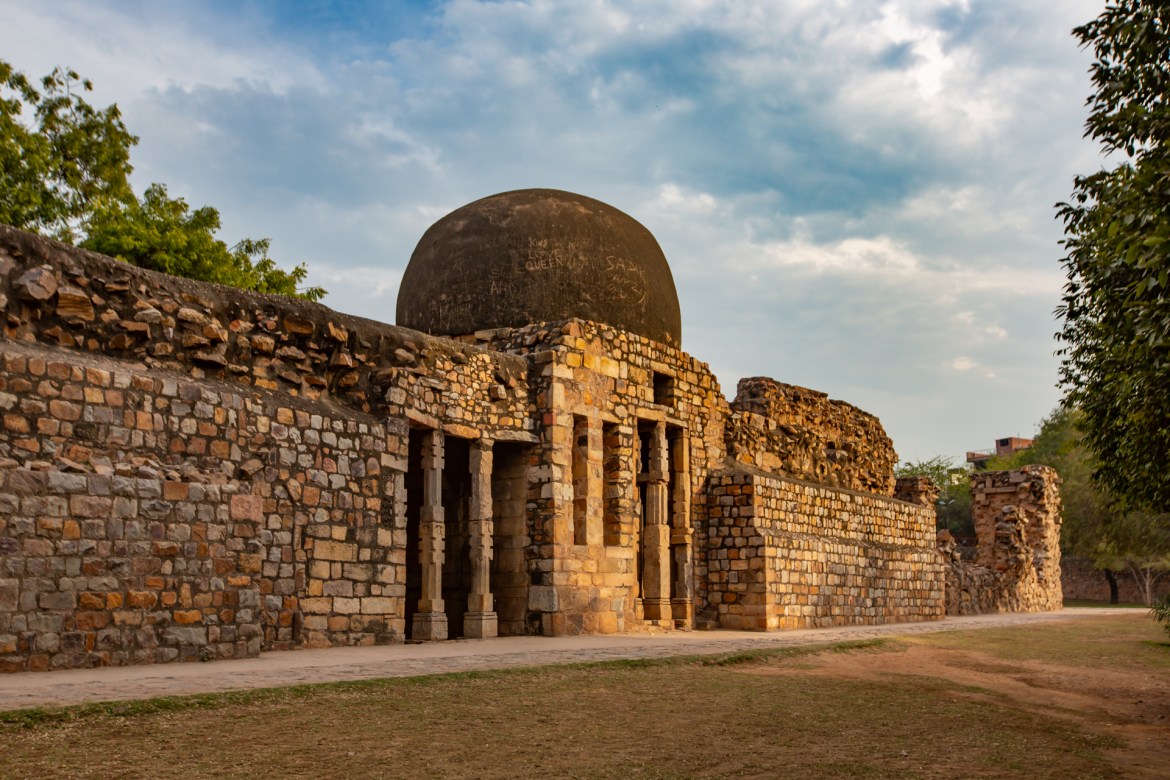
Unfinished Ambition — The nearby Alai Minar, an abandoned giant started by Ala-ud-din Khilji, was meant to double the height of the Qutab Minar—but never made it past the first story.
What Kids Love
Even younger travelers find Qutab Minar fascinating—it’s like a real-life time machine. They can count the tower’s 379 internal steps (closed to the public now), chase pigeons around the lawns, and spot carvings of flowers, chains, and calligraphy in the sandstone. The Iron Pillar is an irresistible selfie stop with its no-rust legend, while the half-finished Alai Minar sparks plenty of “what if” imagination about ancient engineering.
A few links and ads here are affiliate portals. If you click through and snag something, you’ll be fueling my next photo-quest at no extra cost to you. Thanks for keeping the adventure rolling!
To expand your journey beyond Qutab Minar, try these immersive experiences:
Old & New Delhi Private Tour – Half or Full Day — A deep, guided dive into Delhi’s contrasts, from Mughal relics to colonial boulevards. Perfect for travelers wanting to connect the architectural dots between Qutab Minar, Humayun’s Tomb, and India Gate.
All-Inclusive Day Trip to Taj Mahal, Agra Fort, and Baby Taj from Delhi — An unforgettable journey through Mughal grandeur, pairing perfectly with your Qutab Minar visit for a full architectural story arc between Delhi and Agra.
📌 Plan Your Visit: Hours, Tickets & What to Expect
The Qutab Minar Complex rewards slow wandering and smart timing. Arrive just after opening to watch the red sandstone warm from rose to honey as the sun clears the tree line; you’ll have space to frame the Quwwat-ul-Islam Mosque arches and the Iron Pillar before the tour groups bloom. Midday heat can flatten texture, so slide into the shaded cloisters to study carvings, then loop the lawns for long-lens silhouettes of the minaret’s balconies. If you’re visiting later, linger toward closing for softer light and calmer paths—blue hour turns the fluted tiers into a dramatic skyline anchor. Typical public hours run from morning through late afternoon, with online time-slot booking available and occasionally extended evening access during “night tourism” programs; check the current ASI slots before you go.
Getting there is easy: take Delhi Metro’s Yellow Line to Qutab Minar station, then a short auto-rickshaw ride to the gate (roughly 2–3 km). The site sits in Mehrauli, so pairing your visit with nearby stepwells, village lanes, and garden cafés makes a relaxed half-day. Tickets are tiered (Indian/SAARC/BIMSTEC vs. foreign visitors), and children under 15 typically enter free; online purchase helps you skip the ticket queue. Expect a gentle bag check and standard monument rules: respectful attire, no drones, and limited tripod use without prior permission (handheld photography is fine).
🎫 Ticketing Tips. Book your preferred time slot on the ASI portal (forenoon/afternoon/evening windows appear when available) and keep a digital copy of your QR ticket ready at the gate. Same-day slots often exist, but sunrise and late-day entries go first in peak season.
🎉 Festival/Peak-Day Watch. Winter weekends, school holidays, and special cultural nights swell crowds; plan for early entry or a post-lunch lull, and pad transit time if you’re connecting to Old Delhi later.
| 📍 Location | Mehrauli, South Delhi |
| 🕰 Hours | Typically 7:00 AM–5:00 PM; occasional evening slots during night-tourism programs — confirm on ASI time-slot page before visiting. |
| 🎟 Tickets | Indian/SAARC/BIMSTEC ~ ₹35; Foreign ~ ₹550; Under 15: free. Online booking recommended. |
| 🚇 Nearest Metro | Qutab Minar (Yellow Line) + short auto-rickshaw ride (~2–3 km). |
| ⌛ Time Needed | 90–120 minutes unrushed; add 30–45 minutes for café/photo breaks. |
| 📸 Photo Policy | Handheld photography allowed; tripods/monopods typically require prior permission; drones not permitted. |
| 🦺 Accessibility | Level lawns and paved paths around major highlights; some uneven stone in cloisters — bring low-profile footwear. |
| 🧭 Best Light | Golden hour for carvings and warm stone; blue hour for silhouettes and skyline compression. |
| 🧴 Essentials | Water, hat, polarizer (glare on polished stone), and a telephoto for balcony details and birds. |
| 🧾 Booking | ASI Online Portal (choose time slot; keep QR ready at entry). |
🚶 Getting There, Entry & Accessibility
Arriving at the Qutab Minar Complex feels like stepping from Delhi’s bustle straight into a pocket of stillness. Most visitors reach it via the Qutab Minar Metro Station (Yellow Line) and take a short auto-rickshaw ride—about ten minutes—to the main entry gate on Mehrauli Road, where ticketing counters and security screening lines are clearly marked. Private taxis and tour vehicles can drop passengers directly at the monument gate, but the final 2–3-minute walk to the turnstiles is on foot through a shaded forecourt. Bags are scanned, water bottles allowed, and tripods occasionally questioned; keep camera gear compact for a smoother check. Once inside, paths open wide across lawns toward the minaret, so the first sight of its rising sandstone tiers hits with full drama. Plan a comfortable 90-minute to two-hour visit, pacing slower around noon heat and allowing rest in the colonnaded corridors.
Parking & Drop-offs — The main ASI-managed parking lot lies just outside the entry gate on Mehrauli Road, open during monument hours. Spaces fill quickly on weekends, so early arrival (before 9 AM) secures shade. Expect modest fees—roughly ₹50 for cars and ₹20 for two-wheelers. Ride-hail services (Ola, Uber) can drop at the designated monument zone but must exit promptly; pickup works best from the nearby roundabout by the souvenir kiosks.
Accessibility Notes — The complex is largely flat with paved and lawn paths, though a few older cloister stones are uneven. Ramps connect major zones from gate to main courtyard; wheelchairs are available from the visitor office with a refundable deposit. Benches ring the lawns for quiet seating, and restrooms are near the outer gate. No areas require shoes off, but closed-toe footwear helps with heat and footing. Shade is limited mid-day—carry water and a hat for comfort.
Wayfinding Inside — Navigation is intuitive: a central axis leads from the ticket gate straight toward the Qutab Minar, with side trails looping around the Quwwat-ul-Islam Mosque, Alai Darwaza, and Iron Pillar. Signboards mark each ruin in English and Hindi, and circular paths allow a free-flow circuit rather than a one-way system. Meeting points are easiest at the central lawn benches or the information pavilion near the mosque entrance—good regroup spots if exploring separately for photos or sketching.
🧭 How to Explore: Smart Routes for Any Timeline
Think of the Qutab Minar Complex as a story told in chapters: you enter through a shaded forecourt that frames your first full-body view of the minaret, then step into the Quwwat-ul-Islam Mosque where carved pillars and screen walls tighten the scene into intimate textures. From there, the paths open to lawns and side courts where you can breathe, pan, and play with scale—balconies above, parakeets in the air, inscriptions under your fingertips (eyes only for the carvings!). Loop past gateways and tomb fragments toward the Alai Darwaza to feel that shift from open garden to geometric threshold. Finish with a slow circle around the base lawns, catching clean silhouettes of the minar against the sky—your finale vantage where Delhi’s hum fades and sandstone takes the spotlight. If you’re pairing photography and simple wandering, this sequence naturally alternates between detail-hunting and big, cinematic frames.
60-Minute “Essentials.” Enter, breathe, and beeline to the main axis for that first towering reveal. Spend 10 minutes in the mosque cloisters to read the pillar carvings and grab a tight, shallow-depth portrait of script and stone. Walk the central lawn path to frame the minar with arches (classic leading-lines shot), then swing by the Iron Pillar for a quick look and context. End with a slow 360° around the minar from the grass—silhouette studies, balcony tiers, and a final wide establishing shot before you go.
90–120 Minutes “Deeper Look.” Do the essentials loop, then add a measured linger in the Quwwat-ul-Islam colonnades to study repeating pillar rhythms (great for symmetry and foreground layering). Detour to the Alai Darwaza to feel its perfect geometry and cool, filtered light—prime for architectural abstracts. Continue to the quieter side courts where fragments and low walls give you low-angle compositions and human-scale frames. Close with a lawn bench pause to watch the light turn warm; shoot a compressed telephoto of balconies and birds-in-flight for a final, textured set.
Leisurely Circuit (2–3 Hours).
0:00–0:15 — Gate & Grandeur: Step in, hydrate, and make your hero wide shot on the central axis (full minar, people for scale).
0:15–0:45 — Cloister Rhythm: Work the mosque aisles for repeating columns, then capture one tight detail (inscription band, bracket, or lotus-vine carving).
0:45–1:15 — Geometry Gate: Head to Alai Darwaza for an inside-looking-out frame; bracket an exposure for shadow detail.
1:15–1:30 — Reflective Moment: Sit on the lawn edge facing the minar; note the soundscape (birds, breeze) and take a few mindful frames—silhouette or sky-drama if clouds roll in.
1:30–2:00 — Hero View #2: Circle to the opposite lawn for a cleaner skyline compostion; try a vertical pano to exaggerate height.
2:00–2:20 — Quick Local Snack: Exit and grab a chai and samosa at a nearby Mehrauli café or kiosk, then re-enter your notes and favorite frames.
2:20–3:00 — Bonus Pass: Re-walk your favorite spot with different light (or people flow) and pick up one last balcony-telephoto or reflection-in-shade shot before you roll out.
🖼️ Spaces & Highlights You’ll Love
The Qutab Minar Complex reads like a set of intimate chapters—each corner revealing a different rhythm of Delhi’s layered past. Start broad on the lawns where the minaret owns the skyline, then slip into the cloisters to let sandstone textures slow your pulse. Pass through gateways where shade and geometry edit the light for you, and give yourself permission to linger; this is a place that rewards unhurried looking. Keep alternating between big, cinematic frames and quiet details, and you’ll leave with a story—not just a stack of photos. Bring water, a hat, and a flexible plan; the site’s best moments often arrive between scheduled ones.
Qutab Minar Base Lawns — your widescreen frame and breath of space.
The base lawns give you the cleanest sightlines on the tower’s taper and those fluted sandstone ribs that catch light like a spiral lantern. Plant yourself at two opposite corners and work a slow 360° to see how the balconies and calligraphy bands reveal (and hide) with each step. Morning warmth makes carvings glow; late afternoon sculpts punchy silhouettes against Delhi’s pale sky. Let people walk through the foreground for scale—families, sketchers, and sparrows all lend this “living monument” its pulse.
Quwwat-ul-Islam Mosque Cloisters — texture, repetition, and whisper-quiet shade.
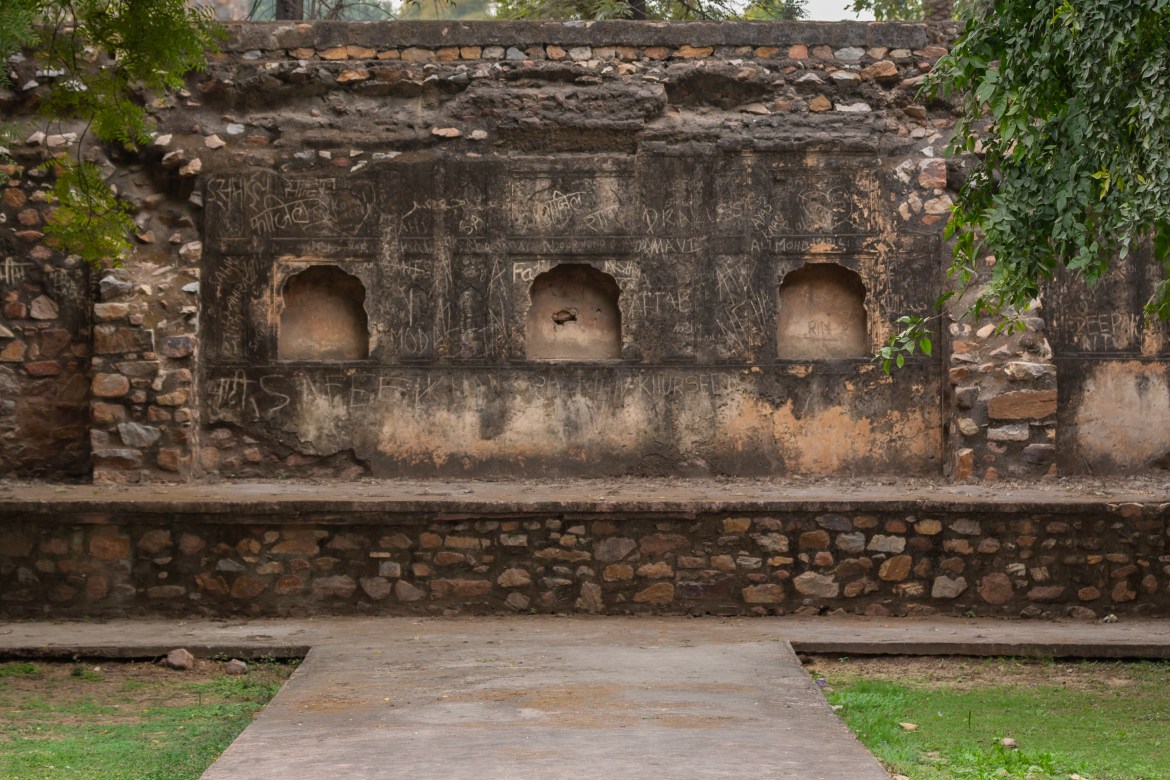
Here the complex shrinks to human scale: rows of repurposed pillars, lotus scrolls sharing space with Arabic script, and cool stone underfoot. Walk the aisles slowly, lining up repeating columns for symmetry shots, then pivot to a shallow-depth portrait of a single carving for contrast. This is where you feel the dialogue of motifs—Indo-Islamic, yes, but also Delhi’s knack for weaving old into new. When crowds surge outside, these corridors are your calm studio of light and line.
Alai Darwaza — geometry perfected, shadows that behave.
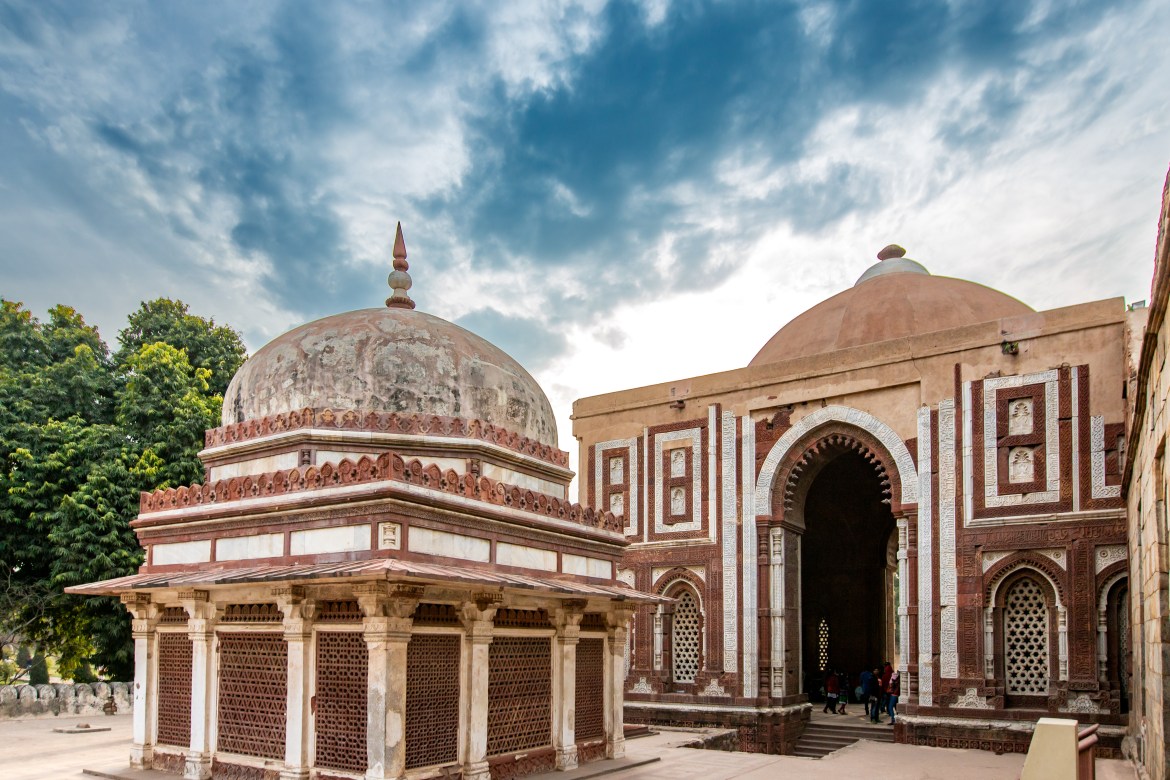
This gateway is a masterclass in balanced proportion and filtered light, ideal for inside-looking-out frames that compress time and space. Step beneath the dome, let your eyes adjust, and watch the doorway outline turn into a natural matte for the minar beyond. The carved lattice and cool stone give you a ready-made softbox; bracket an exposure or two if the contrast runs high. It’s the moment the complex feels like a camera obscura—history composing the image with you.
Iron Pillar Court — metallurgy meets myth, in full daylight.
Predating the Sultanate, the pillar’s famous rust-resistance is best appreciated up close, where subtle sheen and inscriptions live in plain sight. Shoot it as a vertical counterpoint to the minar, then go tight on the lettering for texture studies. The surrounding paving makes clean foregrounds for low-angle compositions, and midday glare actually works here—polish meets sun, and the scene pops. It’s a short stop that adds a different voice to your visual essay.
Hidden Angles (quick hits)
A low-angle frame through cloister pillars that stacks the minar perfectly between capitals.
A doorway silhouette from inside Alai Darwaza, waiting for a single passerby to anchor scale.
A compressed telephoto of balcony brackets and calligraphy bands—abstract patterns, zero context needed.
Reflection in a phone screen or sunglasses on the lawn bench—playful, modern counterpoint to old stone.
A parakeet-in-flight burst at blue hour for a tiny streak of Delhi green against sandstone dusk.
🍽️ Nearby Pairings & Pleasant Pauses
Just beyond Qutab Minar you’ve got easy, low-stress add-ons that keep the day gentle. Wander the leafy paths of Mehrauli Archaeological Park (5–10 minutes’ walk) for crumbling pavilions, birdsong, and calm—an ideal decompression after the main complex. For a sit-down, slip to Mehrauli’s café cluster near the monument (think garden courtyards and mellow playlists) where a late-afternoon coffee sets you up to return for blue hour silhouettes. If you want a lively lane, take a short ride to Hauz Khas Village: boutique browsing, lakeside paths, and rooftop perches with wide sky. On hotter days, the malls of Saket (DLF Avenue/Select Citywalk) offer air-conditioned strolls and quick bites before you glide back out for sunset.
Family-Friendly Stops — The lawns around Qutab Minar and the shady pockets of Mehrauli Archaeological Park make easy picnic-and-bench breaks; kids can roam while you frame a few telephoto balcony shots. Strollers handle the main monument paths and the wider park trails fine; cobbled side lanes in Mehrauli are bumpier, so a baby carrier is handy. For treats, nearby cafés and Saket food courts keep choices simple and quick.
Rain/Heat Refuge — When the mercury spikes or a shower rolls in, duck into Saket’s indoor arcades for breezy corridors, clean restrooms, and plenty of café seating. Courtyard restaurants in Mehrauli offer shaded rooms and fans that tame midday glare—great for rehydrating and reviewing shots. If skies clear toward evening, step back out for that forgiving golden light and a relaxed return lap around the minar.
🎥 Reels on the Road
The Qutab Minar Complex lends itself perfectly to short, cinematic reels—every courtyard offers a ready-made transition from ancient stone to present-day life. Capture the shift from bright Delhi streets to the hushed calm of the mosque cloisters, or play with perspective by walking toward the minaret as it rises frame by frame into the sky. Let your clips breathe—pan slowly, follow passing birds, and let ambient sounds like footsteps, breeze, and distant chatter stay in your audio mix. Early morning and late afternoon give you that signature golden hue, while blue hour turns the sandstone bronze and sky cobalt—a natural reel color grade. Whether you’re after architectural storytelling or slow-travel atmosphere, Qutab Minar delivers material that edits itself.
🎥 Qutab Minar Base Lawns — Smooth pan upward from foreground grass to the tower’s spire as light shifts; film during sunrise for warm gradients.
🎥 Quwwat-ul-Islam Cloisters — Walkthrough shot along repeating pillars; let the changing light pattern lead your motion, shot handheld for intimacy.
🎥 Alai Darwaza Archway — Frame a subject walking through the arch toward daylight; great slow-motion or time-lapse moment for silhouettes.
🎥 Iron Pillar Court — Quick 360° orbit shot of the pillar aligning with the minar behind it, ideally at midday when metallic sheen peaks.
🎥 Mehrauli Archaeological Park Overlook — Slow dolly pull or drone sweep (if permitted nearby) revealing minar in the distance through ruins—shoot during golden hour for atmospheric depth.
🎥 Blue Hour Finale — Time-lapse of fading daylight into evening blues as birds loop the minar, wrapping the reel with a meditative vibe.
🧳 What to Pack for Picture-Perfect Memories
Delhi’s heat and dust can sneak up on even seasoned travelers, so pack like a pragmatist first and a photographer second. Bring a refillable water bottle, a wide-brimmed hat, and light, breathable clothing that still keeps shoulders and knees respectfully covered for heritage sites. Slip-on shoes or sandals with socks make security checks and monument entries easy, though Qutab Minar itself doesn’t require shoes-off rituals. A compact umbrella doubles as sunshade, and a small microfiber cloth earns its keep wiping lenses or sunglasses after every dusty gust. Keep your kit light—a body, one walk-around zoom, and discreet stabilization—so you can move easily between lawns, corridors, and low-light gateways without fatigue.
👉 The Nomad’s Kit: Gear That Earns Its Miles
Canon RF 15–35mm f/2.8L — Ultra-wide for the entire Qutub Minar, intricate arches of Alai Darwaza, and tight courtyards where stepping back means “hello, sandstone pillar.”
Canon RF 24–105mm f/2.8L — Your complex-to-café workhorse: portraits under lattice shadows, mid-tele carvings and inscriptions, and quick street vignettes near Mehrauli.
Canon RF 100–500mm f/4.5–7.1L IS USM — From shaded corners or garden paths, compress the full tower with surrounding ruins; isolate parakeets, inscriptions, or architectural motifs without crossing barriers.
Lowepro ProTactic BP 350 AW III — Dust-resistant and light; keeps filters and gear tidy while navigating crowds and bag checks.
Peak Design Travel Tripod — Ideal for sunrise or blue-hour symmetry from the outer lawns; full tripods aren’t permitted inside monument enclosures, so use short legs outside the gates.
JOBY GorillaPod 3K Kit — Clamp to fences or rest on stone railings for long exposures or night illumination shots—tiny footprint, big stability.
Cut Glare. Shape Time. Make Every Frame Sing.
Delhi light is intense and contrasty—high noon bounces off red sandstone, marble inlay, and tourists’ white shirts alike. A circular polarizer tames glare on carvings and reveals rich tones in the Minar’s spiral fluting; a variable ND lets you slow the heritage flow, turning visitor motion into a soft ghosting while those 800-year-old stones stay eternal.
🌞 Control Reflections & Punch Up Color
Circular Polarizer Filter — Reduce sheen on sandstone carvings and brass plaques, deepen the blue slice of sky behind the Minar, and keep marble inlays crisp. Pro tip: rotate gently—over-polarizing can make the brick glow too dark and flatten the tower’s warmth.
⏱️ Drag the Shutter in the Ruins
Neutral Density Variable Filter — Drop 3–6 stops to blur tourists under archways, smooth fountains or monsoon puddles, and paint cloud motion around the minaret. Pro tip: start around 1/4–1 s for people blur; go 2–10 s for dreamy sky movement.
Pack both for any Delhi outing: the polarizer reveals the stone’s story; the ND sculpts time. Together, they’re a portable “wow” switch.
Photo Policy Reminders — No flash inside mosques and domed chambers; tripods/stands are not permitted inside the protected area without ASI permission. Respect rope lines and guards—never climb or lean on structures. Drones are prohibited near the complex. Dress modestly, stay hydrated, and arrive early or late for gentle light and thinner crowds—Delhi’s golden sandstone glows best when the sun breathes, not blazes.
💰 On-Site Costs Snapshot
A visit to the Qutab Minar Complex is refreshingly affordable by world-heritage standards. Most travelers spend under $10 USD total, covering entry (₹550 ≈ $6.50 for foreign visitors or ₹35 ≈ $0.40 for Indian/SAARC guests) plus a bottled drink and maybe a postcard or magnet from the gate stalls. Hiring an on-site licensed guide (₹300–500 ≈ $4–6 USD) adds context and saves time decoding inscriptions—it’s a worthwhile upgrade if you enjoy layered storytelling. Otherwise, self-guided exploration with a printed map and a cool lime soda from the kiosks keeps the experience simple, relaxed, and budget-friendly.
| 🎟 Entry Fee | ₹550 (≈ $6.50 USD) foreign | ₹35 (≈ $0.40 USD) Indian/SAARC |
| 🗣 Local Guide (optional) | ₹300–500 (≈ $4–6 USD) for 45-60 min walk; official badge required |
| 🥤 Drinks / Snacks | ₹80–150 (≈ $1–2 USD) for lime soda or chai near the gate kiosks |
| 🛍 Souvenirs | ₹200–400 (≈ $2.50–5 USD) postcards, magnets, mini models sold outside exit lane |
| 📸 Photo Permit (if tripod) | ₹25 (≈ $0.30 USD) per device — must be approved before entry |
🤝 Etiquette & Respectful Visiting
The Qutab Minar Complex may hum with tourists, but it remains a sacred and historical space that deserves quiet respect. Dress modestly—light, breathable fabrics that cover shoulders and knees are ideal—and keep voices low in the mosque cloisters where echoes travel easily. If you come across locals offering a quiet prayer or families resting in shaded corners, step aside gently rather than cutting through their space; it’s a small gesture that keeps the shared calm intact. Refrain from touching carvings or leaning on ancient pillars—centuries of patina and artistry deserve preservation over posing. Selfie sticks can crowd narrow aisles, so give fellow visitors their frame just as you’d want yours. A simple smile, a soft tone, and a few Hindi courtesies—namaste, dhanyavaad—turn a quick monument stop into a gracious cultural exchange.
🕰️ Historical Timeline at a Glance
Knowing the timeline of Qutab Minar’s creation and care turns every carved band and weathered wall into a living clue. Each era layered new materials, motifs, and repairs—from red sandstone and Quranic calligraphy to marble inlays and colonial stabilizations—so your eye starts spotting the blend of dynastic ambition and adaptive reuse. What seems like one monument is really a time-lapse of Delhi’s evolving faith, aesthetics, and engineering confidence.
| ⏳ Era | Key Development | Legacy Seen Today |
| c. 400 CE | Iron Pillar erected in honor of Vishnu during Gupta period. | Still rust-free; earliest metallurgy marvel inside the complex. |
| 1192–1210 CE | Qutb-ud-din Aibak begins Qutab Minar and Quwwat-ul-Islam Mosque. | Lower storeys’ red sandstone fluting and early Arabic calligraphy. |
| 1211–1236 CE | Iltutmish completes upper tiers, extends mosque complex. | Alternating buff and red stone bands, ornate balconies. |
| 1369–1388 CE | Firoz Shah Tughlaq restores quake-damaged sections. | Distinct marble-topped fifth storey; subtle shift in carving finesse. |
| 1311–1320 CE | Ala-ud-din Khilji builds Alai Darwaza, starts (and abandons) Alai Minar. | Gateway’s perfect symmetry contrasts the rough giant stump nearby. |
| 19th–20th C. | British & ASI restorations stabilize minar, clear vegetation. | Visible mortar seams, signboards, and safety railing installations. |
| 1993 CE–Present | UNESCO inscription and ongoing conservation programs. | Night lighting, visitor paths, and interpretive panels for modern tourism. |

📓 Through My Lens: Field Notes from the Road
Walking through Delhi’s vibrant streets toward the Qutab Minar Complex, I felt both conspicuous and alive—one of those unmistakable travelers weighed down with twin cameras, long lenses, and a backpack full of accessories. Locals waved, smiled, and, of course, tried to sell me everything from trinkets to “official” guide services with a charm that was hard to ignore. As the towering minaret came into view through the morning haze, the scene unfolded like a living photograph—sandstone glowing through smog, birds wheeling lazily above, the hum of scooters fading behind me. Inside the complex, the light was fierce—bright yet filtered through Delhi’s dust—and every frame demanded patience and balance. I wandered for hours, chasing shadow lines through the Quwwat-ul-Islam cloisters, framing the Iron Pillar against fluted sandstone, and waiting for those rare moments when the lawns emptied and stillness settled in. Sweat trickled, gear straps dug into my shoulders, but the payoff was pure satisfaction—every carved arch and carved verse revealing new texture in the heat shimmer. In that long walk through history, camera in hand, I didn’t just photograph Qutab Minar—I learned its rhythm.
☀️ When to Go & Weather Sweet-Spots
Light, Heat & Heritage: Timing Qutab Minar’s Best Moods
Delhi’s weather swings from crisp winter clarity to monsoon mist, and timing your visit makes all the difference between a hurried dash and a luminous wander. October through March is prime season—cool, dry, and washed in soft sunlight that flatters sandstone carvings. April–June brings relentless heat and shimmering haze, best tackled at dawn before the crowds or late evening for amber silhouettes. Monsoon months (July–September) are humid but visually striking—cloud drama, lush lawns, and fewer tourists. No matter when you go, early entry buys calm light, while blue hour frames the minar in dramatic relief against Delhi’s glowing skyline.
| 🌸 Spring (March–May) | Balanced warmth; blossoms and soft haze—excellent for wide shots. | Light haze before summer spike. | Moderate—arrive early for comfort. |
| ☀️ Summer (June–August) | Intense heat; dry mornings and stormy afternoons. | High—occasional dust storms, shimmering air. | Low midday, higher mornings. |
| 🍂 Fall (September–November) | Golden clarity; best overall conditions for color and comfort. | Minimal rain; clean air post-monsoon. | High—Delhi’s festival season crowds swell weekends. |
| 🌴 Winter (December–February) | Cool and clear; atmospheric fog adds mystery to dawn photos. | Low rain, chilly mornings. | Moderate; busiest months for international visitors. |
🎯 Peak Tourist Season: November–February
🏖️ Off-Season Sweet Spot: Late September and March—clear skies, thinner crowds
💡 Insider Pro Tip: Arrive right at opening (around 7 AM) for the best light and nearly empty lawns; bring a polarizing filter to cut haze and saturate sandstone tones.
🛡️ Practical & Safety Notes
Keep valuables zipped and cross-body as you move through the forecourt and ticket lines—friendly touts and souvenir sellers can be persistent, and pickpockets prefer distracted photographers adjusting lenses. Watch your footing on uneven cloister stones and lawn edges, especially after rain when smooth sandstone turns slick. Hydrate often (Delhi heat + camera weight is a sneaky combo) and plan short shade breaks in the mosque colonnades to avoid overheating. Guards may limit tripod use or cordon off areas under restoration—smile, ask politely, and move on; there’s always another great angle a few steps away. If you’re splitting up to wander, set a meet-back spot at the information pavilion or central lawn benches and avoid lingering at closing when crowds surge toward the exit.
🎞️ More Frames From the Road: Scenes Worth Stopping For
🗣️ Cheat Sheet for Friendly Encounters while in CITY
Even a few Hindi phrases go a long way at Qutab Minar, where guards, vendors, and local families appreciate the effort. Simple greetings or polite thanks often earn you genuine smiles and smoother interactions—especially when negotiating rickshaw rides, entry clarifications, or chai prices just outside the gate. The language here is warm and rhythmic; think of it less as formal speech and more as a cultural handshake. Try these essentials for everyday exchanges and a touch of local charm.
| 🇺🇸 English | 🇮🇳 Hindi | 📖 Phonetic Spelling |
| Hello / Greetings | नमस्ते | Namaste |
| Thank you | धन्यवाद | Dhanyavaad |
| Please | कृपया | Kripya |
| How much? | कितना हुआ? | Kitna hua? |
| Where is…? | ...कहाँ है? | ...Kahan hai? |
| Yes / No | हाँ / नहीं | Haan / Nahi |
| Good morning | शुभ प्रभात | Shubh prabhaat |
| Good evening | शुभ संध्या | Shubh sandhya |
| Beautiful place! | बहुत सुंदर जगह! | Bahut sundar jagah! |
| Can you take my photo? | क्या आप मेरी फोटो ले सकते हैं? | Kya aap meri photo le sakte hain? |
| I don’t understand | मुझे समझ नहीं आया | Mujhe samajh nahi aaya |
| Very tasty! | बहुत स्वादिष्ट! | Bahut swaadisht! |
| Goodbye / See you | अलविदा / फिर मिलेंगे | Alvida / Phir milenge |

Behind the Lens
I’m Steve—a retired Army vet who traded ruck sacks for camera bags and now chases light across every latitude I can reach. From 110 point & shoot film camera beginnings to a Canon R5 Mark II and Mavic Pro II drone, I’ve logged shots in 36 countries and all 50 states, squeezing solo photo runs between corporate flights and longer adventures with my wife. Shutter Nomadica is where I share the hits, misses, and field notes so fellow roamers can skip the guesswork and grab the shot!