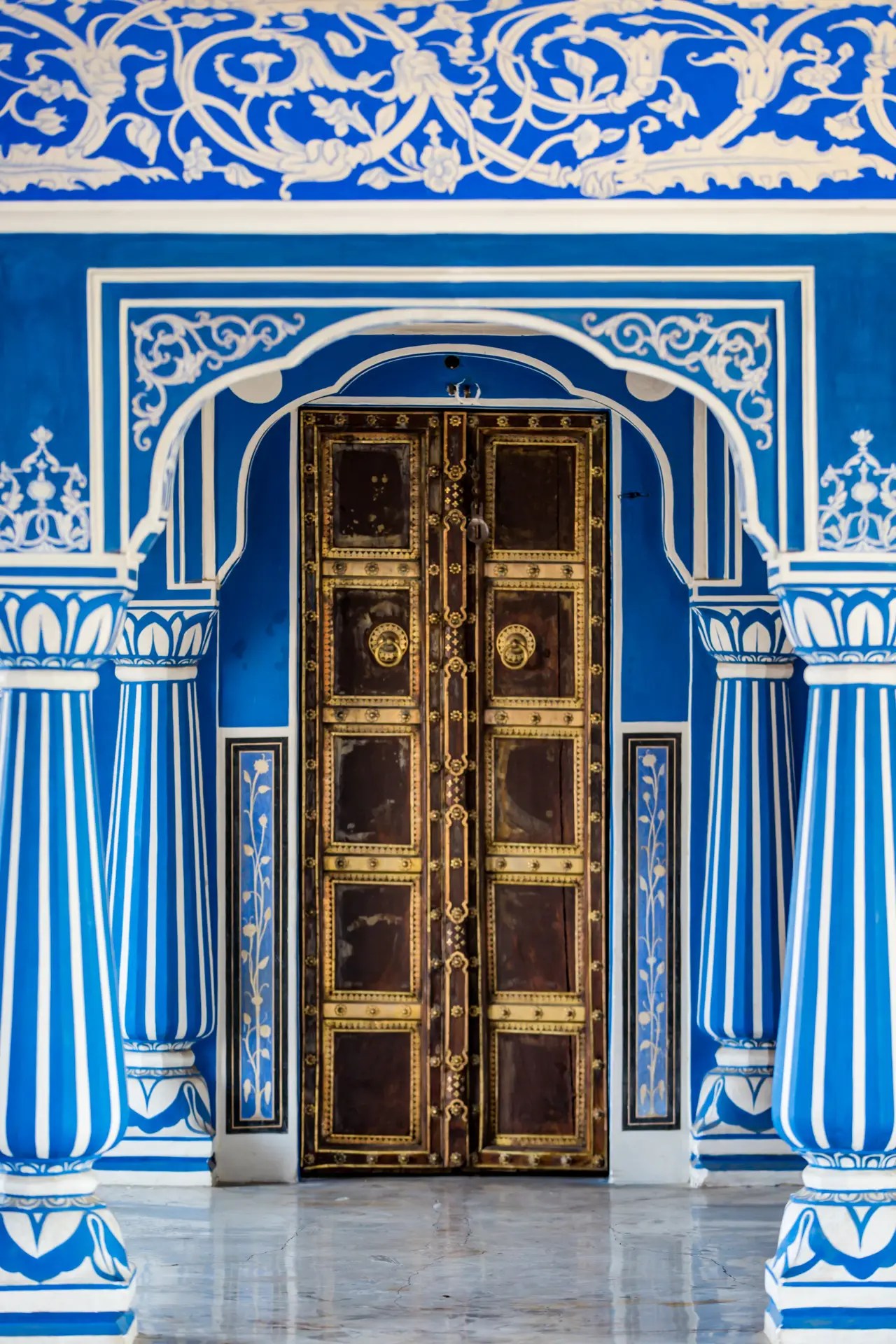
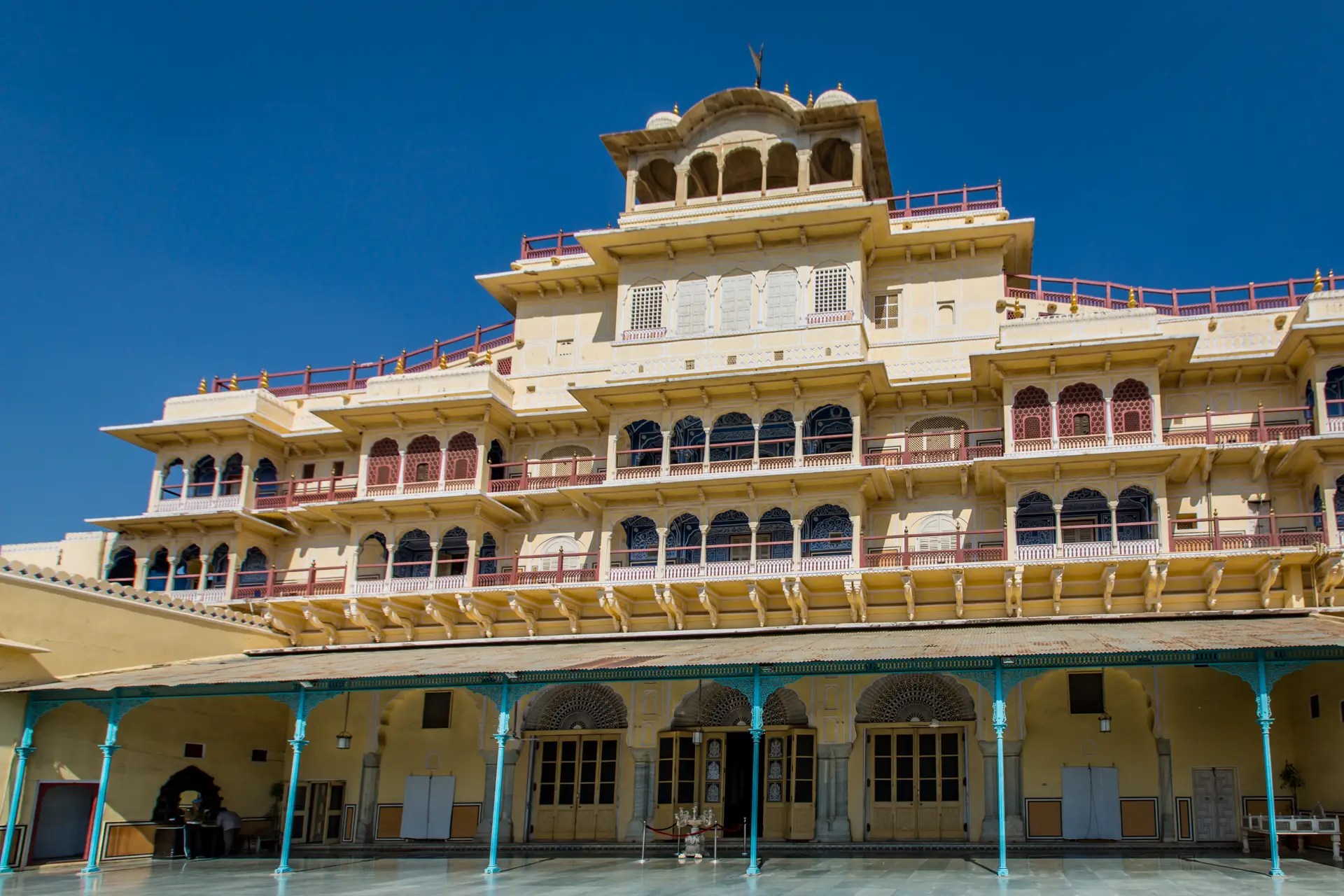
City Palace Jaipur: Where Peacock Gates, Mirror Halls, and Royal Light Still Rule.
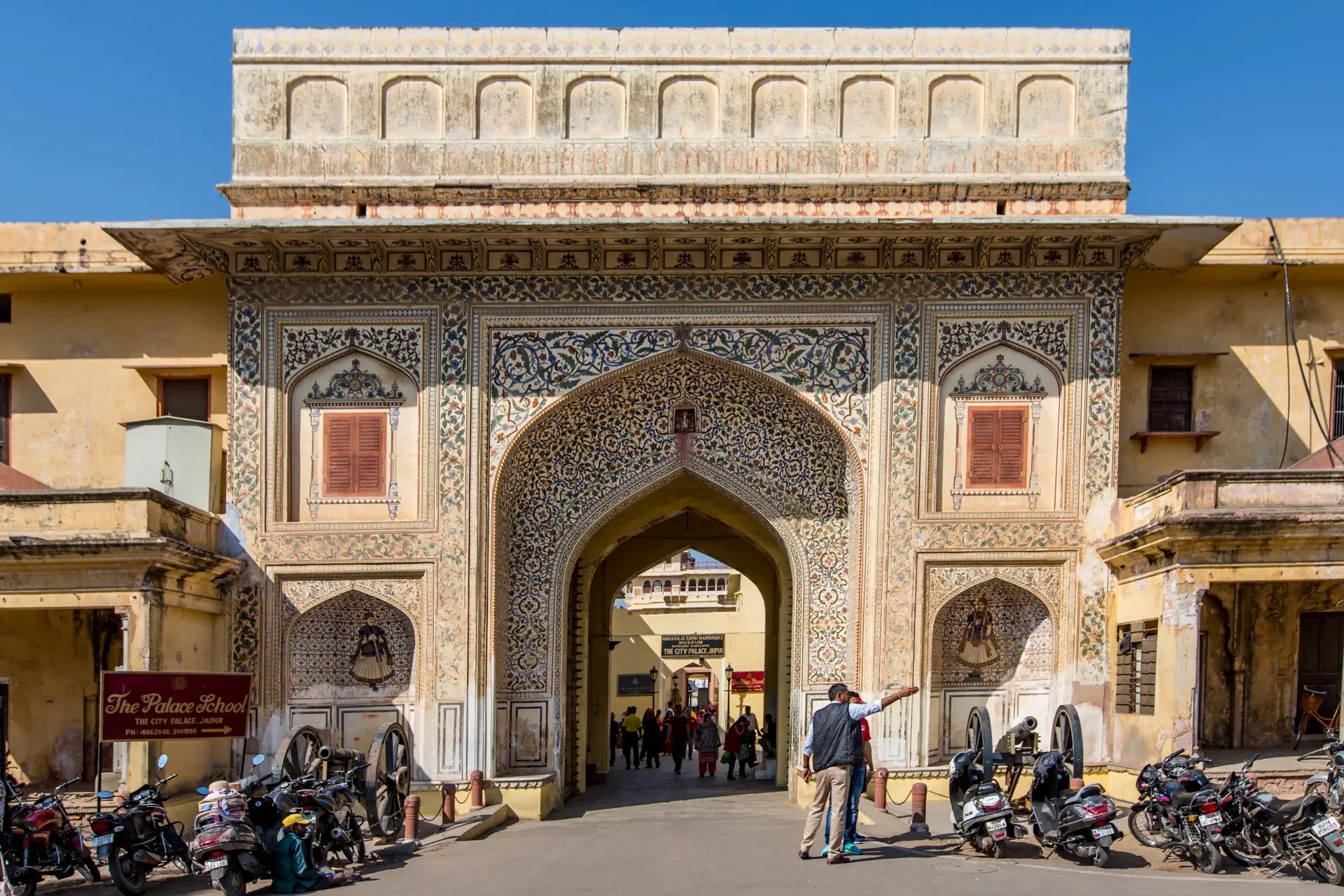
Step through Tripolia Gate and the City Palace doesn’t just appear—it performs: courtyards unfurl like silk, jharokha balconies throw lacey shadows, and the sandstone-and-marble facades glow like they’ve been sipping saffron milk since sunrise. This is where Jaipur’s royal story still breathes: guards in scarlet turbans pose like living exclamation points, frescoes bloom in peacock blues, and mirrored halls catch your reflection and fling it back across centuries. For travelers, it’s a rare “all-in-one” palace complex that’s both museum and mood board; for photographers, it’s a masterclass in geometry, color, and light.
You’ll pace from the Mubarak Mahal to the Pritam Niwas Chowk, then suddenly the Peacock Gate ambushes you with feathered symmetry that begs for a prime lens. Even on busy days, there’s a hush in the courtyards where footsteps echo and time seems to move at palace pace—unhurried, ceremonial, a little dazzled. Come curious; leave color-drunk and a touch palace-spoiled.
🏛️ Story & Significance: The Soul of City Palace Jaipur
In the heart of Jaipur, the City Palace rises as both stage and scripture of Rajasthan’s royal identity. Built between 1729 and 1732 by Maharaja Sawai Jai Singh II, the city’s visionary founder, it was designed not only as a royal residence but as a symbolic center aligning politics, astronomy, and art. Jai Singh’s passion for mathematics and celestial order dictated even the palace’s orientation—it faces the cardinal directions like a living compass of sovereignty. Over the centuries, successive rulers layered new courtyards, pavilions, and gateways like brushstrokes on a single canvas, fusing Mughal finesse with Rajput strength. It’s not just a building—it’s a statement that Jaipur’s kings were as much patrons of precision as of opulence.
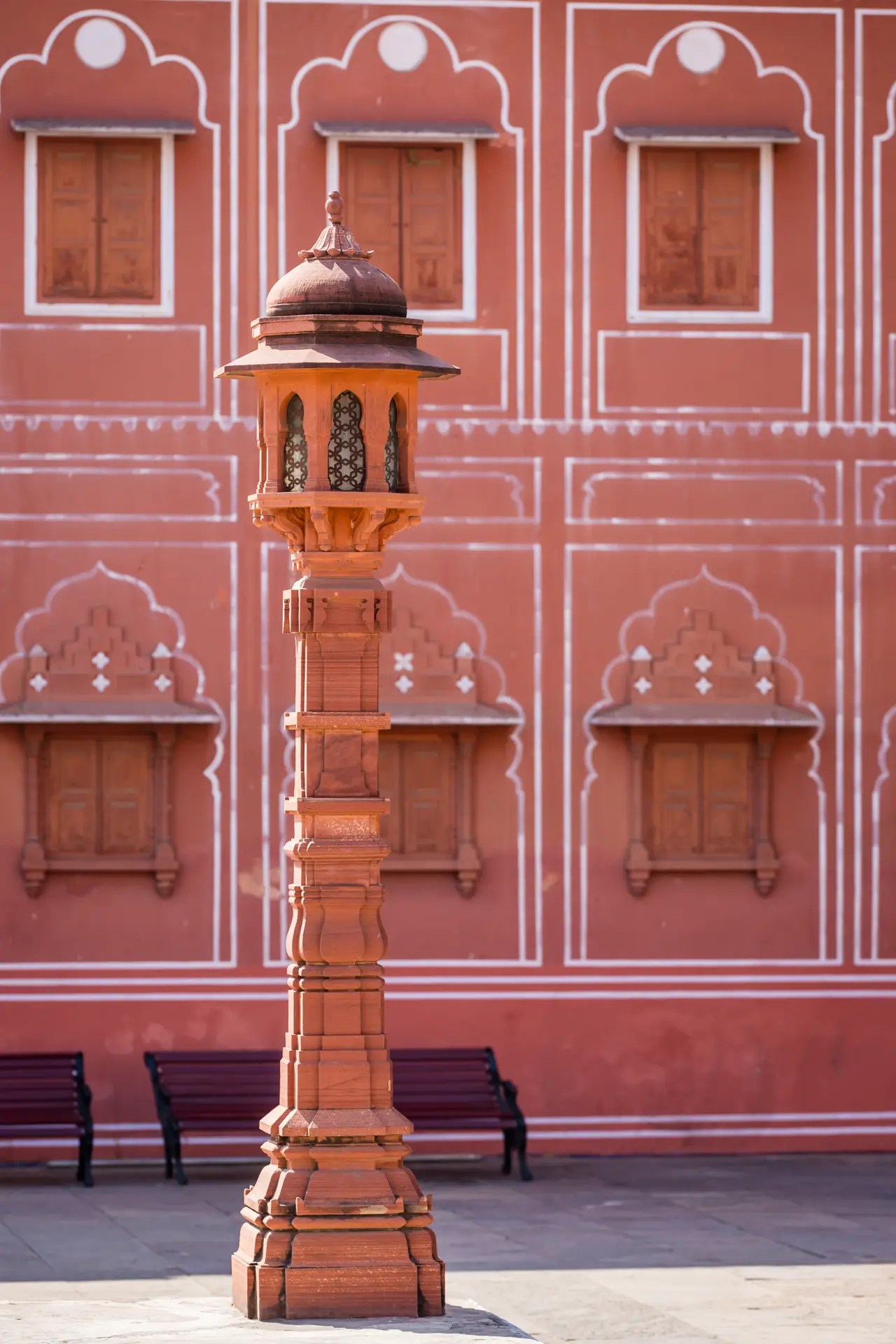
Even today, the Mubarak Mahal welcomes visitors with airy Indo-Saracenic arches, while the Chandra Mahal, still partially home to the royal family, gleams under golden ceilings where every inch whispers ceremony. The palace’s architecture embodies balance: where Islamic geometry embraces Hindu myth, and British-era ironwork quietly joins the dance. For travelers, it’s a journey through layered eras without leaving the courtyard; for photographers, it’s a lighting masterclass—sandstone warms, marble cools, and painted doorways frame every shot like a film set.
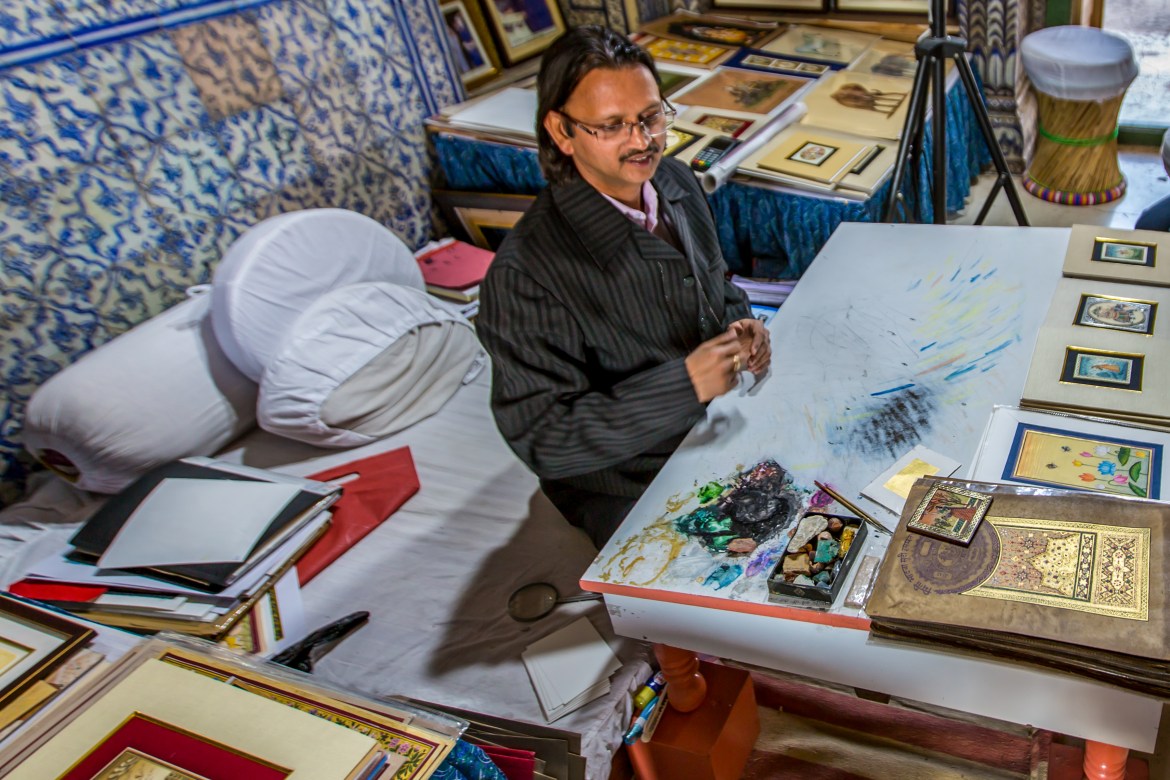
And yet the magic isn’t frozen in time. Within its museums, traditional textiles shimmer like captured monsoons, miniature paintings narrate royal hunts and divine legends, and guards still stand in ceremonial poses—reminders that the past here isn’t past at all. Whether you’re tracing the sweep of a royal procession or catching sunlight through a pierced screen, the City Palace remains what it has always been: Jaipur’s beating, brilliantly gilded heart.
Notable People & Patrons
The City Palace owes its creation to Maharaja Sawai Jai Singh II, whose curiosity rivaled his authority. A warrior, astronomer, and architect rolled into one, Jai Singh laid Jaipur’s gridlike blueprint according to ancient Vastu Shastra principles. Later rulers—particularly Maharaja Sawai Madho Singh I and Maharaja Sawai Man Singh II—expanded the complex, inviting artisans from across India and Europe to refine its elegance. The British Raj added its diplomatic brushstrokes too, turning select halls into venues for stately receptions. Today, Padmanabh Singh, the modern heir, still resides in part of the Chandra Mahal, bridging the palace’s royal past with its living legacy.
Architecture in a Nutshell
Imagine a conversation between three styles: Rajput fortitude, Mughal artistry, and European grace. The City Palace is that dialogue in stone. Its courtyards are sequenced like verses—Diwan-i-Aam, the public hall of audience, gives way to the more intimate Diwan-i-Khas, glowing with mirrorwork and marble columns. Pritam Niwas Chowk dazzles with four seasonal doorways—the Peacock, Lotus, Green, and Rose gates—each a thematic homage to the Hindu deities who guard the palace’s rhythm. The symmetry of archways, lattices, and domes tells a mathematical story; yet everywhere, color breaks the rules, flooding corridors with Jaipur’s signature pink and gold.
Living Traditions Today
Though its power has waned, the palace still hums with ritual. The royal family hosts festivals like Teej and Gangaur, their processions unfurling through the palace gates in flashes of green sarees and flower-draped elephants. The City Palace Museum showcases royal costumes, silver urns, and arms, but beyond the glass, daily prayers and flag-raisings mark continuity. Even weddings and cultural evenings occasionally illuminate the courtyards, inviting travelers into what feels like a living diorama of Rajput grandeur. Step through those gates at sunset, and you’ll sense it—the palace isn’t just preserved, it’s performing.
🧠 Fascinating Facts & Hidden Meanings
The City Palace isn’t just regal—it’s riddled with stories and symbolism that slip past most visitors in the shimmer of its marble and gold. This is where geometry meets mythology, and where a royal’s obsession with balance shaped a palace that still seems to hum with alignment and purpose. From massive silver urns that once crossed oceans to sacred doors that whisper the seasons, every feature tells a layered story of Jaipur’s royal mind.
Below are five fascinating nuggets that turn a casual stroll through the courtyards into a decoding session for travelers and photographers alike:
1. The World’s Largest Silver Vessels — In the Sarvato Bhadra courtyard rest two colossal silver urns, each over five feet tall and weighing more than 750 pounds. Maharaja Madho Singh II used them in 1901 to carry Ganges water to London, ensuring he never drank anything “foreign” during King Edward VII’s coronation. These gleaming giants earned a Guinness World Record—and remain one of India’s most poetic examples of devotion meeting design.
2. The Peacock Gate’s Hidden Cosmos — Among the four seasonal gates in Pritam Niwas Chowk, the Peacock Gate (representing autumn and Lord Vishnu) steals every lens. Look closer: the plumage’s radial pattern mimics astronomical charts, echoing Jai Singh II’s passion for celestial geometry. Shooting here at golden hour adds iridescent warmth that rivals real feathers.
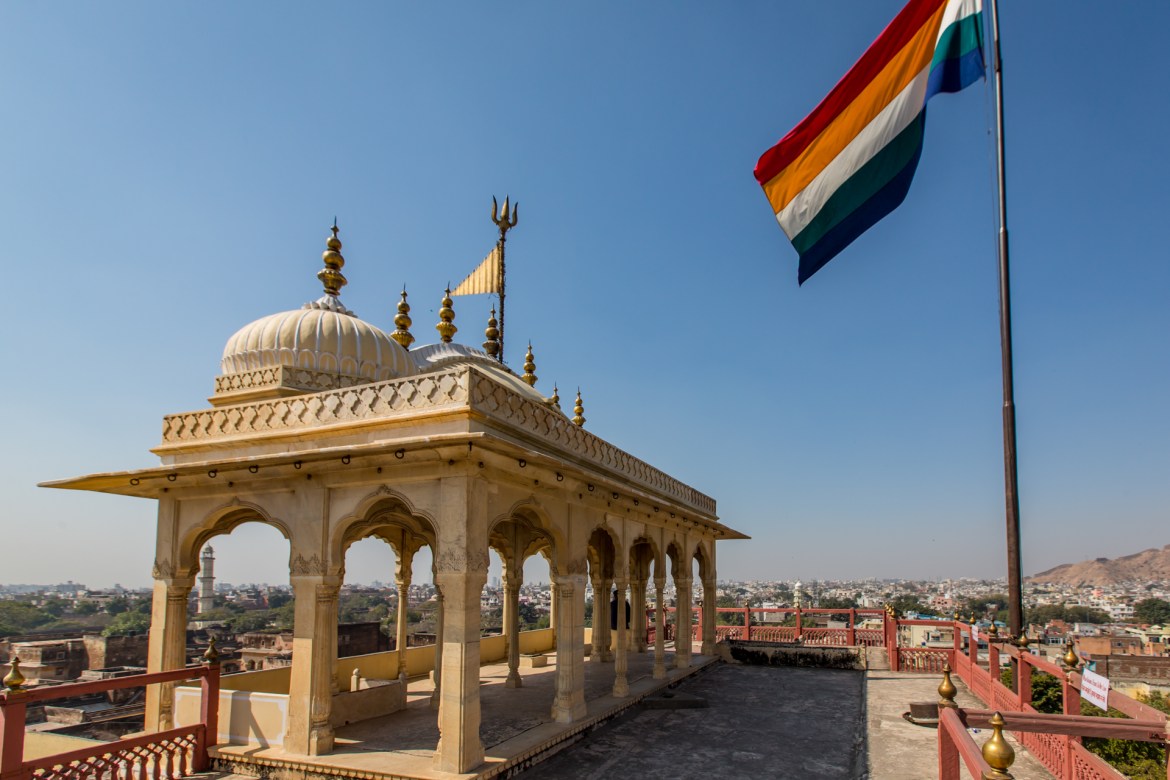
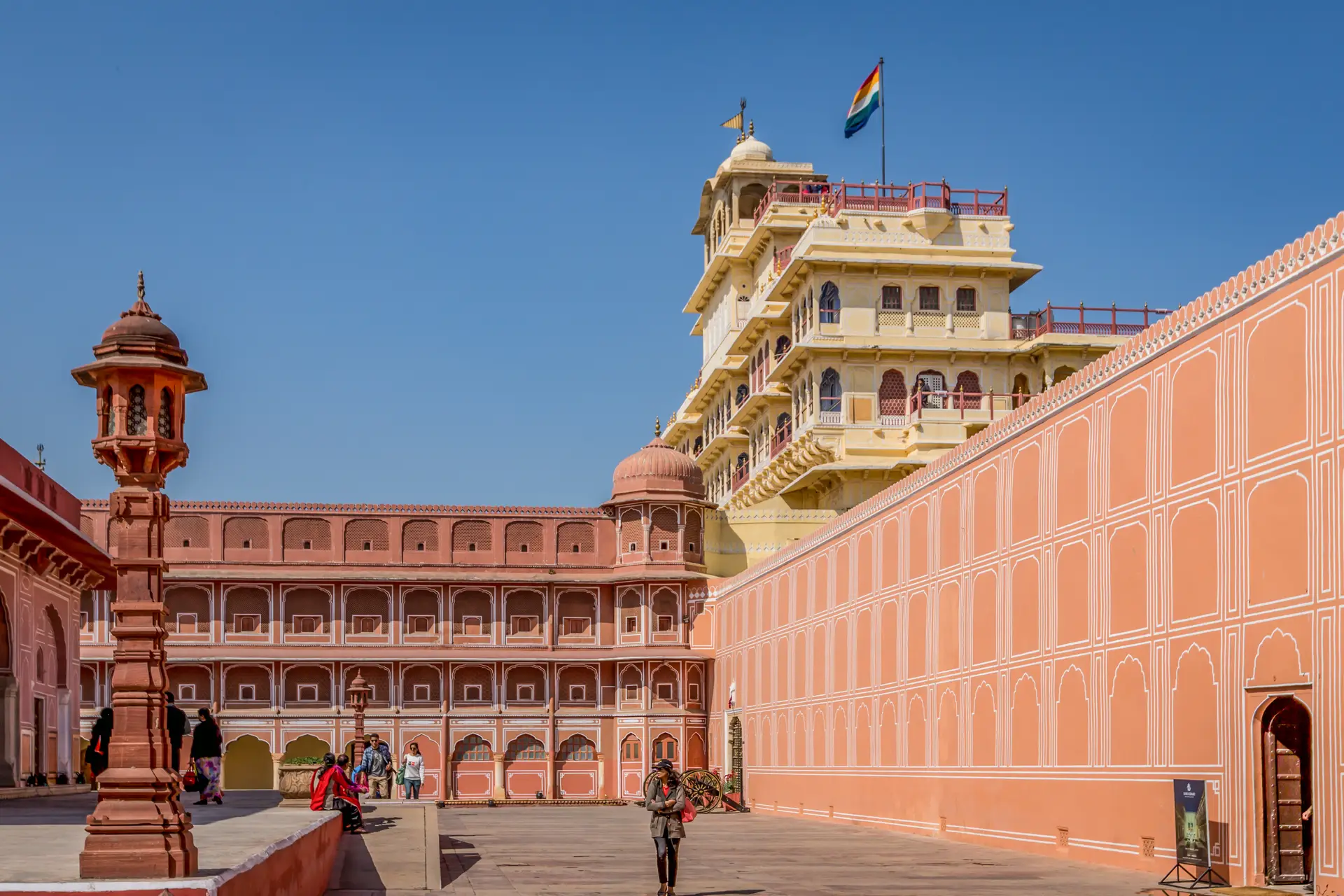
3. The Flag Code of Royal Presence — Above the Chandra Mahal, two flags are flown when the Maharaja is in residence—one saffron, one smaller green. If only the saffron flag flutters, he’s away. It’s Jaipur’s quiet royal status update long before social media existed.
4. The Seven-Storey Symbol — Chandra Mahal, the palace’s main residence, rises seven stories—each floor a symbolic step between the earthly and divine realms. Its mirrored ceilings and frescoed chambers aren’t mere decoration; they act as metaphors for enlightenment, with light literally guiding you upward.
5. Pink, But Make It Purposeful — While Jaipur’s nickname “The Pink City” began as a Victorian PR move to honor Prince Albert’s 1876 visit, City Palace remains the hue’s beating heart. The soft terracotta shade was chosen to evoke hospitality—a tone said to warm guests as much as desert sun. Every repainting is done with limewash mixed by hand, ensuring that signature blush never fades from Jaipur’s skyline.
A few links and ads here are affiliate portals. If you click through and snag something, you’ll be fueling my next photo-quest at no extra cost to you. Thanks for keeping the adventure rolling!
To experience the City Palace and Jaipur’s layered majesty beyond its walls, join the 2-Day Jaipur Tour for First-Time Visitors—a perfectly paced dive through the Amber Fort, Hawa Mahal, and of course, the City Palace’s royal courts. If you prefer an unhurried, personalized approach, the Full-Day Jaipur Private Sightseeing Tour by Car with Guide lets you customize your route, catch the palace at ideal lighting hours, and sip masala chai where maharajas once plotted astronomy and empire.
📌 Plan Your Visit: Hours, Tickets & What to Expect
City Palace rewards travelers who pair curiosity with a little timing strategy. Aim to arrive just after the gates open so you can have Mubarak Mahal and the first courtyards in gentler light, then drift toward Pritam Niwas Chowk as the sun climbs—its painted portals pop even under bright skies. Save interiors and museum galleries for the midday heat, then re-emerge for late-afternoon glow on latticed balconies and marble inlays. If you’re still around at dusk, the brief Museum at Night light-and-sound show wraps the façades in warm tones that make even phone shots feel cinematic. Official hours run daily from 9:30 AM through the evening, with a short night program at 7:00–7:30 PM; note the museum closes only on Dhulandi (the second day of Holi).
Tickets are straightforward: a standard City Palace Museum ticket covers courtyards and galleries; a Composite option bundles Jaigarh and Royal Cenotaphs; and premium Chandra Mahal tours (Royal Grandeur/Splendour) unlock the private royal floors when offered. Current published museum tiers list ₹300–₹500 for core entry options and a Composite at ₹400; royal-floor tours are significantly higher and sold separately on-site. Guides are available at the ticket desk, e-tickets are time-specific, and there are two main entries—near Jantar Mantar and at Jaleb Chowk—both selling tickets. Photography is joyfully encouraged in the courtyards and exteriors, but no tripods and no flash inside museum galleries (Textiles/Arms); when in doubt, ask an attendant before you lift the camera.
🎫 Ticketing Tips. Buy online or at either gate; bring a photo ID to validate e-tickets and a small cash float for guide fees. If you’re eyeing Chandra Mahal access, check day-of availability first thing—slots are limited and prices are separate from standard entry.
🎉 Festival/Peak-Day Watch. During Teej and Gangaur, processions start from the palace (Tripolia/Zanana Deodi), crowds surge, and nearby streets close or reroute; plan extra time and consider an early or late visit for calmer frames.
| Quick Facts — City Palace, Jaipur | Details |
|---|---|
| Hours | Daily 9:30 AM–evening; Museum at Night 7:00–7:30 PM (brief show). Closed on Dhulandi only. |
| Main Gates | Gate 1 near Jantar Mantar ticket counter; Gate 2 at Jaleb Chowk (tickets available at both). |
| Standard Tickets (INR) | City Palace Museum from ₹300–₹500; Composite ₹400 (includes Jaigarh & Royal Cenotaphs per current listing); premium Chandra Mahal tours priced separately. |
| Photography | Allowed in courtyards/exteriors; no flash in galleries; no tripods; follow staff guidance for rooms with restrictions. |
| Good Light Windows | Morning for Mubarak Mahal façades; late afternoon for Pritam Niwas Chowk and Peacock Gate; blue hour for reflective stonework. |
| Guides & Access | On-site guides available (fee); e-tickets time-specific; check day-of for Chandra Mahal tour slots. |
| Festival Watch | Teej/Gangaur processions originate here; expect diversions near Tripolia Gate and heavy foot traffic—arrive early. |
🚶 Getting There, Entry & Accessibility
Jaipur’s City Palace sits at the heart of the Walled City, a short hop from Hawa Mahal and Jantar Mantar, so you’re navigating lively lanes rather than expressways. From Jaipur International Airport (JAI) it’s roughly 12 km/25–35 minutes by car, depending on traffic; rideshares and prepaid taxis are the easiest door-to-gate option. If you’re on the Jaipur Metro (Pink Line), ride to Chandpole or Badi/Chhoti Chaupar and walk or auto-rickshaw the last kilometer through bazaars. Festival weeks (Teej, Diwali run-up) can trigger temporary parking bans and diversions around Tripolia Gate—build in cushion time and consider being dropped a few blocks out to stroll in with your camera ready.
Parking & Drop-offs. The palace has two visitor gates—Gate 1 near Jantar Mantar and Gate 2 at Jaleb Chowk—with ticketing at both. In practice, most drivers arrange quick drop-offs at these gates and wait elsewhere; during peak or festival days, authorities may push private cars to Ramniwas Bagh parking with e-rickshaw shuttles into the Walled City. If you’re self-driving, arrive early morning to snag legal curb space on non-blackout days; otherwise let a cab or auto handle the last stretch.
Accessibility Notes. Within the museum precincts, paths and main courtyards are largely level, and staff can advise on wheelchair assistance or golf-cart transfers between key courtyards; accessible toilets are available. That said, some heritage interiors (stairs, narrow thresholds) are partially accessible only with assistance, and tripods are restricted inside galleries. If mobility is a concern, target courtyards, Diwan-i-Aam/Khas exteriors, and Pritam Niwas Chowk first—these offer the richest visuals with the least stair navigation.
Wayfinding Inside. After ticketing, follow signage toward Mubarak Mahal and the main courtyards, then arc south-east to Pritam Niwas Chowk for the seasonal gates (Peacock/Autumn, Lotus/Summer, Rose/Winter, Green/Spring). For smoother flow, do exteriors early, galleries at midday, and loop back for late-afternoon light on painted portals; if you’re staying for the Museum at Night (7:00–7:30 PM), position yourself in open courtyards for the most photogenic sightlines.
🧭 How to Explore: Smart Routes for Any Timeline
60-Minute Essentials. Enter at opening and move with purpose: a quick ticket check, then glide straight to Mubarak Mahal for those creamy morning façades before the crowds bloom. Drift into the first courtyard to feel the palace scale, then angle toward Diwan-i-Aam for symmetrical columns and a fast primer on royal protocol. With the sun still low, beeline to Pritam Niwas Chowk—give yourself ten concentrated minutes at the Peacock Gate (autumn/Vishnu), then rotate through the other seasonal portals for a tight color study. Wrap by pausing in the shade to shoot layered arches with a short telephoto; you’ll leave with Jaipur’s signature palette—and the confidence you could navigate by instinct alone.
90–120 Minutes, Deeper Look. Start as above, but slow your shutter on the details: textiles motifs in reliefs, carved brackets, and those tiny mirrored tesserae that sparkle like monsoon drops. Add Diwan-i-Khas to understand the “private audience” vibe—notice how light skims marble edges and pools beneath arches. Return to Pritam Niwas Chowk once the sun climbs for saturated pigments; bracket exposures to hold both paint and shadow. Use a 24–105mm walkaround lens for flexibility, then switch to a 15–35mm near tight corridors to exaggerate leading lines. Finish with a quiet circuit of side passages, framing guards against pink plaster for timeless portraits (ask permission with a smile and a quick “Namaste; ek photo?”).
2–3 Hours Leisure. Treat the palace like a living studio: exteriors in the first 45 minutes, galleries during the midday glare, and a slow final lap for late-afternoon warmth. If Chandra Mahal access is offered that day, slot it mid-visit for ceiling frescoes and gilded geometry—move gently, keep your ISO modest, and respect no-flash zones. Between sets, build a mini-series: four seasonal doors (grid), guard portraits (diptych), arches and lattices (monochrome study), and reflections after a courtyard wash (abstracts). Close by planting yourself where foot traffic fans into patterns; let figures become scale markers against sandstone planes. You’ll walk out not just with pretty pictures, but with a cohesive visual story ready for your gallery.
Just Beyond: Jaipur Travel Guide
Step outside the palace walls and dive into the vibrant rhythm of Jaipur—the Pink City that paints history in rose tones and markets in technicolor. From the iconic Hawa Mahal to the hilltop Amber Fort and night bazaars pulsing with sound and spice, our full Jaipur guide captures it all with photo-forward itineraries, festival insights, and practical tips. Find out where to chase the best light, the best lassi, and the most breathtaking rooftops overlooking this royal city of Rajasthan.
View Our Jaipur Guide🖼️ Spaces & Highlights You’ll Love
Think of City Palace as a series of short stories told in stone and pigment. Each courtyard is a new chapter: scale-shifting arches, frescoes that inhale light, and textures that change mood with every hour. Move slowly—this isn’t a checklist, it’s a conversation with Jaipur’s royal past where geometry and ritual still shake hands. Notice how guards punctuate scenes like exclamation points, how latticed windows edit the sun into soft confetti, and how footsteps sound different from marble to sandstone. If you give each space five extra minutes, you’ll leave with frames that feel authored, not just captured.
Mubarak Mahal — The Breezy Welcome
A creamy confection of Indo-Saracenic arches, Mubarak Mahal is your elegant handshake with the palace. It once hosted royal receptions; today it hosts your eyes—inviting you to study filigree balconies and the way morning light wraps columns in soft ribbons. Look for repeating arches that stack into perfect symmetry, and lean into a 24–105mm lens to compress those layers. Pause on the steps and watch the courtyard breathe; when a guard in scarlet crosses the frame, you’ve got your color anchor—click once, then again after the shadow shifts.
Diwan-i-Khas — Intimacy in Marble
The Hall of Private Audience is a masterclass in restraint: polished marble, measured proportions, and light that settles like silk. It mattered because this is where power spoke softly; today, it’s where your compositions can too. Watch how the sun skims column edges and pools beneath arches—perfect for a low-ISO, tripod-free shot with a calm shutter. Work the angles from corner to corner, letting columns frame passersby as scale markers; breathe between takes so you notice the hush that the camera never quite hears.
Pritam Niwas Chowk (Peacock Gate) — Seasons, Painted Loud
A riot of color with discipline underneath, Pritam Niwas Chowk is four doorways, four seasons, four moods—headliner included: the Peacock Gate. It matters because it’s Jaipur’s thesis on harmony: myth, craft, and celestial order dancing in one doorway. Study the feathers like a star chart, then shift a foot left or right to keep verticals true—your 15–35mm will sing here. Don’t rush; walk the full circuit (Lotus, Green, Rose, Peacock), letting pigments change as the sun pivots. When a sari color echoes the paint, wait a heartbeat and make the frame that will live on your wall.
🌸 Nearby Pairings & Pleasant Pauses
After soaking in the grandeur of City Palace, don’t rush straight to the next “must-see.” Within a five-minute stroll you can slip into a gentler rhythm—sipping masala chai while rooftops glow pink, browsing Tripolia Bazaar for hand-blocked prints, or ducking into the cool hush of Govind Dev Ji Temple to watch bells swing and locals pray. Late afternoon is the sweet spot for exploring Jantar Mantar, where long shadows sculpt the sundials, or for claiming a rooftop seat at Tattoo Café with the Hawa Mahal façade blushing gold across the street. If you linger till blue hour, the whole Walled City hums to life—strings of lights reflecting off shop glass, musicians tuning sitars, and the faint scent of sandalwood smoke curling through alleys. These small pauses turn sightseeing into slow travel—Jaipur’s most underrated luxury.
Family-Friendly Stops — Courtyard Calm & Scoops for All
Families will find easy breathing space in Mubarak Mahal’s open court and shaded benches near the City Palace Café, perfect for stroller parking and snack breaks. Just outside the gates, Giovanni’s Gelato and Wind View Café offer sweet relief and panoramic perches where kids can watch pigeons swirl over pink rooftops. Early morning visits are best with little ones—cooler air, shorter lines, and plenty of room for curiosity to wander safely.
Rain/Heat Refuge — Cool Halls & Breezy Arcades
When monsoon clouds or desert sun overstay their welcome, retreat to the Textile Gallery or Arms Museum, both naturally cooler with thick stone walls and filtered light ideal for slow exploration. The Diwan-i-Khas arcade channels cross-breezes through marble columns, while covered passages between courtyards let you linger dry and comfortable. On sweltering days, plan indoor stops between open courtyards, pausing under jharokha balconies that frame the city in soft, shaded gold.
🎥 Reels on the Road
Every inch of City Palace feels like it was built for the lens, but it’s even more magical in motion. The trick is pacing: wide establishing shots of courtyards first, then tight detail clips that make viewers feel the texture—the echo of footsteps, flutter of flags, shimmer of sunlight through latticed stone. Start early for softer tones, switch to slow pans in Diwan-i-Khas when midday brightness hits, and wrap with twilight glows on the Peacock Gate or reflections in polished marble floors. Each reel should feel like a miniature journey through color and calm, not just another travel montage. Think rhythm—let the camera breathe as slowly as the palace itself.
🎥 Mubarak Mahal Morning Sweep — Capture the palace façade catching its first light; use a slow upward pan for dramatic reveal right after opening hours (8:30–9:00 AM).
🎥 Peacock Gate Close-Up Magic — Frame tight details of the painted feathers as sunlight deepens pigment saturation—shoot mid-morning for balanced tones.
🎥 Royal Steps in Motion — Follow a guard’s stride across marble floors with a stabilizer or handheld gimbal, emphasizing sound and rhythm over zoom.
🎥 Diwan-i-Khas Light Play — Pan slowly from column to column as sunbeams slide across arches; catch dust motes for cinematic softness (around noon).
🎥 Twilight Balcony Panorama — From a courtyard edge, film the palace domes as the sky turns indigo; switch to a 24–105 mm lens for layered compression and dreamy skyline silhouettes.
🎥 Evening Echo Walkthrough — Trace your steps exiting under warm lights; use slow-motion or 60 fps footage for graceful movement as Jaipur hums beyond the gate.
🧳 What to Pack for Picture-Perfect Memories
Jaipur’s City Palace is every photographer’s playground—grand courtyards, painted portals, and mirror-lit chambers where light behaves like liquid gold. Pack light but clever: breathable fabrics for the heat, soft-soled shoes for marble floors, and a refillable water bottle for those long shooting hours. The lighting swings from harsh to honeyed, so you’ll need lenses that can handle contrast gracefully. A scarf or small umbrella doubles as sunshade and dust cover; a microfiber cloth is non-negotiable—the desert breeze has a knack for tinting everything Jaipur pink. Travel like a minimalist, shoot like a maximalist, and keep your setup nimble enough to pivot from wide vistas to ornate doorways in seconds.
👉 The Nomad’s Kit: Gear That Earns Its Miles
Canon RF 15–35mm f/2.8L — Ultra-wide for grand courtyards, gilded doorways, and reflective marble halls where stepping back means “hello, palace guard.”
Canon RF 24–105mm f/2.8L — Your dawn-to-dusk workhorse: portraits in archways, mid-tele details on frescoes and latticework, quick café vignettes inside Mubarak Mahal.
Canon RF 100–500mm f/4.5–7.1L IS USM — From outer terraces, compress domes, jharokhas, and flags fluttering above; capture close details of motifs or royal guards without intruding.
Lowepro ProTactic BP 350 AW III — Security- and crowd-friendly; keeps filters, scarf, and water handy through ticket checks and narrow corridors.
Peak Design Travel Tripod — Best left outside or in outer courtyards—full tripods are restricted inside; use for blue-hour palace exteriors or Tripolia Gate symmetry from across the street.
JOBY GorillaPod 3K Kit — Clamp to low railings for smooth fountain exposures or soft-motion crowd blurs—tiny footprint, big results.
Cut Glare. Shape Time. Make Every Frame Sing.
The Pink City’s light is bold—reflected off sandstone, brass, and mirror mosaics. A circular polarizer tames hotspots on gilded surfaces and intensifies the coral tones that define Jaipur. A variable ND lets you slow the royal rhythm: blur strolling visitors under the arches, smooth courtyard fountains into silk, and turn a sunlit bustle into poetic calm while domes stay tack-sharp.
🌸 Control Reflections & Punch Up Color
Circular Polarizer Filter — Reduce glare on marble floors and mirror tiles, deepen cerulean patches between domes, and highlight the saturated pinks and greens of the Peacock Gate. Pro tip: rotate gently—too much polarization can dull gold leaf and metallic accents that make the palace glow.
⏱️ Drag the Shutter in Courtyard Light
Neutral Density Variable Filter — Drop 3–6 stops to blur visitors through Pritam Niwas Chowk, smooth fountain spray in Mubarak Mahal, and capture soft cloud movement over palace spires. Pro tip: start around 1/4–1 s for people blur; go 2–10 s for silky water or dreamy sky.
Pack both for any Jaipur jewel: the polarizer reveals the palace’s brilliance; the ND sculpts its serenity. Together, they make pink stone sing.
Photo Policy Reminders — No flash in interior galleries or shrine areas; tripods/stands and drones are prohibited inside. Photography of royal apartments or private wings requires a separate ticket—respect signage. Dress modestly, stay behind rope lines, and avoid touching frescoes or doors. Visit at opening for empty courtyards and soft light—the City Palace rewards early risers with royal quiet and perfectly diffused color.
💰 On-Site Costs Snapshot
Most visitors spend modestly here: a standard museum ticket plus a licensed guide for 60–90 minutes, then a chai or cold drink and a small souvenir from the bazaar just outside. If you’re going to splurge, make it on a private guide who can navigate timing and photo-friendly angles, or on the Chandra Mahal premium access when offered—those gilded ceilings are worth it for design lovers. Expect that small courtesies (baksheesh-level tips) go a long way with attendants and musicians, and factor in a rideshare to/from the Walled City. All told, most travelers land between $18–$45 USD per person, with upgrades nudging that higher.
| Category | Typical Spend (USD) | What You Get |
|---|---|---|
| City Palace Museum Entry | $4–$8 per adult | Courtyards, Mubarak Mahal, main galleries (Textiles, Arms), access to Pritam Niwas Chowk. |
| Premium Upgrade: Chandra Mahal | $18–$35 add-on (when offered) | Guided access to select royal floors, frescoed ceilings, mirrorwork; strictly no-flash, limited rooms. |
| Licensed Guide (Private) | $10–$20 for 60–90 min | Context, pacing, photo-friendly routing; negotiable on site or pre-booked; tip appreciated for great service. |
| Rideshare / Taxi (One Way) | $2–$5 within central Jaipur | Drop at Gate 1 (Jantar Mantar) or Gate 2 (Jaleb Chowk); surge pricing during festivals. |
| Drinks & Snacks | $1–$3 per person | Masala chai, bottled water, lassi; pause in shaded arcades to cool down between courtyards. |
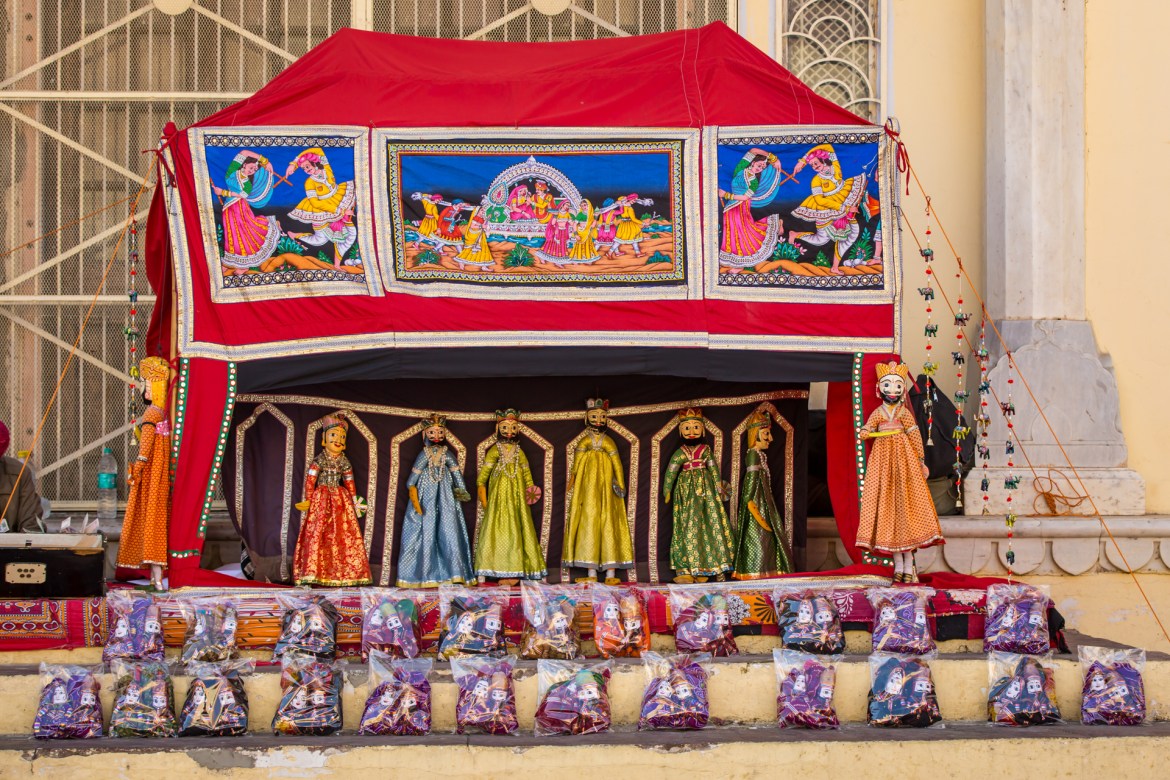
| Souvenir | $3–$12 typical | Block-print scarves, miniature art postcards, small handicrafts from lanes near Tripolia Bazaar. |
| Gratuities | $1–$3 | Thank-you tips for guides, attendants, or musicians during festival days; optional but appreciated. |
Just Beyond: Agra Travel Guide
Ready to swap Jaipur’s pink glow for Agra’s marble moonlight? Our Agra Travel Guide maps the perfect photo-forward day from dawn at the Taj Mahal to sunset over the Yamuna, with timing tricks, lens tips, and low-stress routes. We’ll help you pair Agra Fort with hidden bylanes for chai breaks and candid street frames, then steer you to rooftops where the Taj turns blush at golden hour. Think practical pacing, festival notes, and the best angles for reflections after rain—so you arrive prepared and leave with keepers.
View Our Agra Guide🤝 Etiquette & Respectful Visiting
At the City Palace, grace goes further than your ticket. This is still a living royal complex, not a frozen museum, so a touch of respect keeps the magic intact. Dress modestly—shoulders covered, hemlines around the knee, and muted tones if visiting during festivals or prayer hours. Inside courtyards and shrines like Govind Dev Ji Temple, keep your voice low; echoes here carry like whispers through marble. When you encounter a ceremony or flag-raising, simply pause, step aside, and let locals complete their rituals before resuming your walk or photography. Always ask before taking close portraits of guards or attendants—most will smile and agree, but that small courtesy earns genuine warmth. Avoid touching walls or frescoes (they’re centuries old and delicate), keep food and drinks outside museum rooms, and carry small bills for tipping attendants who open restricted sections or share insights. A respectful rhythm—slow, aware, and appreciative—turns your palace visit from sightseeing into connection.
🕰️ Historical Timeline at a Glance
These milestones change what you’ll notice on-site: early 1729–1732 construction means lots of Rajput-Mughal geometry and Vastu-aligned sightlines; the 1876 “Pink City” moment explains today’s warm terracotta wash; the 1901–02 silver urns reveal royal ritual in material form; and the 1959 museum opening plus modern restorations show why some rooms feel curated while others still live like a palace. Track them as you walk and you’ll start reading ceilings, doorways, and courtyards as chapters in a living royal manuscript.
| Year | What Happened | What You’ll Notice On-Site |
|---|---|---|
| 1727 | Jaipur founded by Maharaja Sawai Jai Singh II; city laid out on Vastu and grid principles. | Straight sightlines, orthogonal courtyards, and an urban plan that frames palace axes. |
| 1729–1732 | City Palace constructed under Jai Singh II. | Blend of Rajput strength, Mughal finesse, and early European touches; ceremonial vs. private halls. |
| Late 18th–19th c. | Successive additions by later rulers. | Layered gateways, expanded audience halls, richer mirrorwork and textiles galleries. |
| 1876–1877 | “Pink City” era for Prince of Wales’ visit; pink color mandated citywide. | Warm terracotta façades; hospitality hue unifying palace walls and surrounding streets. |
| 1901–1902 | Gangajali silver urns commissioned for London trip. | Record-size silver vessels in Sarvato Bhadra; ritual meets craftsmanship in gleaming metal. |
| 1959 | Maharaja Sawai Man Singh II Museum established. | Curated galleries (Textiles, Arms); clearer signage and conservation lighting. |
| 1971 | Royal privileges abolished in India; palace role shifts. | Greater public access; some spaces remain private residence (Chandra Mahal). |
| 2019 | Gudliya Suite opened to guests (select periods). | Heritage hospitality layer; palace-as-living-space context for décor details. |
| 2020s | Restorations & cultural programming under the current royal household. | Refreshed paintwork, revived festivals, and conservation-first visitor routing. |

📓 Through My Lens: Field Notes from the Road
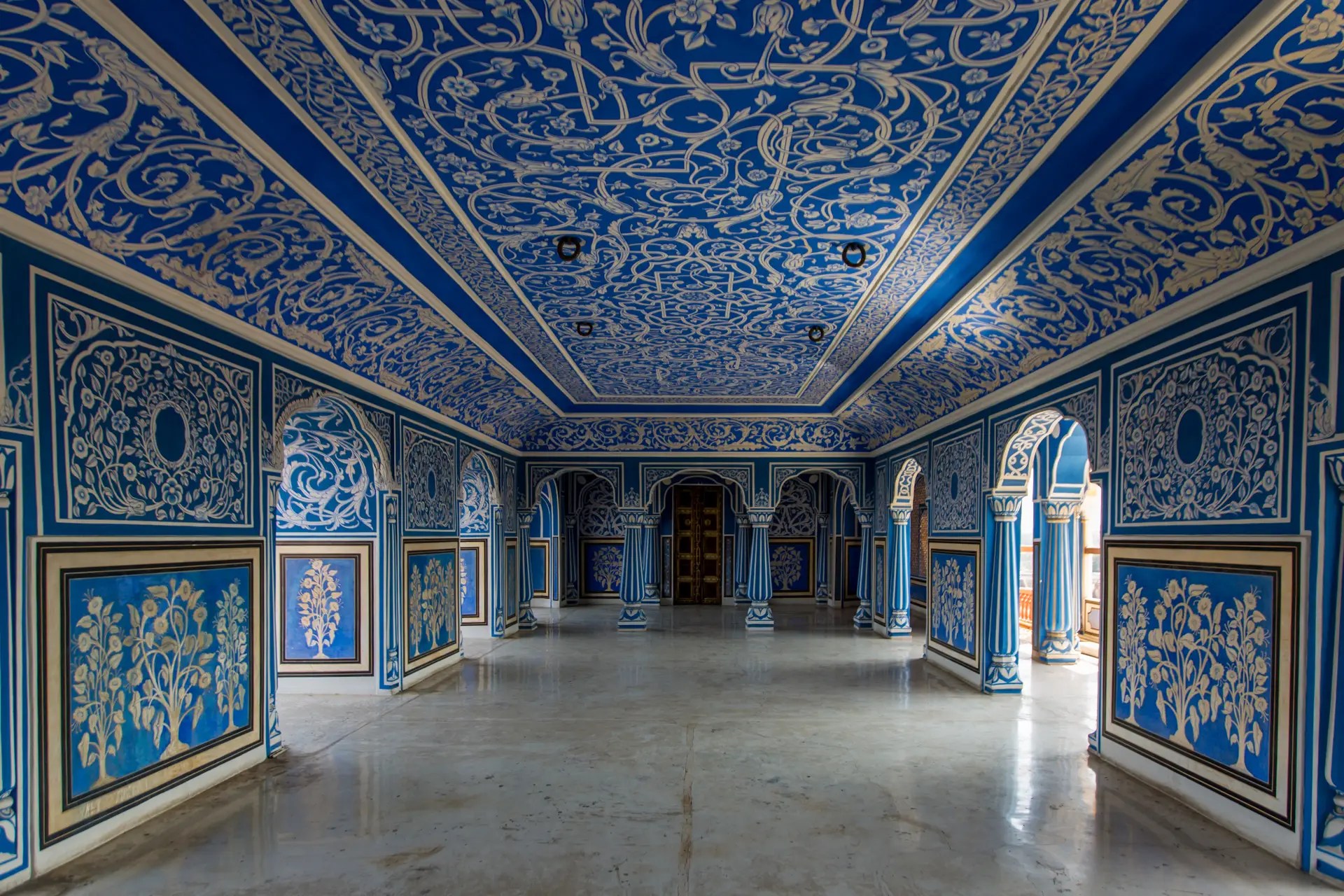
My new friend and trusty guide Shahid brought me to City Palace as one of our tuk-tuk stops, and what a ride it was—horns, scooters, and street vendors all choreographed into Jaipur’s daily ballet of chaos and charm. The moment we rolled through the gates, the noise melted into courtyards that seemed to hum with history. City Palace, like many of India’s grand relics, proudly shows its age—not in decay, but in character. Every crack in the plaster, every fading fresco, felt like a whisper from another century. Upstairs, the rooms unfolded in layers of color so mesmerizing they seemed painted for the gods—mirrored walls, frescoed ceilings, and corridors that made every step feel cinematic. I only had a couple of hours here, but each turn of Shahid’s guided route revealed new textures and tones I longed to linger over. Given the chance, I’d spend a full day just chasing the light across these walls, camera in hand and a new story waiting behind every archway.
☀️ When to Go & Weather Sweet-Spots
Jaipur glows year-round, but the palace’s moods change dramatically with the seasons. From November to February, the winter air feels crisp and the light sharp—ideal for catching mirrorwork details and courtyard shadows without melting in the midday sun. March to April ushers in warmth and festivals; processions like Gangaur bring color and ceremony right through palace gates. May to July can be fiery hot, but the ochre walls blaze photogenically against electric skies, and early mornings stay surprisingly gentle. August to early October brings monsoon drama: sudden showers cool the marble and reflect pink façades in puddles perfect for creative reflection shots. By late autumn, the city settles back into golden equilibrium—warm days, cool nights, and a hush that feels designed for photography.
| 🌞 Season (Months) | 🧘♂️ Vibe Check | 🌦 Rain Factor | 🏛 Tourist Traffic |
|---|---|---|---|
| 🌴 Winter (Nov–Feb) | Cool, bright days; crisp air ideal for sightseeing and photography. | Minimal rain; clear golden light through courtyards. | High—peak season for international travelers. |
| 🌸 Spring (Mar–Apr) | Festive, warm, full of processions and vivid energy. | Occasional brief showers; otherwise dry and sunny. | Moderate to high—especially during Gangaur and Holi. |
| ☀️ Summer (May–Jul) | Fiery hot but atmospheric; brilliant contrasts for photography. | Dry; prepare for heat and carry hydration essentials. | Low—quietest time, excellent for empty frames. |
| 🍂 Fall (Aug–Oct) | Moody monsoon to post-rain glow; puddle reflections and fresh air. | Moderate showers tapering off by October. | Medium—photographers love post-rain color saturation. |
🌧️ Rainiest Months: July–August
🎯 Peak Tourist Season: November–February
🏖️ Off-Season Sweet Spot: Late August–October for soft skies and light crowds
💡 Insider Pro Tip: Arrive at opening in winter for golden angles across courtyards, or just after monsoon rain when the palace mirrors itself in glistening stone.
🛡️ Practical & Safety Notes
The City Palace is one of Jaipur’s safest and best-managed attractions, but a little situational awareness keeps your visit effortless. Keep valuables zipped or cross-body in the tighter thresholds near Pritam Niwas Chowk, where crowd bottlenecks attract the occasional pickpocket. After rain, the marble and sandstone tiles can get slick—especially on shaded stairways and around fountains—so tread carefully and wear shoes with decent grip. During closing hours, guards gently usher visitors toward the exits; if you get separated from companions, regroup near Mubarak Mahal Courtyard or the main ticket gate by Jantar Mantar, both well-marked and easy to find. Overall, it’s a low-stress site: friendly staff, visible security, and plenty of shaded seating to pause, reset, and enjoy Jaipur’s royal calm.
🎞️ More Frames From the Road: Scenes Worth Stopping For
🗣️ Cheat Sheet for Friendly Encounters while in City Palace Jaipur
Even a few words of Hindi can open doors—sometimes literally, as guards warm up fast when you greet them in their own tongue. You’ll hear casual phrases echoing through the courtyards: “Namaste” exchanged between visitors, a soft “Dhanyavaad” as thanks, or even a jovial “Photo le sakta hoon?” when someone spots your camera. Locals appreciate effort more than accuracy, and even short exchanges make for friendlier smiles and smoother navigation. Use these phrases to charm your way through bazaars, tuk-tuk rides, and palace corridors—politeness here is its own form of currency.
| 🇺🇸 English | 🇮🇳 Hindi | 📖 Phonetic Spelling |
|---|---|---|
| Hello / Greetings | नमस्ते | Namaste |
| Thank you | धन्यवाद | Dhanyavaad |
| Please | कृपया | Kripya |
| Yes / No | हाँ / नहीं | Haan / Nahin |
| How much? | कितना? | Kitna? |
| Where is the exit? | निकास कहाँ है? | Nikaas kahaan hai? |
| Can I take a photo? | क्या मैं फोटो ले सकता हूँ? | Kya main photo le sakta hoon? |
| Beautiful place! | बहुत सुंदर जगह! | Bahut sundar jagah! |
| Good morning | सुप्रभात | Suprabhaat |
| Good evening | शुभ संध्या | Shubh sandhya |
| Excuse me / Sorry | माफ कीजिये | Maaf kijiye |
| I don’t understand | मुझे समझ नहीं आया | Mujhe samajh nahin aaya |
| Goodbye | अलविदा | Alvida |

Behind the Lens
I’m Steve—a retired Army vet who traded ruck sacks for camera bags and now chases light across every latitude I can reach. From 110 point & shoot film camera beginnings to a Canon R5 Mark II and Mavic Pro II drone, I’ve logged shots in 36 countries and all 50 states, squeezing solo photo runs between corporate flights and longer adventures with my wife. Shutter Nomadica is where I share the hits, misses, and field notes so fellow roamers can skip the guesswork and grab the shot!